1/13
Tommaso Spinzi Transforms an Airy Industrial Loft Into His Own Apartment in Milan
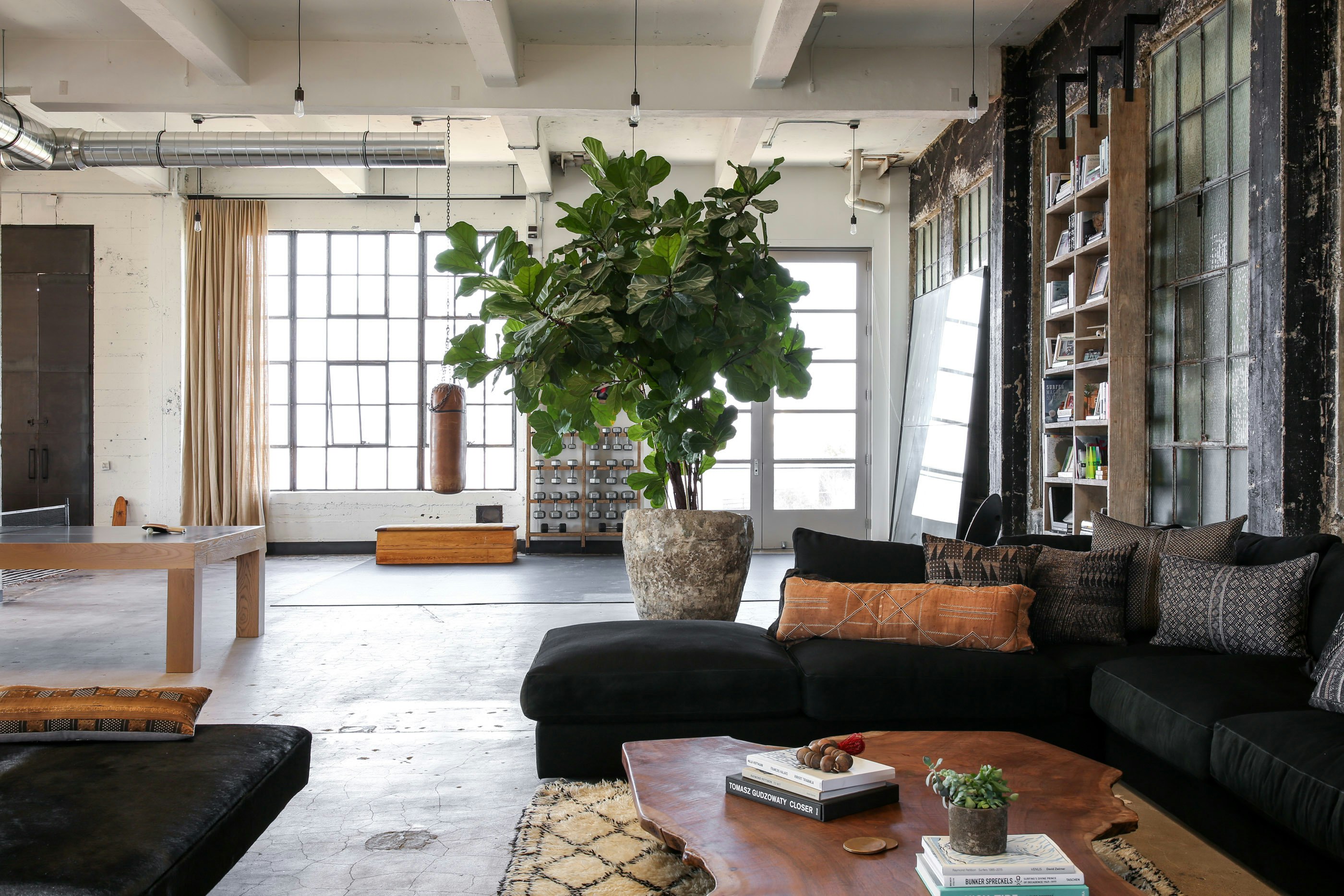
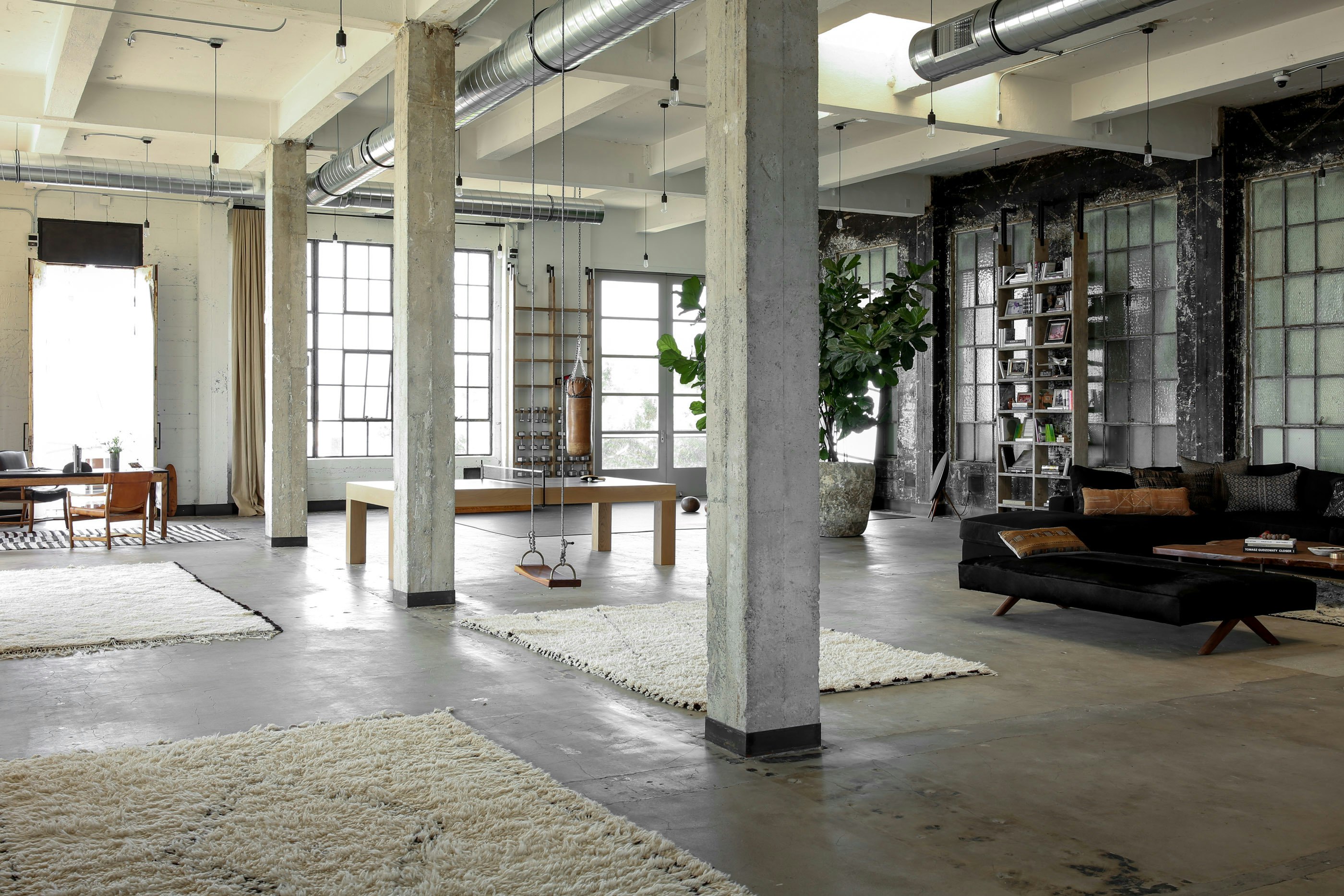
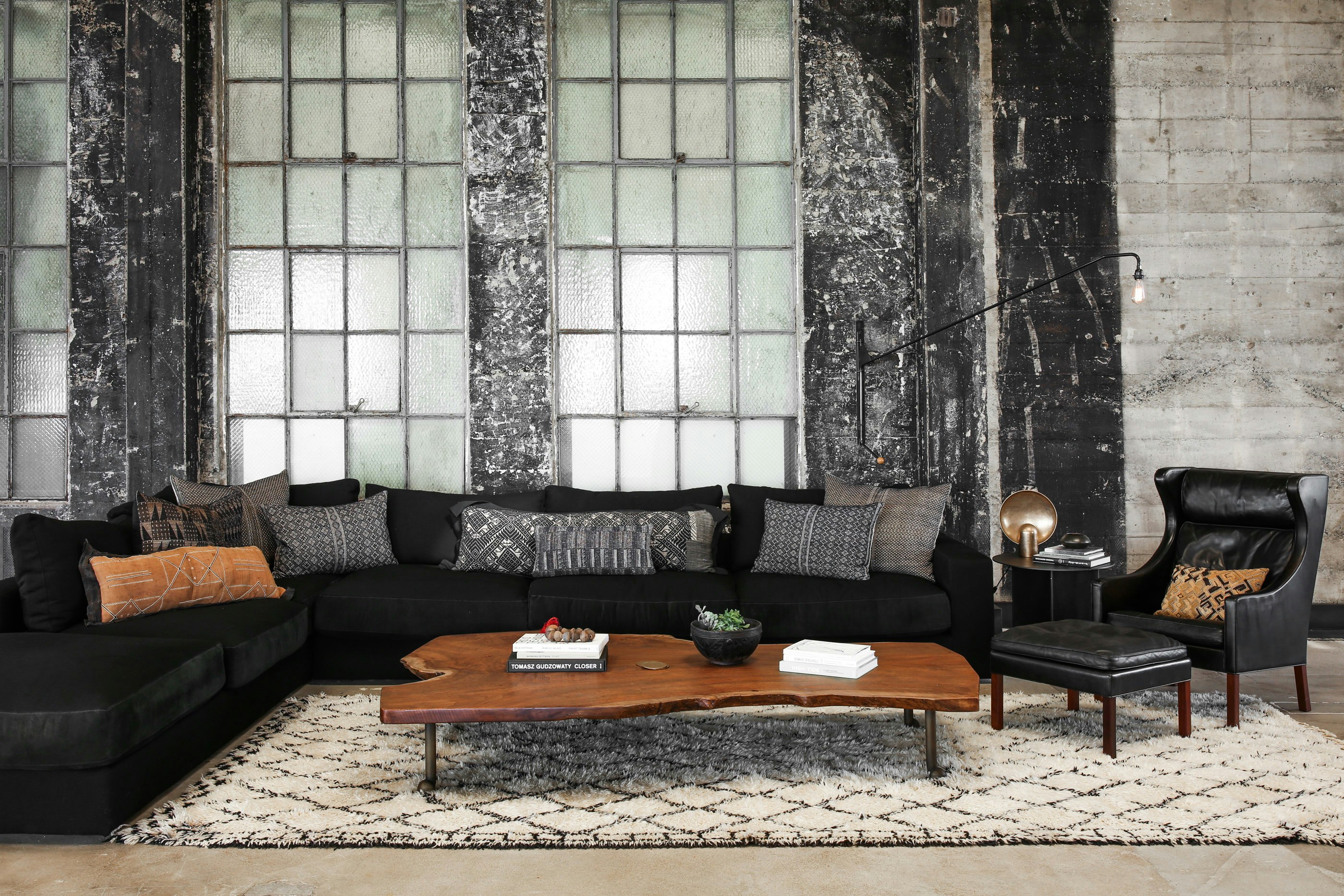
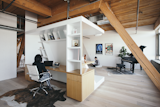
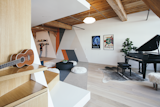
Architect Tommaso Spinzi, originally from Como, Italy, and with a diverse international professional background, returned to Milan in 2018. There, he undertook the renovation of a 2,000-square-foot former workplace near the city center, converting it into his personal loft. The space, which he describes as a “white canvas,” previously served as a stable for postal service horses in the late 1800s before becoming an office. Spinzi's design approach for the ground-floor space involved preserving its industrial characteristics, such as tall multi-paned windows, concrete floors, and an open layout, while integrating softer elements, both vintage and new. His primary architectural alteration involved creating a passage beneath an existing mezzanine to establish a dining area, with the mezzanine itself repurposed into his bedroom.
The loft's functional areas, including the kitchen, bathroom, living and dining spaces, library, and a garage for his 1983 Porsche 911SC, flow seamlessly, loosely defined by furniture arrangements. The design is characterized by an interplay of materials and textures, combining vintage and contemporary pieces, many of which are Spinzi's own creations. The thoughtful placement of artwork and strategic use of green accents, which Spinzi identifies as his favorite color, further personalize the space. Green is applied to walls, in upholstered furniture, and through foliage compositions, bringing natural elements indoors.
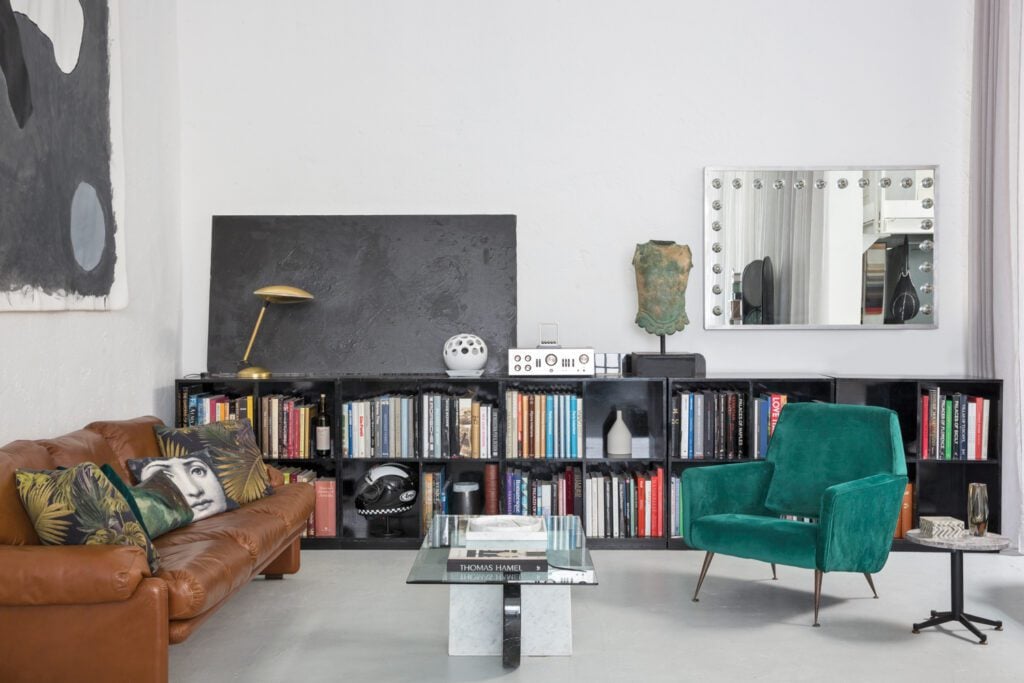
A central theme in Spinzi's design philosophy is the integration of vintage furniture, which he uses to promote upcycling and celebrate Italian craftsmanship. For example, in the library, a 1960s Afra and Tobia Scarpa sofa in tobacco leather is paired with a vintage armchair, re-covered by Spinzi in emerald velvet, and his own marble Medusa stool. The space also features a 1970s Italian vanity mirror and one of Spinzi's abstract paintings. He emphasizes selecting pieces for their aesthetic value and Italian origin, rather than solely their designer provenance, incorporating several anonymous yet impactful items.
The living area showcases this approach with shapely burnt orange-upholstered armchairs and a notable wooden soldier sculpture, whose origins are unknown but contribute significantly to the aesthetic. These are complemented by a 1970s Mario Bellini Le Bambole sofa, a drawing by Alessandro Paglia, and Spinzi's Origini console and cocktail table, both topped with greige terrazzo-like Ceppo. Spinzi, who has a preference for stone and metal, meticulously explores and enhances the inherent qualities of various materials in his work. His creations have been exhibited at the Rossana Orlandi Gallery in Milan, and his designs, along with curated vintage finds, are available through his online shop.
The apartment also features light fixtures made of Murano glass, such as a large 1970s Venini chandelier in the bedroom, and a sculpture composed of stacked marble samples. Spinzi’s philosophy extends to the broader context of urban development, advocating for the repurposing of old structures rather than demolition and new construction. He views this as a way to respect the historical integrity and “soul” of buildings and cities, while simultaneously minimizing environmental impact. This conscious approach aligns contemporary concerns with enduring Italian design traditions, celebrating the resilience of Milan's architectural heritage, from its grand palazzi to industrial complexes.
#MilanApartment #LoftConversion #TommasoSpinzi #ItalianDesign #VintageFurniture #IndustrialInterior #UpcyclingDesign #ArchitecturalRenovation #InteriorDesign #SustainableDesign #MilanApartment #LoftConversion #TommasoSpinzi #ItalianDesign #VintageFurniture #IndustrialInterior #UpcyclingDesign #ArchitecturalRenovation #InteriorDesign #SustainableDesign
0 comment in total
 No comments yet
You may also like
La Macchina Studio Transforms a 1950s Apartment in Rome into a Playful Space
A ski factory’s chic loft home conversion

An Iconic T-Shaped Apartment Receives a Modern Makeover

Before & After: In Spain, a Compact 1960s Apartment Gets a Quirky, Experimental Retrofit
f+f architectes converts attic into bright and spacious two-storey apartment
$2M garage conversion in Bed-Stuy has a zen atrium and industrial glamour

A family spent $69,000 turning their garage into an apartment so their son could live rent-free while launching his startup
Ten loft conversions by architects that maximise usable space
A Building in Venice Becomes a Converted Loft by Alexander Design
Pia Mendaro designs an elevated living space in a former warehouse in Madrid

How a once 'hard-edged' apartment was transformed into a 'soft and playful' home
A New Loft Level Upgrades This Luminous Apartment in Singapore
Small Italian Apartment Revamped As a Flexible, Open Living Space
The Insider: Architect Transforms Floor Levels in Park Slope Townhouse to Suit a Modern Family

The Insider: Designer Warms Up and Customizes Condo in Awkward Former Greenpoint Storefront
Step Inside One Couple’s Game-Changing Live/Work Loft
A 1920s Office Space Is Transformed Into a Polished Penthouse
Transforming a 4-room BTO flat into an open-plan home with city views everywhere
How a Designer Turned This "Modern White Box" Into a Lively—and Functional—Family Home

See How a Stager Transformed a “Dark” Craftsman Parlor (It’s So Much Brighter!)