1/9
f+f architectes converts attic into bright and spacious two-storey apartment
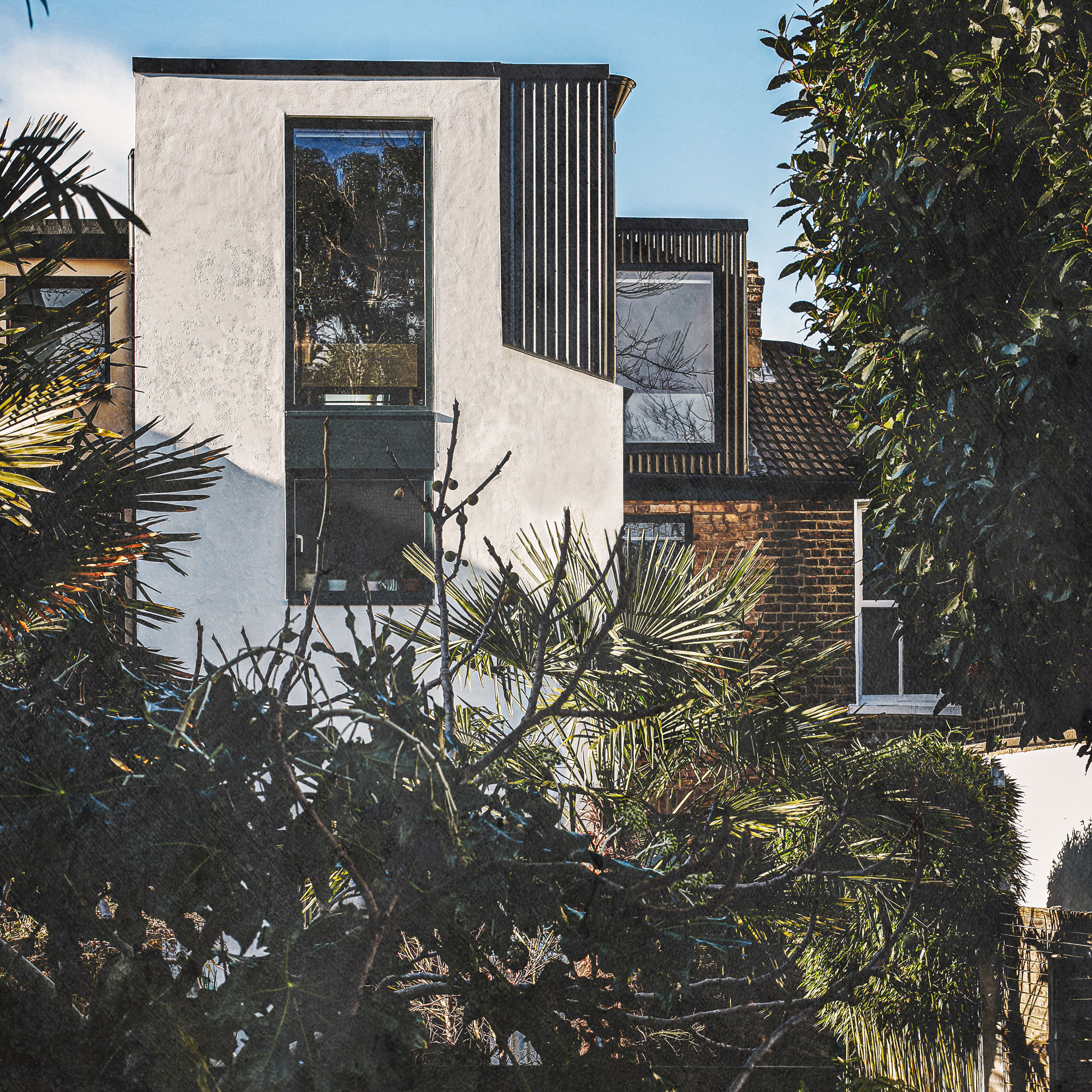
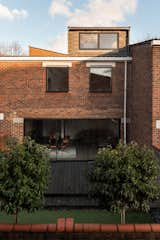
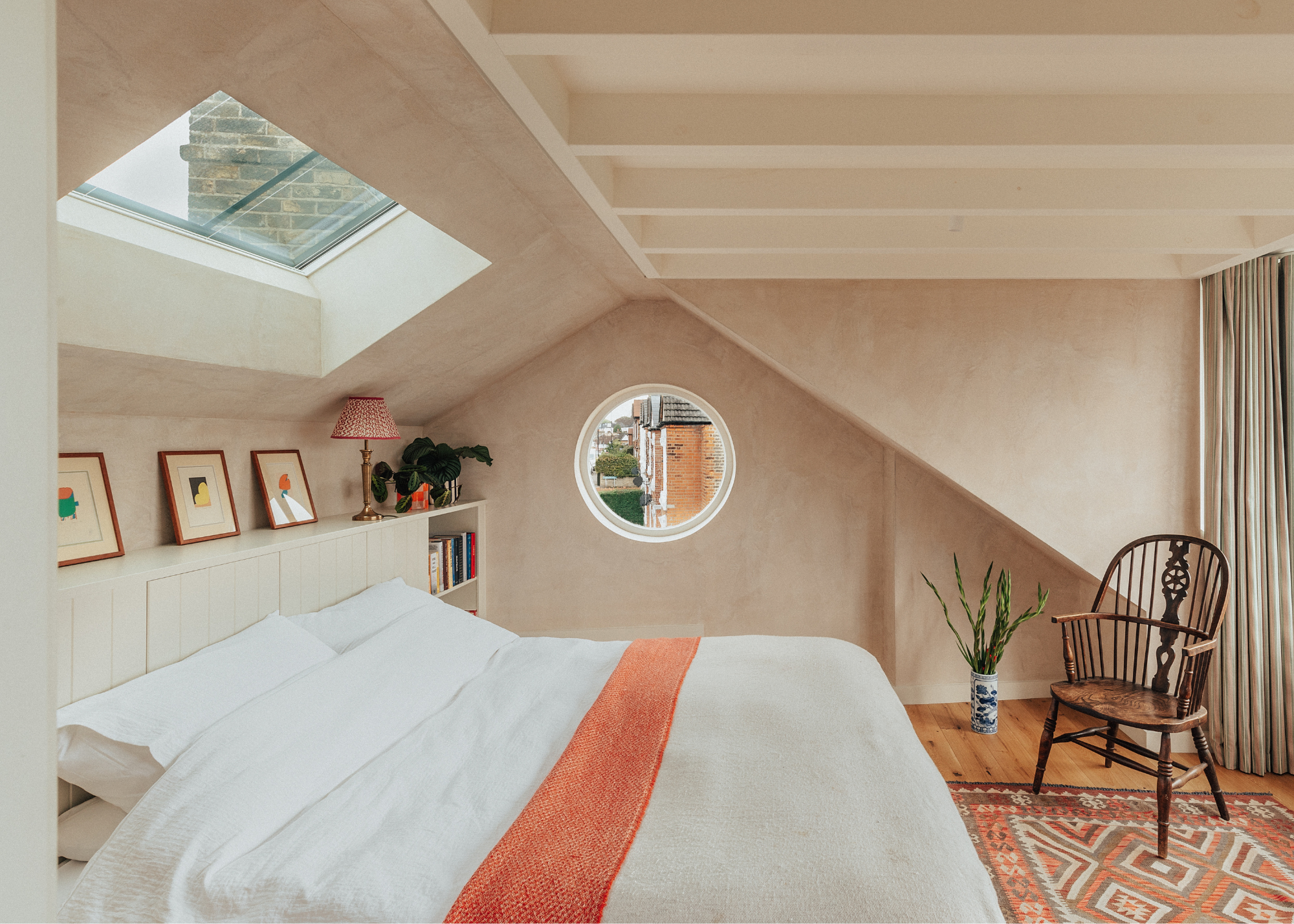
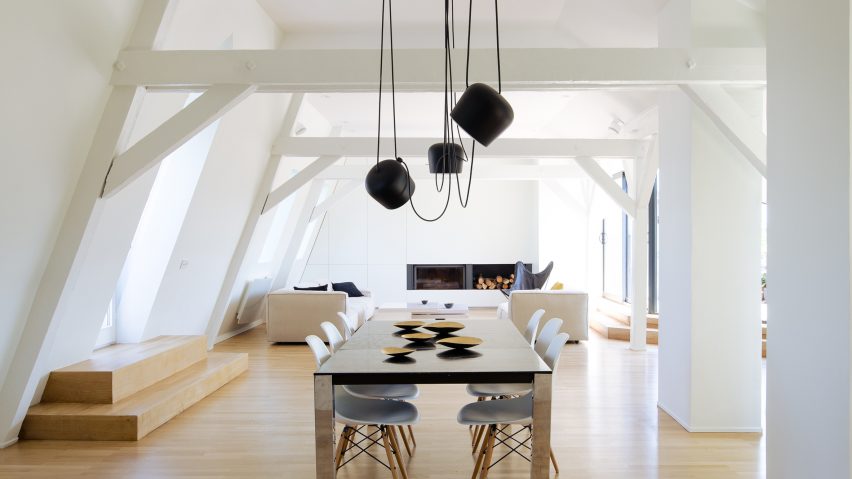
Parisian architecture firm f+f architectes has completed the conversion of a former attic space in an Art Nouveau building in Strasbourg, France, into a contemporary and luminous two-storey, four-bedroom apartment. The renovation project involved the fourth and fifth floors of the building, which were previously used as maid rooms. The newly designed apartment spans 240 square meters, offering a modern living space within a historic context.
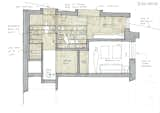
The apartment's layout is split across two levels. The lower level is primarily dedicated to private spaces, featuring four bedrooms, two bathrooms, and a home office. Access to this level is through a double-height entrance hall, which is illuminated by a skylight, creating an immediate sense of openness and brightness upon entry. The upper level, in contrast, hosts the communal living areas, including an open-plan living room, a dining area, and a kitchen. This arrangement allows for a clear separation between private and public functions, catering to modern lifestyle needs.
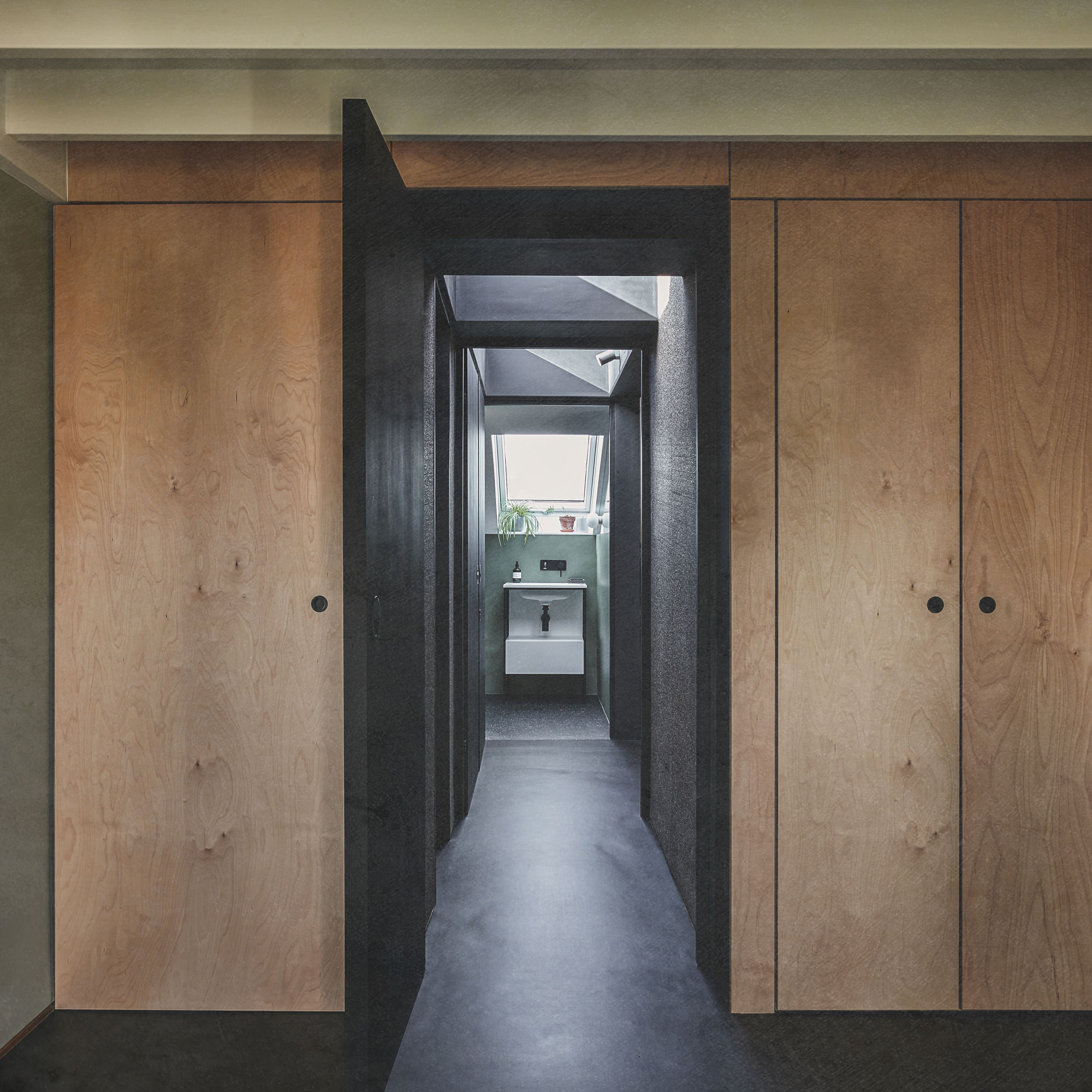
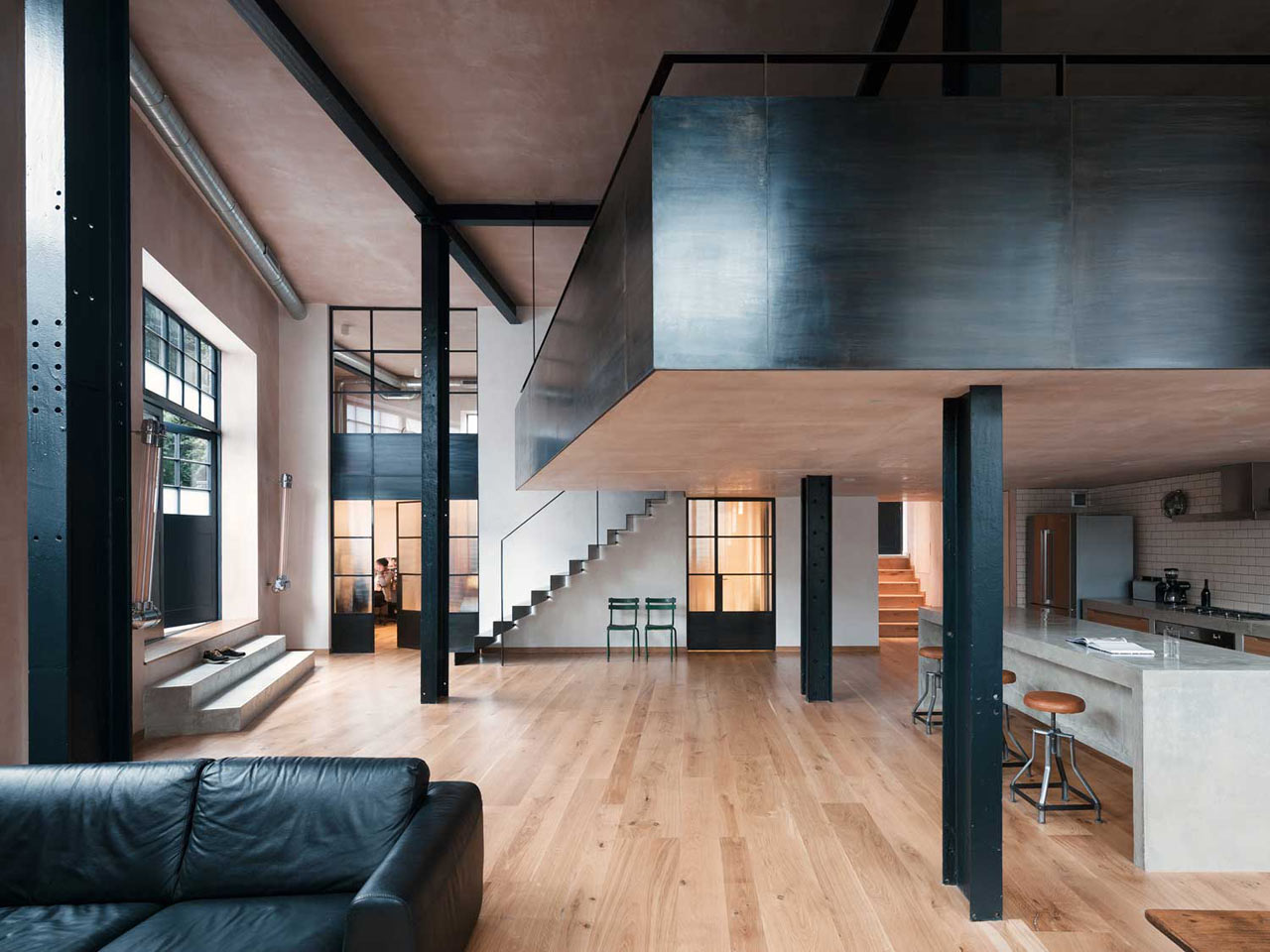
A key material choice in the renovation is black dyed MDF, which f+f architectes used extensively throughout the apartment. This material is integrated into various architectural elements, such as storage units and wall coverings, as well as custom-designed furniture, including the dining table. The selection of black dyed MDF is notable for its consistent color throughout its mass, which makes it less susceptible to visible chipping compared to stained or lacquered wood, ensuring durability and maintaining its aesthetic appeal. This material was also utilized for the stairs, creating a cohesive design language.
To provide a visual contrast to the dark MDF, the stair banister is constructed from clear, laminated glass. This design choice contributes to the apartment's light and open feel, allowing natural light to penetrate through the structure while providing safety. The original pinewood flooring of the building was retained and updated. It was treated with lye, a substance that helps preserve the wood's natural light shade and prevents it from yellowing over time, ensuring the historical character of the flooring is maintained while integrating with the contemporary design elements.
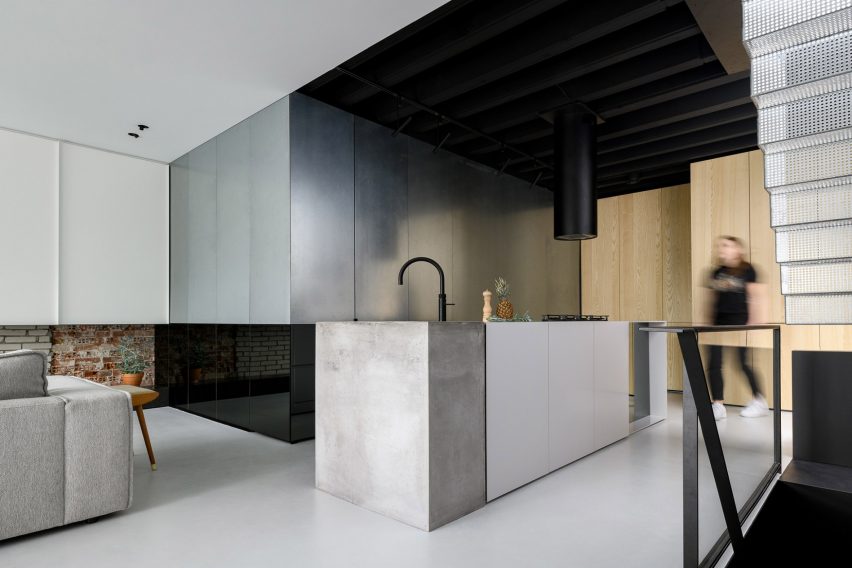
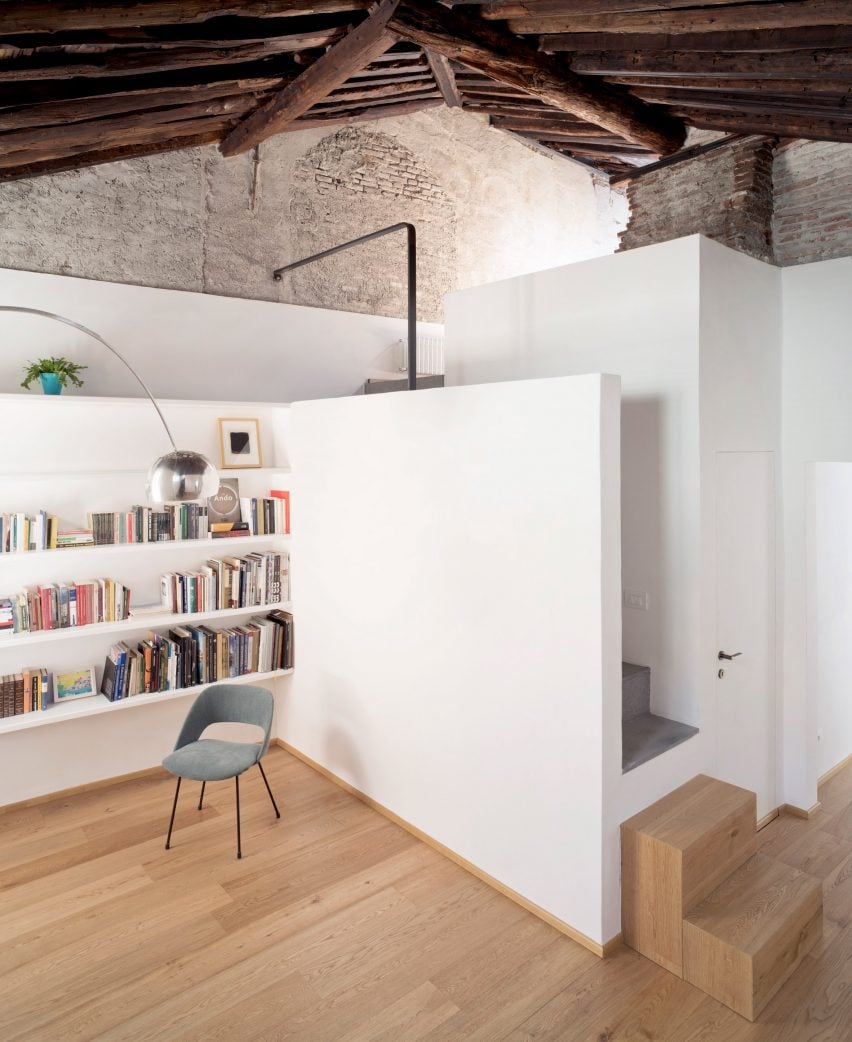
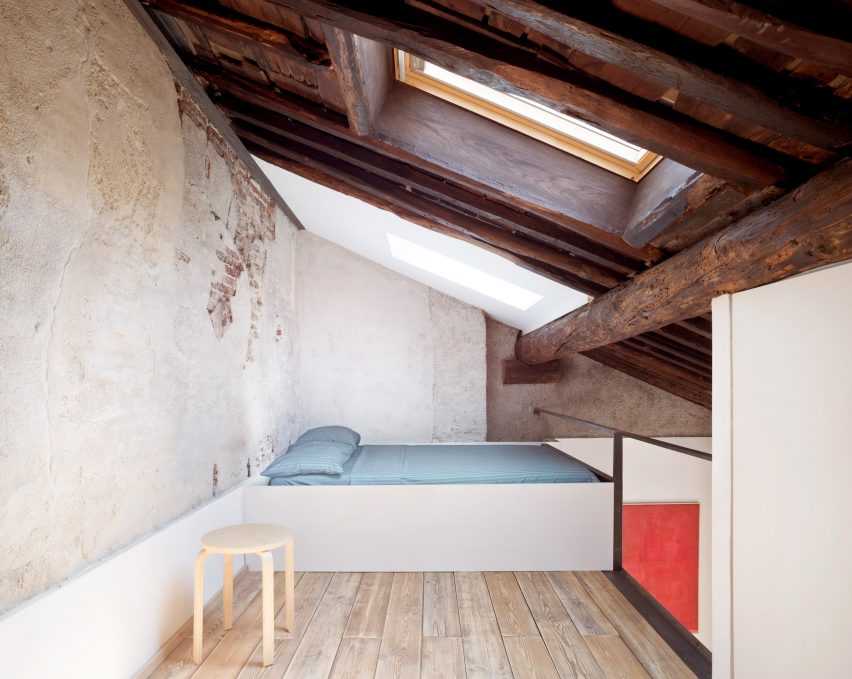
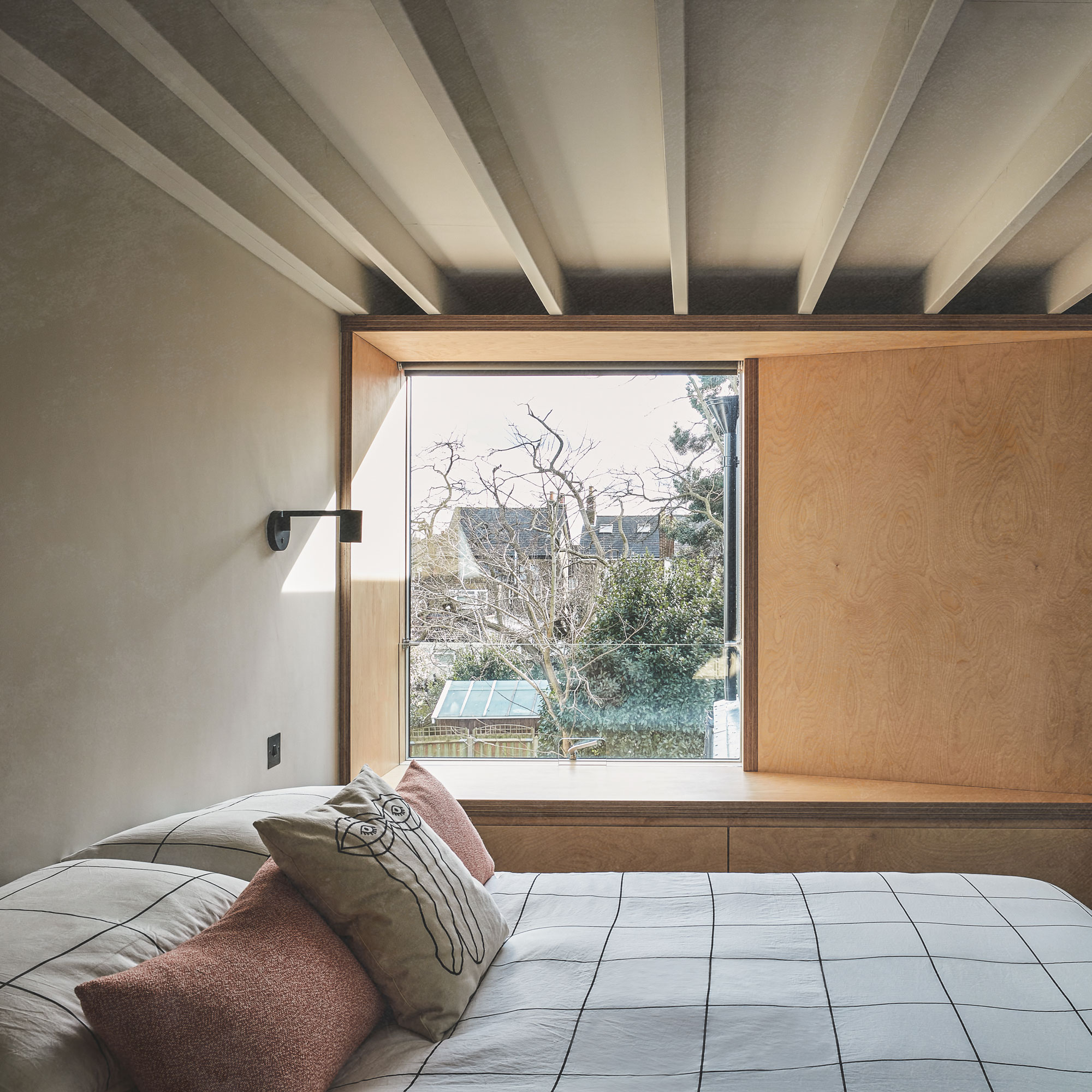
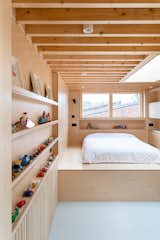
The structural elements of the attic, specifically the trusses, were left exposed, adding an industrial and raw aesthetic to the interior. Additionally, new metal I-beams were incorporated to open up the lower-floor plan and to support the terrace structure. Modifications were made to the roof's truss work to accommodate the new terrace and a new opening was created in the top floor for the stairs, demonstrating a careful balance between preserving existing structures and implementing necessary alterations for the new layout. The kitchen features a marble ceramic island, complementing the natural wood and black MDF, and is situated beneath the original beams. The bathrooms maintain the minimalist design with black MDF cupboards and marble wall and floor tiles, continuing the refined material palette.
Two terraces, one of which is carved into the roof, are accessible from the upper floor and offer views of the surrounding park. The architects noted the asymmetrical pitch of the roof, which is steeper towards the street, likely to give the building a more imposing facade facing a large square. This project exemplifies how historic attic spaces can be transformed into functional, bright, and aesthetically cohesive modern apartments while respecting and highlighting the building's original features.
#Lofts #Interiors #ResidentialArchitecture #Apartments #France #Strasbourg #AtticConversion #Lofts #Interiors #ResidentialArchitecture #Apartments #France #Strasbourg #AtticConversion
0 comment in total
 No comments yet
You may also like
Eight airy and pared-back loft conversions
Casa Flix: A Drab Attic in Madrid Undergoes Colorful Renovation
This Half-Height Expansion for a Growing Family in London Is a Real Brainteaser

Amazing Home Renovation Transforms a Dusty Attic Into a Lavish Walk-In Closet

A clever attic conversion resulted in two incredible kid’s bedrooms

Van Staeyen Interieur Architecten refreshes Antwerp attic with pops of yellow
Room to grow: Finding ways to add space to your home without a major remodel

Seven double-height living rooms with a sense of high drama
Ten loft conversions by architects that maximise usable space
How to ace up your attic conversion and make the most of every cranny
Fala Atelier guts Lisbon apartment to create bright open-plan home
Before & After: Interior designer turns dilapidated loft into a dreamy dressing room and home office

Here's how to turn your attic into a "wow" walk-in closet!
an open-plan master bedroom loft conversion

A Building in Venice Becomes a Converted Loft by Alexander Design
10 Modern Lofts We’d Love to Call Home
Before & after: An unused attic converted into an airy bedroom sanctuary
'We built a smart new loft conversion for more space'
5 Things That Will Make Your Loft Conversion Feel Dated — And What Designers Are Doing Instead

Changing it up: An attic bath renovation leads to more functionality with ample style