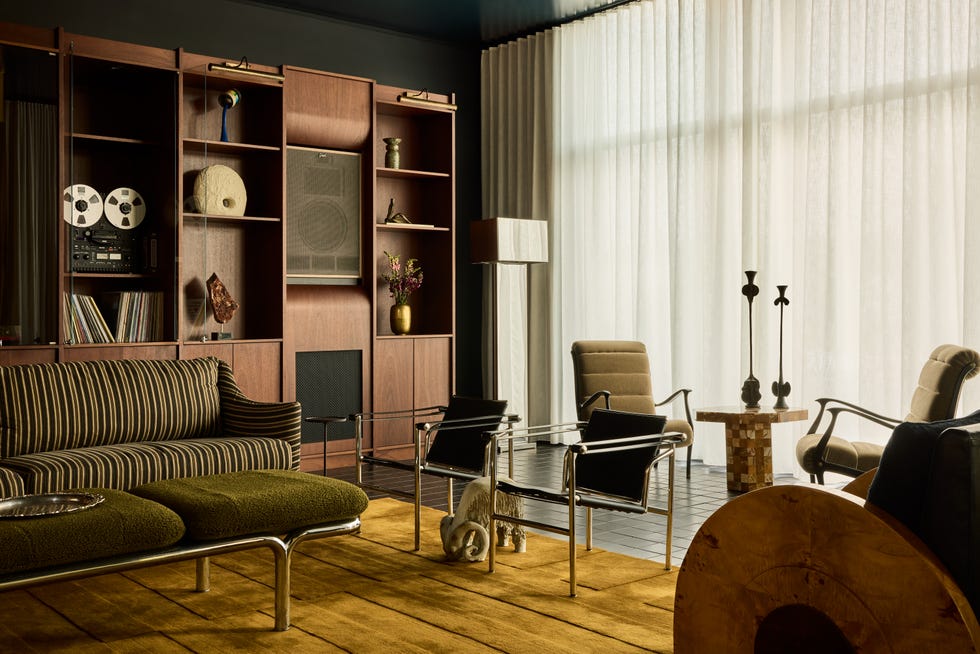
1/8
How the sound in your home affects your mood
The acoustic properties of built environments, from homes to public spaces, significantly impact human comfort, mood, and behavior. This concept, termed "aural architecture" by Barry Blesser, suggests that even without conscious attention, our ears constantly process information about our surroundings, influencing our feelings towards a space. For example, the resonant acoustics of Penn Station might evoke claustrophobia, while the quiet dignity of the National Gallery of Art can inspire calmness.
Acoustic engineers, such as Trevor Cox of the University of Salford, emphasize the profound effect of how buildings sound on human experience. Even in an empty room, the acoustics can convey details about its physical characteristics, like ceiling height or the presence of carpets, by how sound reflects. This unconscious perception of sound shapes our interaction with spaces, highlighting the need for buildings to be acoustically satisfying, not just functional or aesthetically pleasing. Research supports this, linking noisy environments to annoyance, depression, anxiety, reduced concentration, and impaired performance.
Beyond simple noise, the interaction of sound with a building's structure can deeply alter emotions. Crowded housing has been associated with feelings of helplessness, while rooms with high ceilings can foster abstract thought, as their spaciousness contributes to a sense of freedom. Historically, structures like the Hagia Sophia, built nearly 1,500 years ago, exemplify this. Its unique acoustics transform human chants into ethereal sounds, creating feelings of exaltation and spiritual connection, demonstrating how architecture can "conjure up the divine" as noted by medieval art expert Bissera Pentcheva.
While acoustic design is standard for concert halls, the idea of a building as a musical instrument, shaping human emotions, is less common but not unprecedented. The "Oracle room" in Malta's Ħal Saflieni Hypogeum, a 5,000-year-old underground temple, resonates profoundly at 110Hz, reducing activity in language centers and increasing activity in emotional areas of the brain. This suggests that specific acoustic tunings can profoundly affect consciousness. Architect Shea Michael Trahan explores this by using cymatics and 3D printing to design structures that resonate with specific musical tones, envisioning immersive sonic therapy rooms for conditions like PTSD, depression, and Parkinson’s, or even spaces for vocalists to hone their skills.
Architects like Michael Fowler of the Technical University of Berlin are also investigating exemplary sound spaces, including Japanese gardens with hidden water features, to develop algorithms that capture ideal acoustic relationships for architectural design. This could allow architects to create spaces with specific sonic characteristics, regardless of their material or form. In urban environments, where noise pollution is rampant, new technologies are being explored. Vibrating façades could use active noise cancellation to mitigate external sounds, effectively silencing airport noise for nearby residents. Alternatively, noise transformation installations, like Jordan Lacey's project in Melbourne, can blend traffic sounds with music, creating engaging soundscapes that encourage residents to interact with their environment rather than retreat from it.
Karen Van Lengen's conceptual MIX house features "sonic dishes" as windows, allowing homeowners to capture and mix ambient neighborhood sounds into personalized musical compositions. These innovations suggest a future where urban soundscapes are not merely tolerated but designed to enhance human experience. The integration of "auralisations"—acoustic modeling software that simulates how designs will sound—allows architects to make informed decisions and prevent sound transfer, optimizing acoustic responses. This technology enables the creation of unique spaces like Hamburg’s Elbphilharmonie concert hall, with its algorithm-designed acoustic panels. Moreover, auralisations are crucial for preserving acoustic heritage and restoring historical structures, where material choices significantly influence sound.
Despite these advancements, widespread adoption of acoustic considerations in general architecture remains limited, often constrained by minimum benchmarks rather than holistic design. However, envisioning sound as a malleable material, as suggested by Fowler, could unlock transformative possibilities for how we construct our auditory environments, enriching our overall experience of the built world.
#AuralArchitecture #AcousticDesign #MoodInfluence #BuildingAcoustics #SensoryEnvironment #ArchitecturalPsychology #UrbanSoundscapes #SonicTherapy #ArchitecturalInnovation #AuralArchitecture #AcousticDesign #MoodInfluence #BuildingAcoustics #SensoryEnvironment #ArchitecturalPsychology #UrbanSoundscapes #SonicTherapy #ArchitecturalInnovation
0 komentarzy łącznie
 Brak komentarzy jeszcze
Możesz również polubić
How paint colour in your home can affect your mood
From clutter-free zen to cosy comfort: The mental health benefits of home decor | Hindustan Times


Eight acoustic items that help to quieten down lively interiors

The art of making a room soundproof: woman turns pictures and canvases into sound-absorbing decor
9 expert tips for soundproofing a room – how to sort acoustics while losing nothing of the aesthetics

How Feng Shui Impacts Your Wellbeing At Home
Can a Bad Floor Plan Affect Your Mental Health?


Our Homes Have A Lot To Do With Mental Health — This Architect Is Sharing Ways To Make Yours Less Stressful


Psychologists Reveal the MAJOR Impact of Home Renovations on Your Mental Health

Soundproofing, proper acoustic treatment vital for a home

No, room correction software cannot fix a room’s reverb problem


The environment in which we live and our mental health are intricately connected


How to Soundproof a Room (Published 2021)

If Your Home Is Super Noisy, You’ll Appreciate These 24 Noise-Dampening Products
Six acoustic products that control noise levels in busy interiors
Room Within a Room: Acoustic Spaces That Adapt to Contemporary Needs

How to soundproof a room according to an expert

How do I make my kitchen quieter? The tricks designers use to stop noise ruining an open-plan home

Sound-Absorbing Panels: The New Domestic Landscapes Inhabited by Sound

Valentino’s L’Atelier Sonore and the Art of the Listening Room