1/12
Exploring the use of generative AI for material texturing in 3D interior design spaces
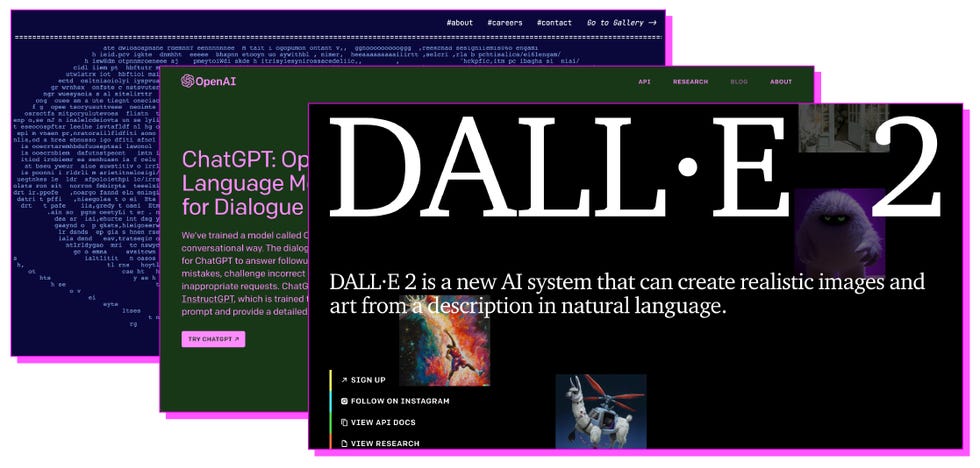
Material selection is a critical yet complex aspect of interior design, requiring designers to consider aesthetics, durability, sustainability, and cost. Technical constraints, if discovered late in the design process, can lead to costly changes. To address this, a study explores the integration of generative AI tools, specifically ChatGPT and DALLE-2, into the conceptualization stage of interior design to aid in 3D texturing and material selection.
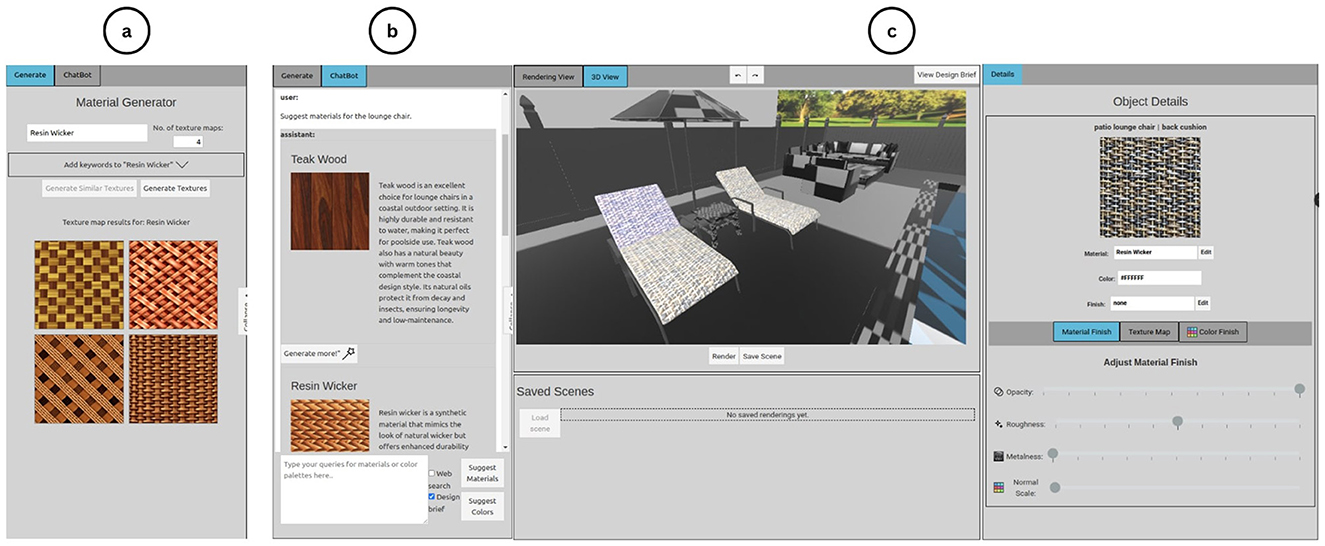
The research involved developing a prototype web application that mimics common 3D modeling software interfaces. This prototype uses DALLE-2 to generate texture maps from text prompts and ChatGPT to provide contextual material and color suggestions. The system does not use fine-tuned models but relies on prompt engineering to leverage the capabilities of these large-scale generative AI models. The Material Generator module allows designers to input material names to create various texture maps, including variations and keyword-based refinements. The Suggestion Chatbot offers material and color palette suggestions based on user queries, incorporating details on properties and reasons for suggestion. It can also integrate web search results for current trends and consider a design brief for contextual relevance.
An exploratory user study was conducted with 11 participants (six professional designers and five interior design students) who were tasked with texturing an untextured outdoor patio according to a design brief. The choice of an outdoor patio highlighted the need for careful material selection due to environmental considerations. The study aimed to assess how generative AI benefits designers in texturing and material selection and to understand their interaction patterns with these tools. Task load was measured using the NASA Task Load Index (NASA-TLX), and creativity support was assessed with the Creativity Support Index (CSI).
The results indicated a moderate task load, with an average NASA-TLX score of 47.26 out of 100. Professionals experienced higher mental demand, while students reported higher frustration. Participants generally found the system provided moderately high creativity support, with an average CSI score of 72.82 out of 100. High scores were noted for enjoyment and exploration, suggesting that the system effectively helped designers discover different materials and textures. However, expressiveness and immersion scores were moderate, indicating room for improvement in aligning the tools with designers' intuitive expression and enhancing user engagement.
Qualitative feedback revealed several benefits: designers found it easy to search for specific textures and materials, saving time compared to traditional search methods. The contextual suggestions from the chatbot, especially when integrated with the design brief, were deemed accurate and helpful. Informative material descriptions aided ideation, particularly for students. Designers also appreciated the ability to explore an infinite array of texture maps and material options, overcoming limitations of predefined material libraries.
Challenges included the system's slow response time, which impacted workflow and user satisfaction, and the lack of essential 3D features (like adjusting objects and lighting) due to the prototype's standalone nature. Concerns about the chatbot's credibility and its knowledge cutoff for current trends were also raised. Some designers struggled with using text-based input for visual tasks, preferring image-based selection. Mismatches between suggested material descriptions and their accompanying texture maps were also noted.
Interaction patterns showed two primary approaches: some designers heavily used the Material Generator for exploration, experimentation, and refinement through keywords, often involving a trial-and-error process. Others adopted an assisted creativity approach, frequently consulting the Suggestion Chatbot for suitable materials and colors, then using the Material Generator to explore texture variations. Designers also considered lighting and color themes, frequently rendering scenes to visualize material appearance under different lighting conditions. The study concludes with suggestions for future improvements, including fine-tuning AI models with domain-specific datasets, enhancing usability, and expanding the scope to include other design elements like furnishings and lighting setups.
#GenerativeAI #HumanAICocreation #MaterialSelection #3DTexturing #InteriorDesign #DALLE2 #ChatGPT #DesignWorkflow #CreativitySupport #GenerativeAI #HumanAICocreation #MaterialSelection #3DTexturing #InteriorDesign #DALLE2 #ChatGPT #DesignWorkflow #CreativitySupport
Hay 0 comentarios en total
 Aún no hay comentarios
También te puede gustar
10 free AI interior design generators

How AI-Powered Rendering Crushes Bottlenecks in Architecture and Interior Design

10 AI tools to generate interior and architectural images
Interiors | A tale through textures

Top 16 AI Tools for Interior Design
Will Artificial Intelligence Replace Designers?
Freepik AI Interior Design Tools review: visualizations
edg Reveals 3-D Printed Cast Concrete Collection
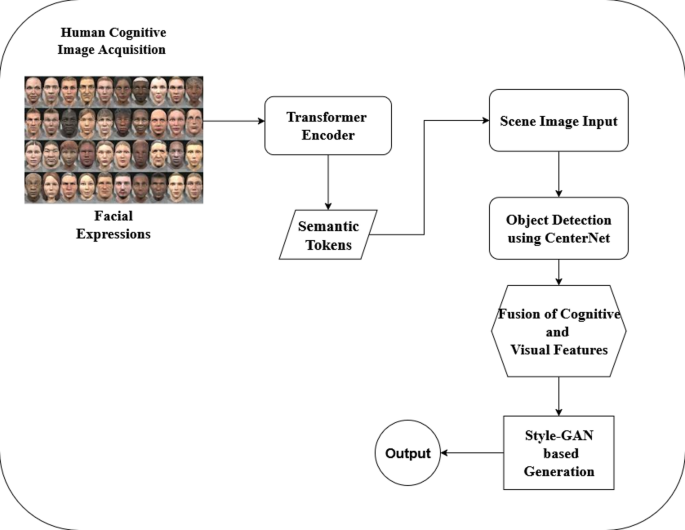
Enhancing interior design and space planning via human–machine intelligent interaction for artistic cognition
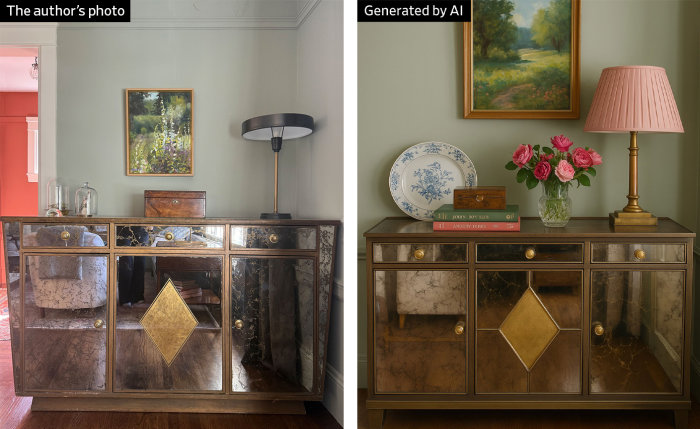
Can AI Save Me the Cost of an Interior Designer?

Aztec Scenic Design Creates Custom 3D Printed Arabian-Inspired Ceiling and it’s Amazing!

Nine creatives designing dreamy renderings

Jessica Shaw creates ‘beautiful tension’ with her mix of fringed fabric, metallic meshes and plaster wallcoverings

3D stencilling is trending on TikTok and Instagram
3DVIA

Is your home feeling lifeless? 5 layering hacks to make the interiors warm and inviting | Hindustan Times

I Used AI Interior Designers to Reimagine My Boring Basement

The Power of Texture in Interior Design – 6 Ways Designers Use It to Shape the Look (and Feel) of Every Room

How to layer materials and add texture to your home decor

3D-printed relief art: Michelle Larsen sees a trend reversal in interior design