1/13
Rubble Stone Masonry Buildings with Cement Mortar: Base Shear Seismic Demand Comparison for Selected Countries Worldwide
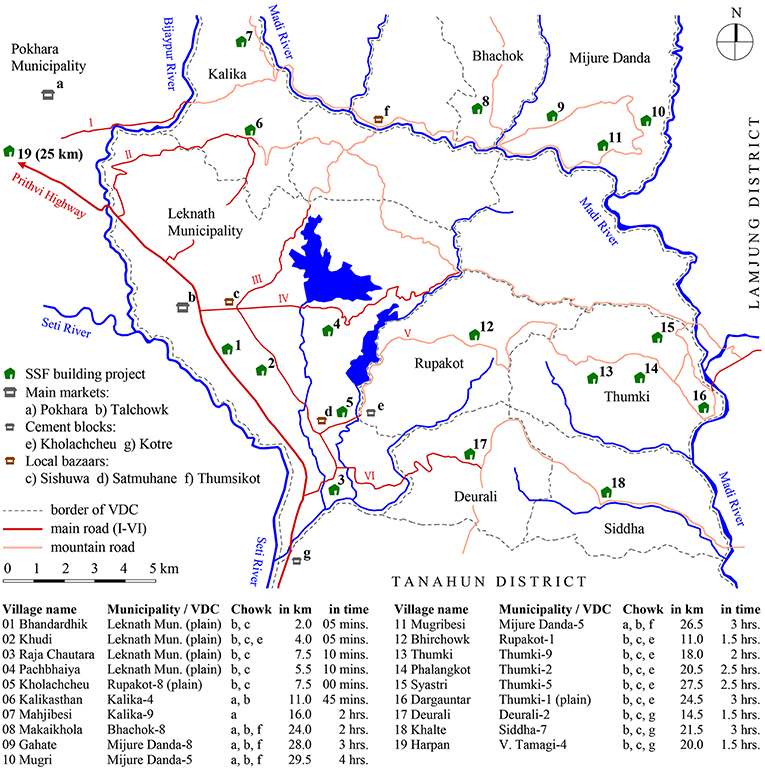
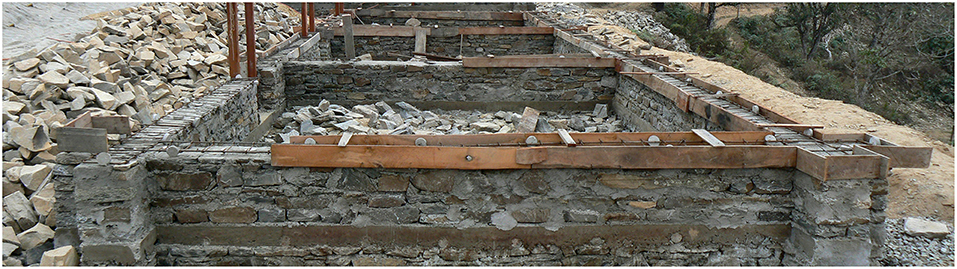
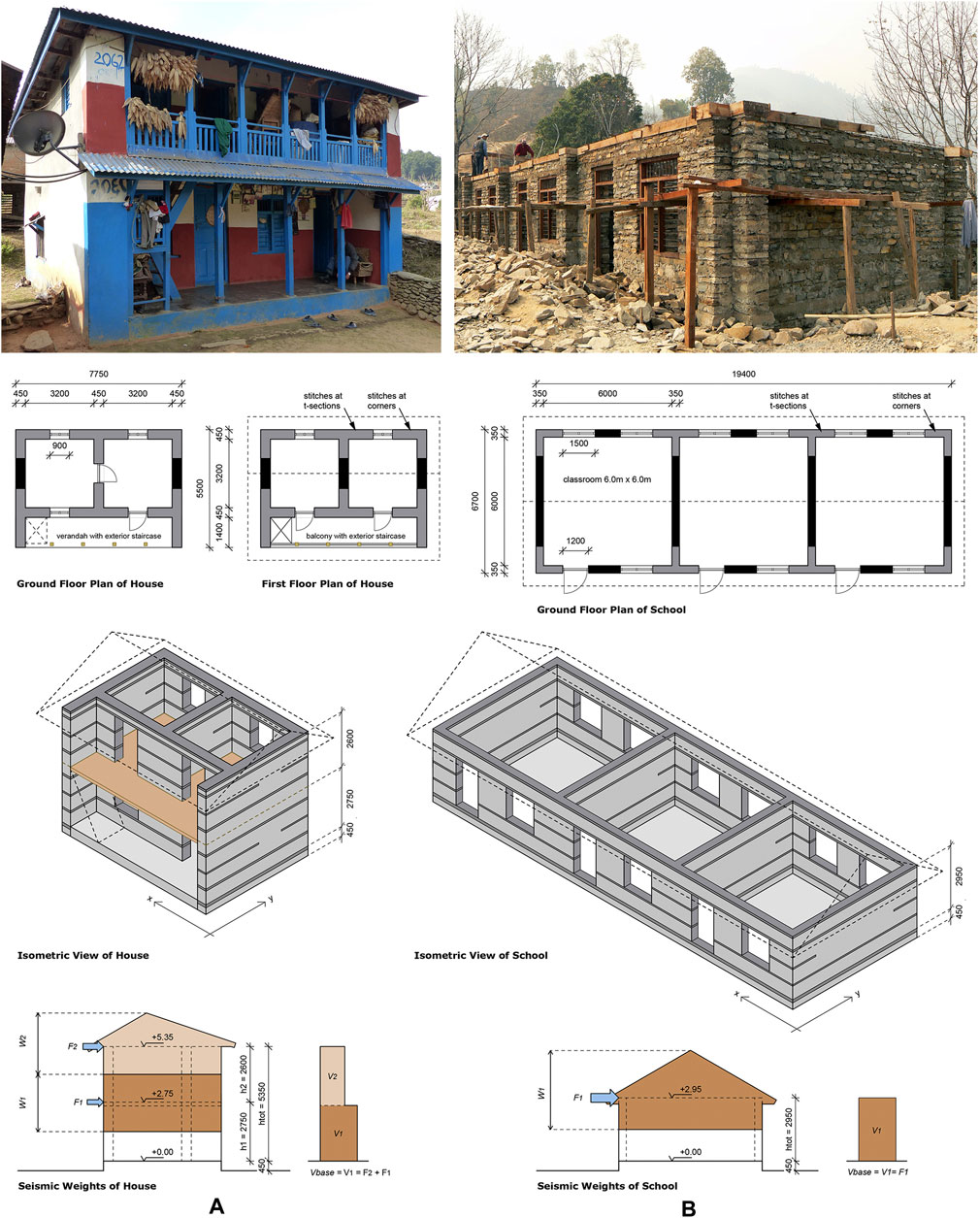
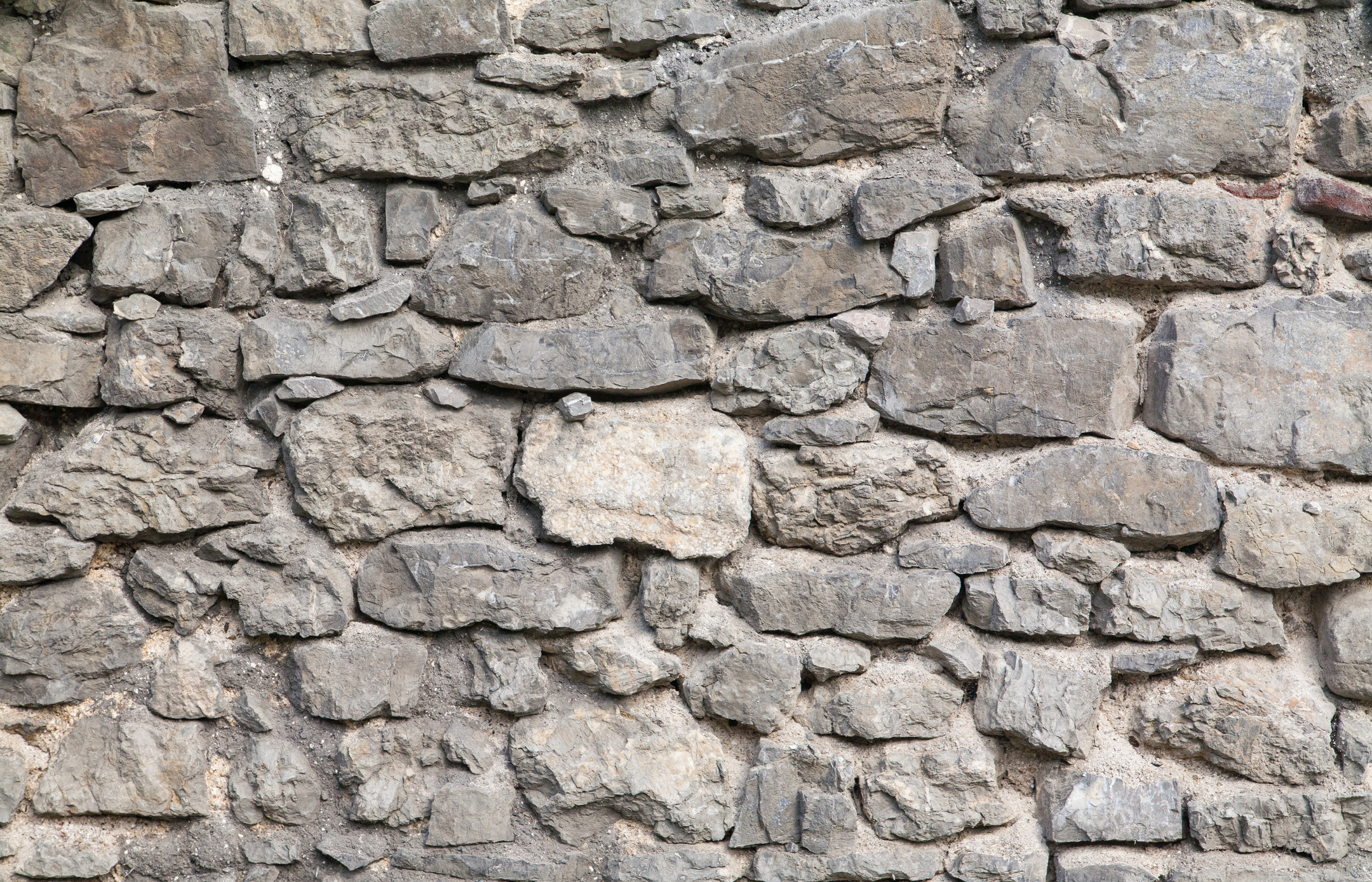
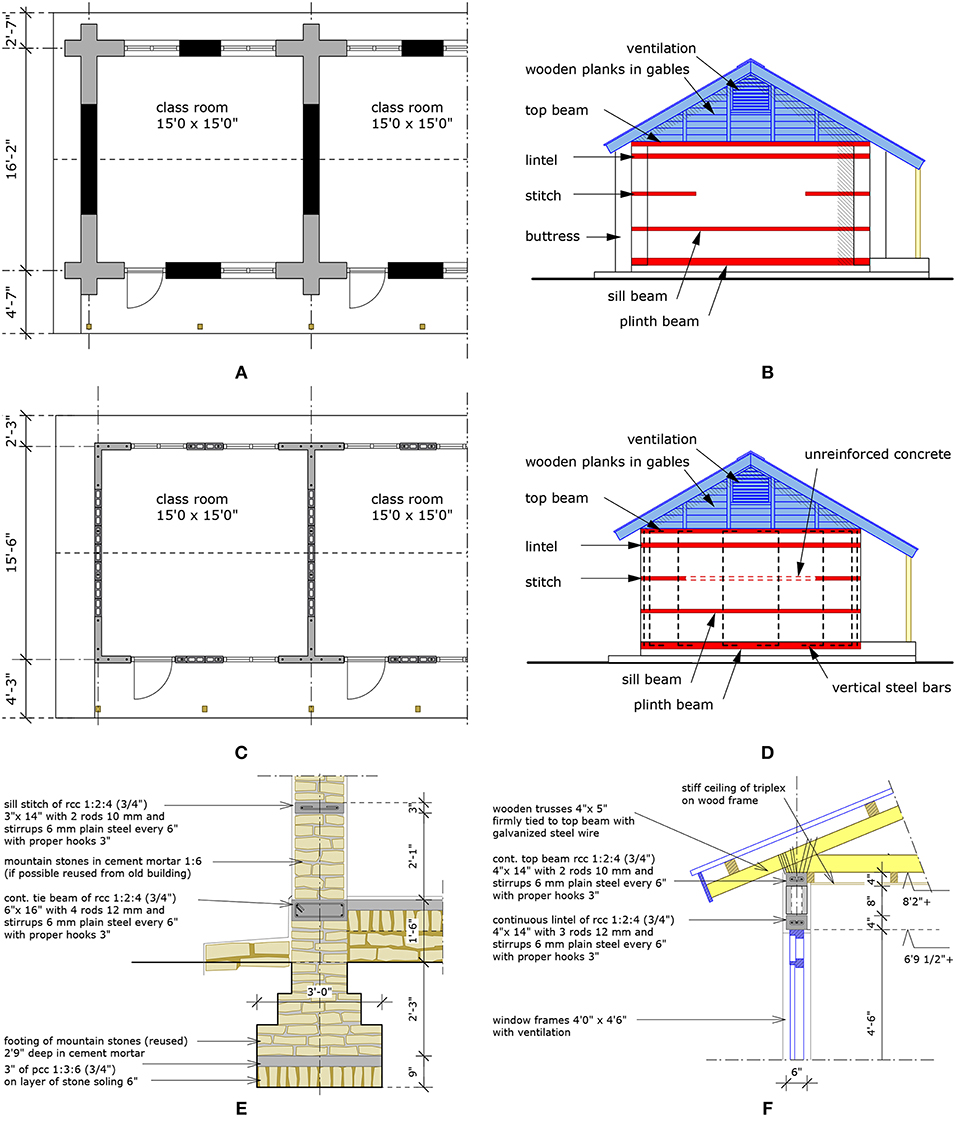
This study addresses the lack of comprehensive analyses and calculated examples for base shear seismic demand in heavy stone masonry buildings by examining nominally reinforced rubble stone masonry house and school designs commonly found in Nepal. The research applies seismic codes from countries where this construction technique is permitted (Nepal, India, China, Tajikistan, Iran, Croatia) or could be reintroduced (Pakistan, Afghanistan, Turkey). The initial phase of the study compares base shear formulas, inertia force distributions, material densities, seismic weights, seismic zoning, natural periods of vibration, response spectra, importance factors, and seismic load combinations across these codes, revealing significant discrepancies in approaches and coefficients.
The research then calculates base shear and story shears for a design peak ground acceleration of 0.20g, along with the effects of critical load combinations on lateral-resisting elements, adhering to Equivalent Lateral Force (ELF) principles for Ultimate Limit State (ULS) verifications (10%PE50y). Pakistan's code is identified as the most lenient, Nepal's as an average, and India's and China's as the most conservative for the case study buildings. A key observation is that heavy-masonry-light-floor systems with negligible diaphragm action behave distinctly under seismic motion compared to other building typologies. The applicability of conventional ELF, S-ELF, and S-Modal methods for such heavy masonry buildings is questioned, as current codes do not offer modified approaches for these differences. Further assessment and validation are required for implications such as the exclusion of plinth masonry and large portions of seismic weight, necessitating potentially more sophisticated concepts like the equivalent frame method or distributed mass system.
Considering Nepal's allowance of stone masonry in higher seismic hazard areas (>0.40g), in contrast to India (<0.12g) and China (<0.15g), Nepal's code serves as the reference for subsequent research aimed at verifying seismic demand through capacity checks of masonry piers and spandrels. The article highlights that these buildings, with heavy stiff walls and light flexible diaphragms, derive almost all their lateral-force-generating mass from the walls (approximately 97.5% versus 2.5% for diaphragms, including live loads). The choice of stone type significantly influences inertia forces, and current codes may underestimate base shear by excluding lower wall sections and lumping seismic weights at floor levels. Empirical formulas for the fundamental period (T1) can also lead to overestimation of maximum base shear in short-period buildings.
The structural behavior factor, typically 2.0 for nominally reinforced stone masonry with cement mortar, is crucial, with values like Pakistan's R=4.5 potentially leading to underestimation. While many countries accept simplified analytical methods for regular structures, India's requirement for dynamic analysis at lower seismic levels seems inconsistent with non-engineered seismic design principles. Significant variations in seismic hazard levels and PGA values exist across the selected countries, with India and Tajikistan showing relatively low design accelerations not based on probabilistic approaches. Despite variations in coefficients, the resulting base shear for houses is similar across Nepal, India, Afghanistan (ELF), Iran, Turkey, and Croatia, with Nepal representing the average. Pakistan is the most tolerant, and China the most conservative in terms of base shear. When load combinations are applied, India's seismic demands become comparable to China's due to a high load combination factor. The study emphasizes the need for modified design approaches and rigorous validation of parameters specific to nominally reinforced stone masonry, advocating for global collaboration through initiatives like SMARTnet to improve seismic resilience in such structures globally.
#RubbleStoneMasonry #SeismicDemand #SeismicCodes #BaseShear #LoadCombinations #EarthquakeEngineering #StructuralBehavior #BuildingDesign #HimalayanRegion #RubbleStoneMasonry #SeismicDemand #SeismicCodes #BaseShear #LoadCombinations #EarthquakeEngineering #StructuralBehavior #BuildingDesign #HimalayanRegion
0 comment in total
 No comments yet
You may also like
Rubble Stone Masonry Buildings With Cement Mortar: Design Specifications in Seismic and Masonry Codes Worldwide
Enhancement of Himalayan irregular stone masonry buildings for resilient seismic design
Tensile strain-hardening cementitious composites and its practical exploration without reinforcement: A review
Bash & Co. Sotheby’s International Realty: Stone foundations and flooding – what to do!

Cost Analysis of Mountain Schools in Nepal: Comparison of Earthquake Resistant Features in Rubble Stone Masonry vs. Concrete Block Masonry
Taking the floor
Timber-concrete composite floor systems for tall buildings

Acme Brick, Tile and Stone – Northwest Arkansas
School Buildings in Rubble Stone Masonry With Cement Mortar in Seismic Areas: Literature Review of Seismic Codes, Technical Norms and Practical Manuals
Designing brick veneer for loadbearing exterior walls

Masonry reinvented: One brick at a time

Acme Brick, Tile and Stone – Abilene
Coupling URM walls with RC walls ‒ EESD
Seismic Performance and Strengthening of Purlin Roof Structures Using a Novel Damping-Limit Device
Critical earthquake response of elastic–plastic structures under near-fault ground motions (Part 1: Fling-step input)

Morocco earthquake: why traditional earthen architecture is not to blame for the destruction communities have endured

Seismic performances of reinforced concrete buildings with openings in unreinforced masonry infill walls: a soil–foundation–structure modelling approach
Seismic Retrofitting Concrete - Q and A with Kyle Tourje of Alpha Structural Inc.


Acme Brick, Tile and Stone – Shreveport
Confirming the Connection Detail for a Residential Footing