1/6
Placing Concrete in the ICF Foundation
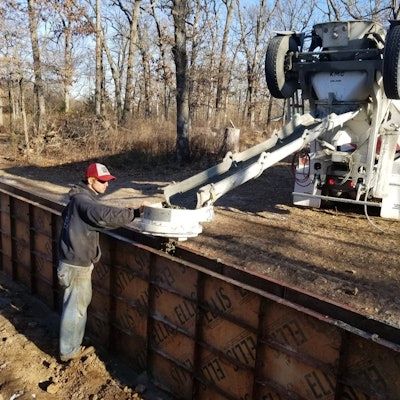
This article details the process of pouring concrete into an Insulated Concrete Form (ICF) foundation, highlighting the logistical and technical considerations for a successful foundation pour. The project was executed with the help of several individuals on a cool, cloudy day, which is ideal for concrete work. The pouring process involved a concrete pump, and specific techniques were employed to ensure the structural integrity of the ICF forms and the quality of the concrete consolidation.
The concrete was poured in three distinct passes, each filling approximately one-third of the form's height. This methodical approach was crucial to prevent excessive pressure buildup within the forms, which could lead to a 'blow-out' or structural failure. Pouring in stages also allows for easier repair if a blow-out were to occur, as the amount of concrete above the damaged section would be minimal. The concrete mix was intentionally kept stiff, avoiding the addition of water, which necessitates thorough rodding and vibrating to achieve proper consolidation. A 1x3 piece of lumber was used to rod the concrete, ensuring that successive layers mixed well with the one below it.
Simultaneously, a worker followed behind the pour with an ICF Wallbrator, also known as an Arkie Wall Banger. This specialized tool, which attaches to a drill, provides low-impact vibration to the ICFs. The vibration is essential for settling the concrete, removing air pockets, and ensuring the concrete completely fills all voids within the forms, resulting in a dense and strong foundation.
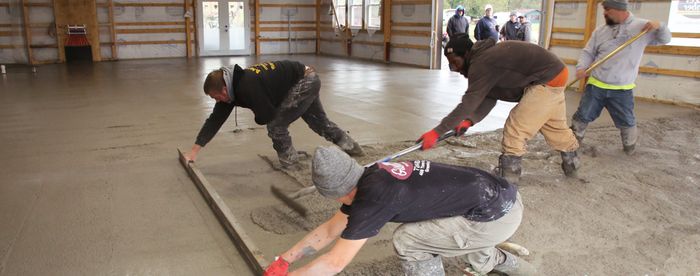
The entire process of pouring the ICF foundation walls was completed relatively quickly, taking less than two hours. Following the wall pour, the crew immediately transitioned to pouring the basement slab. Due to the concrete pump being paid for a half-day, the operator was utilized to spread the concrete for the slab between screed pipes. This significantly reduced the manual labor required for dragging and leveling the concrete for the slab. In total, approximately 38 cubic yards of concrete were placed and floated for both the foundation walls and the basement slab by five workers within about three and a half hours. The project proceeded without any blow-outs, and the absence of rain allowed for a proper finish on the slab, marking the day as successful for the construction team.
A subsequent discussion point arose regarding the ability to pour the slab on the same day as the walls. The explanation provided clarified that for the main house foundation, external braces were used, leaving the interior clear for the slab pour. For the garage foundation, where internal bracing was utilized, the slab pour would have been handled differently or at a later time. This highlights the importance of strategic planning for brace placement in multi-stage concrete pours involving foundations and slabs.
#ICFFoundation #ConcretePour #ConstructionProcess #FoundationWalls #BuildingFoundations #ConcretePumping #ICFWallbrator #BasementSlab #ConstructionTechniques #ICFFoundation #ConcretePour #ConstructionProcess #FoundationWalls #BuildingFoundations #ConcretePumping #ICFWallbrator #BasementSlab #ConstructionTechniques
0 comment in total
 No comments yet
You may also like
Seismic Retrofitting Concrete - Q and A with Kyle Tourje of Alpha Structural Inc.

Building a Concrete Castle

The Build Up

Concrete With 3D Printed Foam Forms


The Sims 4: How to Add Foundations
Built to Last: Michiana ICF Supply

Basements and Beyond

Rebuilding
Benefits of Building with ICFs

Lego-like product saving energy in construction

Going Green with ICF
How Formwork Works
The Tailgater controls the flow of concrete
Insulated Concrete Forms

Students use eggs as inspiration for inflatable concrete shelters

GFRC Offers New Design Options for Concrete Countertops
Global Insulated Concrete Form (ICF) Market Size, 2033

Confirming the Connection Detail for a Residential Footing

Concrete Events & Tradeshows for 2026
Earth Wall Builders Unite!