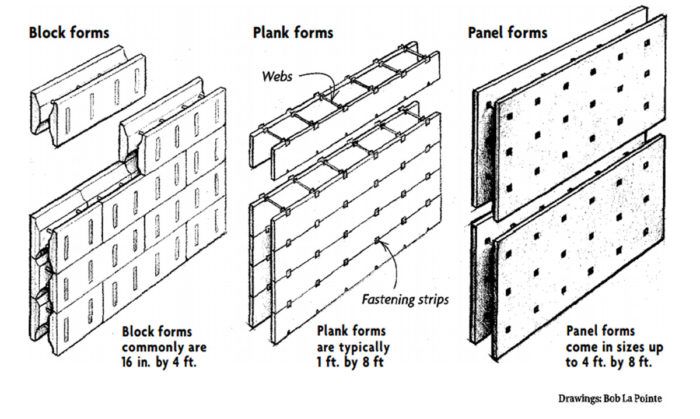
Insulated Concrete Forms
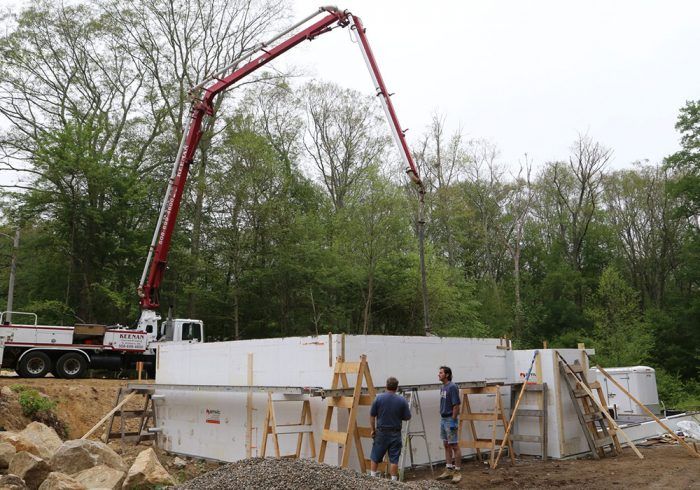
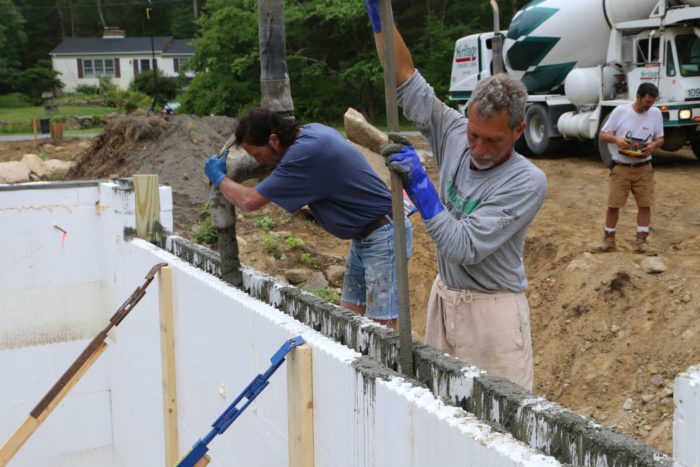
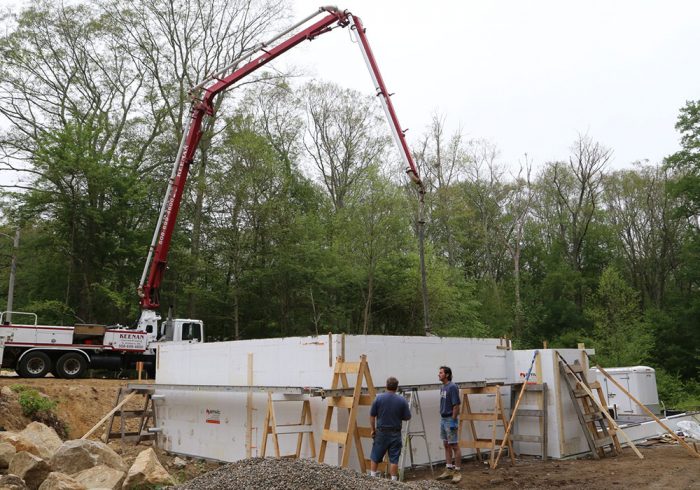
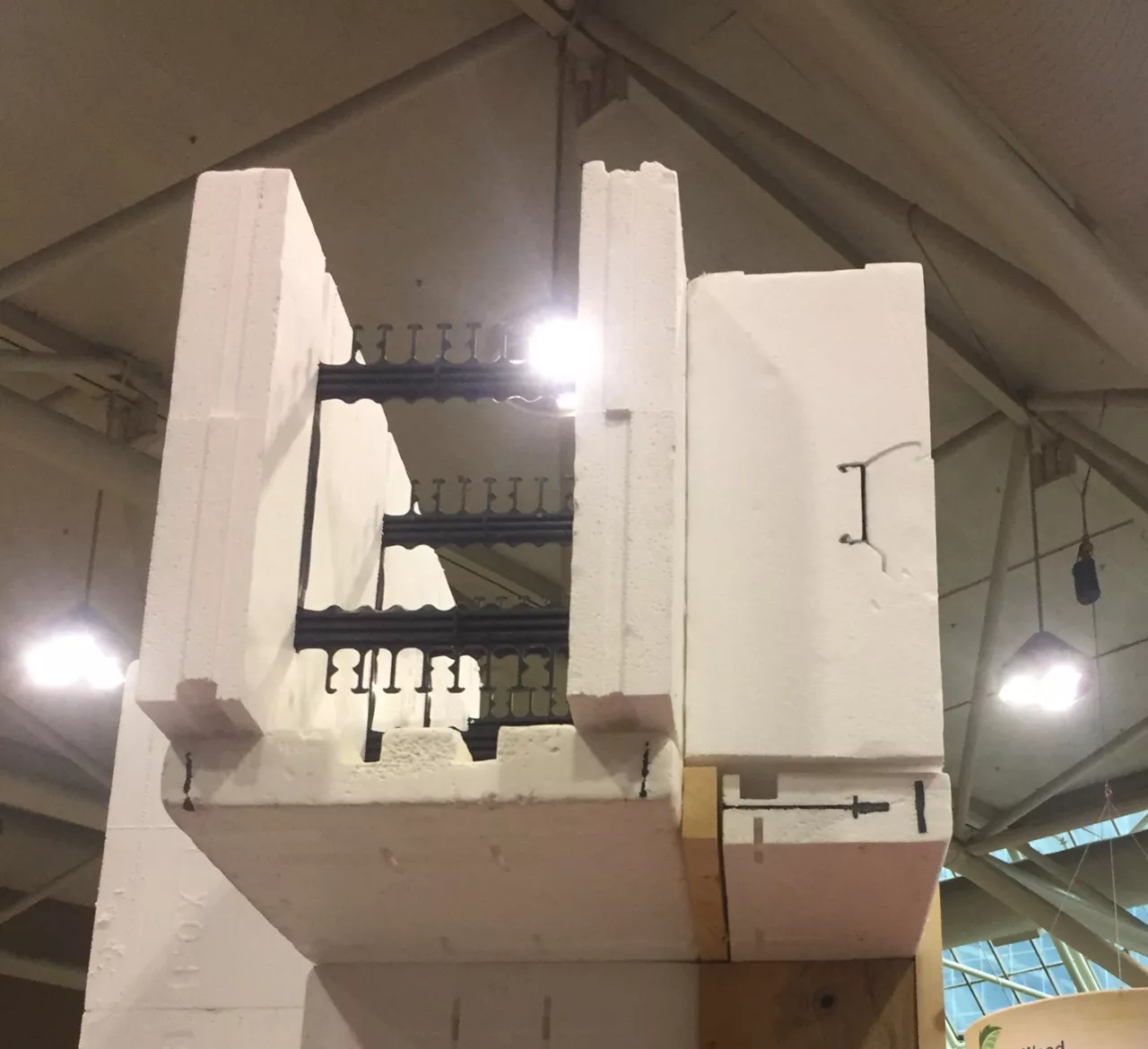
This article details the author's personal experience constructing the basement walls for his new home using Insulated Concrete Forms (ICFs). The author describes how, with the assistance of his wife and four coworkers, he successfully poured concrete into ICFs for a 28-ft. by 40-ft. basement. The process of setting up the forms, braces, and rebar took approximately two weeks of part-time effort. Despite initial anxieties regarding the structural integrity of the foam and plastic forms under the immense weight of three truckloads of wet concrete, the operation proceeded smoothly, culminating in a successful pour.
The author explains his decision to use ICFs, highlighting the key advantage of achieving an insulated basement. He notes that while hiring a professional concrete contractor might have completed the job faster and for a similar cost, it would not have provided the desired insulation. ICFs offer significant thermal benefits, with industry sources suggesting effective R-values potentially reaching 40 when considering thermal mass and air-sealing effects. Even solely from the foam, the basement walls achieved a respectable R-value of 25. This insulation contributes to enhanced energy efficiency and comfort within the home.
Another practical motivation for choosing ICFs was the scarcity of contractors during a building boom in his area. The author asserts that individuals with carpentry and concrete experience can build ICF walls with careful planning and execution, thus circumventing the challenges of securing professional help. This DIY approach offered greater control over the construction process and timing. The author expresses his satisfaction with the outcome, indicating that he would consider extending ICF construction to the entire house, up to the roof, if he were to build another home.
While the initial cost of ICF walls might be slightly higher than traditional frame construction, the article points out that this difference becomes less significant in regions prone to high wind or seismic activity. In such environments, steel-reinforced concrete structures, especially those that are well-insulated, present a sensible and robust building solution. The author, though not claiming expert status from one project, broadened his understanding by consulting with experienced ICF builders across various states, from Maine to Florida to Washington. He acknowledges the existence of over 40 ICF manufacturers, each with unique system assembly methods. However, he clarifies that the fundamental aspects of construction, such as setting windows, doors, bracing, and concrete filling, remain largely consistent across different brands. The article advises readers to consult their distributors for specific details related to particular ICF systems.
In essence, the article serves as a testament to the viability and benefits of using Insulated Concrete Forms for residential construction, particularly for basements, emphasizing their insulating properties, ease of assembly for those with relevant skills, and structural advantages in challenging environments.
#InsulatedConcreteForms #ICFConstruction #BasementWalls #HomeBuilding #EnergyEfficiency #DIYConstruction #ConcreteConstruction #BuildingMaterials #ThermalInsulation #InsulatedConcreteForms #ICFConstruction #BasementWalls #HomeBuilding #EnergyEfficiency #DIYConstruction #ConcreteConstruction #BuildingMaterials #ThermalInsulation
0 comment in total
 No comments yet
You may also like
Home insulation materials

An Easy Way To Build a Well-Insulated House
Glass-Mat Sheathing for Residential Construction
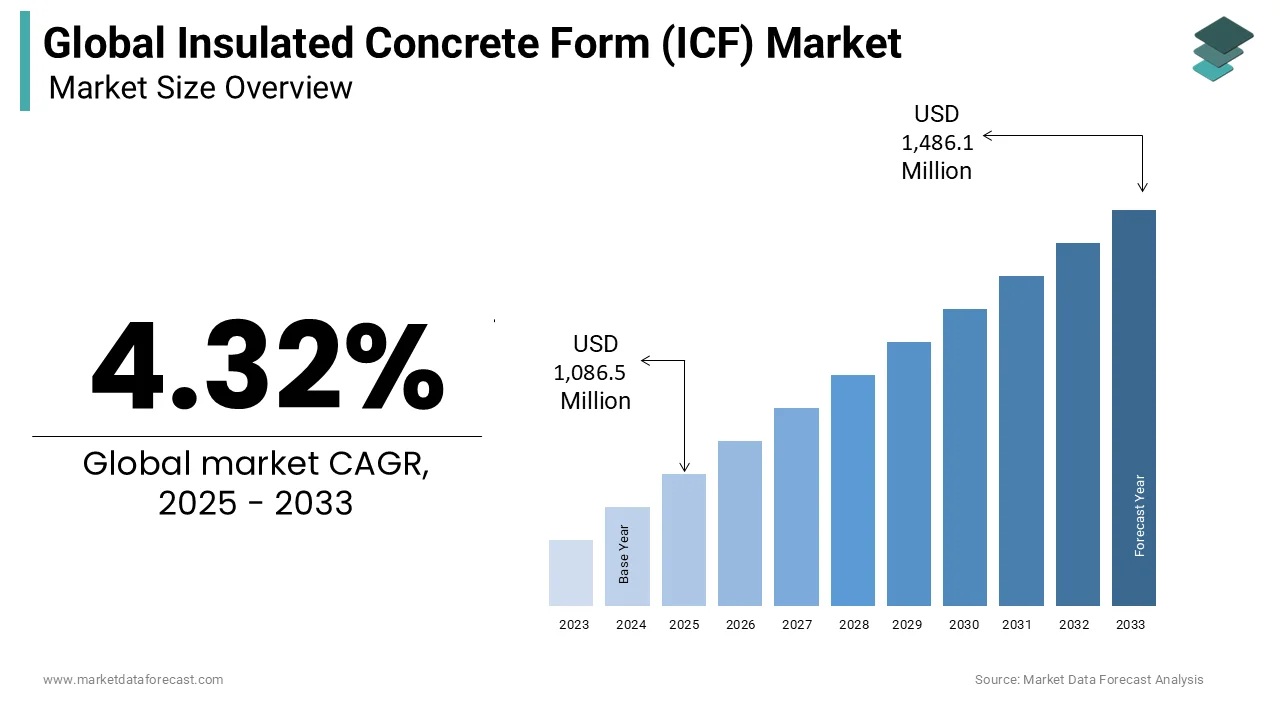
Global Insulated Concrete Form (ICF) Market Size, 2033

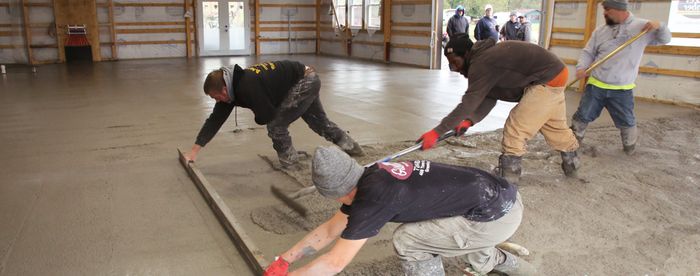
Placing Concrete in the ICF Foundation

Loft Insulation

Benefits of Building with ICFs
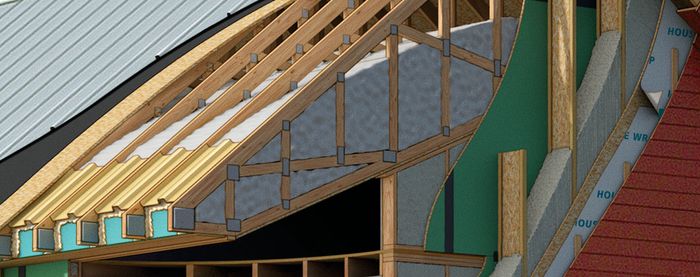
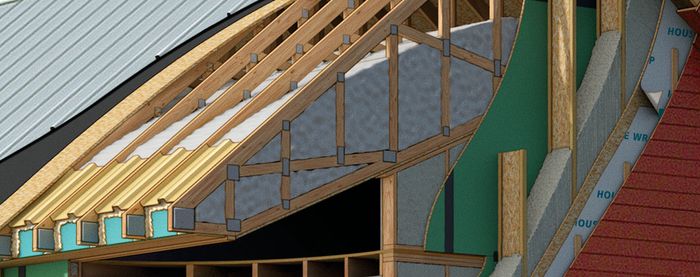
What to Consider When Choosing Insulation

The pros and cons of permanent formwork systems for single dwelling wall construction
Time for Another Look at Insulated Concrete Forms?
Weather-resistant barriers: Advanced technologies for modern construction

Avoid insulating these spots as it can cause damp and mould

Lego-like product saving energy in construction

9 basement insulation ideas

7 Concrete Alternatives

3D Printing Lightweight, Insulated Walls Using Cement-Free Mineral Foam

Building with High Thermal Mass in a Hot, Humid Climate

Sustainable Concrete Panel Construction | Spotlight on Nexii and Vero Building Systems


Material Guide: The Benefits of Building With Concrete

Basements and Beyond