1/9
Testing Reliability of Biophilic Design Matrix Within Urban Residential Playrooms
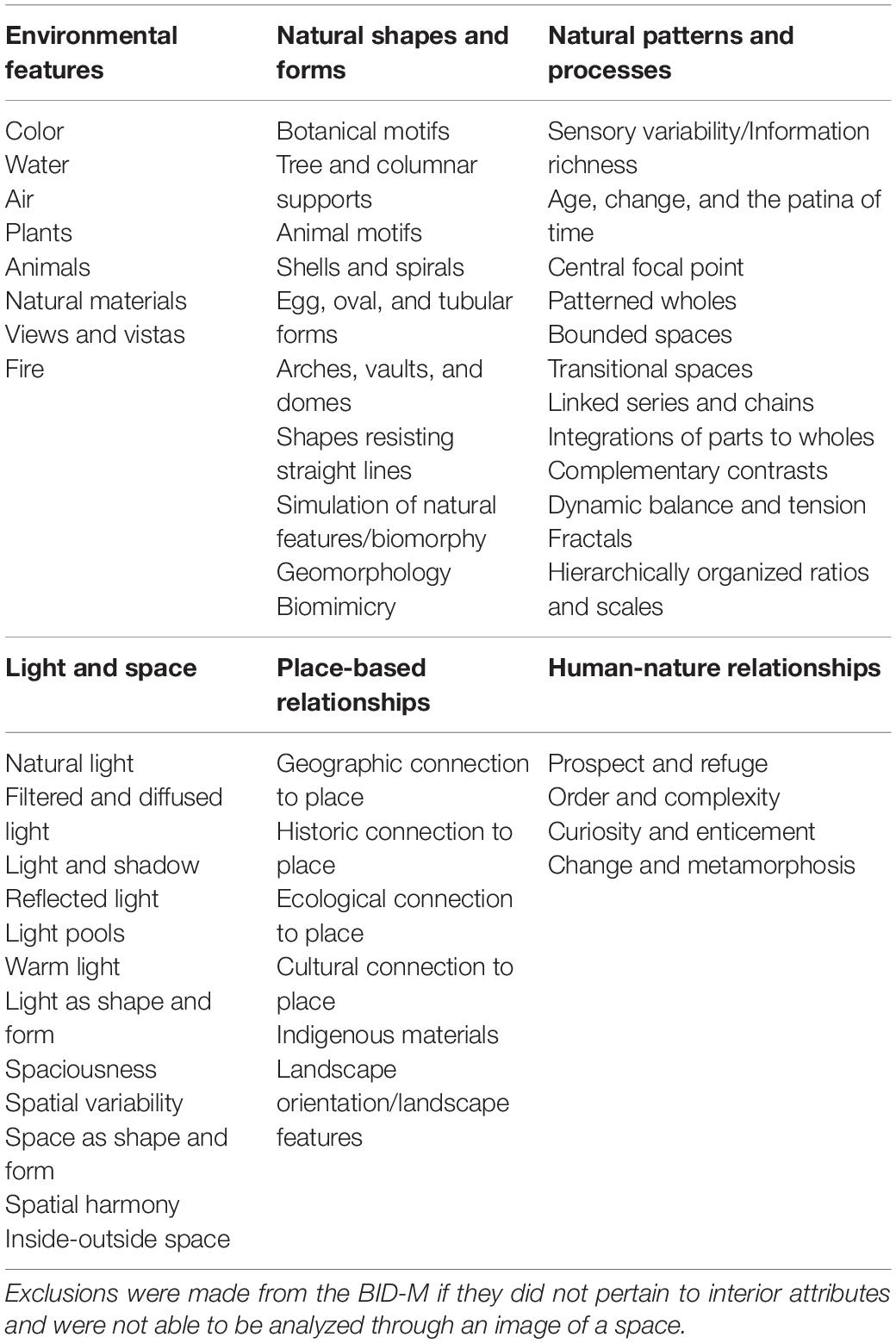
The increasing urbanization of cities has led to playtime for children becoming predominantly an indoor activity, limiting their access to natural outdoor environments. This shift highlights the need for integrating biophilic design into indoor spaces, particularly playrooms, which are often overlooked in this context. Interior designers and specialists currently lack a reliable tool to effectively identify and incorporate biophilic features into these urban indoor environments. The Biophilic Interior Design Matrix (BID-M), developed by McGee and Marshall-Baker, is a tool designed to quantify 52 of Kellert’s biophilic design attributes to assess their presence or absence in interior spaces. This study aimed to expand the utility of the BID-M by testing its reliability in a new setting: urban residential playrooms.
The research involved coding images of 45 children's playrooms located within Manhattan residential buildings in New York City. This sample size was larger than previous studies and allowed for a more robust reliability assessment. Inter-rater reliability for the overall design matrix and its individual items was evaluated using percent agreement and free-marginal multirater kappa. The overall design matrix demonstrated good reliability. However, several individual matrix items exhibited low reliability among raters, suggesting limitations in the BID-M's current form when applied to urban children's playrooms.
Many attributes within the BID-M showed low reliability, particularly those related to 'natural shapes and forms' and 'natural patterns and processes.' This could be attributed to the original BID-M not being specifically designed for urban playrooms, and a lack of clear operational definitions or visual references for how natural features translate into interior design. The study also highlighted challenges in coding visually objective attributes (e.g., air, tree and columnar supports) and subjective attributes (e.g., sensory variability, spatial harmony) from static online images, where raters without a background in interior design struggled with interpretation.
Attributes with consistently high agreement included color, water, plants, animals, natural materials, views and vistas, fire, animal motifs, age, change, and the patina of time, hierarchically organized ratios and scales, spaciousness, and prospect and refuge. Some attributes, such as living animals or fireplaces, were consistently absent in all urban playrooms, indicating their impracticality in such settings and suggesting they might be less relevant for this specific context. The concept of 'place-based relationships' also proved challenging to apply in an urban context, as existing research suggests that urban environments are inherently less biophilic and do not foster the same connection to nature as outdoor spaces.
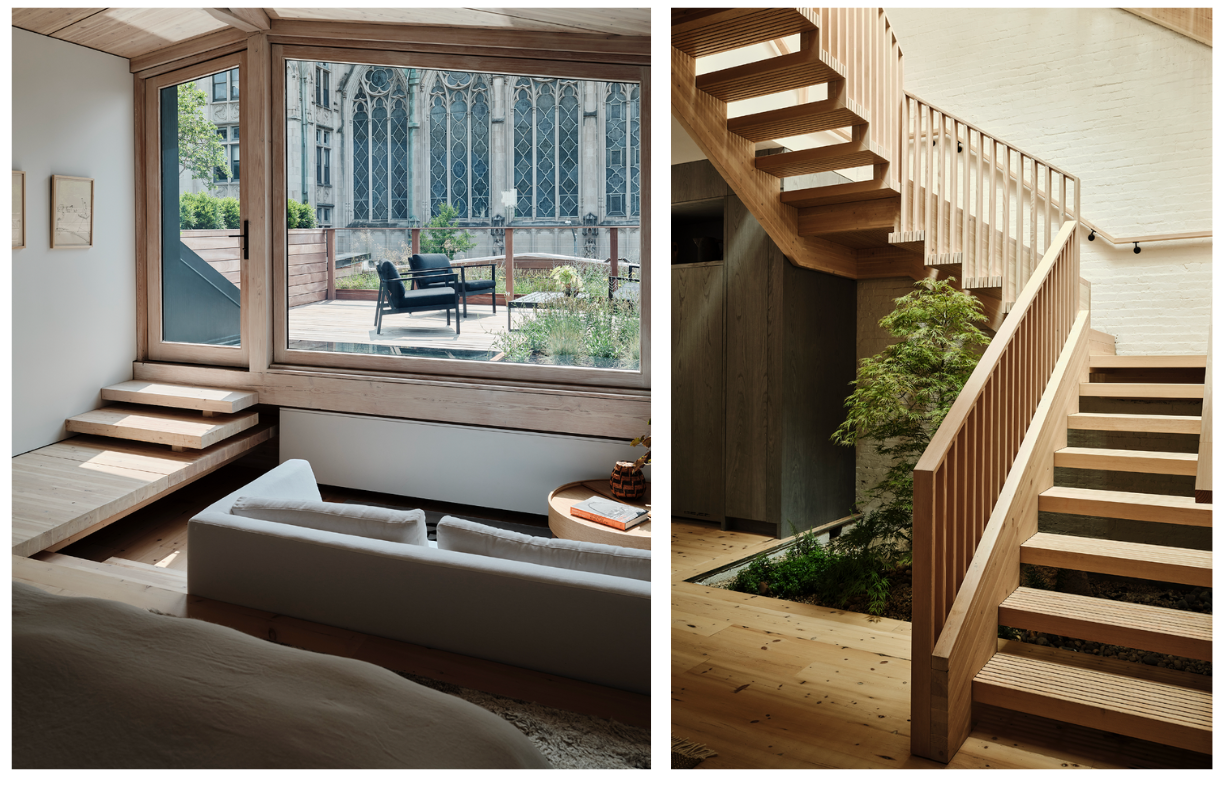
Based on these findings, a schematic model of an ideal biophilic playroom was developed, emphasizing natural light, external vegetation views, natural materials, operable windows, indoor plants, botanical and animal motifs, natural forms (circles, ovals, arches), open spaces, sensory variability, and features promoting prospect and refuge.
The study concluded that the BID-M requires modifications to enhance its applicability and reliability for urban interior spaces for children. Recommendations include clarifying ambiguous attribute definitions, providing context-specific examples, potentially removing impractical attributes for urban settings, and transitioning from a binary (presence/absence) scoring system to a Likert scale to better capture the quality and degree of biophilic elements. Future research should consider multi-sensory aspects of biophilic design beyond visual stimuli and explore different socio-cultural contexts to understand the influence of varying access to nature on biophilic design implementation in children's play spaces. These improvements would create a more usable tool for designers, parents, and caregivers to enhance children's well-being in urban environments.
#Biophilia #BiophilicDesign #BiophilicInteriorDesignMatrix #Children #NaturePlay #Playroom #UrbanDesign #EnvironmentalPsychology #Biophilia #BiophilicDesign #BiophilicInteriorDesignMatrix #Children #NaturePlay #Playroom #UrbanDesign #EnvironmentalPsychology
0 comment in total
 No comments yet
You may also like
Welcome to the Great Indoors

Designing with nature: Why Biophilic Design?

Cultivating Green Apartments: A Guide to Integrating Nature in Small Urban Spaces


Biophilic facades in sustainable building design
Bringing the Outside In: Life-Size Terrariums and Other Ways to Exhibit Nature in European Apartment Buildings
Biophilic-Inspired Design Takes Center Stage: How Bricks Bring Nature In
Reimagining Care Through Nature: The Case for Biophilic Design

Effects of gender and personality on experience of small living spaces: Ceiling height and floor plan shape in virtual environment
Biophilic Interiors: 21 Projects that Blend Architecture with Nature

Is Biophilic Design the New Paradigm?

20 Nature-Loving Homes Where Biophilia Thrives

What the heck is biophilic design?

GG-loop clads biophilic housing proposal in amsterdam with parametric timber facade
What to Expect from Interiors of the Future

Newsletter #50: 🏡 Place as medicine: How our homes can create health or disease
Water in Interior Design: 18 Projects that Include Water Fixtures in their Spaces
This Biophilic Condo Wants to Improve Your Health — By Design
Biophilic Interiors Invade These 10 Contemporary Residences

Ten modern homes with interiors informed by biophilic design

Thinking the Biophilic Way: Five Ways to Interact with Nature in Design