1/25
HiRes Concrete Slab in the Empa NEST Dübendorf
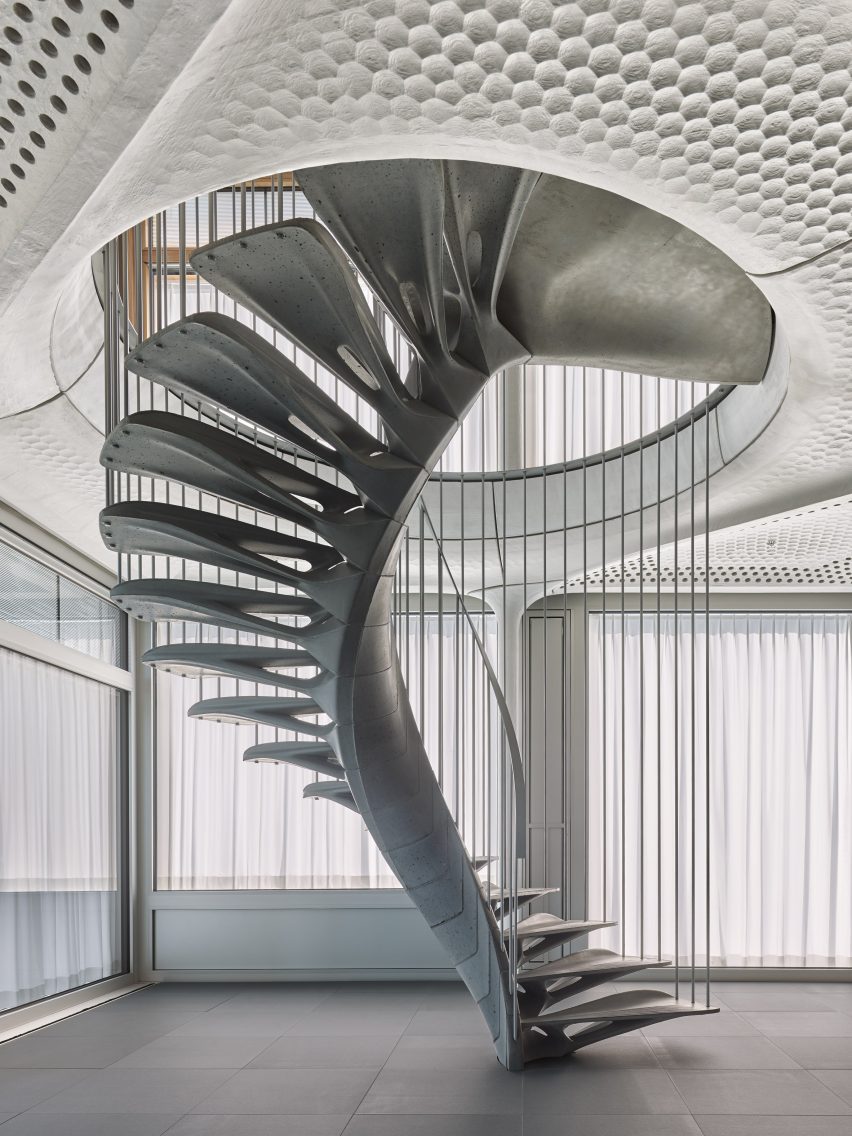
The article discusses the HiRes Concrete Slab, a novel concrete floor developed by an interdisciplinary team at ETH Zurich for the NEST research building in Dübendorf, Switzerland. This innovation draws inspiration from Gothic architecture's efficiency and aesthetic appeal, achieving similar results through computer-aided structural optimization.
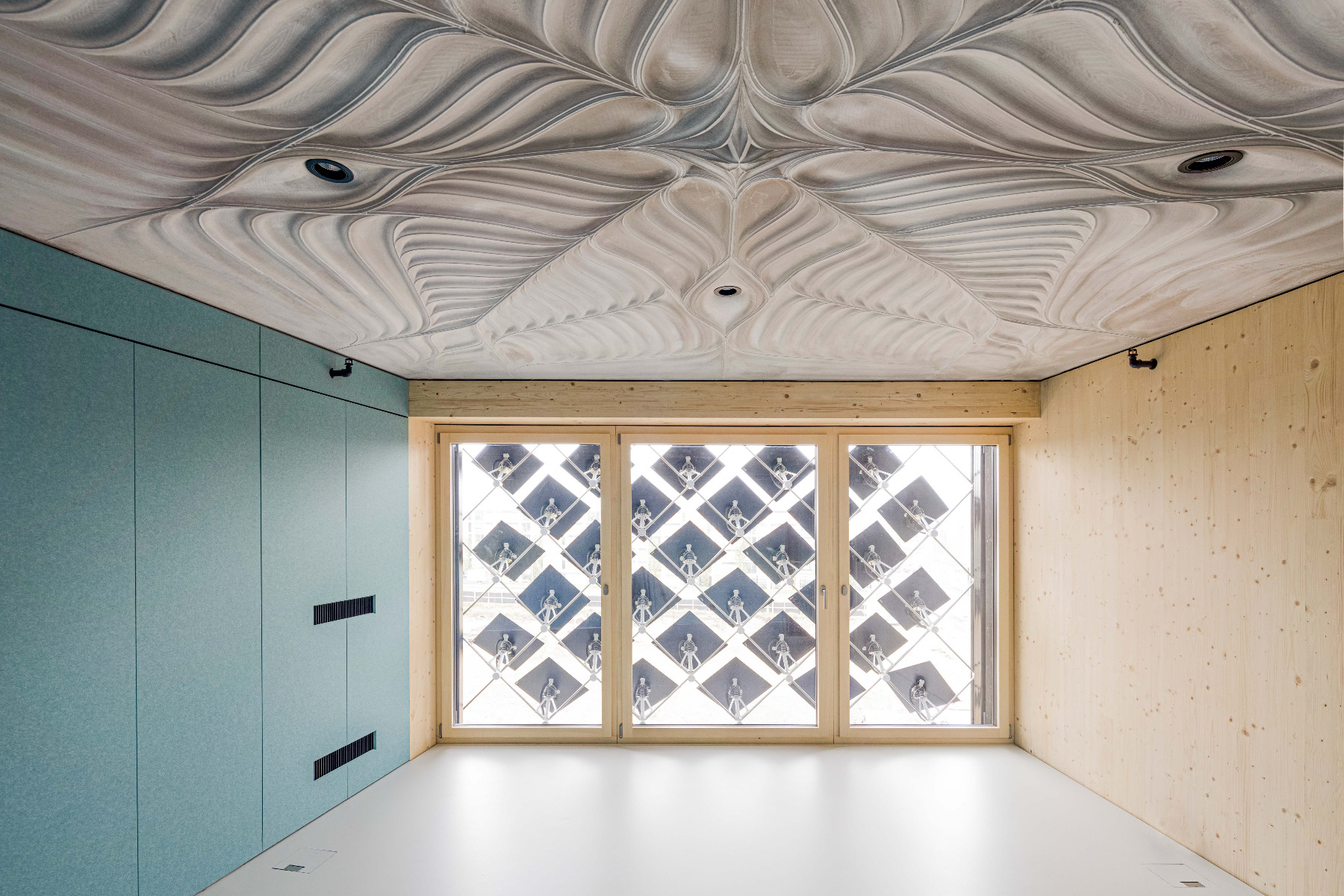
The HiRes Concrete Slab, a thin, slightly vaulted funicular concrete floor, was installed in an office space at ETH's HiLo research unit, measuring approximately 4 x 5 meters. This design represents a significant material reduction of about 70% compared to a standard flat slab, a claim supported by a precursor presented at the Davos World Economic Forum in 2019.
The structural optimization is primarily due to the strategic placement of ribs on the upper side of the ceiling slab, which is approximately 50 mm thick. Additionally, the ceiling features a rise of about 275 mm in its central area. Further concrete savings are achieved by integrating 12 mm thick post-tensioning ties along the four edges of the room.
The underside of the floor is designed for acoustic optimization. It features sound-scattering ridges that are most prominent and closely spaced in the center of the slab, gradually diminishing to a smooth surface towards the walls. The slab also ingeniously incorporates spaces for a lighting system, heating and cooling pipes, and subtly integrated air vents. All these elements were embedded into the formwork prior to the concrete pouring.
The manufacturing process of the concrete floor involved a combination of digital production techniques. The slab was cast in place using 43 small-scale, 3D-printed formwork parts for the bottom layer. These parts were then mounted onto a slightly vaulted waffle grid. The ETH team utilized three distinct digital production processes:
1. **Laser-cutting:** Used for shaping the wood components of the waffle grid.
2. **Binder-jet process:** Employed for creating the formwork elements. This technique involves selectively solidifying sand with a binding agent.
3. **Fused deposition modeling (FDM):** Utilized for producing the small-scale ventilation ducts. FDM builds components layer by layer from a liquid thermoplastic material that subsequently hardens.
In contrast, the method for forming the 50–80 mm ribs on the upper side of the slab was less complex, involving CNC wire-cut polyurethane foam blocks as formwork elements. These foam blocks are designed to remain between the ribs, providing additional insulation after the construction is complete.
The project involved collaborations with various partners and sponsors, including Empa, NCCR Digital Fabrication, Bürgin Creations, Holcim (Schweiz), BASF (Schweiz), and Christenguss, highlighting a multidisciplinary approach to advanced architectural design and construction.
#HiResConcreteSlab #EmpaNEST #ETHZurich #SustainableConstruction #StructuralOptimization #3DPrinting #DigitalFabrication #FunicularDesign #RibbedCeiling #HiResConcreteSlab #EmpaNEST #ETHZurich #SustainableConstruction #StructuralOptimization #3DPrinting #DigitalFabrication #FunicularDesign #RibbedCeiling
0 comment in total
 No comments yet
You may also like
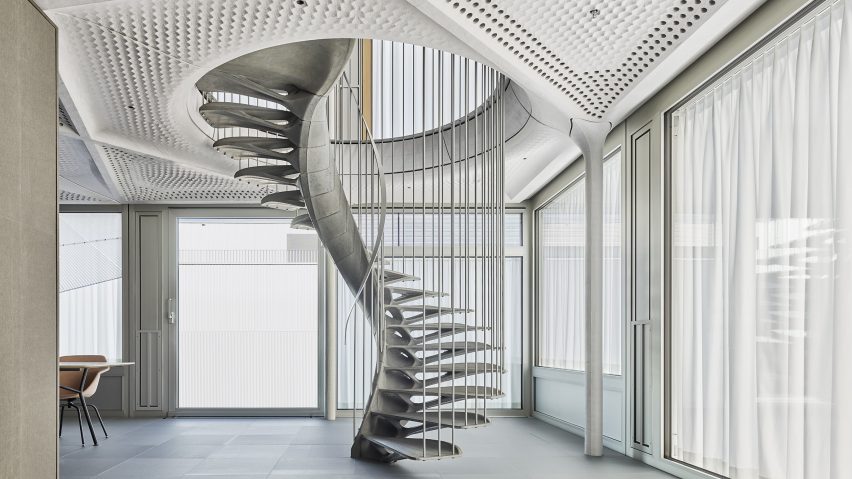
ETH Zurich explores novel fabrication method for light and reusable concrete staircase
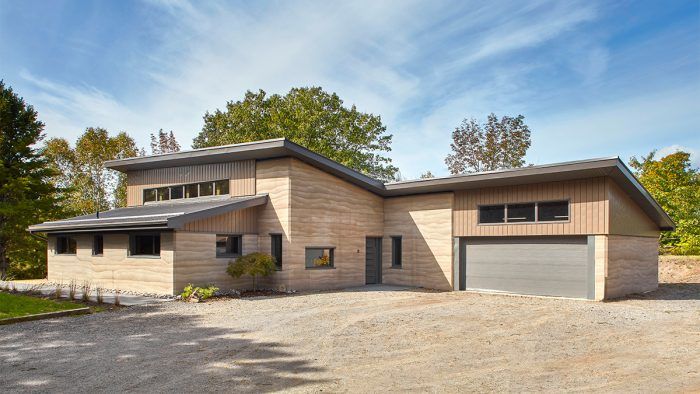
Rammed Earth Construction
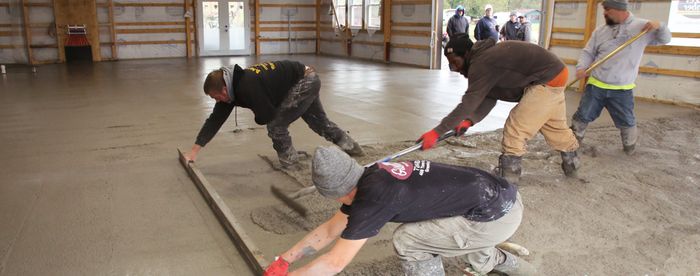
Placing Concrete in the ICF Foundation

Concrete Events & Tradeshows for 2026

edg Reveals 3-D Printed Cast Concrete Collection

Cement

Bucket-Mixed Concrete

Alvar Aalto inspires orange blockwork fireplace in Notan Office's Brussels roof extension
The Cradle Office Building / HPP Architects


MUT design: drops concrete tiles for entic design
8 concrete flooring ideas that will convince you this style can be surprisingly luxurious

Facade System - LINEA Dietfurt Limestone from Franken-Schotter

The Tailgater controls the flow of concrete
Tensile strain-hardening cementitious composites and its practical exploration without reinforcement: A review
Sustainable Concrete Panel Construction | Spotlight on Nexii and Vero Building Systems
Heirlooms in Concrete / Greyscale Design Studio
7 Concrete Alternatives

Material Guide: The Benefits of Building With Concrete


Building Materials - Building Supplies

Turning Gray to Great