1/11
San Francisco Residential Living Wall
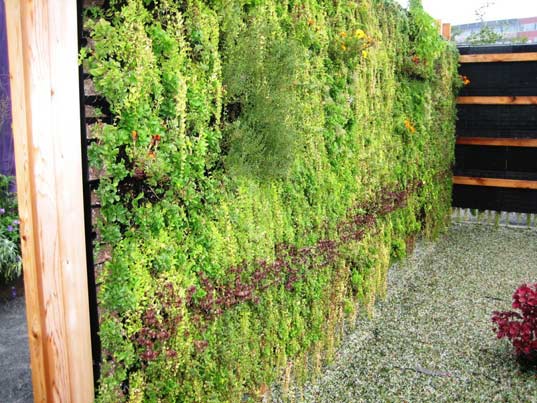
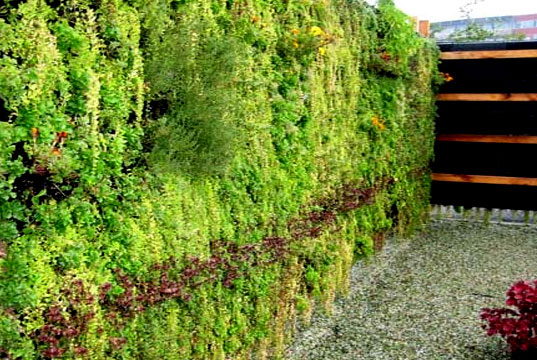
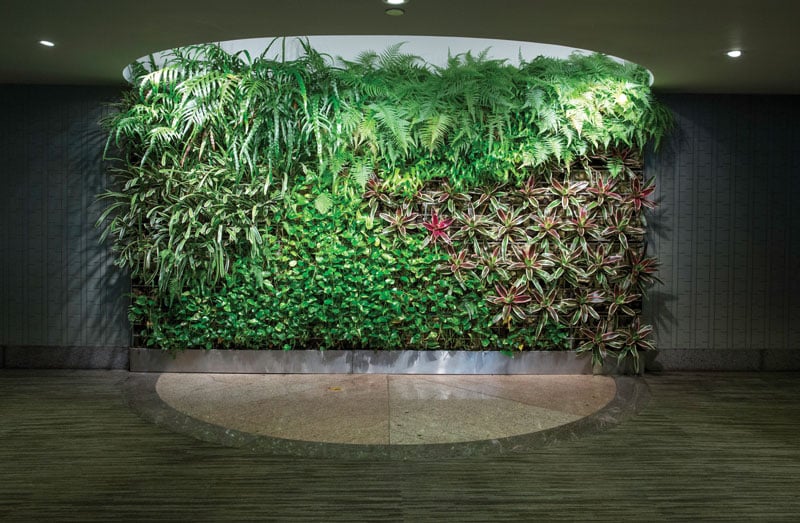
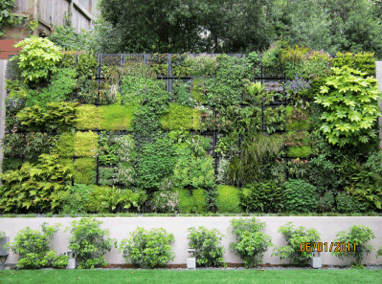
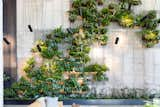
This blog post details the design, installation, and initial performance of a residential living wall in San Francisco's Pacific Heights. The project involved transforming a previously landscaped backyard, which featured significant concrete retaining walls due to its hillside location, into a striking vertical garden. The homeowner and designer, Michelle Bond of Thumbellina Gardens, aimed to maximize the aesthetic and ecological potential of these walls by implementing a large-scale living wall system.
The living wall, installed in late November 2010, measures 12 feet high and 27.5 feet wide, covering an area of 330 square feet. It was constructed using 96 VGM modules from Tournesol Siteworks, a system chosen for its bracket and module design. Each module, measuring 20 inches by 20 inches and 10 inches deep, was filled with a specific growing medium consisting of a 50/50 mix of coir-based "Ultra Potting Soil" and Perlite, deviating from Tournesol Siteworks' typical recommendation of a less-organic mix. The planting plan, developed from a sketch by the homeowner and designer, incorporated over 75 varieties of shade-loving plants, suitable for the north-facing hillside.
The installation process involved meticulous planning, which spanned six months prior to the physical setup. Each of the 96 modules was pre-planted with 16 4-inch plants and numbered according to the detailed planting scheme. To acclimate the plants to their vertical orientation, they were initially grown in the modules for about three weeks, after which the modules were gradually tilted to a 45-degree angle for another three to four weeks. This acclimation period allowed the plants to establish and adjust before the final vertical installation.
The irrigation system, following Tournesol Siteworks’ recommendations, involved a horizontal main line with laterals running up the rails, and multi-port drip emitters installed at the top of each box to provide water to individual modules. A critical component of the system was the integration of a fertigation system, designed to continuously replenish nutrients in the soil, which are typically leached out by constant dripping. This system was crucial for the long-term health and vitality of the plants.
Six weeks after the final vertical installation, all modules were securely hung. Six months into the project, the living wall had filled in approximately 85%, demonstrating significant growth. The fertigation system proved effective in supporting plant growth, with most plant varieties thriving. Only a few species, specifically Serissa, Vrisea, and Alocasia, experienced difficulties. The ongoing maintenance regimen, conducted by Thumbellina Gardens, includes bi-weekly checks of the fertilization/irrigation solution's pH, monthly trimming, and a change of fertilizer mix every four months, ensuring the sustained health and lush appearance of the living wall.
#LivingWall #ResidentialDesign #VerticalGarden #SustainableLandscaping #GreenInfrastructure #SanFrancisco #HomeownerDesign #PlantingDesign #IrrigationSystem #LivingWall #ResidentialDesign #VerticalGarden #SustainableLandscaping #GreenInfrastructure #SanFrancisco #HomeownerDesign #PlantingDesign #IrrigationSystem
0 comment in total
 No comments yet
You may also like
San Francisco bungalow transformed into spacious architectural home

Filled With Accent Wall Ideas That Whisper Yet Wow, This California Home Balances Restraint and Richness
ELT EASY GREEN LIVING WALLS

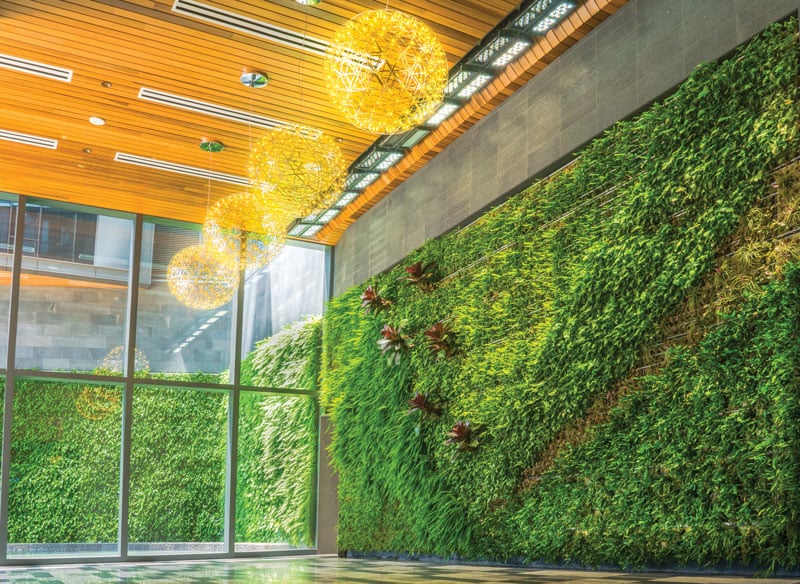
Trend Alert: Living Walls Add a Pop of Nature to Urban Honolulu Spaces

Wall Panels


Living Green Walls of Plants Refresh Brooklyn Homes
Rapi Wall And Lasting Long, Check Out 5 Tips For Choosing Wall Panels For Modern Housing

This San Francisco home by Geddes Ulinskas Architects features a cast-glass stair
Property of the week: a light-filled live/work loft in San Francisco
Feature walls frame out spaces, add interest to rooms

12 panelling ideas to add instant character to living room walls, from modern new-builds to elegant townhouses

San Francisco Is Turning Gray — One House At A Time

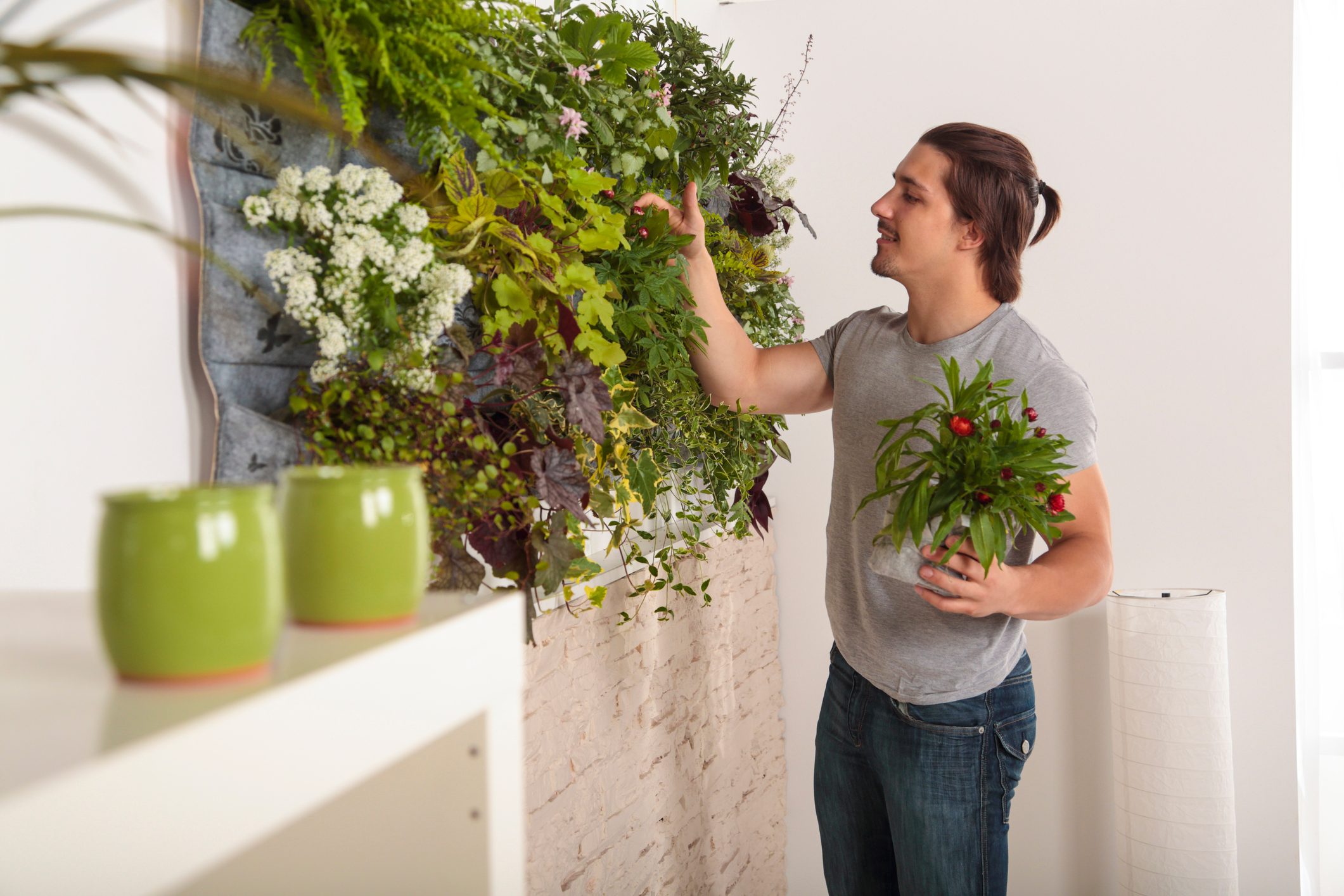
Homeowner’s Guide To Living Walls

Check Out This Brooklyn Hotel's Dramatic Living Wall Installation

Dolores Heights Residence / jones | haydu

Skylights and Massive Glass Walls Transformed This Dramatic Black Home from Brooding to Bright

Efficient Prefab Panels Form This Southern California Abode
Green Wall Ferrara
To Emphasize Her Rental’s Lofty Ceilings, This Philadelphia Stylist Created a 14-Foot-Tall Gallery Wall

Soaring Ceilings & Wrapped Windows