Recirculating Hoods and Indoor-Air Quality
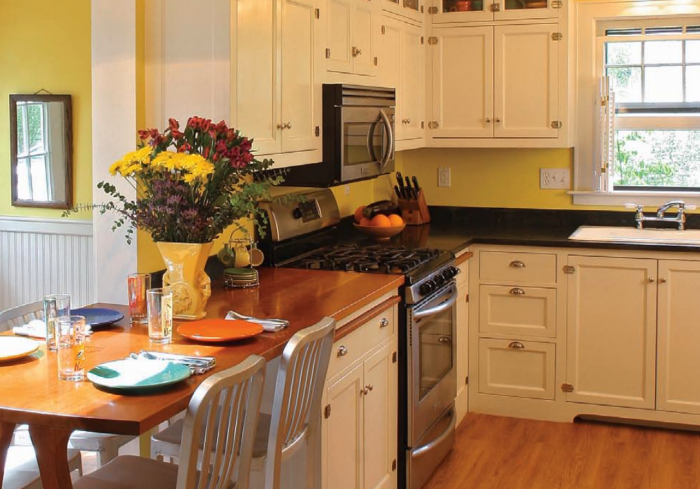
This blog post addresses the efficacy of recirculating range hoods in maintaining indoor air quality, responding to a reader's query about their ability to remove moisture and filter air. The author, building science expert Kristof Irwin, asserts that recirculating hoods are inadequate for both tasks. He explains that these hoods primarily serve to move cooking pollutants away from the immediate breathing zone and capture grease with filters. While some filters incorporate activated charcoal to absorb certain chemical compounds, they do not effectively remove particulate matter or moisture from the air.
The discussion delves into two key facts: first, cooking generates indoor-air-quality pollutants, and second, the understanding of building science regarding range hoods has evolved. Research from institutions like LBL and the University of Texas at Austin's HOMEChem project indicates that indoor cooking significantly impacts respiratory health due to the release of various pollutants. The historical motivation for using recirculating hoods, which was to preserve the air barrier's integrity and avoid the need for makeup air in energy-efficient homes, is re-evaluated in light of modern health considerations. The author emphasizes that a holistic approach to building design, as advocated by principles like "Design around people, a good building follows," should prioritize human health and well-being alongside energy efficiency and durability.
The article clarifies that a range hood should be viewed as part of a larger system. Its functional role is to capture cooking pollutants and exhaust them outside the home. Recirculating hoods fail in this regard because they do not remove pollutants from the indoor environment. In contrast, a properly functioning exhaust system requires a fan, ducting, and crucial makeup air, especially in modern, tightly sealed homes. The need for integrated makeup air is highlighted as a critical component for any powered device that expels air from a residence.
The author provides a set of recommendations for effectively managing cooking-related indoor air quality. These include reducing pollutant generation by using lids and minimizing high-temperature oil cooking. He also suggests increasing the capture efficiency of the hood by selecting models with deep sumps, as ineffective capture geometry allows pollutants to escape. Furthermore, the system must move the correct volume and speed of air to ensure pollutant entrainment. The use of short, metal ducting with minimal bends to the exterior is advised, along with the consistent practice of turning on the hood during cooking. The overall message underscores that proper range hood performance is directly linked to occupant health, making it an essential aspect of home design to address correctly.
#RecirculatingHoods #IndoorAirQuality #RangeHoods #BuildingScience #CookingPollutants #Ventilation #HomeDesign #KitchenVentilation #HealthAndWellness #RecirculatingHoods #IndoorAirQuality #RangeHoods #BuildingScience #CookingPollutants #Ventilation #HomeDesign #KitchenVentilation #HealthAndWellness
0 comment in total
 No comments yet
You may also like

How to improve air quality at home - it’s the big health issue nobody’s talking about
How to Get Better Indoor Air Quality | Wirecutter
Evaluating the emission of VOCs and HCHO from furniture based on the surface finish methods and retention periods
8 Simple Ways to Improve Indoor Air Quality This Winter

How to improve indoor air quality at home
Expert-tested mould removal tips that actually work

How to improve indoor air quality

Is your air purifier in the best spot? Follow these rules

Our buildings are making us sick

Simple Ways to Improve the Indoor Air Quality of Your Home

How to clean your HVAC system – 6 expert tips to make this essential task DIY-friendly

How to clean vent covers and how often to do it - TODAY

HVAC and Indoor-Air Quality

'If you can smell it, there's a problem in progress' – 5 expert-approved ways to get rid of musty smells in an attic
The 10 Best Air Purifiers for a Basement to Remove Dust, Allergens and Odors

How to get rid of mould

5 mistakes you're making that are compromising your home's air quality – and how to fix it like a HVAC pro

The 3 Features That Earned This Chic Air Purifier a Spot on My Nightstand

Are air purifiers better on the floor or a desk?

How to Improve Indoor Air Quality | Wirecutter