1/2
Deck Framing: Connectors and Hardware
This article discusses the critical connections required for safe and durable deck construction, emphasizing the evolution of building codes and the role of specialized hardware. Historically, deck construction often relied on basic framing nails, but increased public awareness of catastrophic deck failures and inadequate code provisions led to more stringent requirements. The 2015 version of the International Residential Code (IRC) now includes more explicit and comprehensive provisions for decks, particularly regarding critical connections that utilize metal hardware.
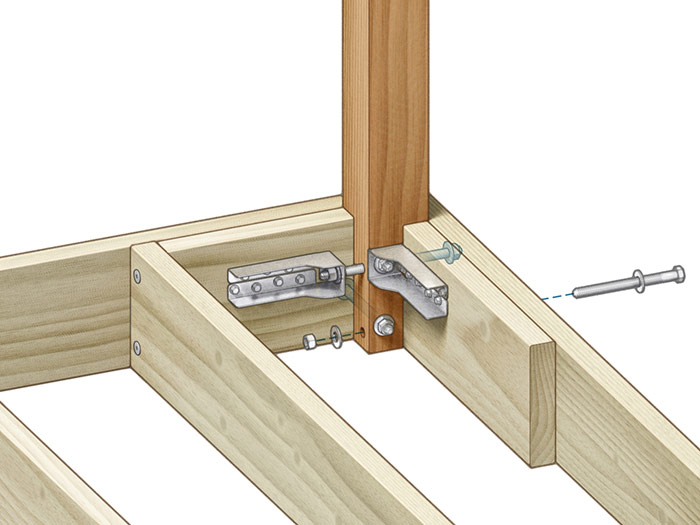
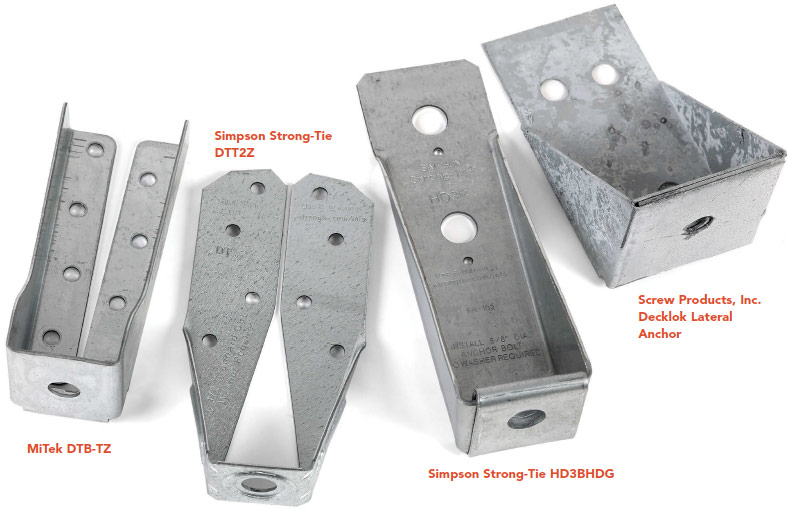
The article highlights that a deck must withstand various forces beyond just gravity. Engineers and builders must consider not only the dead load (the weight of the deck structure itself, typically 10 lb. per sq. ft.) and live load (the weight of occupants and movable items like furniture and grills, typically 40 lb. per sq. ft.) but also lateral loads. Lateral forces, which include wind, earthquakes, and human activity on the deck, can exert horizontal stress, requiring specific hardware to maintain structural integrity. While uplift forces from strong winds are also categorized with gravity loads, the primary focus for lateral stability is on direct-bearing connections where wood components meet, often reinforced by metal plates.
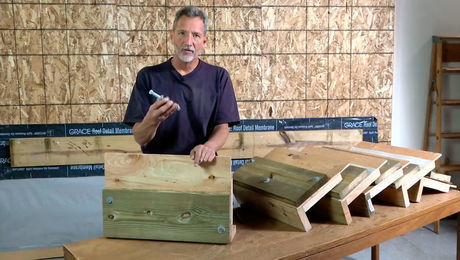
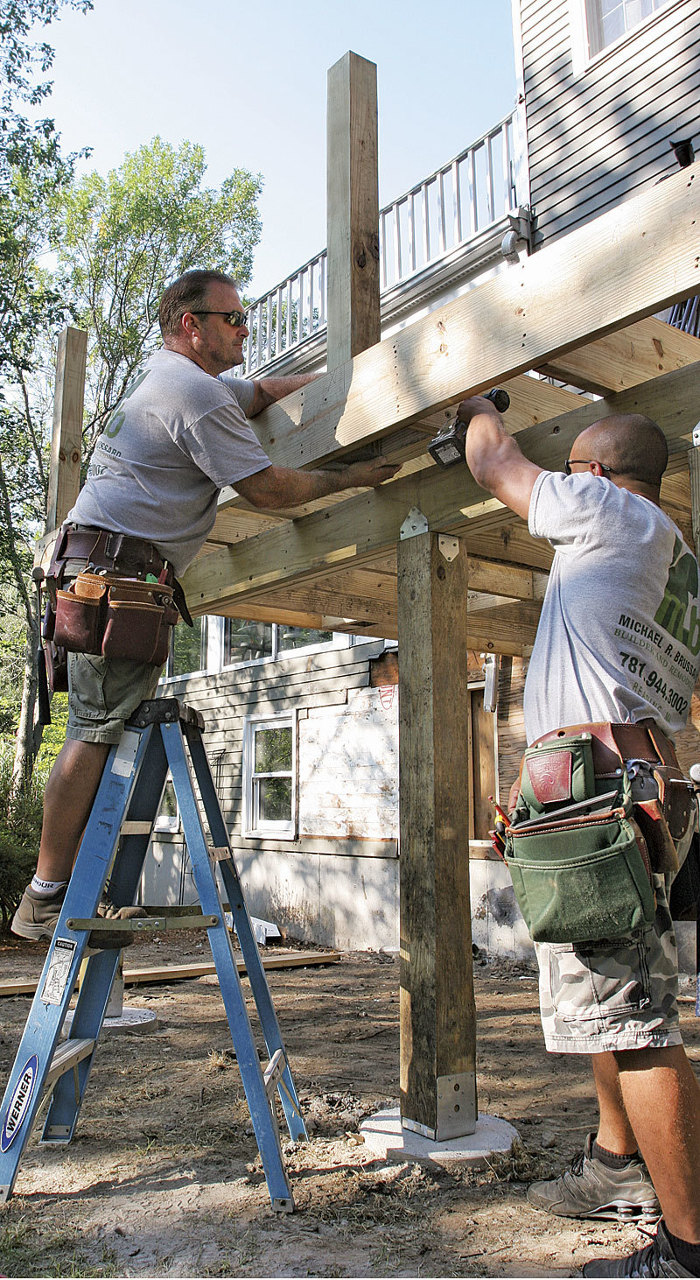
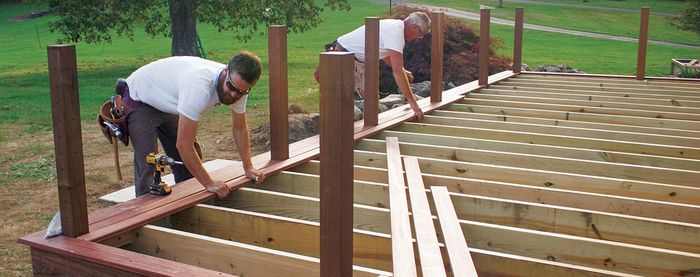
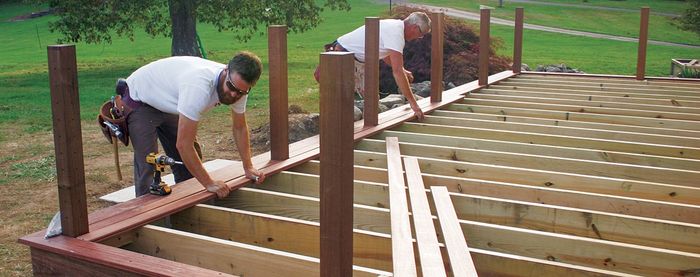
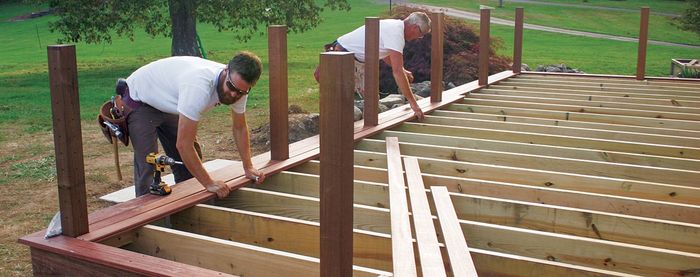
To illustrate these principles and the proper application of modern deck hardware, the authors collaborated with David Finkenbinder, a mechanical engineer and product designer specializing in deck connectors at Simpson Strong-Tie. Finkenbinder provided insights during the construction of a typical ledger-attached raised deck, explaining the function of various hardware components and how they counteract different structural forces. This collaboration aimed to educate builders on best practices and common pitfalls.
The discussion underscores that some hardware components are constantly engaged in supporting the deck, while others act as safety measures during periods of high stress, such as extreme weather or heavy use. The article stresses the importance of understanding the forces at play and selecting appropriate connectors to ensure long-term stability and safety. The information presented is intended to bridge the gap between engineering design principles and practical application on the job site, offering builders a deeper understanding of deck construction requirements and the rationale behind current building codes.
#DeckConstruction #BuildingCodes #StructuralIntegrity #DeckHardware #LateralLoads #GravityLoads #DeckSafety #HomeImprovement #ConstructionTechniques #DeckConstruction #BuildingCodes #StructuralIntegrity #DeckHardware #LateralLoads #GravityLoads #DeckSafety #HomeImprovement #ConstructionTechniques
0 comment in total
 No comments yet
You may also like

In Depth: Deck Fasteners

In Depth: Deck Railings & Accessories

Decking Screws


PRODUCT PICKS: Nov / Dec 2015
Deck Railing Fasteners
A Deck Builder’s Tool Kit
Support And Connect Stair Stringers For Strong Stairs

The 2 Best Online Framing Services of 2026 | Reviews by Wirecutter

12 Code-Compliant Post-to-Frame Connections for Deck Guards
A deep dive into the Chesapeake

Product Picks: July 2022

Door Frames & Fixings
Installing Deck Joists
Custom Railing Ideas

7 signs you need to replace your wooden deck – the red flags to look out for in your garden

Affordable Frames That Work for Every Home

In Depth Extra: Deck fasteners
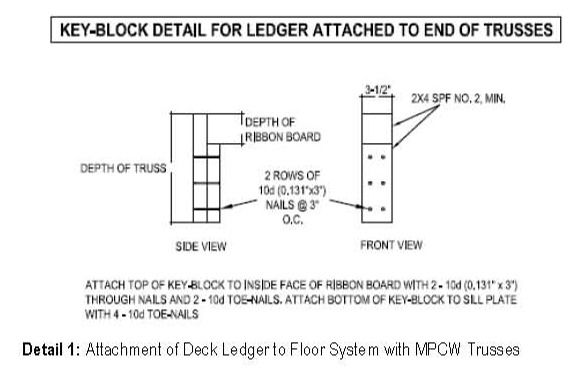
Attaching a Deck Ledger to Floor Truss
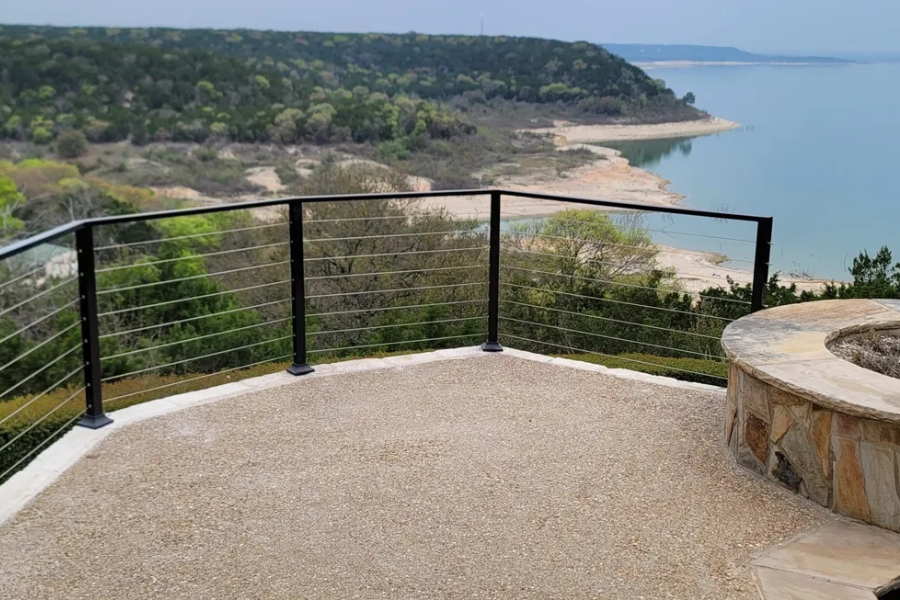
Deck N Cable Railing enhances Austin homes with custom railings, decks, more
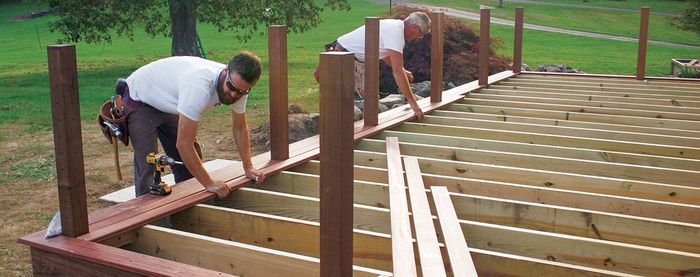
Deck Lateral Load Connector Options