1/16
12 Code-Compliant Post-to-Frame Connections for Deck Guards
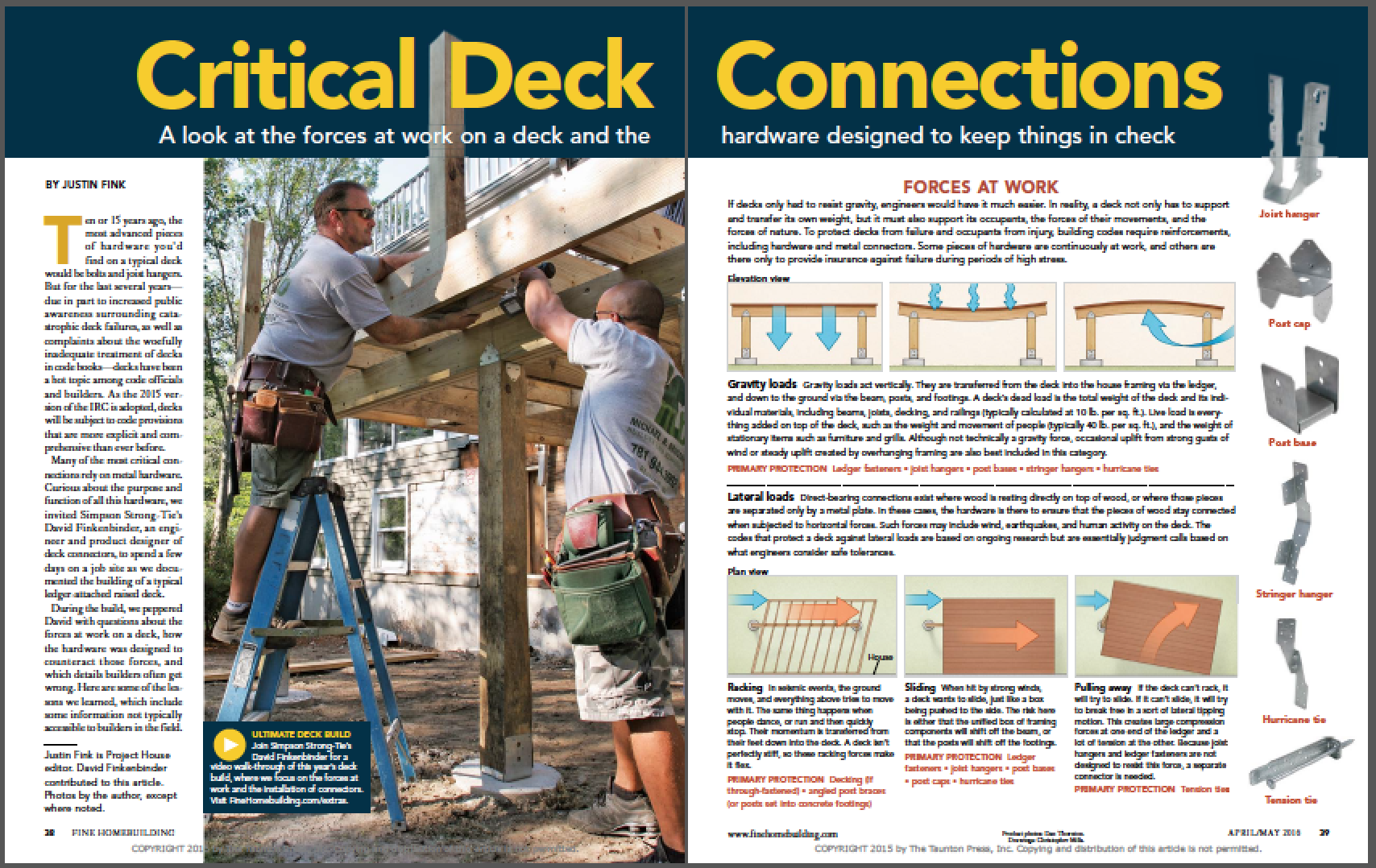
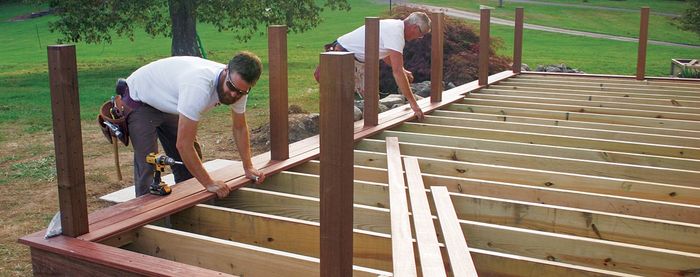
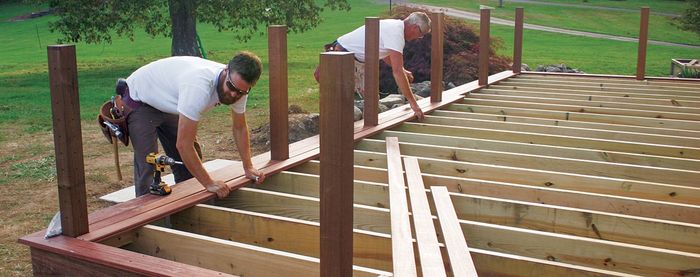
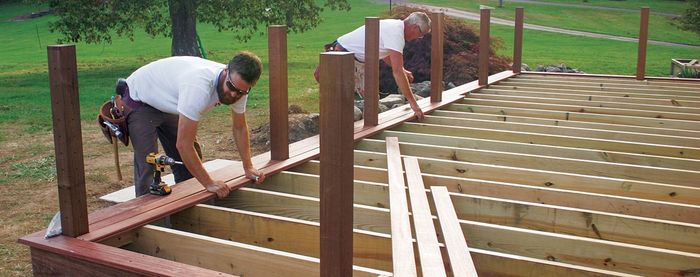
The 2021 International Residential Code (IRC) has evolved significantly in its prescriptive solutions for deck construction, moving from minimal guidance to comprehensive details for most deck components. However, specific prescriptive details for guard systems, particularly the connection of guard posts to deck framing, remain somewhat limited. Despite this, the IRC mandates that guards must be engineered to withstand a concentrated 200 lb. load applied at any point along the top, both downward and outward. If a guard also functions as a handrail, it must resist a 200 lb. load in any direction. Manufactured guards undergo rigorous testing, often incorporating safety factors up to three times the code-required load, but site-built guards typically do not receive such testing. The updated code introduces requirements and restrictions to guide the construction of site-built guards, necessitating a continuous load path to the deck joists rather than sole reliance on rim joist connections. For guards at the ends of a deck, joists must be connected to inboard joists using blocking, with fasteners avoiding sole reliance on end grain connections.
Research conducted at Virginia Tech in the early 2000s highlighted the inadequacy of traditional guard post fastening methods, which often failed to meet the code-required load and a 2.5-times safety factor. This is largely due to guard posts acting as levers, where a 200 lb. horizontal load at the top of a 36-inch post translates to approximately 1400 lb. at its base, potentially prying the rim off the joists. The weak point is often not the guard post itself, but the connection between the guard post and the deck frame. Reinforcement is crucial, and testing showed that using metal hardware to transfer loads from posts to deck joists allows the post and deck frame to handle the required loads, including the safety factor, without excessive deflection. This principle has led to numerous combinations of post-to-frame attachment details, all emphasizing reinforcement of both the deck framing and the post at the connection point.
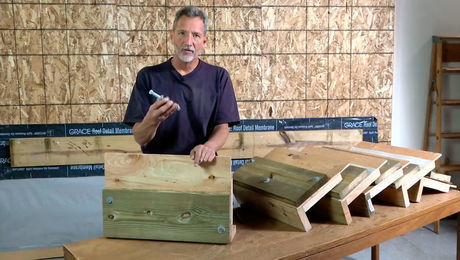
This article details 12 different code-compliant post-to-frame arrangements, categorized by whether the posts are installed inside or outside the rim board and end joists. These details account for various scenarios, including outside corners, and connections along the rim or end joists, whether beside or between joists. While most of these configurations have been tested by Virginia Tech or hardware manufacturers, some have been extrapolated by the author, Mike Guertin, with unofficial testing to assess their strength. Builders may encounter unique post locations that lack specific tested designs, but the provided examples offer a basis for extrapolation, or an engineer can be consulted for custom designs. Reinforcing guard posts with metal hardware or additional screws and blocking might seem excessive, especially if current practices appear sufficient. However, deck framing materials are exposed to significant moisture content fluctuations, freeze/thaw cycles, and fastener corrosion, which can compromise connections over time. Therefore, robust connections are critical for safety, as a guard failure can lead to severe falls.
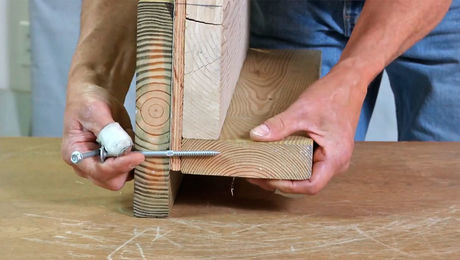
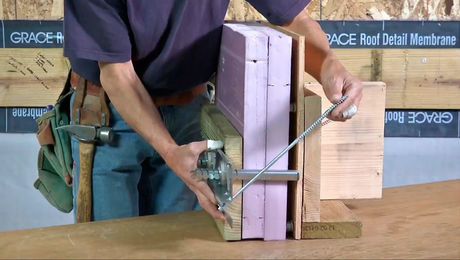
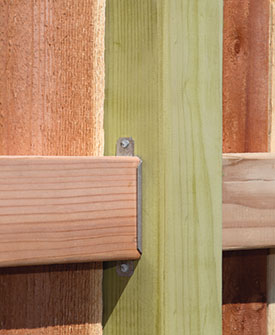
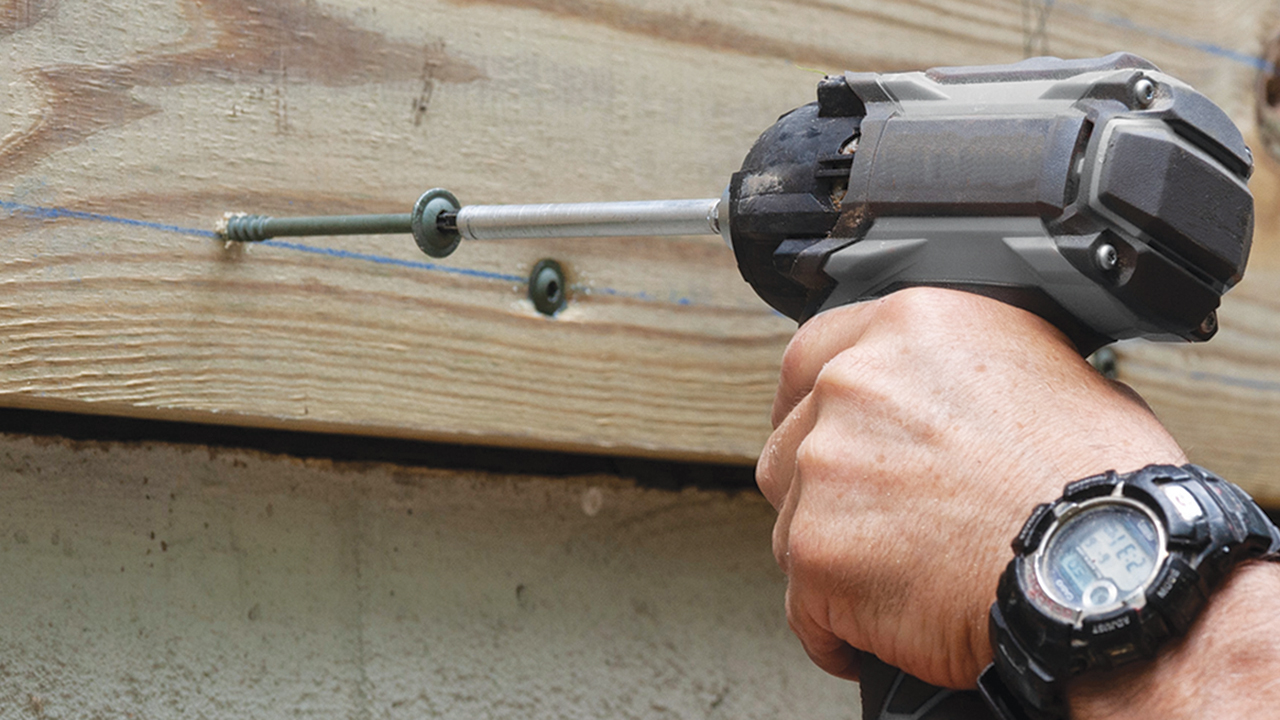
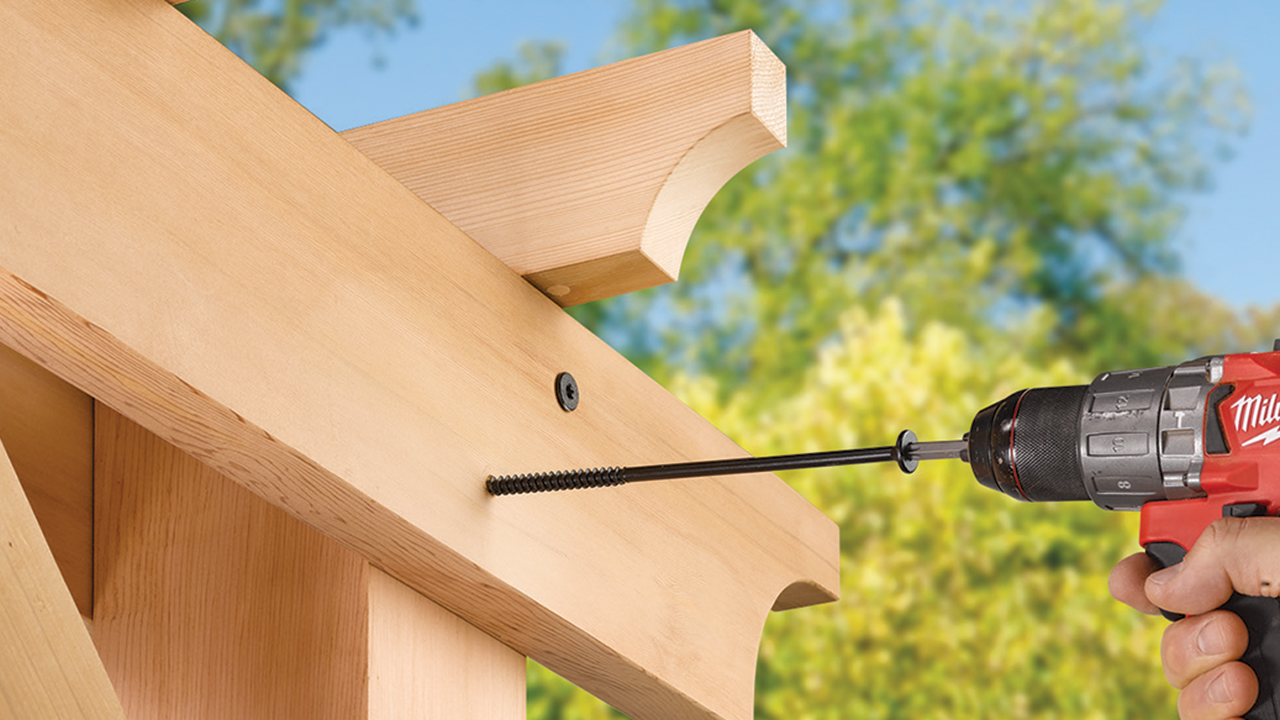
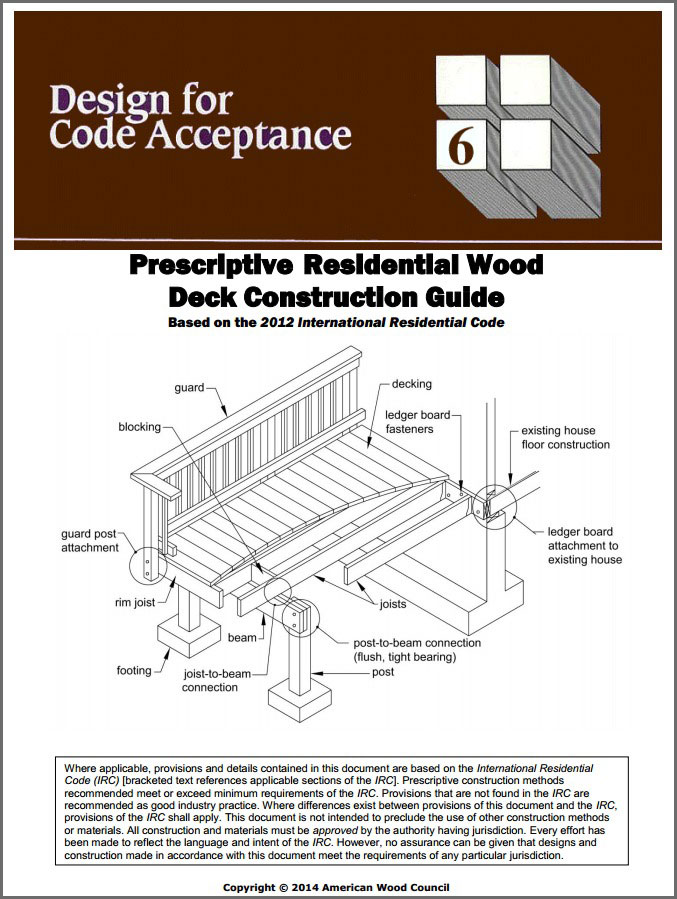
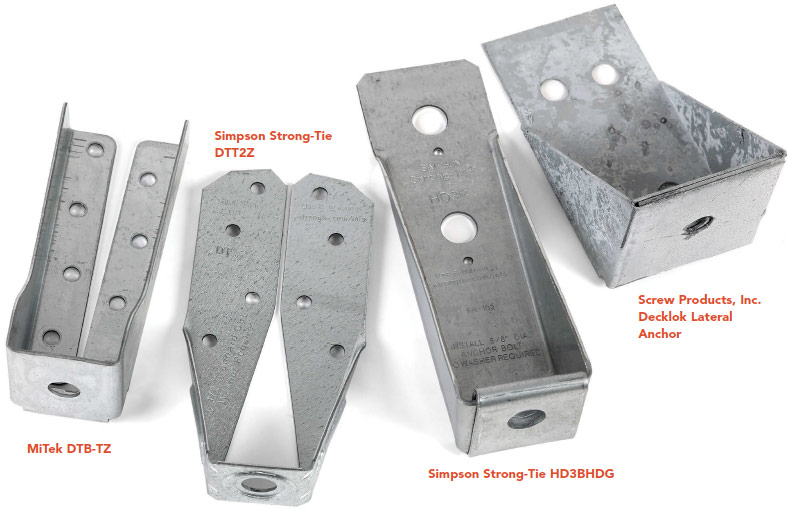
The article also discusses the use of proprietary hardware from manufacturers like Simpson Strong-Tie, MiTek, and Screw Products, Inc., which reinforce guard posts to deck framing along the rim and end joists. These manufacturers provide installation guides that must be followed for effective reinforcement. Specific products mentioned include MiTek DTB-TZ, Simpson Strong-Tie DTT2Z and HD3BHDG, and Screw Products, Inc. Decklok Lateral Anchor. FastenMaster Thrulok and Simpson Strong-Tie Strong-Drive SDWS Timber Screws are also highlighted for screw and block connections, particularly for posts mounted inside the deck frame. These systems typically use specific screw models, lengths, and blocking arrangements that are not interchangeable between brands. The article also differentiates between mounting posts inside versus outside the deck framing, noting that outside mounting can limit hardware choices, often favoring tension ties due to the lack of specific screw details from manufacturers for these applications. The diagrams illustrate critical connection details for various configurations, emphasizing that these basic principles can be adapted to almost any guard post scenario.
#deckGuards #postConnections #buildingCode #deckSafety #IRCCompliance #deckFraming #hardwareInstallation #structuralIntegrity #deckConstruction #guardrailSystems #MikeGuertin #deckGuards #postConnections #buildingCode #deckSafety #IRCCompliance #deckFraming #hardwareInstallation #structuralIntegrity #deckConstruction #guardrailSystems #MikeGuertin
0 comment in total
 No comments yet
You may also like
Deck Railing Fasteners
Attaching a Deck Ledger to Floor Truss
The Complicated Path From Decking to Dirt
A deep dive into the Chesapeake

In Depth Extra: Deck fasteners

The Best Chain Link Fence Panels for Privacy and Security


Deck Code Guidelines for Guardrails and Stairway Railings

Support And Connect Stair Stringers For Strong Stairs
In Depth: Deck Fasteners
Installing Deck Joists
Deck Lateral Load Connector Options
How to Design a Deck for Building Codes
Deck Framing: Connectors and Hardware

The 2 Best Online Framing Services of 2026 | Reviews by Wirecutter

Handyman Hints: You need your deck's posts to pass inspection

What Are the Right Nails for Metal Connectors? A Pro Answers
In Depth: Deck Railings & Accessories
How to Attach Ledgers for Deck Framing

Decking Balustrades & Posts


Feather Edge Boards