1/15
Common Older Home Problems
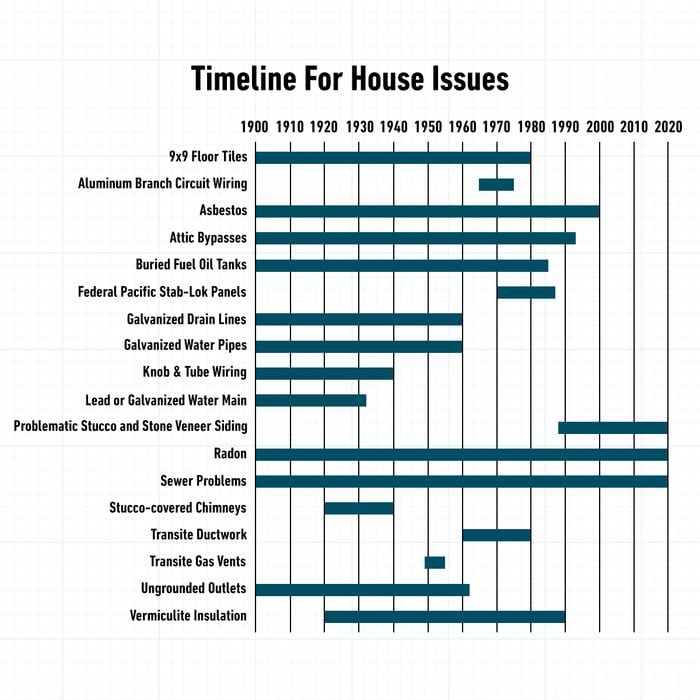
Older homes, despite their unique charm and aesthetics, often present a range of problems depending on their construction era. This article, featuring insights from Reuben Saltzman, CEO of Structure Tech Inspections, highlights common issues found in older homes and provides guidance on how to address them.
One significant concern in homes built before the 1980s is the presence of 9x9-inch floor tiles containing asbestos. While intact, these tiles are harmless, but disturbing them can release dangerous fibers. Professional removal is recommended before any flooring replacement. Aluminum branch circuit wiring, popular in the 1960s and 70s, is another major safety hazard due to its tendency to expand and contract, leading to loose connections and potential fire risks. An electrician should inspect and repair such wiring.
Asbestos, in various forms, can be found throughout older homes. Apart from floor tiles, it can be present in materials that are not wood or metal. Generally, it's safe if undisturbed, but any material containing asbestos should not be tampered with by homeowners. Attic bypasses, common in homes built before 1992, contribute to ice dams, frost, moisture, and mold. Addressing air leaks before sealing these bypasses is crucial and can be a DIY task or handled by a professional.
Homes built before the 1930s might have buried fuel oil tanks, which, if not properly drained and filled, can leak and cause extensive environmental and financial damage. Locating these tanks by looking for vent pipes or metal caps is important, and professional environmental cleanup is required for removal or filling. Federal Pacific Stab-Lok panels, found in homes from the 1970s to late 1980s, pose a hidden fire hazard as they often fail to trip when overloaded. Replacing these panels, a relatively inexpensive investment, is strongly advised for safety.
Galvanized drain and water pipes, used prior to 1960, corrode internally, restricting water flow and causing significant plumbing issues. Replacement with modern materials like PEX, copper, or PVC is the recommended solution. Knob and tube wiring, prevalent before the 1940s, is a safety concern due to potential modifications and age-related deterioration. A knowledgeable home inspector and an electrician should assess and repair such systems, and homeowners should confirm insurance coverage.
Lead or galvanized water mains, common in the early 1930s, are problematic. Galvanized steel restricts water flow, and lead in water is a health risk. Homeowners can test for lead by scratching the pipe; a shiny silver scratch indicates lead. Stucco-covered chimneys from the 1920s-1940s, often built with sand-lime bricks, are susceptible to water damage from the inside out. Prompt repair is essential if water invasion is observed.
Transite ductwork, used in the 1960s and 70s, can contain asbestos, making cleaning impossible and posing a health risk if disturbed. While not a simple fix, it's a known issue for potential homebuyers. Similarly, transite gas vents from 1949 to 1955 can flake apart, trapping exhaust gases and releasing carbon monoxide. Professional inspection and abandonment of deteriorated vents are critical for safety. Lastly, ungrounded outlets, common in pre-1962 homes, lack the crucial third prong for redirecting electrical current during ground-faults, increasing the risk of electric shocks. A licensed electrician should address these for safety, as DIY attempts can be dangerous. Vermiculite insulation, found in homes built between 1920 and 1990, may contain amphibole asbestos, which is particularly hazardous. Testing for asbestos and utilizing resources like the Zonolite Attic Insulation Trust for removal cost reimbursement are recommended.
#OldHomeProblems #HomeInspection #AsbestosHazards #ElectricalSafety #PlumbingIssues #HistoricHomeRenovation #HomeMaintenance #DIYHomeRepair #OldHomeProblems #HomeInspection #AsbestosHazards #ElectricalSafety #PlumbingIssues #HistoricHomeRenovation #HomeMaintenance #DIYHomeRepair
0 comment in total
 No comments yet
You may also like
Older Adults Are Sharing The Design Trends They Despise For Very Specific Reasons


The Truths About Buying and Living in an Old House

Your Home Checklist for Aging in Place

Does Your Home Have "Old House Smell"? Here's How to Fix It

Research on architectural space design based on an empirical investigation of the communication life of older adults: taking unit-type nursing home as examples


Guide to Buying Older Homes by Decade

Aging In Place Remodeling: A Checklist For Senior Homes


8 Ways to Make the Stairs Safer at Home
5 Common Mistakes Homeowners Make When Restoring Old Houses

Home improvement hacks for common household issues

"I Grit My Teeth When I See It": People In Their 60s, 70s, And 80s Are Sharing The Modern Home Trends They Simply Cannot Stand
16 "Outdated" Home Design Trends That Are Wildly Better Than Modern-Day Trends
Owning an Old House: Charming Love Affair or Expensive Money Pit?
15 Old House Features We Were Wrong to Abandon

The Best Smart Home Devices to Help Aging in Place

20 Unfortunate Ways Your Home Looks Super Dated, According to Experts
Does Your Home Have 1 of the 3 Major Health Hazards?

7 DIY Home Improvement Ideas for Your Forever House


Better with age: Flooring trends in senior living
5 Essential Home Design Ideas to Make Aging in Place Easier