1/16
Building Knowledge, Not Just Structures: Redefining the Architect’s Role in Times of Uncertainty
The role of the architect is undergoing a significant transformation, moving beyond the creation of iconic buildings to fostering platforms for autonomy, learning, and replicability, particularly in a world marked by climate crises, social inequalities, and rapid changes. This shift highlights a broader understanding of culture, where architecture is not merely a physical structure but an active cultural process that builds relationships, knowledge, and collective meaning. Projects acting as “schools of construction” demonstrate the efficacy of utilizing local materials, adopting participatory methods, and empowering communities to create resilient and meaningful architecture capable of sustaining life and culture in uncertain times.
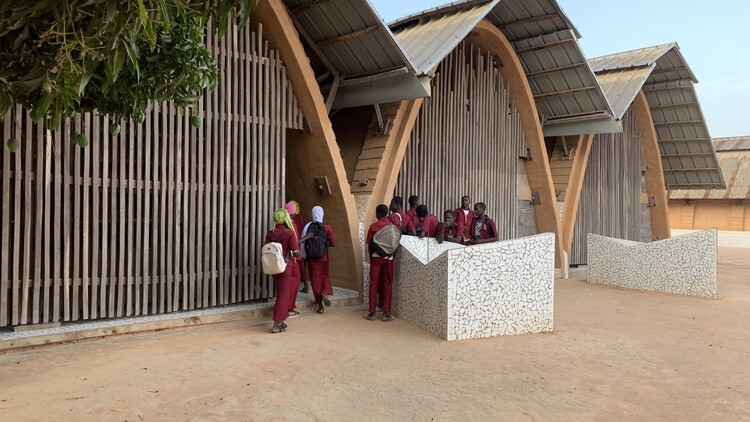
A key aspect of this evolving practice involves the replication of knowledge on a local scale through the use of regional materials and adapted construction techniques. An exemplary project is the Gando Primary School in Burkina Faso, designed by Diébédo Francis Kéré, where compressed earth blocks produced locally were used in construction, engaging community labor. This project not only resulted in a physical school but also established a functioning construction workshop, enabling other communities to adopt similar building practices. Similarly, the CEM Kamanar Secondary School in Thionck Essyl, Senegal, built by dawoffice / Foundawtion, utilized locally molded clay blocks to create thermal comfort and reduce costs. The construction process became a training ground, enhancing traditional building skills among local masons and residents, thus strengthening indigenous practices and resourcefulness. Another project integrating both dimensions is the Lanka Learning Center in Sri Lanka by FEACollective, which used local materials like bamboo and reclaimed wood, built collaboratively by architects, residents, and volunteers, serving as a mutual learning laboratory that fostered technical autonomy and community belonging.
These projects illustrate how architecture can transcend mere shelter provision, becoming a catalyst for community transformation by articulating processes of encounter, cooperation, and formation. Architects, in these instances, serve as mediators between technical and local knowledge, turning the building process into a shared learning experience. The Rugerero Health Center in Rwanda, designed by ASA Studio, exemplifies this by engaging the community through participatory workshops and using local materials like adobe bricks and stone, significantly reducing costs. The construction site doubled as a trade school, training residents in various building techniques, which empowered them for future community projects. In Brazil, USINA CTAH’s Mutirão União da Juta project involved families in every stage, from design to execution, leading not just to homes but to a network of solidarity and technical training that redefines architectural practice.
The relevance of these approaches is heightened amid global crises, where architects are increasingly called upon to facilitate between diverse stakeholders, identify local material supply chains, train workers, and deliver durable and resource-efficient solutions. These “schools of construction” are invaluable as they propagate knowledge, diminish reliance on external resources, and, crucially, establish a lasting legacy. They underscore architecture’s potential as a regenerative practice, capable of shaping not only physical spaces but also empowering people. Projects by the Asociación Semillas para el Desarrollo Sostenible in Peru, such as the Primary and Secondary School El Huabo and the Technology and Environment Laboratory Mencoriari, showcase this by combining vernacular knowledge with sustainable innovation in remote Amazonian contexts. These buildings, constructed using managed timber and passive strategies, function as educational environments for both students and builders, promoting social and environmental resilience through shared stewardship.
Challenges persist, including the time and mediation required to engage real communities, the inherent tension between ideal designs and local realities, and the need for documentation, standardization, and adaptation for method replication. Architects must balance their roles as technical specialists with that of broad facilitators of knowledge. Ultimately, in an era of uncertainty, the architect’s role evolves from merely designing structures to mediating processes and cultivating shared practices, thereby building collective knowledge that is adaptive and enduring.
#Architecture #ArchitectsRole #CommunityDrivenDesign #LocalMaterials #SustainableArchitecture #ParticipatoryDesign #EducationalArchitecture #RegenerativeArchitecture #ResilientArchitecture #Architecture #ArchitectsRole #CommunityDrivenDesign #LocalMaterials #SustainableArchitecture #ParticipatoryDesign #EducationalArchitecture #RegenerativeArchitecture #ResilientArchitecture
0 comment in total
 No comments yet
You may also like
How Architectural Theory Distances People from Design
Ten architecture projects by students at the City College of New York

The Plan and the Prompt: How AI Is Rewiring Design and Practice

Championing Chief Architects

Book Review: Modern Architecture and Climate—Design before Air Conditioning


15 Best Architecture and Design Firms in the USA

The Architect as Writer: Expanding the Discipline Beyond Buildings
New Talent: Seven Innovative Design Studios to Watch
Architectural design to meet the needs of our time
Whatever Happened to “The Architects’ Architect”?
Building a profile: The sway of marketing on architectural design


7 innovative ideas in architectural design


Designing Beyond Buildings: An Architect’s Strategic Shift


Meet Philip Oloo | Architectural Designer, Virtual Reality for Architecture and Licensed General Contractor
We need more flexible housing for 21st-century lives

The Transformative Power of AI in Architecture Design
Let’s Architect! Resiliency in architectures
7 Awe-Inspiring Modern Libraries That Bend the Genre

An Architect’s Life in a Diehard Profession

How to Be a Better Architect Than Me