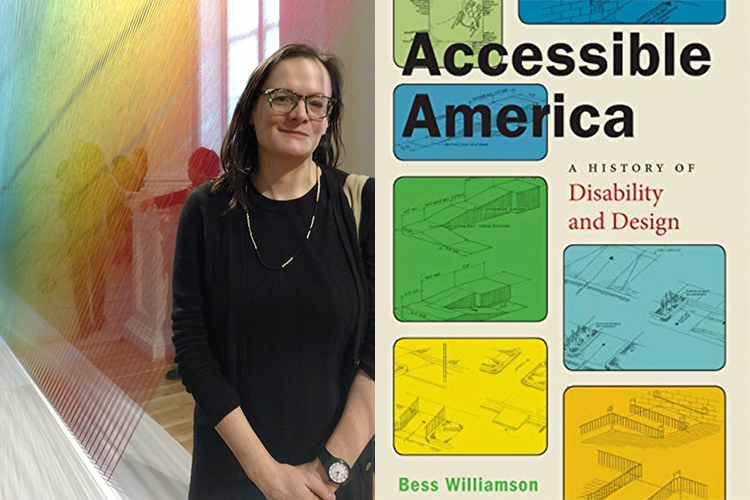
Berkeley Talks transcript: Bess Williamson on the history of disability and design
This blog post is a transcript of a Berkeley Talks episode featuring Dr. Bess Williamson, a historian of design and material culture and an associate professor at the School of the Art Institute of Chicago. The discussion revolves around the history of disability and design, focusing on accessibility, inclusion, and justice in design and technology. The talk is part of the "Design Conversations at the Jacobs Institute for Design Innovation at UC Berkeley" series, themed "For Whom? By Whom? Designs for Belonging." Dr. Williamson's work, particularly her book, "Accessible America: A History of Disability and Design," explores how design has responded to disability rights from 1945 to the present day, examining the concept of access and its everyday impact on people with disabilities.
The discussion begins by acknowledging the current global situation and how it has forced a reevaluation of accessibility, making virtual participation more common and highlighting the vulnerability of human bodies. Dr. Williamson emphasizes that disability is not an external issue but an intrinsic part of human experience, shaped by social and political circumstances. She illustrates this by discussing the varying experiences with video conferencing tools during the pandemic, noting how features like captioning have become widely used, fulfilling long-standing requests from disabled communities. She also highlights the subtle but significant differences in accessibility features across platforms and the importance of human-operated captioning over AI-generated alternatives.
The core of the talk delves into the historical evolution of accessible design, particularly in the U.S. Dr. Williamson asserts that design has historically been built around norms, citing examples like Da Vinci's Vitruvian Man and Le Corbusier's Modulor. These historical norms often excluded or marginalized disabled individuals, forcing them to adapt or be institutionalized. The shift began after World War II, transforming access for disabled people from a private burden into a public concern. Legal measures, starting in the 1960s with local building codes, played a crucial role in driving change. Ronald Mace, an architect with polio and a wheelchair user, was instrumental in illustrating and interpreting these early codes in his "Illustrated Handbook of the Handicapped Section of the North Carolina State Building Code," advocating for renovations and remaking the existing built environment rather than starting anew.
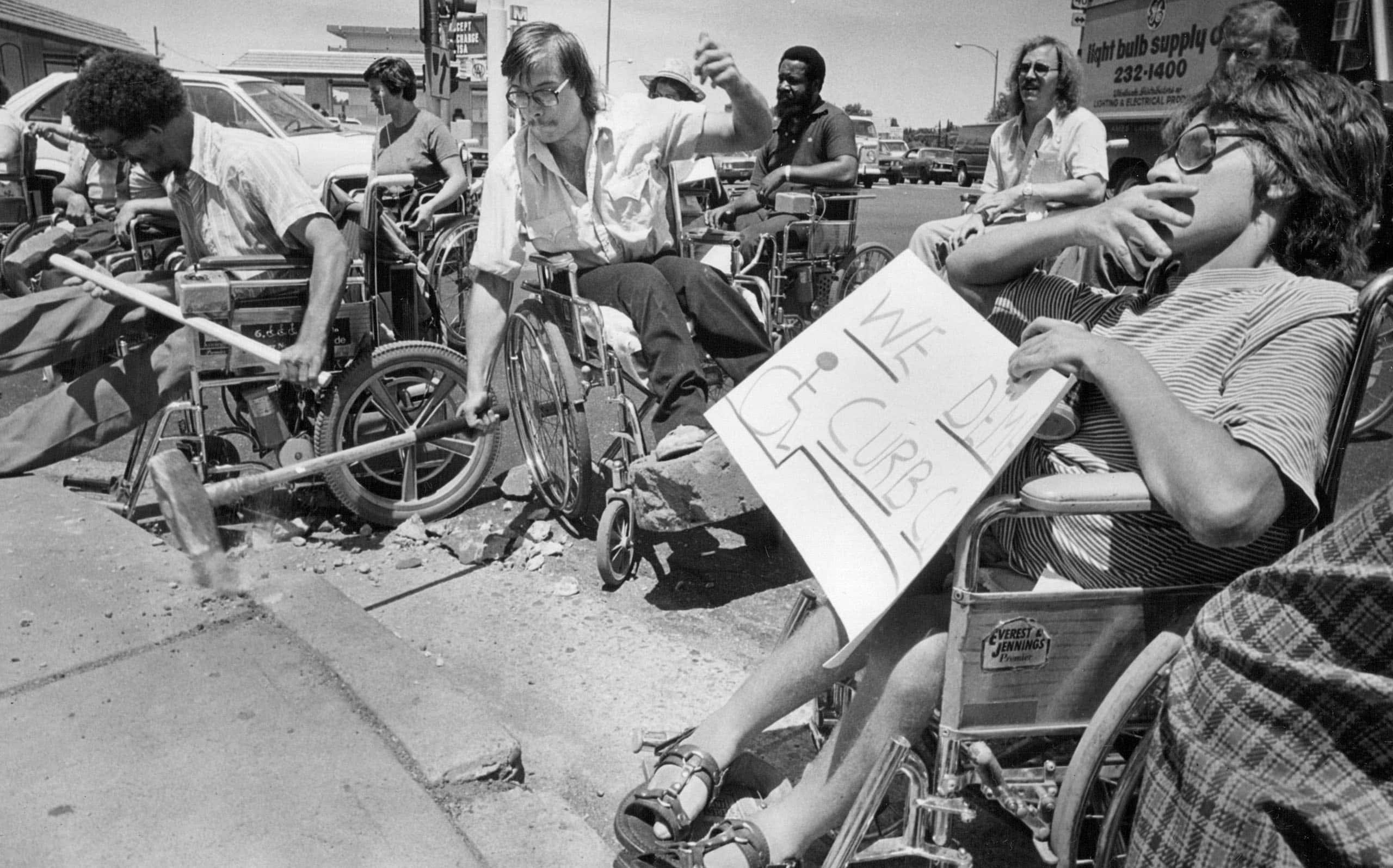
The blog post also highlights the significant role of the disability rights movement in Berkeley, California, in the 1960s and 1970s. The Center for Independent Living, a community-driven social service agency, empowered disabled individuals to chart their city and make recommendations for accessibility. This led to the creation of the world's first continuous wheelchair-accessible streetscape, demonstrating a community-driven approach where disabled people defined their own priorities. An example cited is the evolution of curb cuts: initial designs flattened out the curb, posing a risk to blind pedestrians. The disability community then proposed a sharper, slightly offset curb cut, allowing for cross-disability access. This illustrates that achieving accessibility often involves conflict and compromise, pushing back against resistance from designers, cities, and businesses.
Beyond legal mandates, Dr. Williamson discusses how product design began to incorporate disability awareness. Examples include the Cuisinart food processor, designed by a professor who researched manual and visual impairment, and OXO Good Grips, developed by designers Betsy and Sam Farber to address Betsy's arthritis. These products seamlessly integrated accessibility features into elegant, functional designs without explicitly marketing them as disability aids. This led to the concept of "universal design," coined by Ronald Mace, which aims to create designs that work for both disabled and non-disabled individuals, eliminating the need for separate entrances or products.
However, Dr. Williamson also critically examines the limitations of universal design and ADA compliance. She points out that while the Americans with Disabilities Act of 1990 was a landmark achievement, it often led to a "normalizing" approach, focusing on minimum compliance rather than genuine inclusion. The example of the Queens Public Library, with its inaccessible fiction section, illustrates how designs can be legally compliant yet fail to reflect a culture of openness. In contrast, the Ed Roberts Campus in Berkeley is presented as a flagship enterprise that celebrates access, integrating highly visible and generous accessible features, but it's questioned why such a level of access is almost exclusively found in buildings dedicated to the disability community. The discussion concludes by exploring a newer generation of design, exemplified by Rebirth Garments, a fashion company creating highly customizable clothing for diverse body shapes and needs. This approach moves beyond universality towards distinctiveness, showcasing a creative, community-based approach to access that addresses disability not as a functional problem but as a cultural issue, emphasizing individualized solutions and visible context.
Ultimately, Dr. Williamson encourages designers to consider the underlying ideas about disability that drive their work, asking whether they are striving for a truly inclusive community that actively engages with and celebrates disability, or merely fulfilling minimum legal requirements. The conversation also touches upon the durability of access in physical versus digital environments, emphasizing the importance of "maintenance" in design and engineering and the role of legal frameworks in ensuring lasting value.
#disability #design #accessibility #universalDesign #disabilityRights #inclusiveDesign #materialCulture #architecturalDesign #disability #design #accessibility #universalDesign #disabilityRights #inclusiveDesign #materialCulture #architecturalDesign
Hay 0 comentarios en total
 Aún no hay comentarios
También te puede gustar

Erick Mikiten Has a Vision for the House You’ll Grow Old In

Residential design through a lens of care
Nate Berkus Talks Design with Target and Story

Disability-Forward Design Across Multiple Cities

9 Inspiring Accessible Homes That Champion Inclusive Design
Alberto Alessi talks design


The new elegance of cities. The evolution of inclusive design


Talking with Sybil Domond and Dan Lessin about Greenpoint, Up-Cycling Design, and Day Beds
An Interview with Architect Gabrielle Bullock

Dr. Carol Bentel Tackles the Issue of Disposable Design at Design Talks 2019

How to use inclusive design principles to create accessible design projects
Rebecca Moses Joins Cindy Allen for Interior Design’s Inaugural ArtbyDesign Talk at PENN1

Brooke Williams


Talking Bedding Design Trends With Thom Filicia

Talking with Jeanine Hayes and Bryan Mason about Crown Heights, Design Philosophy and Stoop Culture