1/14
Residential design through a lens of care
This article explores the evolving field of residential design that specifically caters to individuals with complex human needs, including physical disabilities, cognitive impairments, and neurodevelopmental conditions. It highlights the importance of an empathic approach in architecture, moving beyond basic physical accessibility to create spaces that minimize challenges, promote well-being, and enable occupants. The author, Anthony Clarke, examines four distinct residential projects that exemplify this lens of care, showcasing how deep sensitivity to client needs can lead to profound and often unexpected design outcomes.
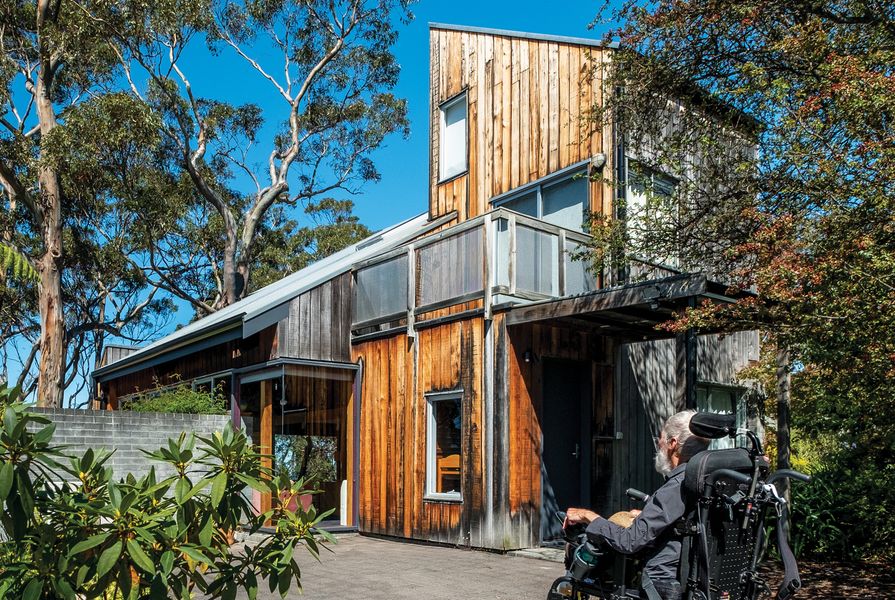
The first case study, Gilby House in Hobart, Tasmania, illustrates how a home originally designed by an architect with a spinal injury in the 1970s has been continually adapted to support its residents, who now include the architect's parents, both living with progressive mobility issues. Despite its initial multi-levelled plan and steep site appearing incongruous with 'aging in place' principles, recent renovations, co-designed by the family, have made significant impacts. A key adjustment involved repositioning the main bedroom closer to the kitchen, enabling Meg and Paul, who use motorized wheelchairs, to maintain connection and inclusion within the household. This design choice, initially challenging conventional architectural instincts, proved crucial in empowering the residents and allowing them to remain at home, reflecting a philosophy that values personal agency and meaning over strictly eliminating all risks.
Peakaboo House in Brisbane, by Alcorn Middleton, serves as another compelling example. This renovation and addition was designed for a multigenerational family, with the client's father, Robert, diagnosed with dementia during construction. The design features carefully planned 'breezeways' that delineate new from old spaces and communal from private areas, originally intended to encourage airflow. Unexpectedly, these thoroughfares have become a significant asset for Robert, providing a safe and enjoyable circuit for his daily repetitive routines. This adaptive use of space allows him a sense of autonomy and agency, demonstrating how architectural elements can foster positive emotional engagement and sustained meaning for individuals living with dementia, aligning with concepts from Oliver James's *Contented Dementia*.
Mitchell Street House in Brisbane, designed by James Russell Architect, focuses on supporting a family with a son living with autism who required extensive in-home therapy. The renovation of this Queenslander property, completed in 2013, incorporated a two-layer movement system. External carers could access therapy areas directly without disturbing the family's private spaces, maintaining a critical sense of privacy and connectedness for the residents. The architect's personal experience with autism informed the design, ensuring the home was not 'entirely dedicated to care' but rather enabled a secure yet integrated living environment, highlighting the importance of balancing therapeutic needs with a family's desire for normal home life.
The final project, House for Taylor, designed by BLOXAS, is currently under construction and is being developed in collaboration with a young woman living with Myalgic Encephalomyelitis/Chronic Fatigue Syndrome (ME/CFS). This design prioritizes flexibility and future adaptability, acknowledging the inherent uncertainty of ME/CFS. The focus is on Taylor's movement and energy consumption, aiming to create a functional, purposeful, and delightful environment that supports her unique needs, particularly given her limited mobility and connection to the external world. This project, along with the others, underscores the value of vulnerability from both client and architect, leading to a reflexive design process that addresses complex concepts like agency and ableism and results in significant advantages for the occupants. The article concludes by referencing neurologist Oliver Sacks, emphasizing the importance of centering the 'suffering, afflicted, fighting, human subject' in design to create truly meaningful spaces.
#ResidentialArchitecture #InclusiveDesign #DisabilityAccess #Neurodivergence #EmpathicDesign #AgingInPlace #DementiaCare #AutismFriendlyDesign #AdaptiveHousing #ResidentialArchitecture #InclusiveDesign #DisabilityAccess #Neurodivergence #EmpathicDesign #AgingInPlace #DementiaCare #AutismFriendlyDesign #AdaptiveHousing
0 comment in total
 No comments yet
You may also like
Interactive floor plan: Chilmark Guest House, USA
This Biophilic Condo Wants to Improve Your Health — By Design
20 Homes With Striking Indoor-Outdoor Living Spaces

Associated Designs | Experience Indoor-Outdoor Perfection with the Jacobsen House Plan

7 Character-Filled Apartment Buildings That Wow
Home & Design | Making It Personal
Daring house designs feature on Dezeen's new Pinterest board

What is zoning in interior design? Expert layout tips

Why the Perfect Time to Work with an Interior Designer Is Now

Thesis Project: RAW Holistic Healing Center
“It Instantly Becomes Tacky": 22 Home Design Trends That Are Mega-Popular For Reasons Many People Will Never Understand

Habitat Design Consulting Expert Interior Design Advice

What’s next for multifamily design?

When My Mom Had a Stroke, My Goal Was to Make Her Assisted Living Apartment Calm and Cozy

4 Creative Homes Designed With Panache and Personality
Copy-And-Paste Interiors: Repeating A Look Isn’t Lazy — It’s Clever
Case Studies in Community-Centered Living: Innovative Residential Design

A designer's idyllic urban cottage where nature and intuition inform every detail
10 Horrifying Home Design Trends: 2022 Edition
How to design your home with real-life size plans