1/2
IMPs balance envelope performance with fire safety
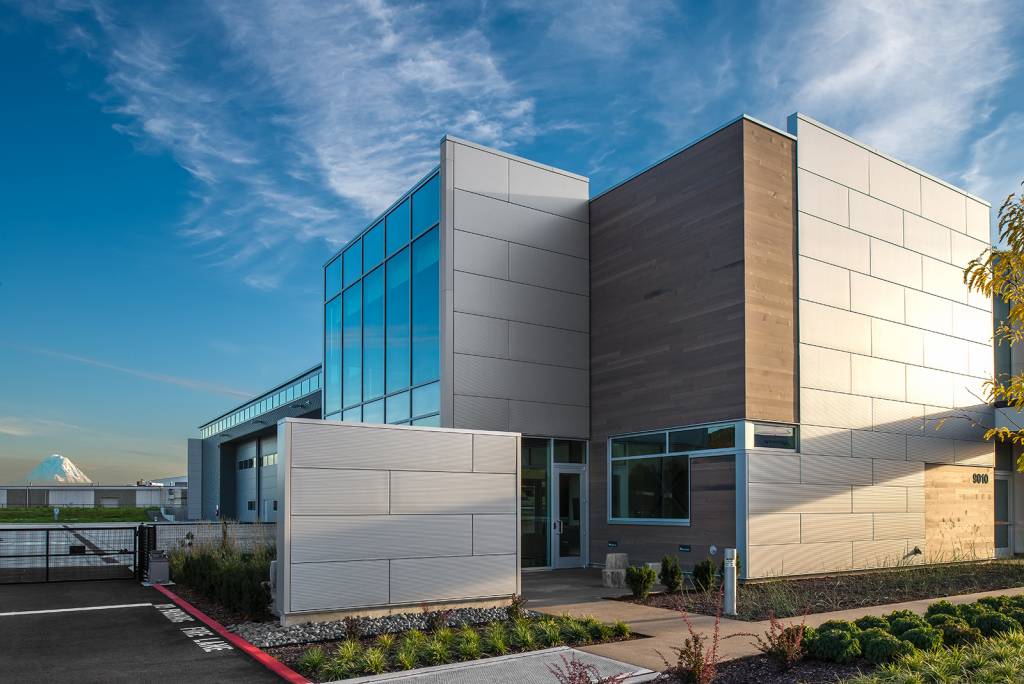
Insulated metal panels (IMPs) have emerged as a factory-assembled alternative to traditional site-built construction methods, offering significant advantages in modern building design. These panels consist of two impermeable metal facers with an insulating core, typically polyisocyanurate foam plastic, which provides high R-values (exceeding R-7 per inch thickness). IMPs deliver thermal resistance alongside an effective air, water, and vapor barrier within a single component. Their design optimally positions insulation and barriers, meeting the stringent performance requirements of contemporary architectural projects. As a result, designers are increasingly integrating IMPs into complex wall assemblies to fulfill thermal and weatherization functions, often incorporating additional elements for diverse exterior aesthetics and enhanced air and moisture control.
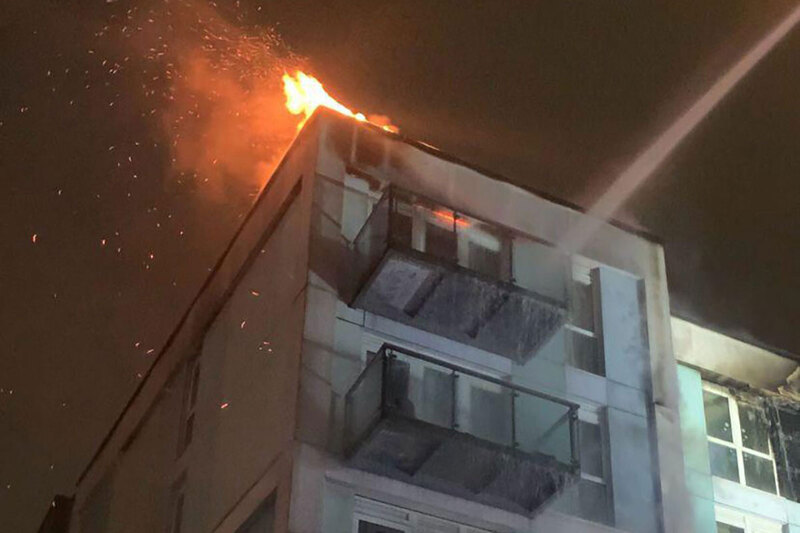
The growing demand for improved energy efficiency, driven by rising energy costs and more aggressive energy codes, has presented challenges in maintaining fire safety. Many communities are adopting 'stretch codes' that mandate energy performance at least 20 percent higher than current national building energy codes. Manufacturers have responded with new technologies, but some of these innovations, particularly those involving combustible materials like foam plastic insulation in IMPs, introduce fire safety considerations. Building codes, including the International Building Code (IBC), address this balance by allowing combustible materials under specific, more stringent fire performance criteria to ensure safety.
To address the fire safety aspects of combustible materials, code officials and fire safety organizations have collaborated with standardized testing bodies such as ASTM and the National Fire Protection Association (NFPA), and certification bodies like Factory Mutual (FM) and Underwriters Laboratories (UL). This collaboration has led to specific code sections designed to implement these standards. IBC Section 2603, “Foam Plastic Insulation,” is particularly relevant, governing the requirements and applications of foam plastic insulation, including IMPs, in various structures. Specifiers and design professionals can refer to several key standards to predict the fire performance of combustible materials, including ASTM E84 for surface burning characteristics, FM 4880 for Class 1 fire rating of insulated panels, NFPA 286 for evaluating interior finish contribution to room fire growth, and UL 1040 for fire testing of insulated wall construction. However, these standards do not cover all potential scenarios of fire propagation.
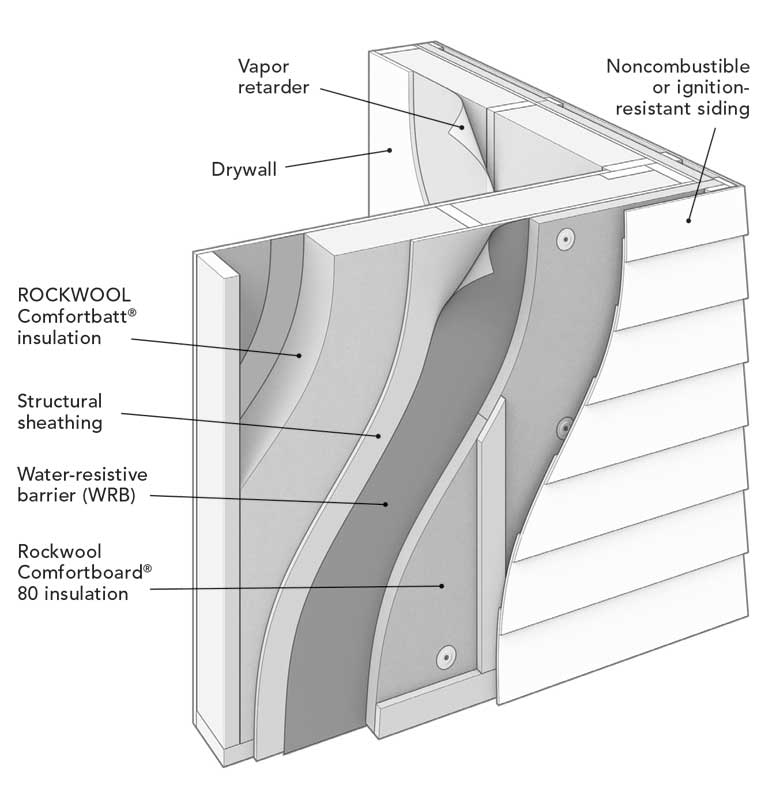
The NFPA 285, “Standard Fire Test Method for Evaluation of Fire Propagation Characteristics of Exterior Nonloadbearing Wall Assemblies Containing Combustible Components,” was developed to assess vertical and lateral fire propagation in wall assemblies that include combustible components such as foam plastic insulation, high-pressure laminate (HPL), metal composite material (MCM) exterior façade elements, and certain air/water barrier materials. Introduced in 1998, NFPA 285 has become crucial for evaluating complex wall assemblies, especially as energy codes increasingly require continuous insulation (ci) outboard of exterior walls and designers specify multiple barriers. A critical aspect of NFPA 285 is its “assembly” test nature, meaning materials are evaluated not in isolation but as part of the proposed wall assembly, accounting for interactions between components and cavities.
The NFPA 285 test involves a two-story chamber where one wall is the test assembly, including a simulated window opening. Fire sources are placed in the lower story room and at the window. The assembly is equipped with thermocouples to monitor temperatures, and the test uses a multi-tiered intensity fire source. Pass/fail criteria include limits on visible flames on the exterior wall, temperature thresholds for exterior thermocouples, temperature rise within wall cavities and combustible components, and temperature rise within the second-story test room. Many IMP manufacturers have successfully passed NFPA 285 for common wall configurations, including horizontal and vertical orientations, open framing, and finished interiors, and for assemblies where IMPs are one of several components. Specifiers should request documentation to confirm code compliance. Current codes and test standards offer flexibility for design professionals while upholding safety, with the IMP industry actively contributing to their development to ensure high-efficiency building envelopes without compromising fire performance.
#InsulatedMetalPanels #IMPs #FireSafety #BuildingCodes #EnergyEfficiency #ConstructionMaterials #NFPA285 #BuildingEnvelope #ThermalPerformance #InsulatedMetalPanels #IMPs #FireSafety #BuildingCodes #EnergyEfficiency #ConstructionMaterials #NFPA285 #BuildingEnvelope #ThermalPerformance
0 comment in total
 No comments yet
You may also like

The New Rules of Fire-Resilient Home Design, According to a Top Malibu Architect
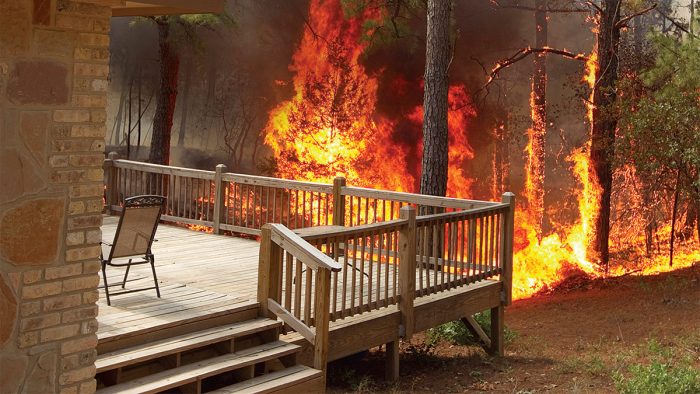
How to Build a Fire Resistant Deck


Non-combustible fence options: these are the materials to consider

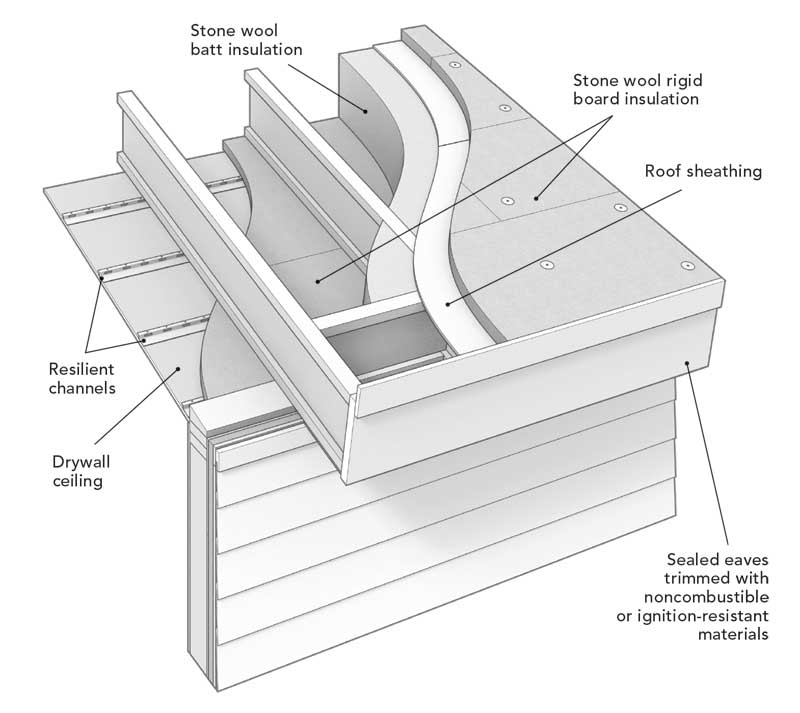
Building for better fire resilience in WUI zones
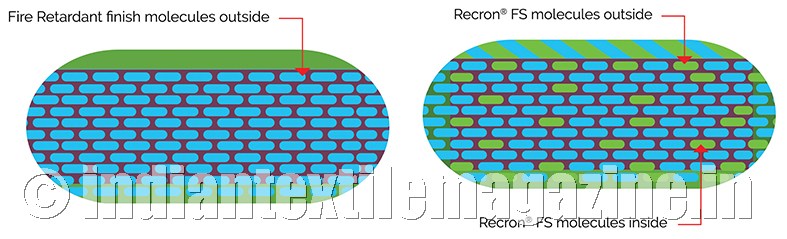
RIL’s fire-retardant Recron FS for enhanced safety

10 Latest Fire Door Designs With Pictures In 2023

Barry Stone: Wood stove too close to wood paneling

CO alarm rules for properties across the UK


This House Survived a Wildfire Because of Its Smart Design. Here’s How.
Council flat front fire door installation?

WANT AN EFFICIENT HOME? MAKE IT FABRIC FIRST
Free Chimney Flue Seals for Victoria Homeowners

Fire risk assessment wants new 60-min door?

6 areas of your home you should never insulate – and why it's a hazard that can do more harm than good

The 7 things you should never do with an electric heater
Comment - A foreign perspective on second staircase regulations

Building a Fire-Resistant House
I Bought an Old Home in a High-Risk Wildfire Zone. Here’s How I’m Protecting It.
Gas Fireplaces: Direct Vent vs. Vent-Free
Insight - Cladding remediation: why is progress so slow?