1/9
Di Gregorio Associati's cinematic pergola frames a rural Italian home
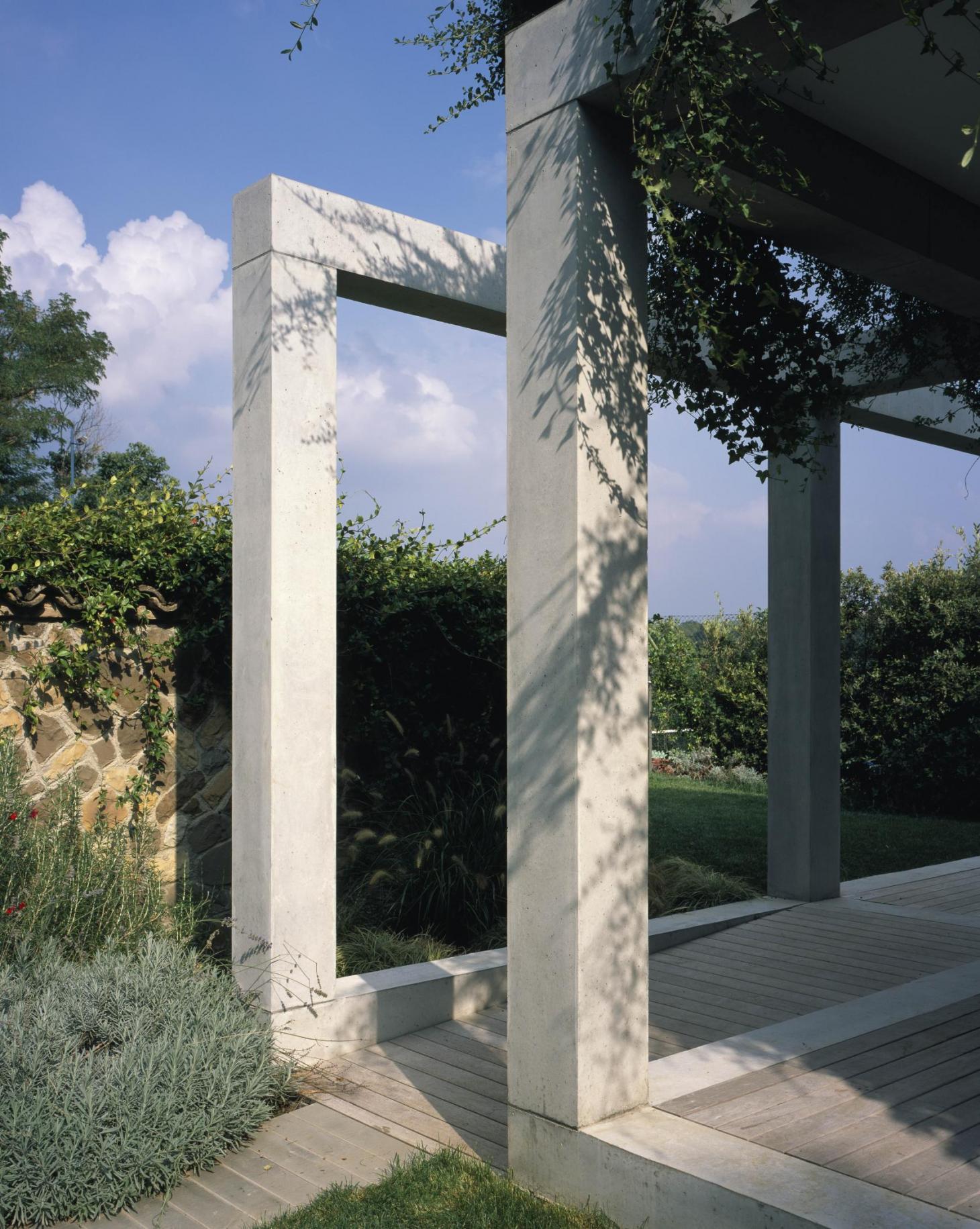
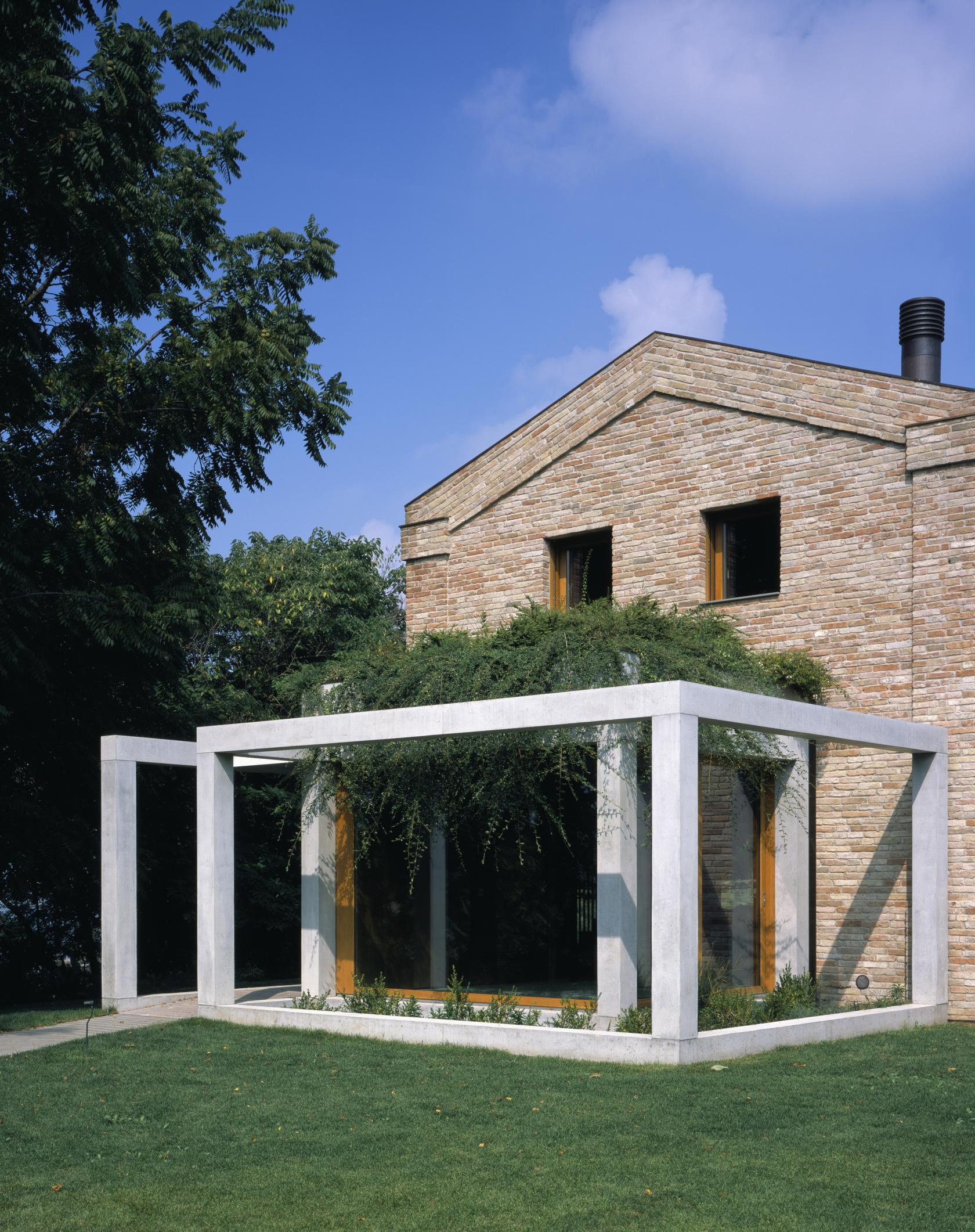
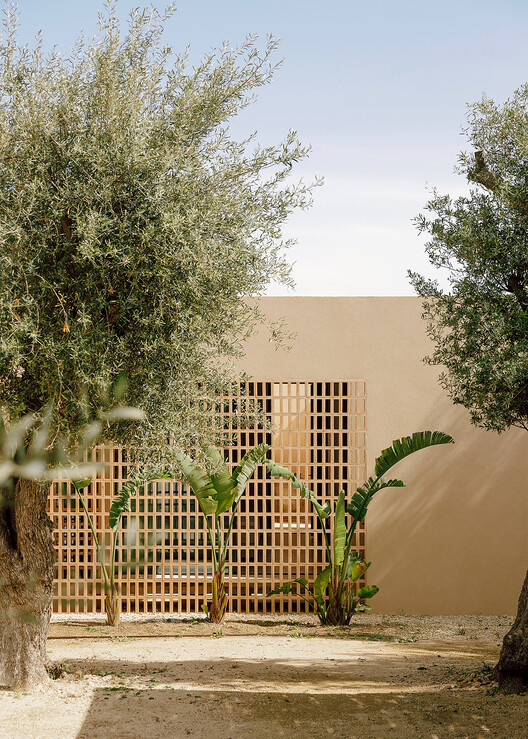
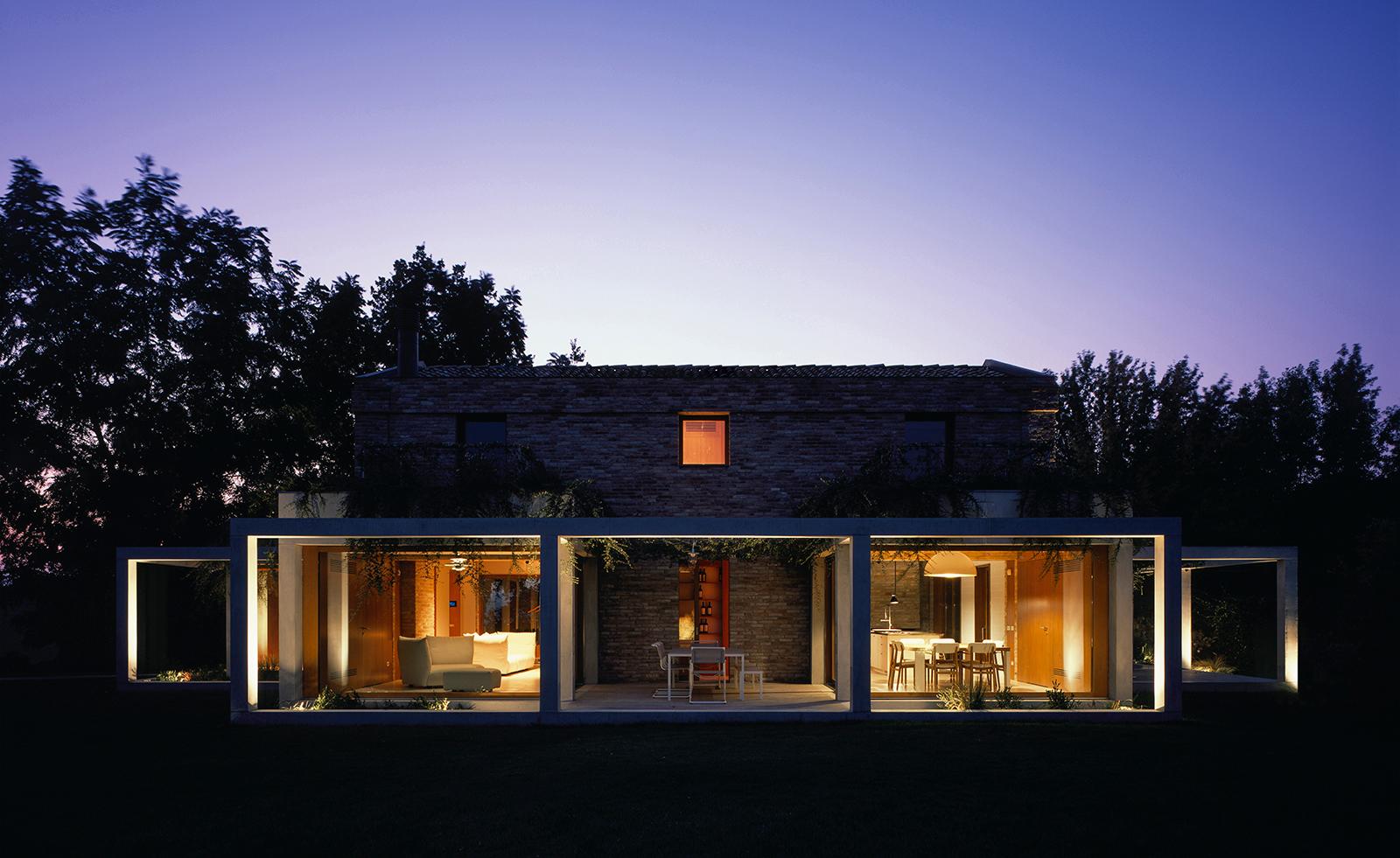
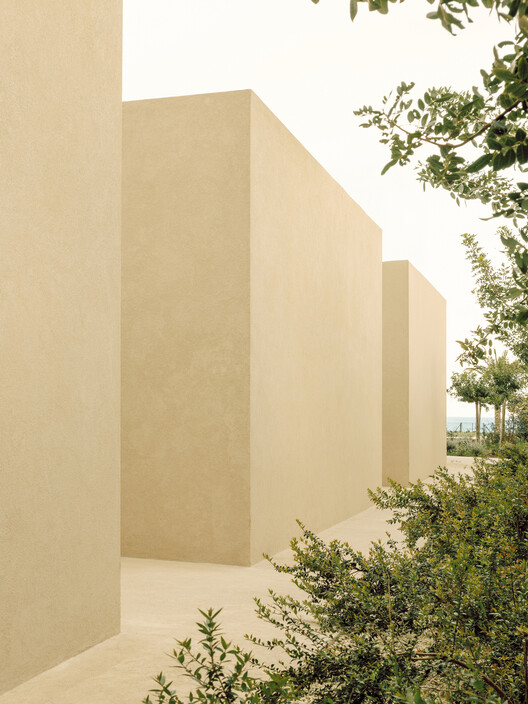
The Monticello House, located in the Emilian countryside of Italy, has undergone a significant modernist transformation by Di Gregorio Associati. The project involved cloaking an existing rural house in a floating concrete pergola, creating a unique interplay between the old and the new. While the house itself received a complete modernist makeover, many design elements were inspired by its original simple barn architecture. Volumes were expanded, openings were widened and glazed, and existing bricks were meticulously restored and rebuilt. The defining feature of this renovation is the new concrete frame, which provides the house with a distinct identity. This bold structure is designed to respond to the scale of the house but intentionally never physically touches it.
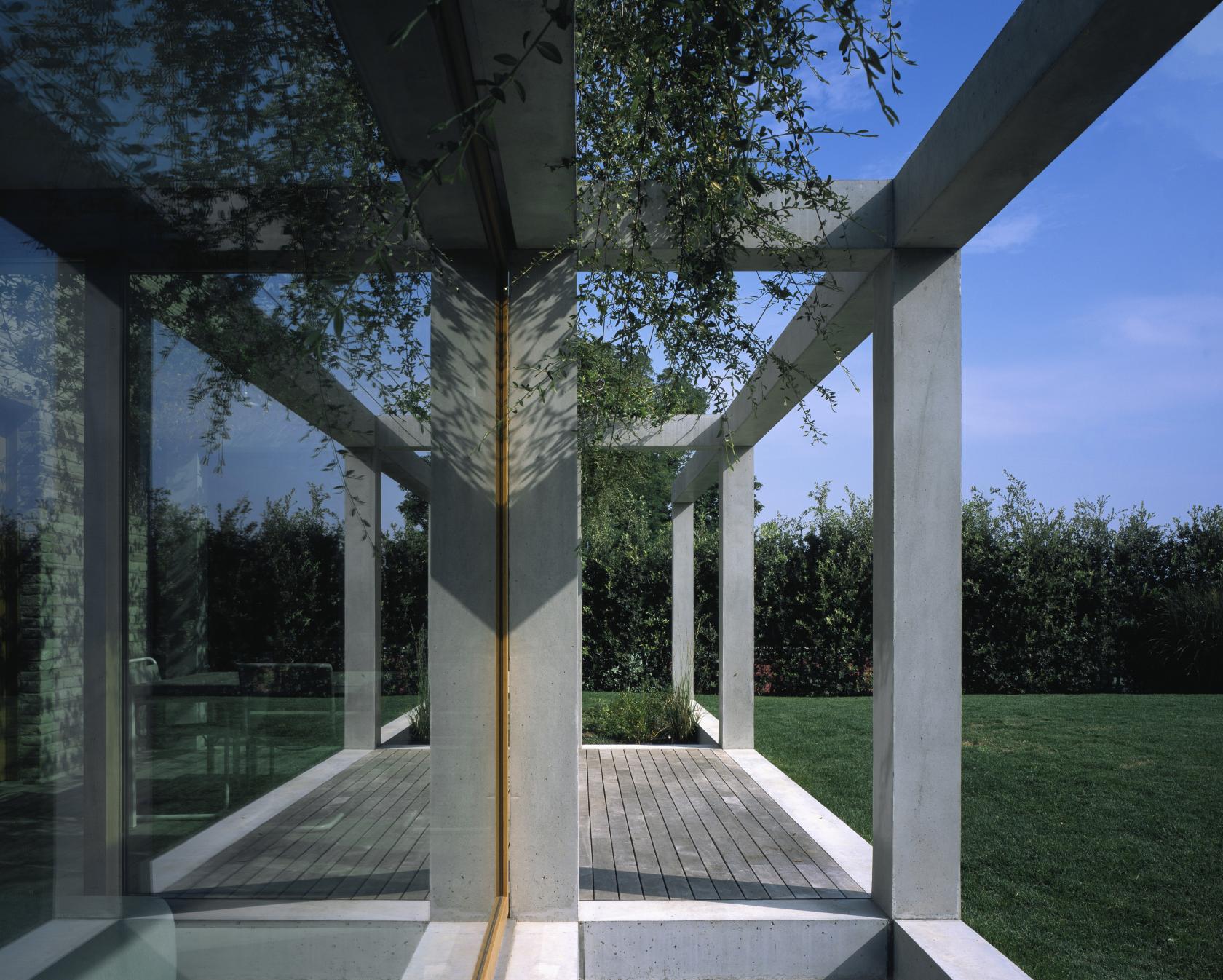
Francesco Di Gregorio, the lead architect and son of the practice's founder, highlights the symbolic importance of the space between the ancient brickwork and the new concrete frame. This interstitial void is intended to represent the intimate connection between the past, present, and future, with the house subtly integrated into its landscape. Plans are in place for plants to grow within these spaces, softening the square concrete columns and cascading over the edges of the platform, fulfilling Di Gregorio's vision for a harmonious blend of nature and architecture.
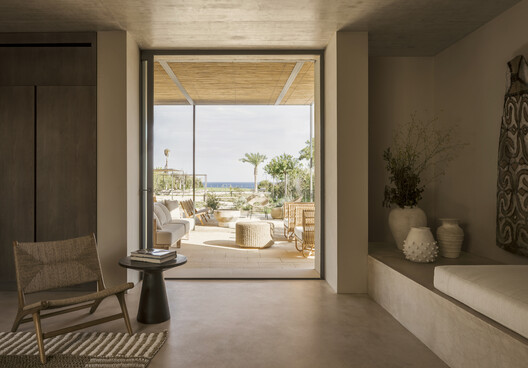
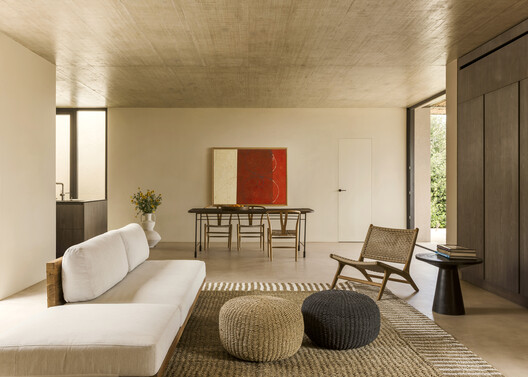
Each new exterior cube of the concrete frame corresponds to an interior space, effectively doubling its perceived size through reflection. This illusion is further enhanced by the architects' strategic use of glass walls and exposed concrete finishes on the ceilings. Inside, the design emphasizes smooth lines and clean volumes, creating a minimalist environment for living. European oak volumes discreetly conceal facilities and built-in storage. The original interior brick walls have been thoughtfully upholstered with German fabrics, Italian ceramics, and quartzite sourced from the nearby Val Taro river, adding texture and local character to the modern interiors.
The architect's background in film production, serving as an associate producer at Paris-based ZID Films, offers insight into the "cinematic vision" of the house. The design incorporates unfolding frames, echoing exterior and interior landscapes, and seamlessly weaves together natural elements with concrete structures. Furthermore, Di Gregorio, born in 1985, studied architecture under Mario Botta in Mendrisio, a renowned architect known for his ability to bridge concrete geometry with organic forms. This academic influence is evident in the Monticello House, where the architectural design meticulously balances robust materials with natural integration.
The project underscores a thoughtful approach to renovation, preserving the essence of the original structure while introducing contemporary elements that redefine its presence within the landscape. The Monticello House stands as a testament to the potential for old and new architectural forms to coexist and enhance each other, creating a living space that is both functional and artful.
#Architecture #ResidentialDesign #ItalianCountryside #ConcretePergola #ModernistRenovation #DiGregorioAssociati #ArchitecturalDesign #SustainableArchitecture #Architecture #ResidentialDesign #ItalianCountryside #ConcretePergola #ModernistRenovation #DiGregorioAssociati #ArchitecturalDesign #SustainableArchitecture
0 comment in total
 No comments yet
You may also like
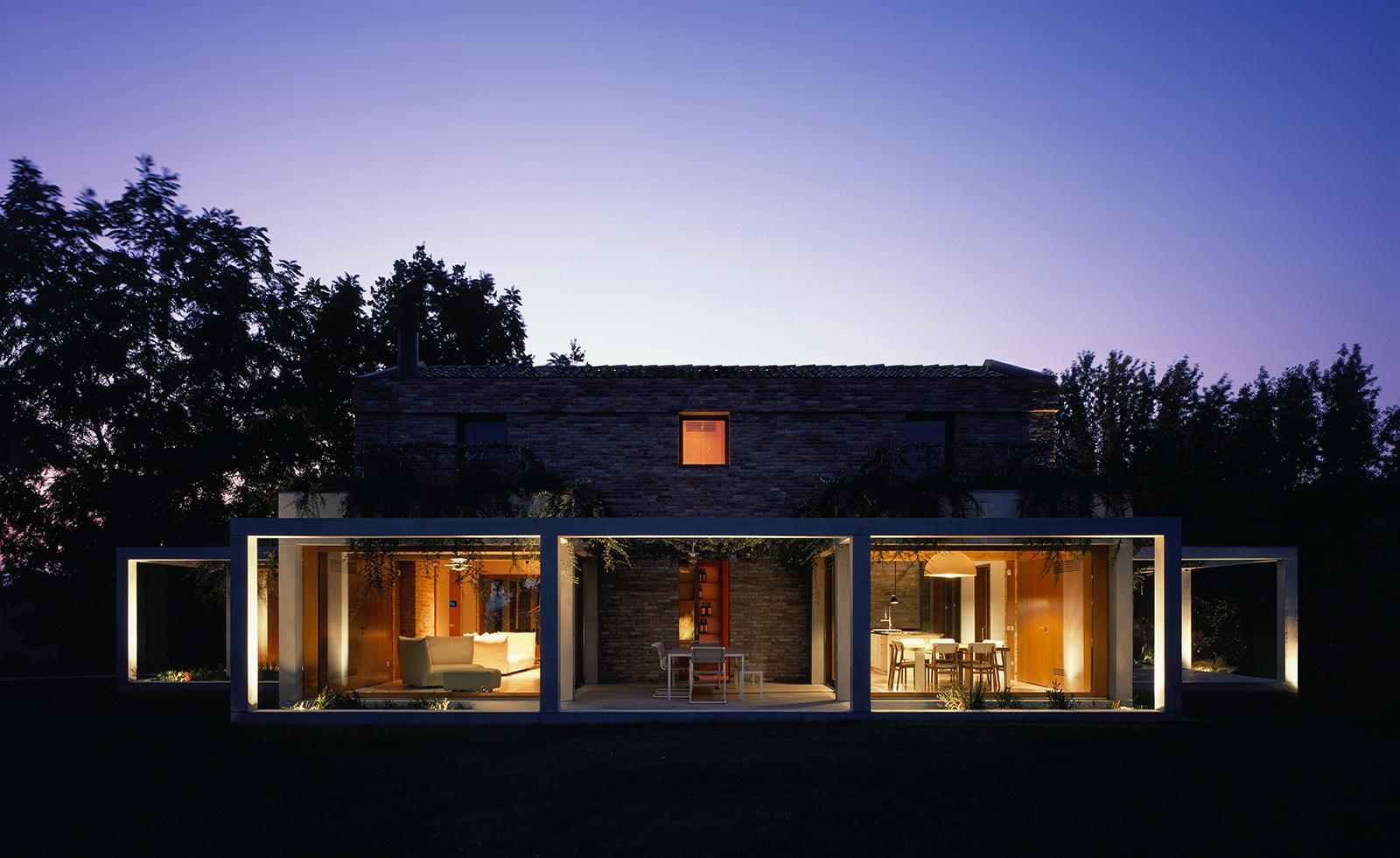
Di Gregorio Associati's cinematic pergola frames a rural Italian home

Meghan Markle's terrace is inspired by the Italian Renaissance
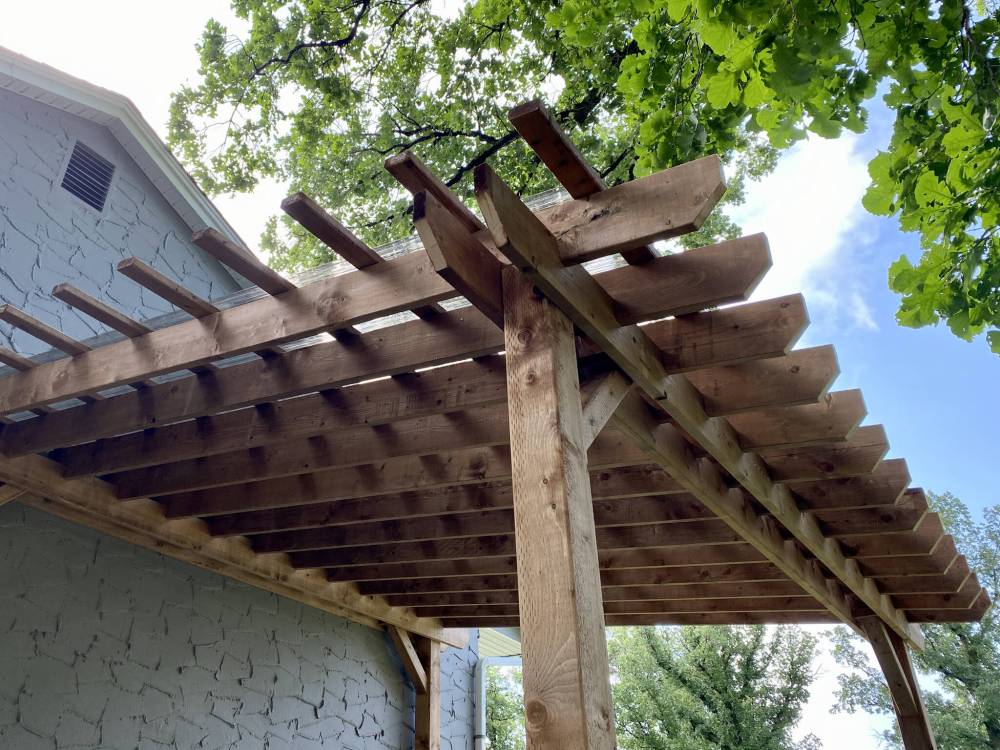
Nov 2022: The endless pergola summer


christian vivanco and los patrones design an armchair with a built-in pergola
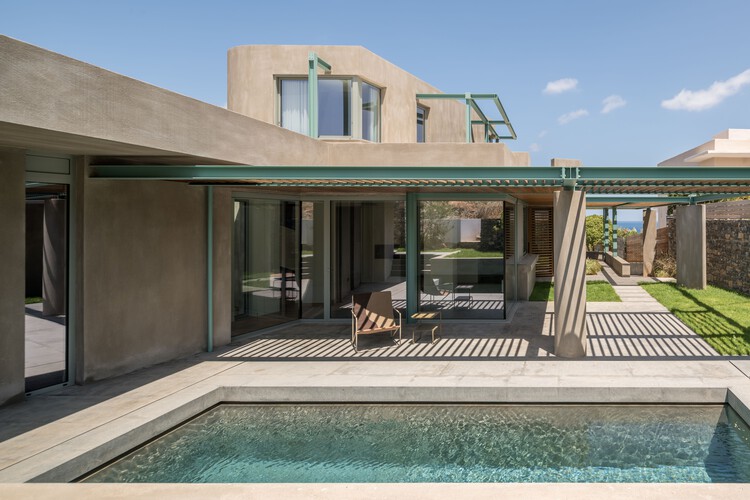
Pergola House / Entopos Architects

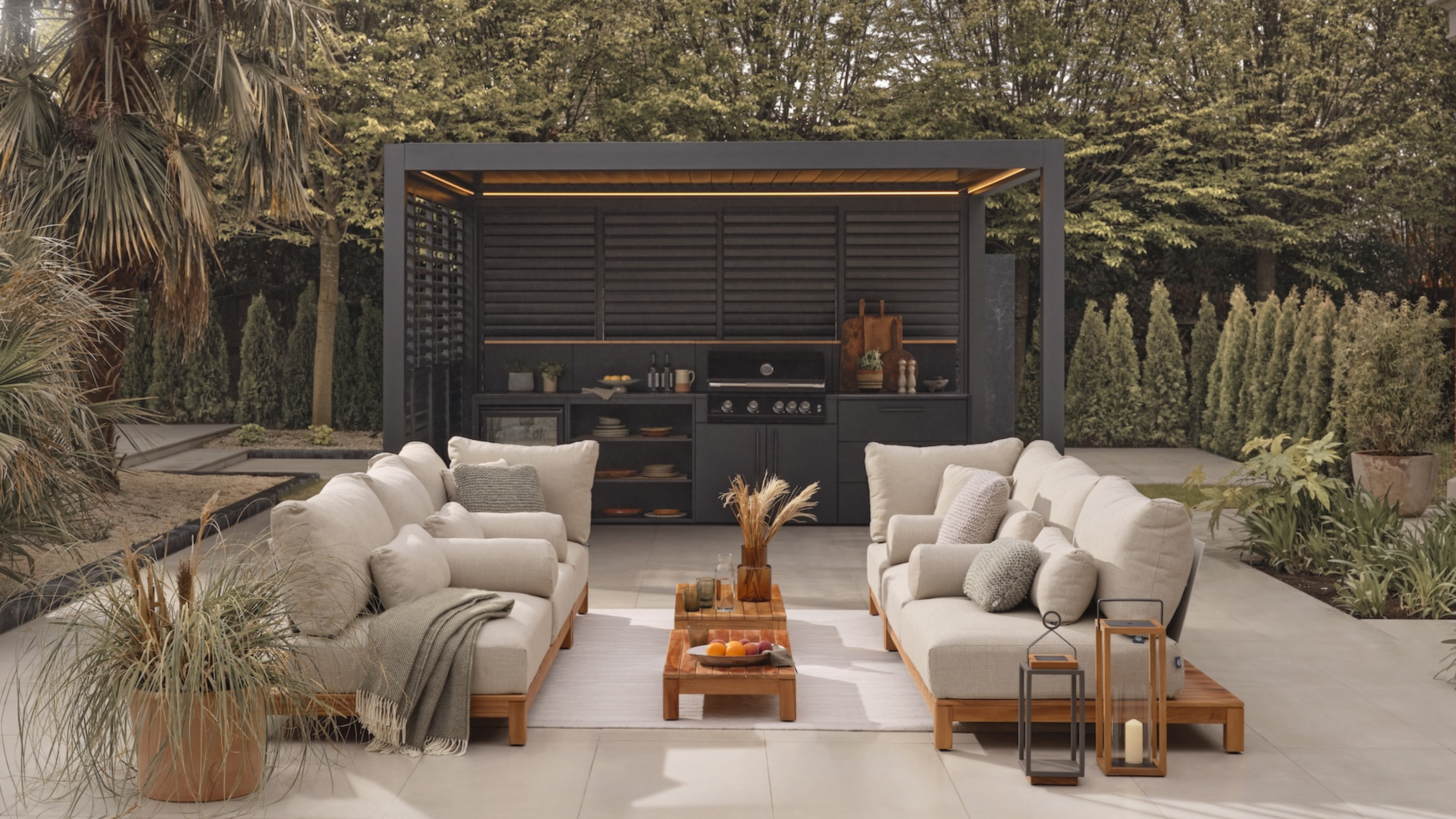
Is It Better to Buy or Build Your Own Pergola? Experts Discuss the Most Cost-Effective Way to Embrace Those Shady Summer Days


Family Premier Pergolas

Patio House / Solum Studio
Home Sale Differentiators: The Pergola

Trumpeting beauty of a pergola
De Stijl-inspired home in Kiev features massive pergola wall for privacy
This Modernist Pavilion Blends Italian Luxury With a Japanese Zen Garden

Gimme Shelter
Pergola House Playa Grande, Costa Rica home
This Home’s DIY Backyard Pergola Is One of the Coolest Outdoor Chill Zones We’ve Seen
Pergola mistakes: a pro reveals 9 common pergola errors
Interiors conquer the outdoors thanks to designer pergolas

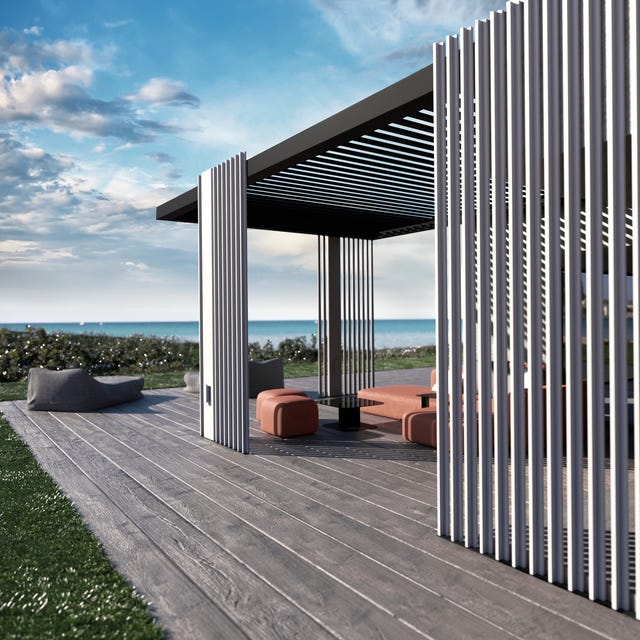
Tailor-made pergolas designed to enjoy the outdoors all year long
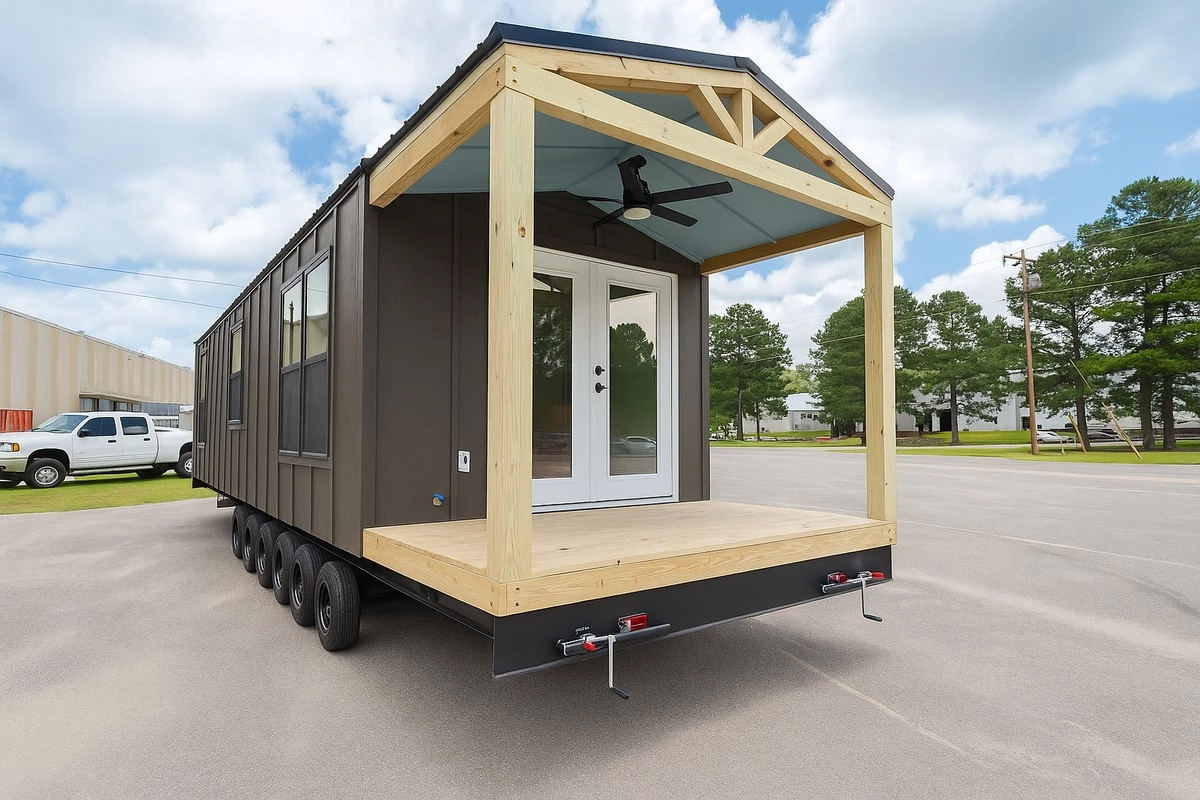
34-ft tiny house makes room for spacious semi-outdoor living
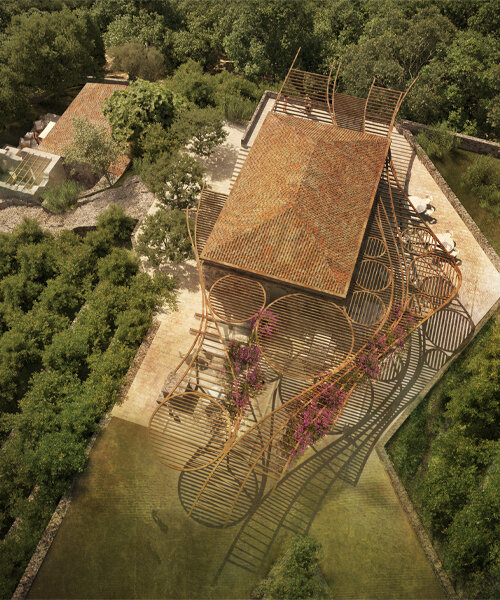
matteo cainer's proposed retreat in sicily reveals blooming pergola inspired by citrus groves