Japanese designers serve up unusual tableware
The COVID-19 pandemic, by increasing the time people spend dining at home, has spurred a demand for aesthetically pleasing tableware, consequently opening new avenues for Japanese porcelain design. A notable example is the Kiwakoto collection, which originated from a surprising background. Initially launched in 2018 by A-Story Inc., a subsidiary of the luxury car dealership Matsushima Holdings Co. Ltd., Kiwakoto began as a brand specializing in bespoke artisanal car interiors crafted in Kyoto. This unique origin story highlights a multidisciplinary approach to design, where expertise from one luxury sector is adapted to another, emphasizing high-quality craftsmanship and aesthetic appeal.
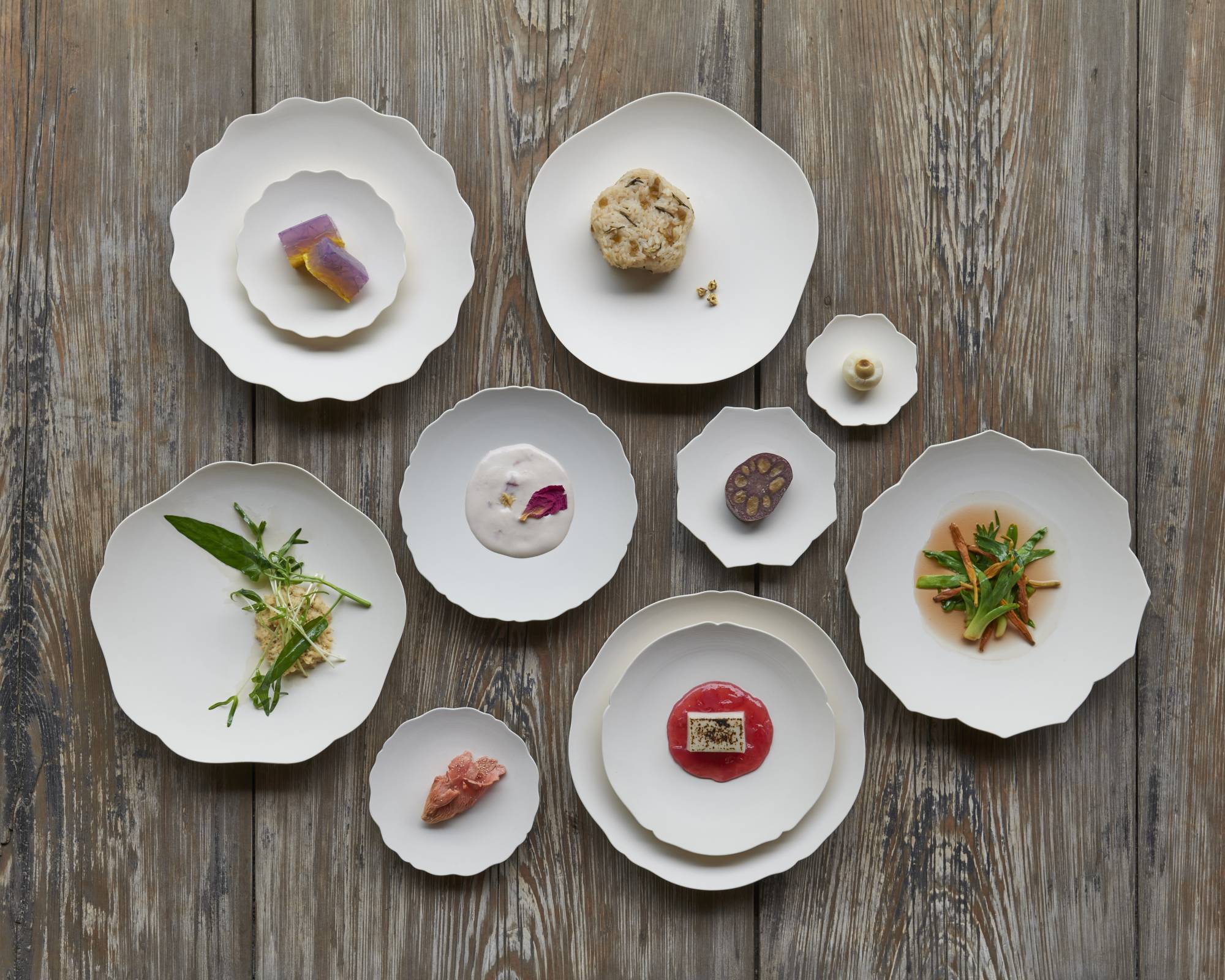
The Kiwakoto tableware line maintains the brand's commitment to exquisite materials and meticulous craftsmanship, transitioning its design philosophy from car interiors to dining ware. The collection features minimalist interpretations of iconic Japanese flowers, with dishes fired unglazed using a traditional process called *yakishime*. This technique not only imparts a distinctive natural texture but also showcases the inherent beauty of the clay, aligning with traditional Japanese aesthetics that value simplicity and the organic. The unglazed finish allows for a subtle interaction with light and food, enhancing the dining experience through both visual and tactile sensations.
The evolution of Kiwakoto from bespoke car interiors to tableware reflects a broader trend within the design industry: the application of high-end design principles and artisanal techniques across diverse product categories. This approach suggests a recognition that consumers of luxury items appreciate consistent quality and design ethos, regardless of the specific product. The brand leverages its established reputation for luxury and artisanal quality, built through its car interior venture, to introduce a new line of products that resonate with a similar discerning clientele.
The emphasis on iconic Japanese flowers in the tableware designs serves to connect the products with a rich cultural heritage, adding a layer of storytelling and authenticity. Each piece becomes more than just a functional item; it is a miniature artwork reflecting Japanese natural beauty and craftsmanship. The use of *yakishime* further reinforces this connection to tradition, celebrating ancient pottery techniques in a contemporary context.
This development in Japanese porcelain design caters to a growing market segment that values not only the functionality but also the artistic and cultural significance of household items. As home dining continues to be a central activity, the demand for tableware that elevates the everyday experience through sophisticated design and traditional craftsmanship is likely to persist. Kiwakoto's expansion into this market exemplifies how Japanese designers are innovating by blending modern aesthetics with time-honored techniques, offering consumers products that are both visually appealing and deeply rooted in cultural heritage.
#JapaneseDesign #Tableware #Kiwakoto #Porcelain #Yakishime #LuxuryDesign #MinimalistDesign #ArtisanalCraftsmanship #HomeDining #CulturalHeritage #JapaneseDesign #Tableware #Kiwakoto #Porcelain #Yakishime #LuxuryDesign #MinimalistDesign #ArtisanalCraftsmanship #HomeDining #CulturalHeritage
0 comment in total
 No comments yet
You may also like
Ten furniture and lighting designs by Japanese brands and designers

Step inside Acne Studios’ pink-hued Tokyo flagship: ‘fashion is supposed to be fun’

A floating dialogue in space: Pod by B&T Design and Jin Kuramoto

This coffee table finds balance in Scandinavian and Japanese design elements for a bold and elegant look

Eeshaan Kashyap experiments with forms and finishes to create a unique tableware collection

You Can Now Buy Domino-Designed Dinnerware at Anthropologie

creation as DIALOGUE: modern design meets ancient nagoya crafts at maison&objet 2023
Michael Hsu Pays Homage to Japanese Tradition in Uchi Miami


Dancing Squares by Nendo
Japanese Zen Gardens + Art Deco are the inspiration behind this furniture and tableware collection!
Postcard Bakery Features Bold Color and Pattern Inspired by Retro Japanese Design


The Post-Materialist | A Pattern’s Math Magic

Bringing Out Luxurious Japanese Design

10 best shops in Kappabashi kitchen town: Japanese knives, bento boxes and more

MoMA Design Store Resurrects Hellerware Rainbow Dinnerware
BZIPPY Introduces Tables, Planters, and Vases With a Twist
3D-Printed Ceramic Vases That Mimic Nature’s Patterns
Kyuhyung Cho creates colourful three-sided shelves for Menu
How to create a Japandi kitchen – 6 design ideas to nail this simple-yet-soothing look


Made in Japan Nagoya Mosaic-Tile collections now available