1/6
Weather-resistant barriers: Advanced technologies for modern construction
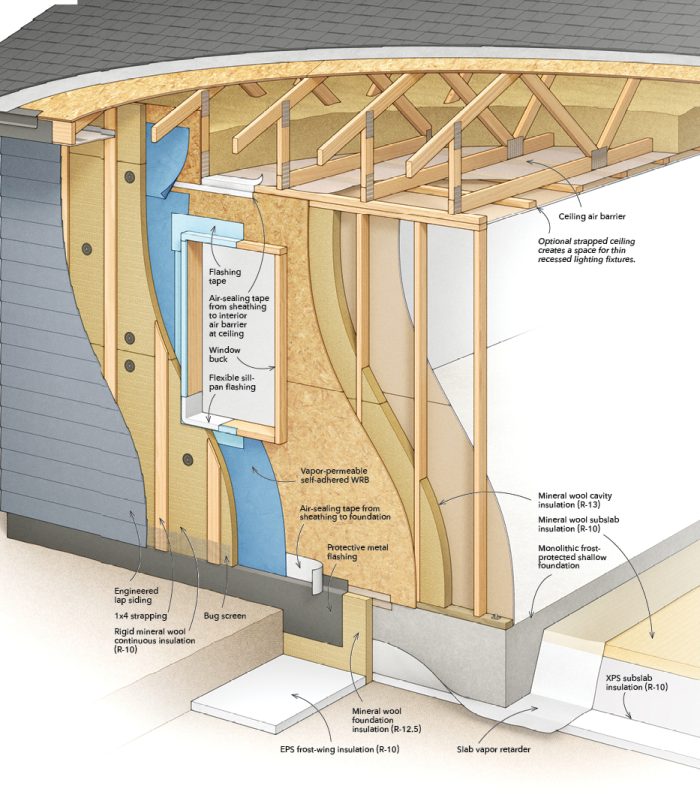
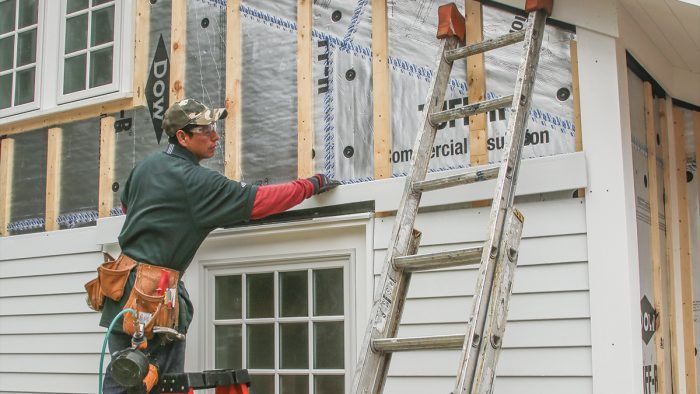
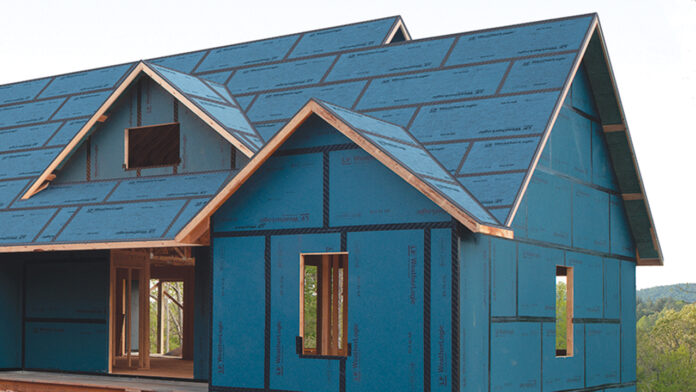
The increasing demand for superior building performance and stricter regulations has made effective moisture management a critical aspect of multifamily and commercial construction. Weather-resistant barriers (WRBs) are crucial in creating air- and moisture-resistant building envelopes. The 2018 International Building Code (IBC) Section 1403.2 defines a “water resistive barrier” as at least one layer of No.15 asphalt felt, or other approved materials, attached to studs or sheathing to provide a continuous water-resistive barrier behind the exterior wall veneer. The American Architectural Manufacturers Association (AAMA) further distinguishes weather-resistant barriers as surfaces preventing air and water infiltration, with polymer-based barriers also serving as air barriers. Manufacturers of polymer-based barriers, such as building wraps, differentiate between water-resistive and weather-resistive barriers, with the latter providing the added benefit of serving as an air barrier for the vertical building enclosure.
The IBC code sets minimum standards for WRBs, comparing them to No. 15 felt paper, the original “house wrap.” Modern WRBs require a “balance of properties,” including bulk air and water holdout, breathability, and durability. Advanced building wrap products now feature integrated drainage gaps, eliminating the need for furring strips and reducing material and installation costs. The article explores the performance characteristics of WRBs, including moisture management and drainability. A high-performance building wrap must pass a “water ponding” test and a more stringent hydrostatic pressure test. It must also balance permeability with drainability to prevent moisture trapping and allow evaporation. Drainage efficiency is typically tested according to ASTM E2273, which requires a minimum of 90% drainage efficiency for wall assemblies. Some advanced building wraps achieve even higher efficiencies, utilizing integrated drainage gaps created through creping, embossing, weaving, or filament spacers, or through an additional layer of polypropylene fibers.
Permeability is another vital characteristic, measuring the amount of vapor transmission a building wrap allows. ASTM E96, also known as the Water Vapor Transmission Rate (WVTR) or Moisture Vapor Transmission Rate (MVTR), is the industry standard for permeability. A permeable WRB prevents moisture vapor from becoming trapped within the wall assembly, which can lead to issues like rotting and mildew. The key is to design a wall system that allows moisture to escape to the outside. The International Code Council (ICC) requires a product's permeance rating to be at least five perms to be classified as a water-resistive barrier, distinct from a vapor retarder. Building scientist Joseph Lstiburek suggests an optimal range of 10–20 perms for balancing moisture protection and breathability.
Air holdout, as defined by the Air Barrier Association of America (ABAA), refers to a system of assemblies designed to control uncontrolled airflow. A continuous air barrier is essential for energy efficiency, comfort, and indoor air quality, reducing energy consumption for heating and cooling by up to 40%. An individual material must have an air permeance of less than or equal to 0.02 L/(s•m2) at 75 Pa when tested per ASTM E2178 to be classified as an air barrier. However, real-world performance depends on proper installation and the integrity of connections. For ABAA approval, an air barrier must pass ASTM E2357 testing, which simulates real-world conditions including wind loading. Whole-building testing can also be performed using ASTM E779.
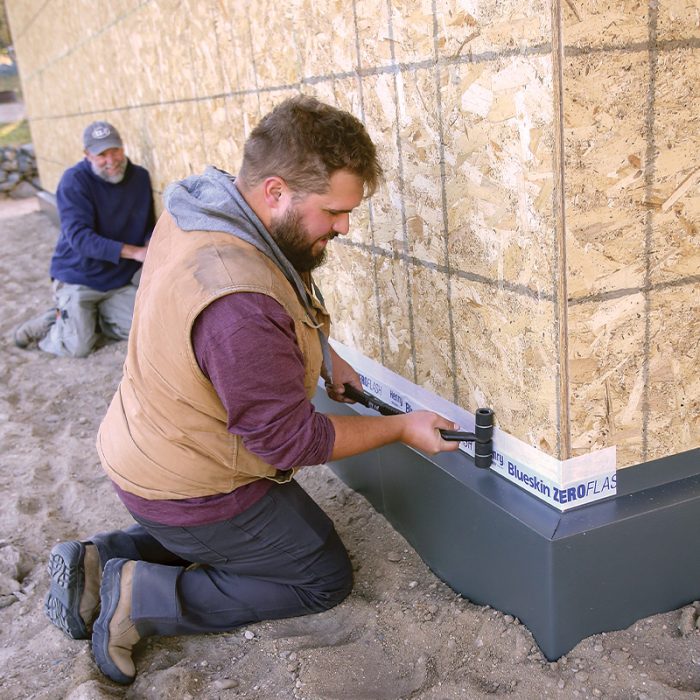
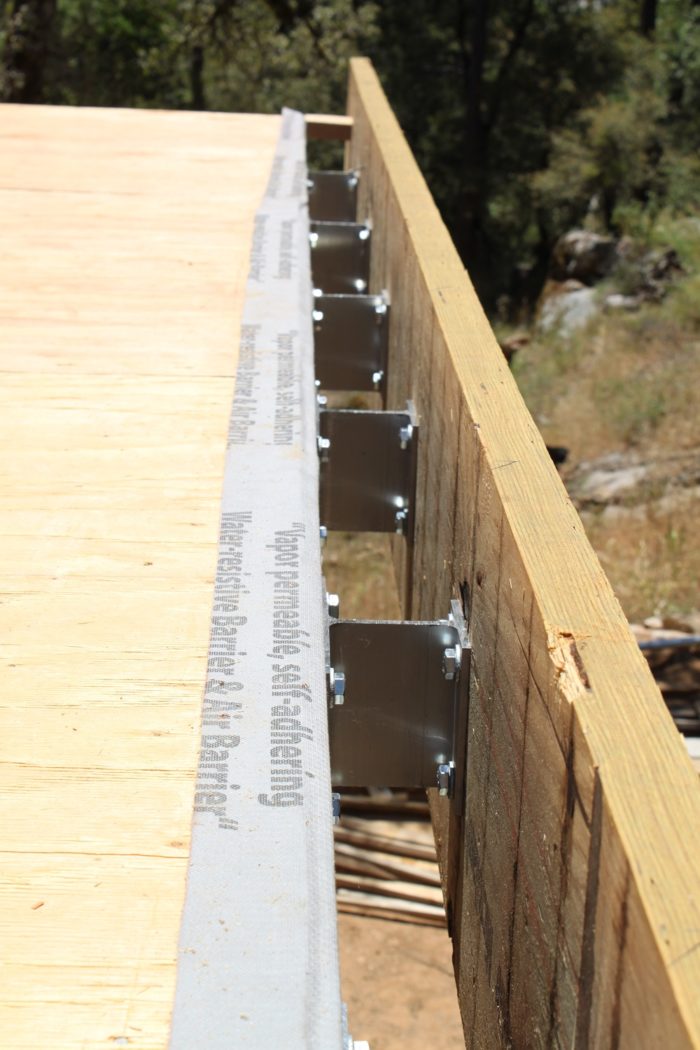
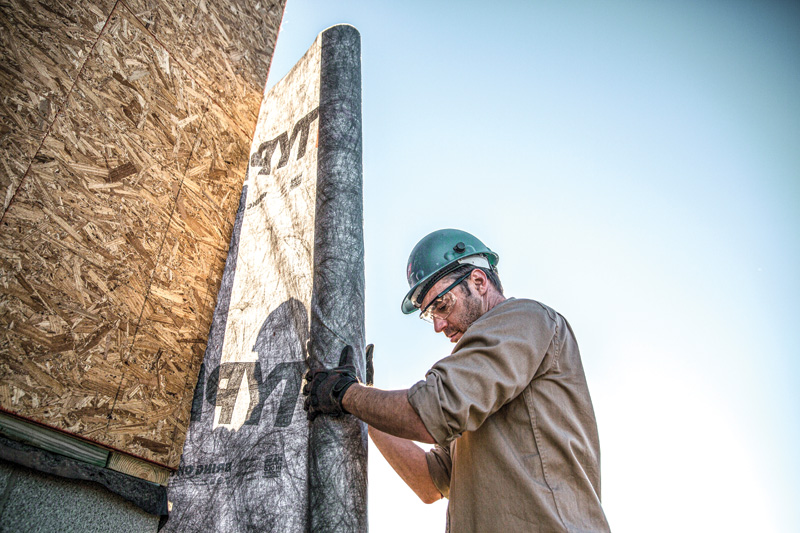
A systems approach is crucial for air and moisture management, where the WRB is integrated with flashing tapes, sealants, and other accessories. Compatibility of these components is vital; for instance, certain sealants can damage bitumen flashing products. Proper installation, including correct fastening methods and seam sealing, is essential to prevent performance compromise. Manufacturers often offer system-based warranties for integrated solutions. Durability is also critical, with WRBs needing to withstand construction site rigors, including tears, scratches, and exposure to UV light and chemicals. The ICC evaluates durability based on tensile strength and tear resistance, with trapezoidal tear tests (ASTM D1117/ASTM D5733) being a reliable measure of in-plane tear resistance. The grab tensile measurement (ASTM D5034) is suitable for nonwoven fabrics. Scratch resistance, while lacking specific ASTM standards, is also important for maintaining material integrity.
UV resistance is another key performance attribute, especially in commercial construction where prolonged exposure can degrade materials. High-performance WRBs can offer up to 12 months of UV resistance without performance degradation, a significant advantage given potential project delays. Finally, surfactant resistance is often overlooked but critical. Surfactants, such as those found in wood extractives or cleaning solutions, can lower surface tension, allowing water to penetrate the WRB and compromise its effectiveness. This can lead to structural damage, mold, and rot. Specifiers must choose WRBs that are resistant to these chemicals. Selecting the right WRB involves understanding these key performance measures and adopting a systems approach to ensure a high-performance building envelope that meets modern codes and contributes to the longevity and energy efficiency of structures.
#WeatherResistantBarriers #MoistureManagement #BuildingEnvelopes #ConstructionMaterials #AirBarrier #Permeability #Durability #UVResistance #SurfactantResistance #WeatherResistantBarriers #MoistureManagement #BuildingEnvelopes #ConstructionMaterials #AirBarrier #Permeability #Durability #UVResistance #SurfactantResistance
0 comment in total
 No comments yet
You may also like
Outdoor shade and screens ride the storms out

Cupa Pizarras creates cladding system that "utilises the beauty of natural slate"
Learn How to Install Rainscreen Siding Like a Pro
The Best Way to Ventilate Siding
Build a "Perfect Wall" on a Budget for Affordable High-Performance
A New Take on Insulating a Roof
Understanding Rainscreens
3D Printing Lightweight, Insulated Walls Using Cement-Free Mineral Foam

Thermally Broken Roof Framing
LP WeatherLogic Air & Water Barrier

How Can Architecture Combat Flooding? 9 Practical Solutions

Hurricane-Proof Construction with the Fortified Home Standard

Rainscreen walls: An updated definition for today’s construction environment

Sustainable Concrete Panel Construction | Spotlight on Nexii and Vero Building Systems

The latest and greatest innovations in sustainable building materials
Vintage view: How old stone and brick walls can benefit from lime render

Radiant Barriers
Inside and out
6 ways to future-proof your home against extreme weather – your home (and wallet) will thank you

Stone wool insulation: Improving open-joint cladding systems