1/25
The Idea and Invention of the Villa
The villa has played a pivotal role in the trajectory of Western architectural history. In ancient Italy and again during the Renaissance, the concept of a country house nestled in a natural environment captivated both affluent patrons and architects. While the architectural forms evolved and their settings shifted from rural to suburban or even urban gardens, the fundamental principle endured: to create an architectural embodiment of an idyllic retreat for intellectual pursuits and spiritual contemplation, distinct from urban life. Following the Renaissance, the villa archetype expanded beyond Italy, being revitalized and reinterpreted across Western Europe and in other regions influenced by European culture.
The term "villa" encompasses various structures that share a natural setting or an agricultural function. A villa's architecture might include working farm structures, known as *villa rustica*, alongside living quarters, or *villa urbana*. Thus, the villa is best understood as a concept, or identity, applied to architecture, rather than a fixed concrete form. This fluid application of an idea to architecture embodies an ideal of living, or *villeggiatura*.
The architectural design and organization of villas are largely informed by the literary accounts of ancient Rome. Authors such as Columella in *De re rustica* and Cato in *De agricultura* detailed the characteristics of their villas in the Campagna, the area surrounding Rome. These ancient texts frequently highlight the restorative qualities, or *otium*, offered by the natural setting of a villa, contrasting it with the demands of city life, or *negotium*. Horace's poetry also celebrated the simple virtues of ancient villa life. Pliny the Younger's *Letters*, particularly his descriptions of his Laurentine and Tuscan villas, significantly influenced later patrons and architects. His accounts provided visual impressions of the villas' general appearance and delineated the experience through integrated interior and exterior architectural elements. Pliny's retreats blended seamlessly with the landscape through terraced gardens and opened to nature via colonnades or loggias, replacing solid walls. He sought solace in the gardens, appreciating the abundant flora and fauna, fostering a cultural life of poetry, art, and literature distinct from urban Rome. Architects, drawing on initial reconstructions by Vincenzo Scamozzi, would later use Pliny's descriptions to envision ancient villa spaces.
During the Renaissance in Italy, the concept of the villa was further shaped by archaeological discoveries. The monumental Villa Adriana, built by Emperor Hadrian in the first century A.D., encompassed over 300 acres, combining imperial administration (*negotium*) with courtly leisure (*otium*). Rediscovered in the fifteenth century, this vast archaeological site was studied firsthand by architects like Francesco di Giorgio Martini, Andrea Palladio, and Pirro Ligorio, who consulted historical texts for details of Hadrian's life there. Ligorio notably incorporated sculptural fragments from Villa Adriana into the Vatican gardens and as architectural spolia in his design for the Villa d'Este, renowned for its water features and terraced gardens overlooking the Roman campagna.
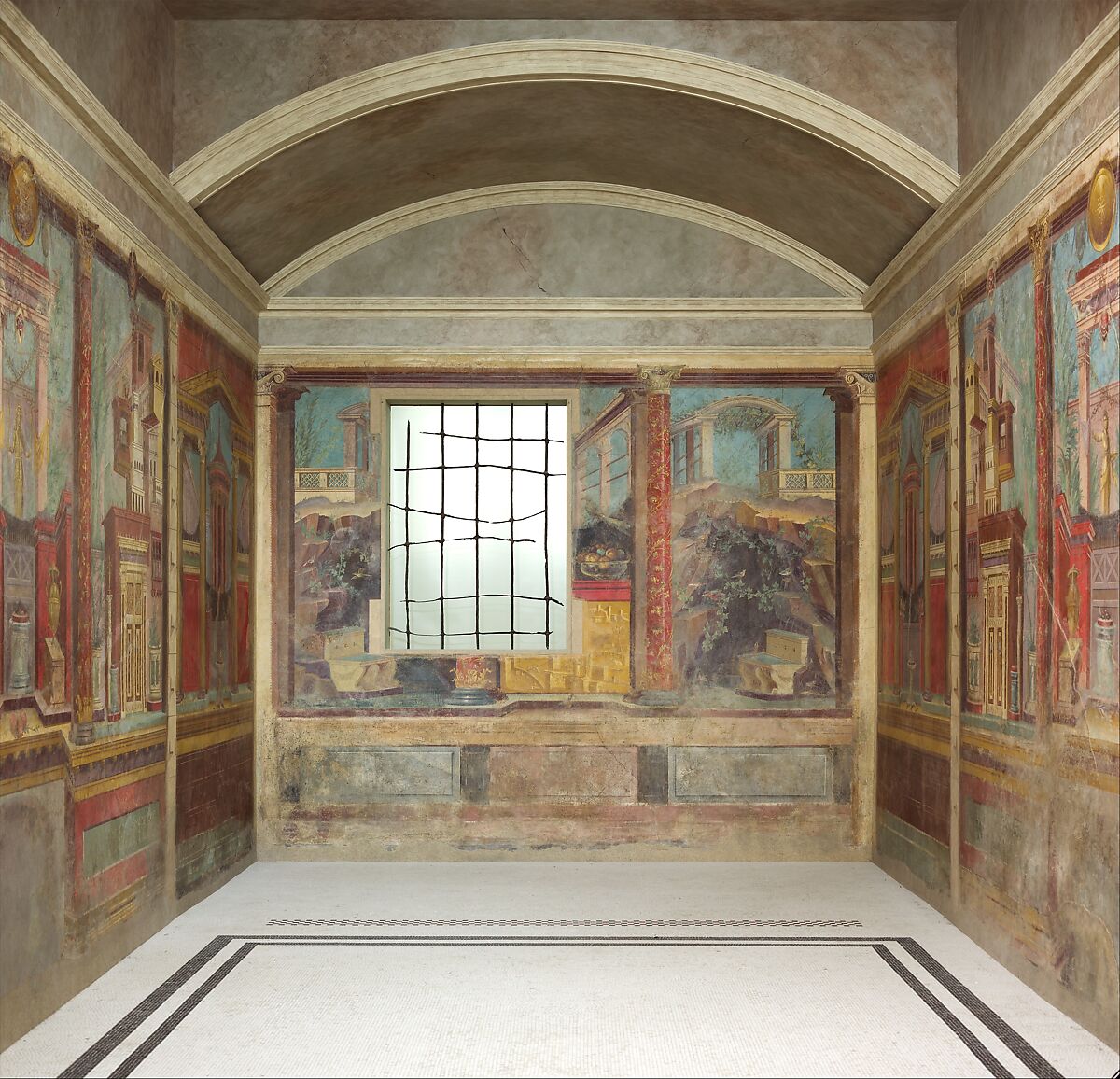
The grandeur of the ancient Roman villa-estate was not only imagined through written descriptions but also evolved from the rediscovery of painted frescoes on antique ruins. Raphael and his workshop reinterpreted the ornamental stucco details from their archaeological studies for the Villa Madama in Rome, incorporating grotesques with narratives from ancient authors, drawing inspiration from Villa Adriana and the Domus Aurea. Similarly, for Pope Julius III, architects like Giacomo Barozzi da Vignola, Bartolomeo Ammanati, and Giorgio Vasari created intricate surfaces within the courtyards, loggias, and grottoes of the Villa Giulia. Barozzi da Vignola's design for the Villa Farnese adapted a massive pentagonal fortified structure, integrating Roman garden and villa concepts with a circular courtyard. In the late sixteenth and early seventeenth centuries, as Roman elites sought country retreats, architects specialized in villa design, moving beyond strict historical examples. They skillfully combined classical forms with Baroque principles of unity, grandeur, and spectacle, harmonizing surface architecture, interiors, and landscape into cohesive decorative ensembles. These designs featured ornate facades, elaborate entrance gates, and gardens with spectacular water features and antique statues, setting the stage for grand social events. Notable examples include the Villa Borghese, Villa Medici, and Villa Doria Pamphilj in Rome, as well as the Villa Aldobrandini and Villa Mondragone in Frascati. In Florence, the Medici family developed villas integrated with their garden settings, such as the Villa Medici at Fiesole, the inventive villa-park at Pratolino, and the Villa La Petraia.
A distinct variation of the Roman villa ideal emerged in the Venetian republic during the sixteenth and seventeenth centuries. Noble families enhanced their estates with villa designs influenced by Renaissance humanism and architectural treatises published in Venice. Vitruvius's *De architectura*, with its woodblock images, and Serlio's *Regole generali di architettura* and *Il terzo libro, de le Antiquita*, which combined ancient and contemporary Roman examples, were influential. Serlio described the fresco perspectives at the Villa Farnesina as extending interior space into the landscape and praised the setting of the Villa Madama. Vincenzo Scamozzi's *L'idea della architettura universale* emphasized ancient Roman texts and geometric proportion. Andrea Palladio, a prominent Venetian humanist-architect, codified the ideal villa type in *I quattro libri dell'architettura*. He blended the humanist concept of *otium* with architectural rules based on his interpretation of ancient Roman proportional principles. His villa designs, characterized by symmetrical plans and antique temple-front porticos, include the Villa Barbaro and the Villa Almerico. At Villa Barbaro, loggias integrated the natural surroundings into the central hall, with frescoes depicting seasons and villa life. The Villa Almerico, also known as the Villa Rotonda, featured four identical temple-front porticos symmetrically arranged around a circular central hall, strategically positioned on a hilltop to command the landscape and crowned with a dome, echoing the Pantheon.
Palladio's treatise, translated and republished throughout the seventeenth and eighteenth centuries, profoundly influenced architecture beyond Italy, making his villa inventions synonymous with the villa ideal until the late eighteenth century. Villa architecture, often enriched by local building traditions, became an interpretation of antiquity disseminated through images of a Neoclassical style. Inigo Jones championed Palladian ideas in early seventeenth-century England, making them a dominant force in Georgian country-house architecture for nearly two centuries. Lord Burlington's Chiswick House, based on Palladio's designs, exemplifies this. Palladianism also influenced Pieter Post's Huis ten Bosch in Holland and Thomas Jefferson's Monticello and Drayton Hall in America. In European villa designs, interior decoration evolved beyond the direct imitation of antique frescoes and stuccowork seen in Italian traditions. Eighteenth-century English classical interiors, such as the Kirtlington Park dining room and Robert Adam's Lansdowne House dining room, demonstrate a complex blend of Palladian style, incorporating antique motifs, contemporary flourishes, and Palladian patterns, reflecting an ideal interior design influenced by Palladio's published works.
#VillaArchitecture #RenaissanceArchitecture #RomanVillas #Palladianism #ArchitecturalHistory #LandscapeDesign #ClassicalArchitecture #ItalianVillas #CountryHouses #VillaArchitecture #RenaissanceArchitecture #RomanVillas #Palladianism #ArchitecturalHistory #LandscapeDesign #ClassicalArchitecture #ItalianVillas #CountryHouses
0 comment in total
 No comments yet
You may also like
Breeze-Block Walls and Pavilions Make This Spanish Villa Exceptionally Airy

Best Traditional Home 2025: Paradise Valley Estate
A Michigan villa, a Georgia mansion, and a Pennsylvania ranch: A special swing state luxury real estate roundup
Holiday home of the week: a country retreat on Croatia’s Istrian peninsula
Villa Z / ARK-architecture

This reimagined "minimally eclectic" villa originally featured in Belle back in the 90s


Write on!
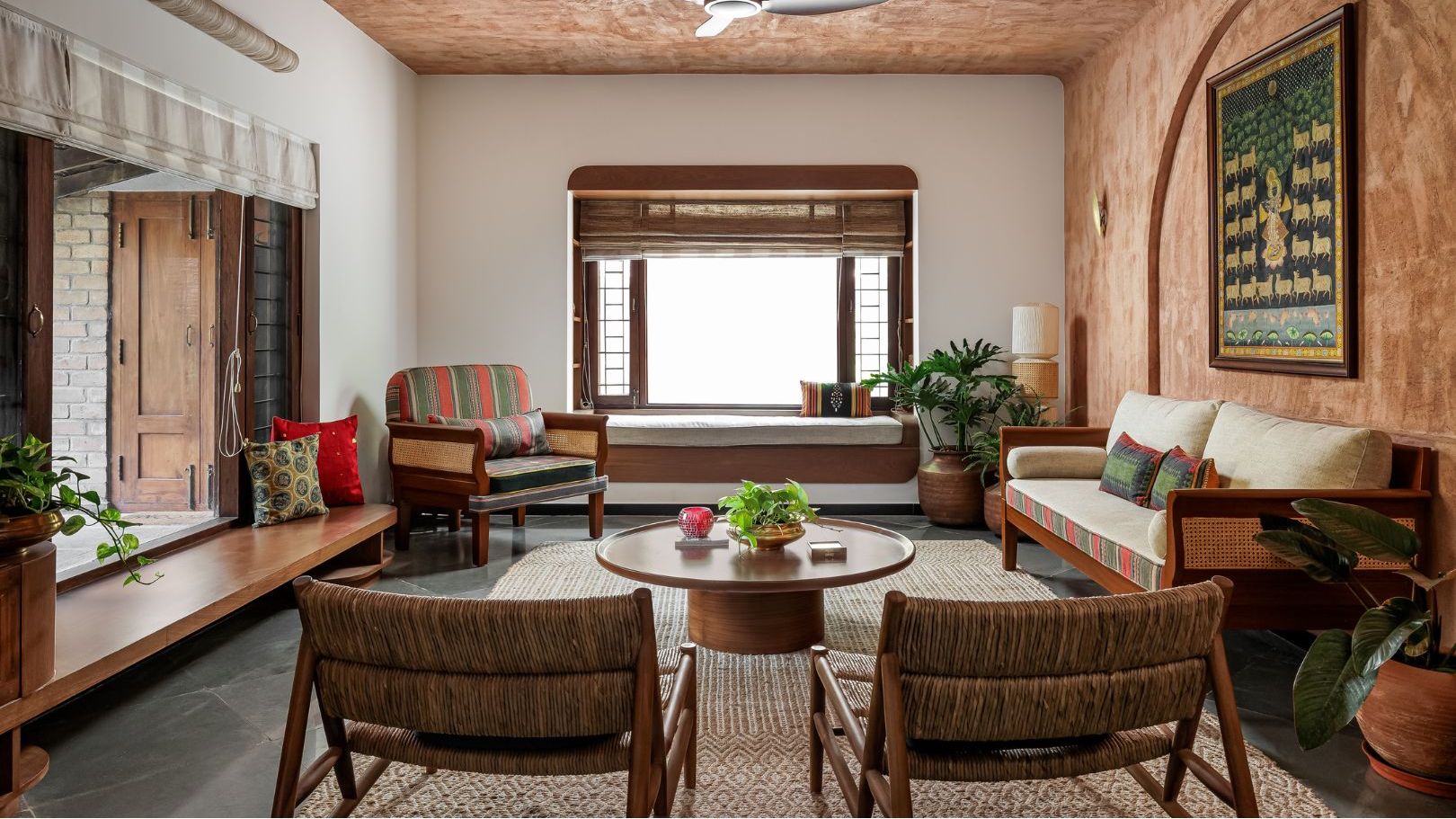
This 3,500-square-foot Bengaluru villa is a tactile map of memories and modernity

Using art and IKEA finds, a well-kept Victorian villa is turned into a family haven
APS concept studio nestles wooden villa into vietnamese countryside
Contemporary Stone Villa / Dana Oberson Architects

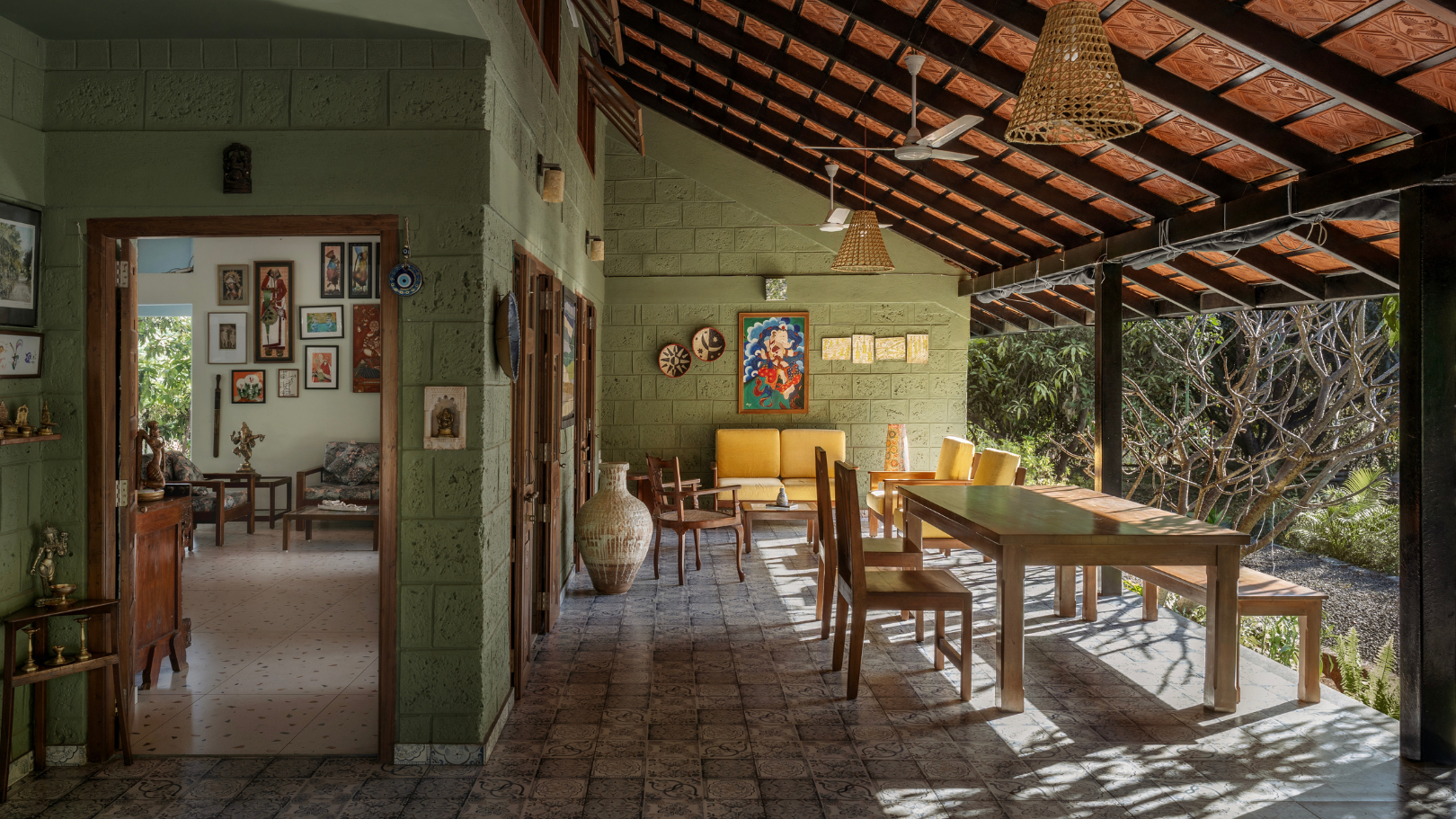
This Vastu-compliant villa in Alibag is a cottagecore fantasy come true
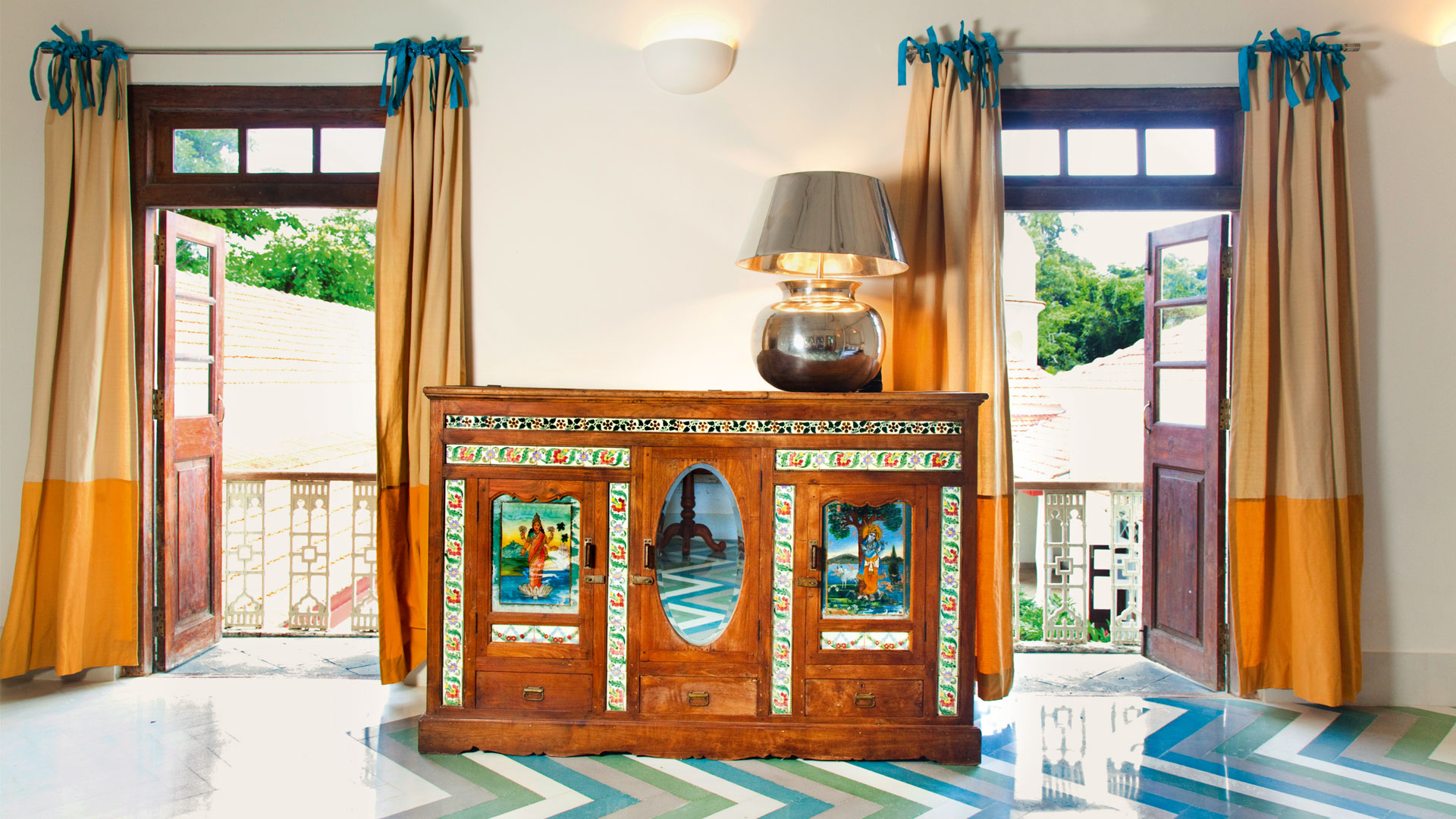
Inside a rustic Goan villa by the sea
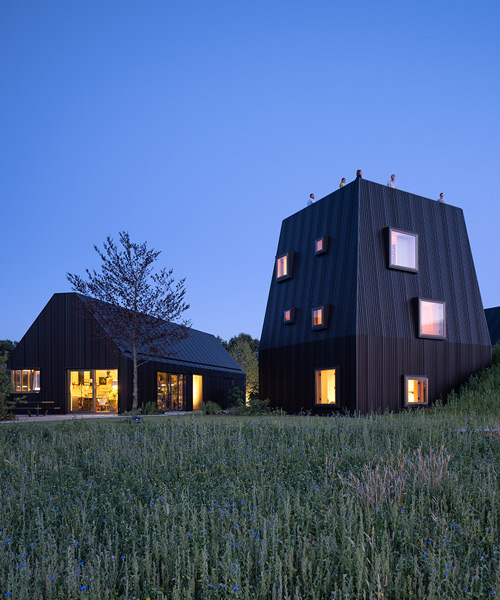
mecanoo references the layout of dutch farmhouses for 'villa vught' in the netherlands
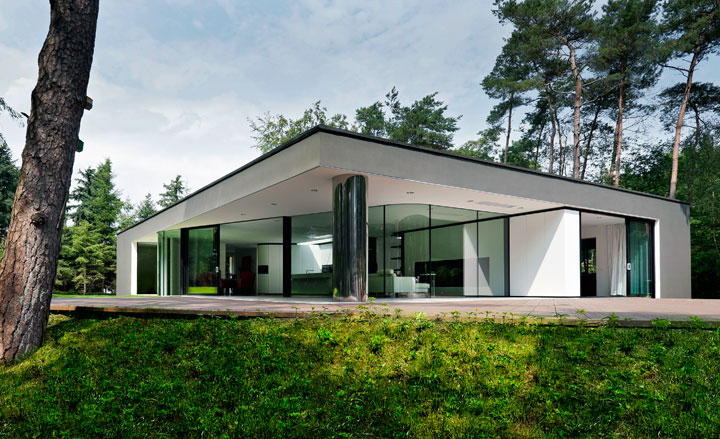
Interactive floor plan: Villa Veth by 123DV Architects, Netherlands
The Courtyard House / Atelier Varun Goyal
'Every Room Tells Part of the Family’s Story, It’s Filled With Decades of Memories' – See How Sims Hilditch Transformed This Old London Villa From Family Heirloom to Family Home

Mosa Tiles Enliven Venetian Villa by JM Architecture

A fictional 1970s villa is full of drama in Dimoremilano and Loro Piana’s installation

What Are Victorian Houses? Everything to Know About This Architecture Style