1/11
A closer look at the 10 best Achille Castiglioni designs
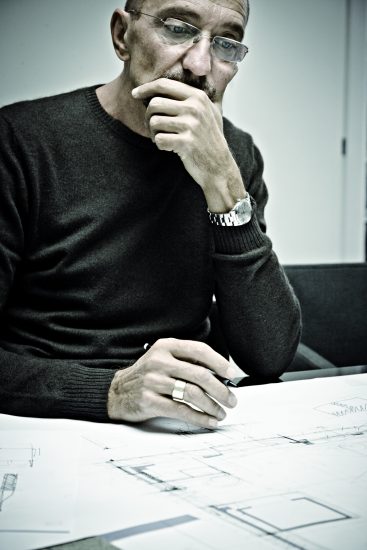
Achille Castiglioni, a prominent figure in global industrial design, demonstrated an extraordinary ability to transform ordinary materials into masterpieces, contributing significantly to Italian design after World War II. His work, often created in collaboration with his brother Pier Giacomo, is celebrated in leading museums and educational resources worldwide. This article highlights ten of his most iconic designs, showcasing his creative philosophy of achieving maximum results with minimum means.
One notable creation is the Luminator floor lamp (1954, FLOS), co-invented with Pier Giacomo. This lamp exemplifies simplicity and functionality, comprising a galvanized metal tripod, an iron rod, and a lampshade-less bulb. Its minimalist design reflects the Castiglioni brothers' core principle of efficiency in design.
Another iconic piece is the Mezzadro stool (1957, ZANOTTA), which ingeniously reuses an old tractor seat, a bent iron bar, and a wooden stand. Originally produced by Isa and later by ZANOTTA, this stool is a testament to their innovative approach to repurposing everyday objects into functional and aesthetically pleasing furniture. Similarly, the Sella stool (1957, ZANOTTA) utilizes a bicycle saddle, a steel pole, and an iron base, allowing for a unique combination of sitting and movement, reflecting Achille Castiglioni's desire for adaptable furniture.
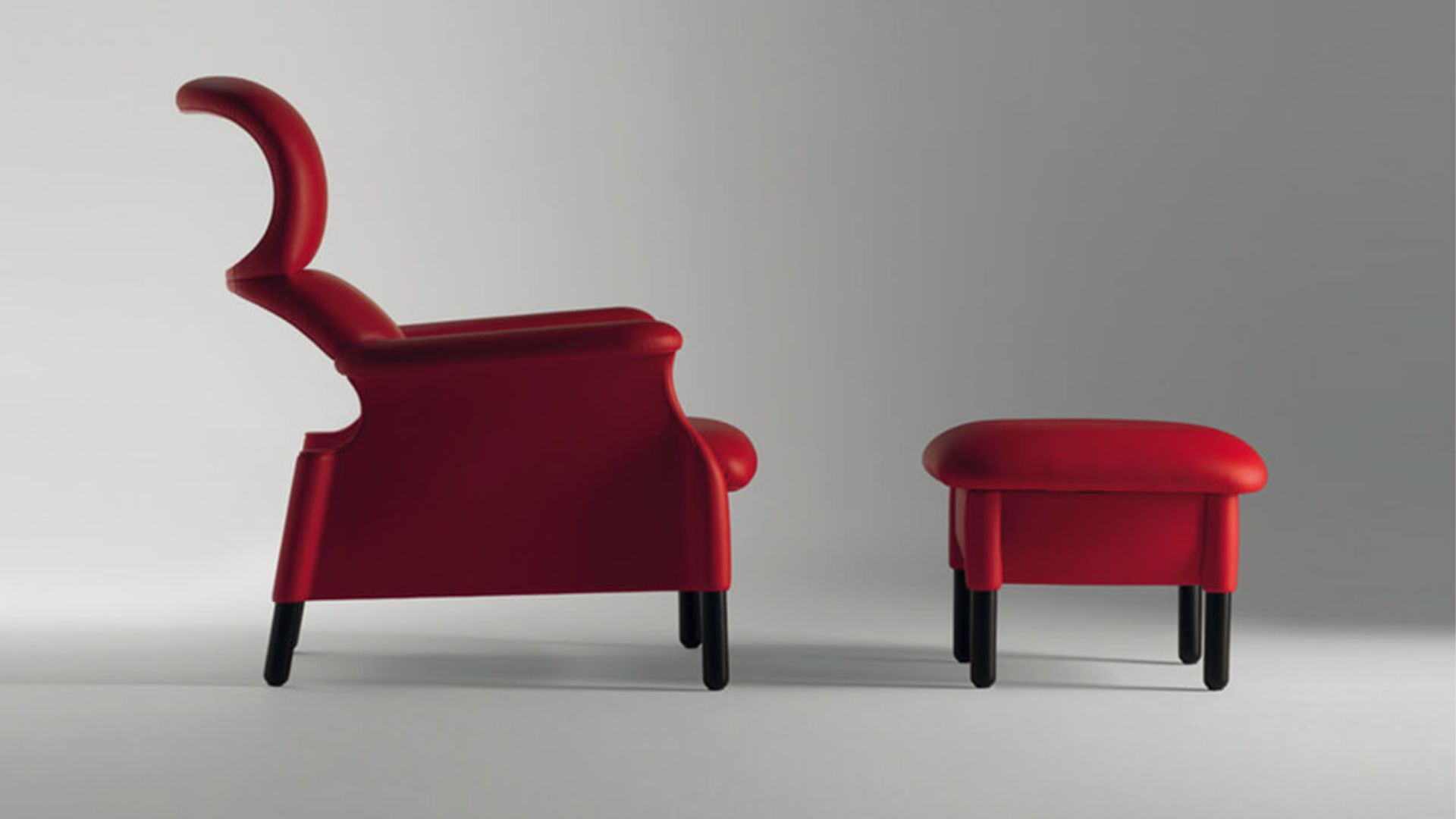
The Sanluca chair (1960, POLTRONA FRAU) offered a contemporary take on classic armchairs. Its ergonomic design and the modular production process, where components like the seat, backrest, and headrest were made separately and then assembled, were revolutionary. After being produced by several companies, Poltrona Frau continues its production today, often paired with the Luca pouf.
In the 1960s, Achille and Pier Giacomo collaborated with FLOS to introduce the innovative Cocoon technology for lighting. This technique involved spraying synthetic resin onto a metal frame to create a unique "cocoon" effect. Their designs, such as the Taraxacum, Viscontea, and Gatto lamps, quickly gained popularity for their distinctive appearance.
The Brionvega RR126 stereo radio (1965, RADIOLA) made a significant impact in both design and technology. Its modular design allowed it to fold into a compact square, and its handcrafted wooden case ensured each unit was unique. Equipped with wheels, it offered mobility within a space.
For the La Casa Abitata exhibition in Florence, Achille and Pier Giacomo designed the Firenze wall clock (1965, ALESSI). Though initially a prototype, Alessi later produced it in 1996, retaining its original design while introducing new color variations.
After Pier Giacomo's passing, Achille Castiglioni continued to innovate. The Paro inverted glasses (1983, DANESE) showcase his simple yet ingenious concept: an inverted glass with a stem that doubles as a shot glass. The Joy modular shelving unit (1989, ZANOTTA) is another original work, allowing users to create various spatial compositions by twisting wooden consoles strung on a steel rod.
In his later years, Achille Castiglioni also engaged in teaching, influencing future generations of designers. The 40/80 chair (1999, Moroso), co-created with Ferruccio Laviani, is an example of his collaborative spirit with young talent. The enduring appeal and museum presence of Castiglioni's works underscore his lasting legacy in industrial design, which continues to inspire and impress with its blend of functionality, innovation, and artistic vision.
#AchilleCastiglioni #IndustrialDesign #ItalianDesign #FurnitureDesign #LightingDesign #ProductDesign #DesignIcons #MinimalistDesign #DesignHistory #AchilleCastiglioni #IndustrialDesign #ItalianDesign #FurnitureDesign #LightingDesign #ProductDesign #DesignIcons #MinimalistDesign #DesignHistory
0 comment in total
 No comments yet
You may also like
Ten notable furniture designs by architects from Milan design week

Milan Design Week: the 7 best fashion installations
Cristina Celestino Unveils Ceramic Tiles In Two Geometric Patterns

R5 An Italian Beauty

Seven Great Finds from Designer Gail Carlson
9 Show-Stopping Installations Seen at Milan Design Week 2022

the gucci décor 2018 collection captures a rich history of italian artisans

Add These Installations To Your Milan Design Week Itinerary

The top 10 furniture stores in the Castlefield Design District
Twelve of the best new lighting designs at Milan design week
Alberto Alessi talks design

My ArchiSchool spotlights 10 architecture and design projects

5 Italian-origin architectural styles for which we ought to be thankful

Legendary Designer Jean-Charles de Castelbajac Enhances Universe With Bold Home Projects

Masterful Minds – Furniture Designers At The Top Of Their Game
14 best architects in Charlotte