Why Do Some Old Homes Have a Beehive Built Into a Wall?
The article explores the historical practice of building beehives directly into the walls of homes, a feature that might seem unusual to modern homeowners but once served a practical purpose. This practice, known as "wall beekeeping," allowed residents to easily access honey while providing a beneficial environment for bees.
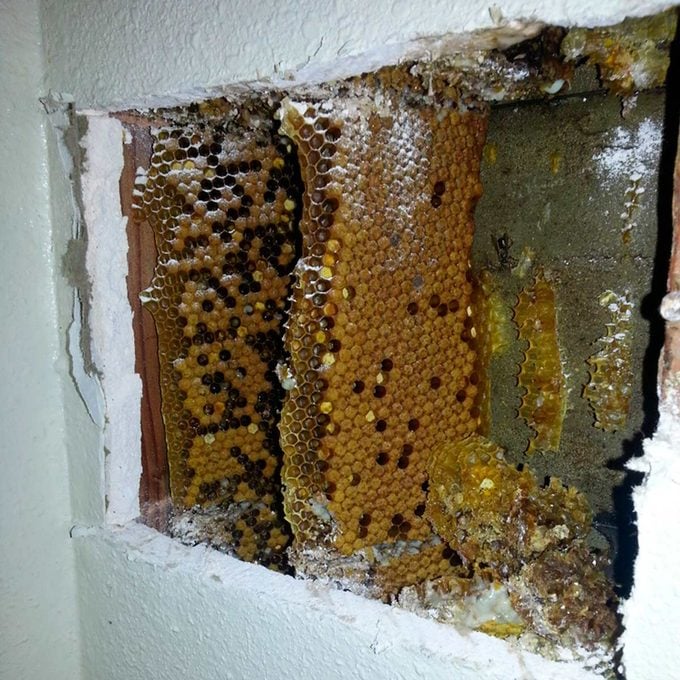
One notable instance of this discovery occurred in 2007 when Robert Brackley Jr. was dismantling the Thomas House on the University of Maine at Farmington campus. He found a beehive constructed between wall studs, close to a chimney. A wooden plug at the bottom of the hive was identified as the bees' entry point, with honeycomb still present on the exterior. This discovery affirmed the historical accounts of built-in beehives.
Historically, these integrated beehives were designed to benefit beekeeping homeowners. Bees could freely move through pipes installed within the walls, facilitating honey production. When honey was desired, individuals could access the hive from inside the house, typically from an upper floor, by removing a panel or back section of the hive. This method allowed for convenient harvesting of honey directly into the kitchen or living area.
Wall beekeeping was not unique to specific regions but was prevalent in mountain homes, such as those in the Himalaya Mountains of Northwest India, where hives were integrated into thick exterior walls. In these traditional settings, wild bee colonies often established themselves in these built-in spaces, or farmers would relocate existing hives from surrounding forests to village homes. This ensured a consistent supply of honey for the human caretakers.
Advocates for wall beekeeping, like Susan Chernak McElroy, have embraced and documented this ancient practice. McElroy, who refers to her own wall hive as an "Observation Hive" due to its plexiglass cover, highlights that her ancestors had been utilizing such hives for millennia. Her understanding is supported by a 1998 _Bee World_ article by Eva Crane, which details the prevalence of wall hives and wall hive beekeeping across approximately 20 warm-temperate old-world countries, tracing the practice back to at least AD 60.
For those interested in preserving or creating a wall hive, McElroy's experience provides a practical example. She had carpenters modify her bedroom wall by removing drywall and insulation between studs, cleaning the cavity to its original 1930s wood and shingling. A plexiglass panel with a small, accessible door was then installed, allowing for feeding the bees if necessary. To maintain the bees' natural environment, a light-proof, thick quilting was placed over the plexiglass, ensuring darkness and privacy for the colony.
Beyond human convenience, wall hives offered significant benefits to the bees themselves. These hives, typically about 12 inches wide, 17 inches tall, and 9 inches deep, were often constructed within thick stone walls of houses and barns. Soft stone was carved to create the hollow, usually covered by a wooden door accessible from either the interior or exterior of the building. Historical records indicate that bees thrived particularly well in these wall hives, likely due to the superior thermal regulation provided by the stone construction, offering better warmth during winter and cooler temperatures in summer. This inherent insulation provided a stable and protective environment, contributing to the health and productivity of the bee colonies.
#Beehives #WallBeekeeping #OldHomes #HomeFeatures #HoneyProduction #TraditionalPractices #ThermalRegulation #HomeRenovation #Beehives #WallBeekeeping #OldHomes #HomeFeatures #HoneyProduction #TraditionalPractices #ThermalRegulation #HomeRenovation
0 comment in total
 No comments yet
You may also like

Give Your Blank Walls New Life With These Stunning Planters
4 Common Wall Hanging Myths, Busted

25 Homes With Exposed Wood Beams: Rustic to Modern


This Hack Will Ensure You ALWAYS Hit A Stud

15 Old House Features We Were Wrong to Abandon

17 contemporary ideas for homes with wooden beams

How to Update an Older Home While Honoring Its History

Why Are Some Outlets Installed So High Up On Walls In Older Homes?
Your Historic Tile Fireplace Could Be Worth Thousands!

23 Indoor Plant Wall Ideas to Bring Life to Any Room

This 500-year-old farmhouse is full of historic features and charm

Antique Beams & Boards Gives Old Barns New Life
10 farmhouse antiques experts say will only increase in value over time
Exciting ideas for an indoor plant wall in your home

All of the most stylish rustic kitchens I am seeing right now have this one feature in common – it's easy to replicate and you probably already own everything you need
If You Live in a Farmhouse, Listen Up

Daring Dormers Breathe New Life into a Derelict 1930s Farmhouse