1/2
When numbers lie: Interpreting IIC ratings for flooring underlayment performance
The article discusses the critical role of understanding impact insulation class (IIC) and sound transmission class (STC) ratings, along with selecting appropriate acoustical underlayments, in multifamily and hospitality construction. The authors highlight that while laboratory tests provide an acoustical performance snapshot, they often fail to reflect real-world conditions, particularly the impact of load applied to the floor after tenant move-in. The piece emphasizes that the true acoustical performance is ultimately experienced by occupants, stressing the importance of effective sound control for project profitability and client satisfaction.
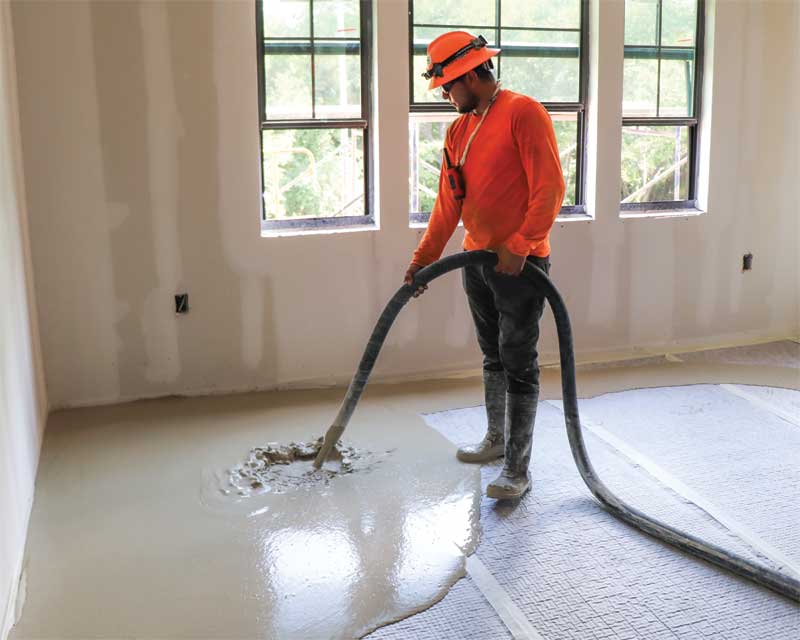
The history of acoustical control mats is traced back to the 1950s and '60s, a period marked by new fire codes and increased public safety concerns. Gypsum underlayments emerged as an economical, lightweight, and fire-rated solution, incidentally offering sound reduction benefits. Manufacturers subsequently developed a range of products, including sheet goods and rolled materials, for installation beneath gypsum underlayments, particularly for hard-surface finished floors, to meet architects' and owners' demand for quieter units.
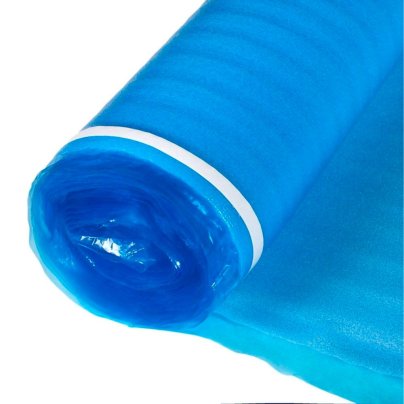
Two primary approaches to sound reduction are explored: dampening (absorption) and decoupling. Absorption involves materials like rubber, neoprene, and foam panels soaking up acoustical energy, reducing vibration transmission. Decoupling, on the other hand, isolates surfaces to create two distinct layers for sound vibrations to pass through, enhancing the system's performance by dissipating energy during transference.
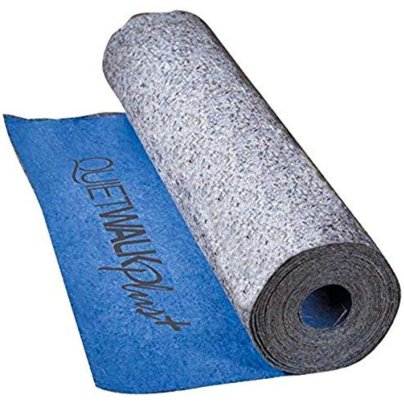
The 1980s saw the rise of mass-spring technology mats, which gained popularity due to their ease of installation, cost-effectiveness, and impressive test performance. These mats use an entangled mesh of synthetic fibers to isolate the gypsum underlayment from the subfloor, allowing the floor to 'float' and the fibers to absorb transferred acoustical energy. More recently, rigid mats have been introduced, offering decoupling with a thinner profile and higher compressive strength. These rigid mats can be significantly shallower (20 mm or ¾ in.) compared to monofilament mats (38 mm or 1 ½ in.) required to meet minimum sound attenuation standards (50 STC and 50 IIC). Despite their potentially higher initial cost, rigid mats can be competitive in terms of overall cost and performance when factoring in reduced material requirements and shorter curing times, leading to less downtime on building sites.
The article also touches upon the definition of STC, which measures the effectiveness of an assembly in addressing airborne sound, covering frequencies from 125 to 4000 Hz, encompassing common sounds like voices, music, televisions, and pet noises. The laboratory testing process for STC involves generating sounds with a tone generator and measuring sound pressure levels in both the testing room and the room below. The resulting loss across 16 frequency bands is then averaged to determine the STC rating.
#AcousticalSoundMats #Flooring #GypsumUnderlayment #ImpactInsulationClass #RigidMats #SoundAbsorption #SoundTransmissionClass #MultifamilyConstruction #HospitalityIndustry #AcousticalSoundMats #Flooring #GypsumUnderlayment #ImpactInsulationClass #RigidMats #SoundAbsorption #SoundTransmissionClass #MultifamilyConstruction #HospitalityIndustry
0 comment in total
 No comments yet
You may also like
Best Flooring From Consumer Reports' Tests
Best Flooring of 2025
Our Flooring Experts Weigh In On The Best Type Of Flooring For Basements
LL Flooring Review: Our Thoughts on Quality, Install and Features

5 Best Types of Flooring for Your Basement in 2022
The Best Laminate Underlayment for Flooring

Costco Or Home Depot: Who Has Better Deals On Flooring?
Floor Prep and Underlayments: Critical flooring performance attributes reside below the surface - Jan 2021

The Best Underlayments for Vinyl Plank Flooring
8 Basement Flooring Ideas to Elevate Your Subterranean Space

Flooring