
1/13
In Depth: Engineered wood products
Engineered wood products (EWP) are advanced, high-performance building materials characterized by their dimensional stability and consistent performance. These products are manufactured using small dimension lumber, veneers, and wood fibers to create structural components. EWP has significantly influenced the building industry and is projected to see continued growth, largely driven by the expansion of the U.S. housing market.
Government reports on residential construction indicate a positive trend. In May, privately owned housing starts increased by 5% over April's revised estimate and were 20.3% higher than May of the previous year. Single-family housing starts also saw a 3.9% increase. Building permits, while slightly down from April, remained 8% above the previous year's rate. Industry experts, such as Joe K. Elling from APA – The Engineered Wood Association, anticipate sustained growth for EWP, forecasting 1.36 million housing starts in 2019, up from 1.3 million in 2018. Demand for North American-produced I-joists is expected to rise by 6% in 2018 and an additional 2% to 3% in 2019.
Beyond housing starts, factors such as pricing stability, volatility in commodity lumber, demand for long-length lumber, lumber quality, and increased design flexibility contribute to EWP's anticipated growth. Residential construction, encompassing both single-family and multi-family homes, remains the primary driver for EWP manufacturers. Mass timber construction, which increasingly uses wood in mixed-use development projects, is also fueling demand for solid-section EWPs like glulam beams and columns. The millennial demographic is identified as a key influence in the residential growth forecast, with predictions of a 5-7% increase in single-family starts for 2019.
Challenges to this growth include a shortage of skilled labor for both trucking and construction, particularly for on-site product installation. Despite these labor concerns, the overall trajectory for EWP usage and demand remains upward. A significant trend poised to further propel EWP growth is mass timber construction, which is gaining popularity in the U.S., particularly for four- and five-story mixed-use developments. This method utilizes solid or engineered wood for primary load-bearing structures and solid wood panels for walls, floors, and roofs, offering a sustainable and carbon-friendly alternative to steel and concrete. Examples of mass timber products include Cross-Laminated Timber (CLT), Nail-Laminated Timber (NLT), Laminated Strand Lumber (LSL), Parallel Strand Lumber (PSL), and Glue-Laminated Timber (glulam).
Engineered wood products have a long history, with archaeological evidence dating back thousands of years. Modern EWP has evolved consistently with changes in building codes and practices, becoming stiffer, stronger, more fire-resistant, energy-efficient, and easier to install. Manufacturers are integrating structural panels with air and water barriers to reduce labor requirements and meet new code standards for lower air exchange rates. Due to mass timber construction, EWPs are also being developed to meet more stringent fire codes, with some achieving fire ratings of up to two hours. While radical changes are unlikely, evolutionary advancements are continuously being made to improve product performance and address specific market needs, such as fire-resistant I-joists for unfinished residential basements in certain regions.
Product consistency is a critical advantage of EWP, especially in an era of labor shortages. Builders seek products that are easy and quick to install, consistent in quality, and minimize callbacks. EWP solutions address these needs, enabling builders to operate more efficiently. The "one-stop-shopping" approach, where a single manufacturer or supplier provides a wide range of EWP solutions, simplifies the process for contractors and homeowners, fostering confidence in product performance and warranties. Manufacturers are also emphasizing the environmental benefits of EWP, highlighting their vertical integration and efficient use of wood resources. Ultimately, comprehensive product knowledge and strong manufacturer support, including training, literature, and technical assistance, are essential for dealers to effectively sell EWP, leading to increased sales, faster construction, and greater customer satisfaction.
#EngineeredWoodProducts #ConstructionIndustry #HousingMarket #MassTimberConstruction #BuildingMaterials #SustainableBuilding #LaborShortages #ProductInnovation #ResidentialConstruction #EngineeredWoodProducts #ConstructionIndustry #HousingMarket #MassTimberConstruction #BuildingMaterials #SustainableBuilding #LaborShortages #ProductInnovation #ResidentialConstruction
0 comment in total
 No comments yet
You may also like
Designed & Made's integrated approach to custom woodworking projects

The 10 Best Woods for Woodworking (According to a Pro)

Wood as a Home Design Trend: Through the Archives to Today
wooden trusses inspire paulo kobylka's handmade 'gusset' seating collection
Ten projects that seamlessly integrate wood into the design
The 10 Best Woods for Woodworking (According to a Pro)
Here's the Truth About Wood Veneers


In The Design Studio: The ABCs of Kitchen Cabinets, Part 2
Wood Treatments


wood and timber architecture and design Archives

15 Types Of Wood That Are Easy To Build With
Toronto Woodworkers Making Heirloom-Quality Wares
Solid Wood Isn't Always Superior to Engineered Wood—Here's Why
Nine designers work socially distanced wonders with wood
Where Functional Meets Beautiful: 5 ways Renova Custom Woodworks can elevate every space


Blending functionality with artistry: the essence of Albert Potgieter’s designs

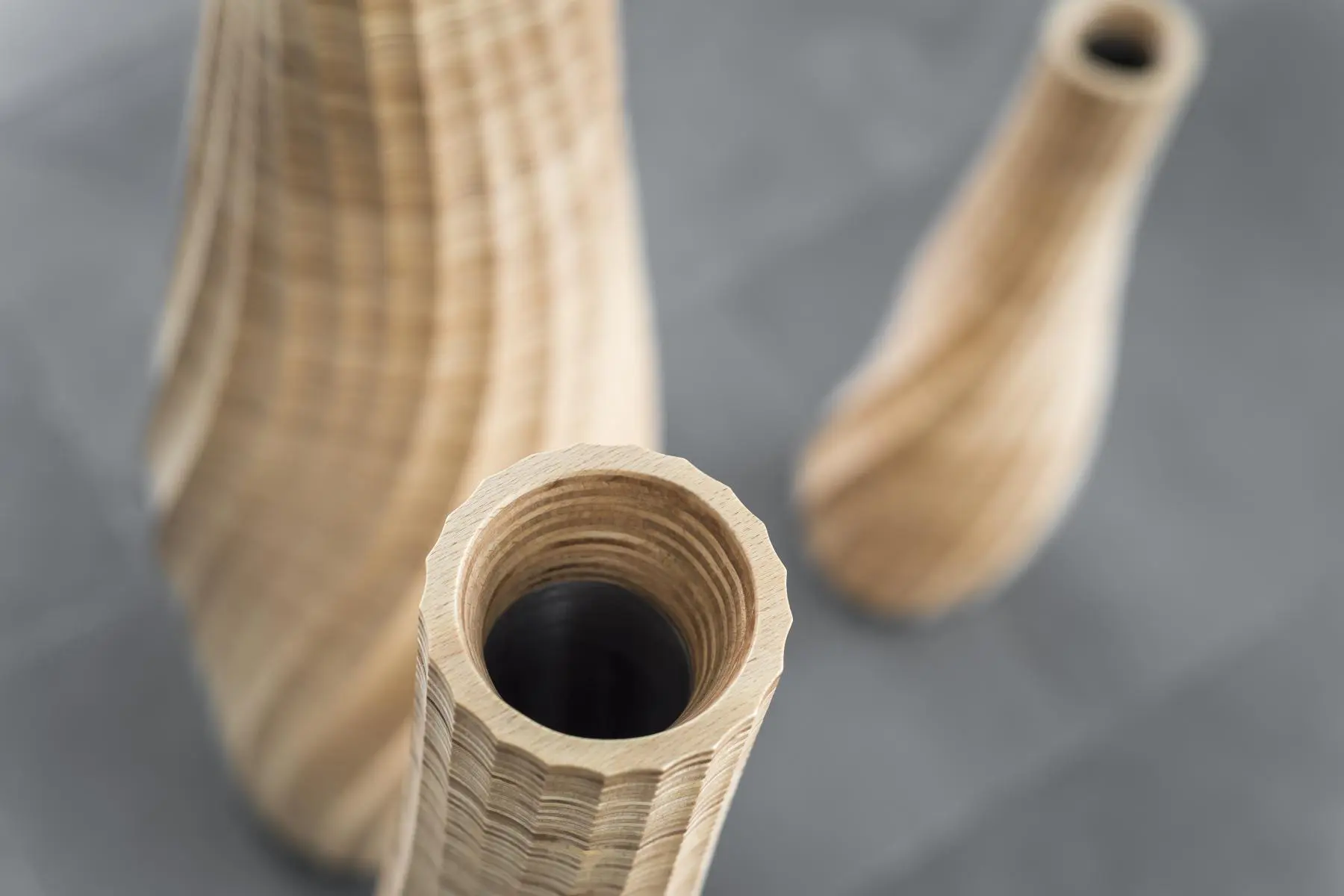
Hundreds of layers of beech wood are aligned, combined and gently sculpted
Woodcarver Brings Bespoke Details to Homes
12 designs made from wood that showcase the versatility of the material
Elite Woodworks' components for success