austin maynard's circular beach house is secluded among the coastal dunes of australia
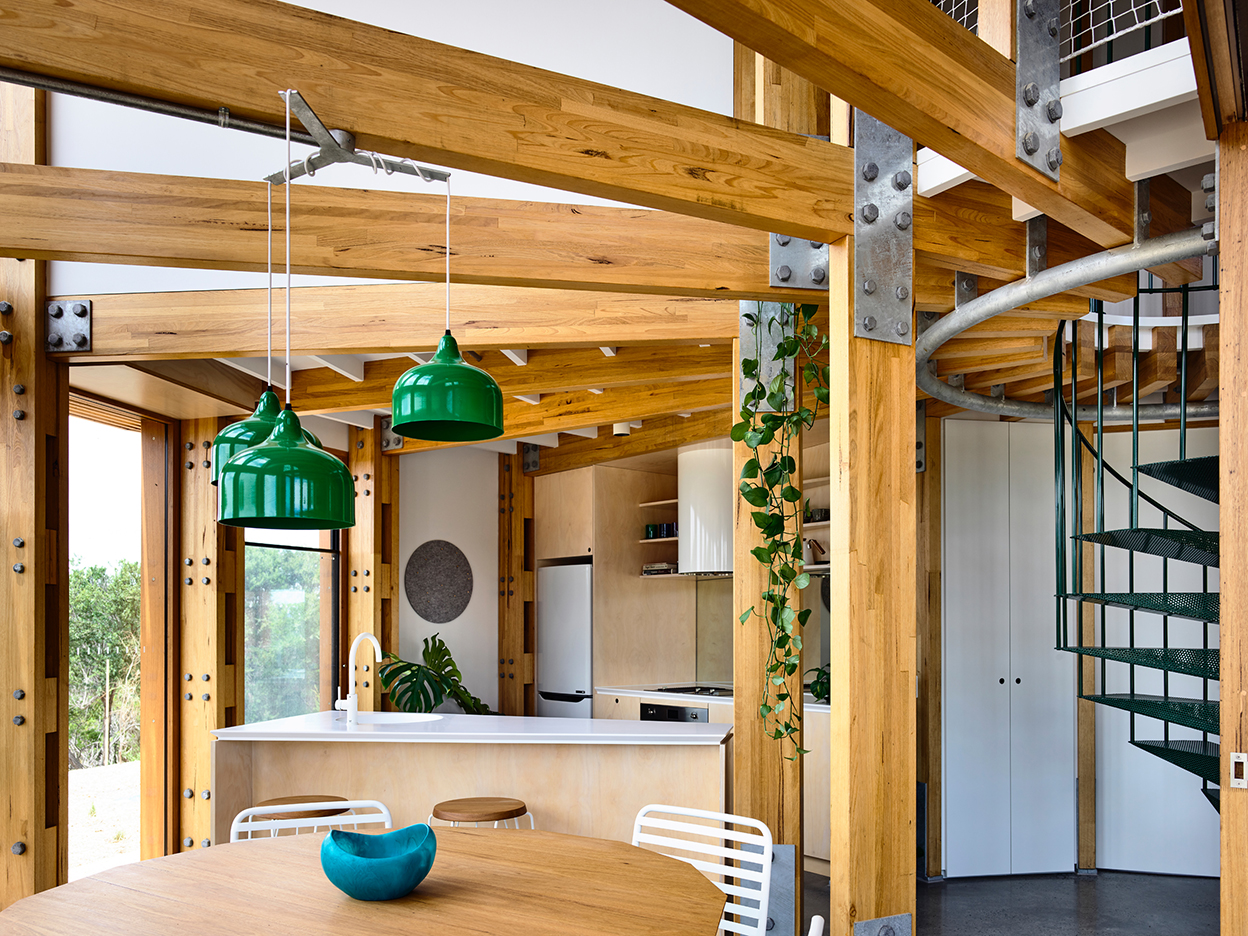
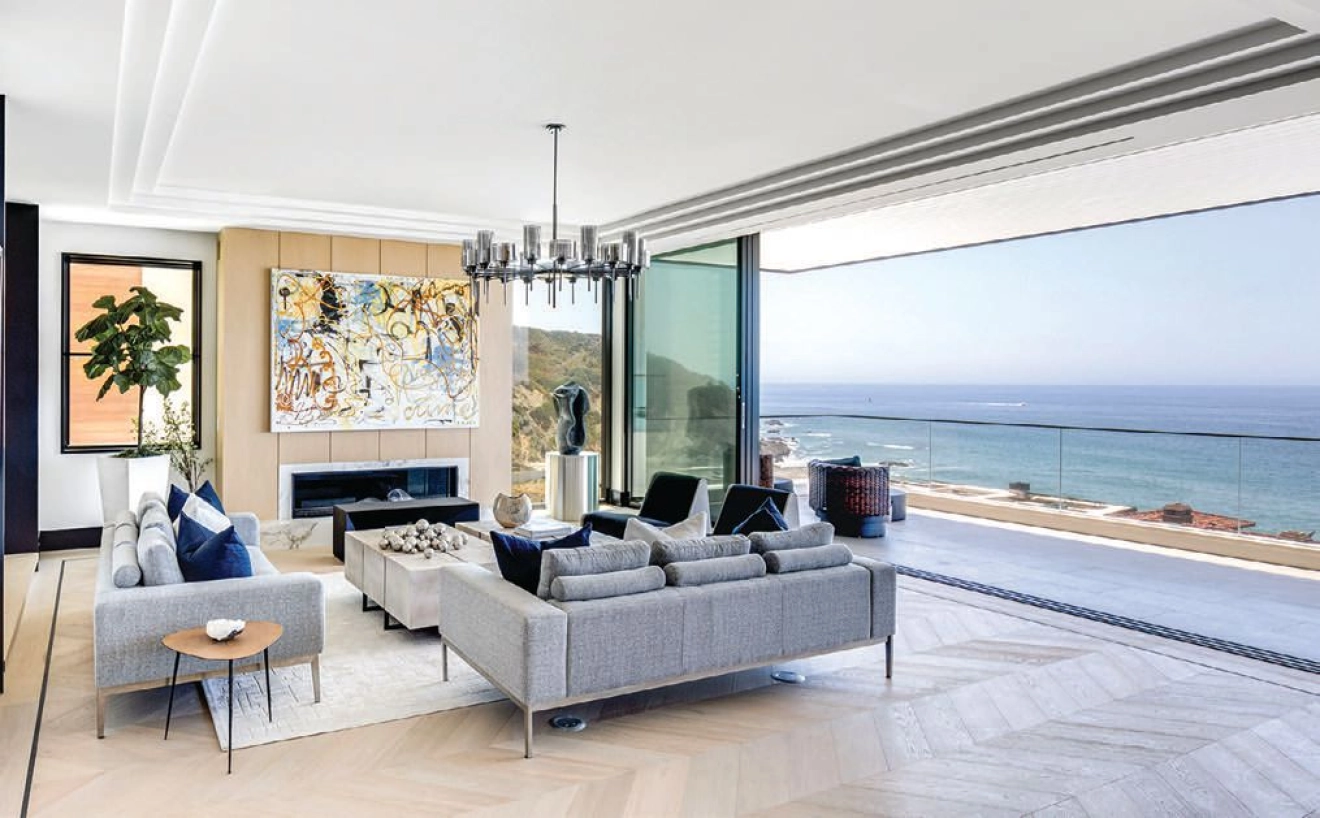
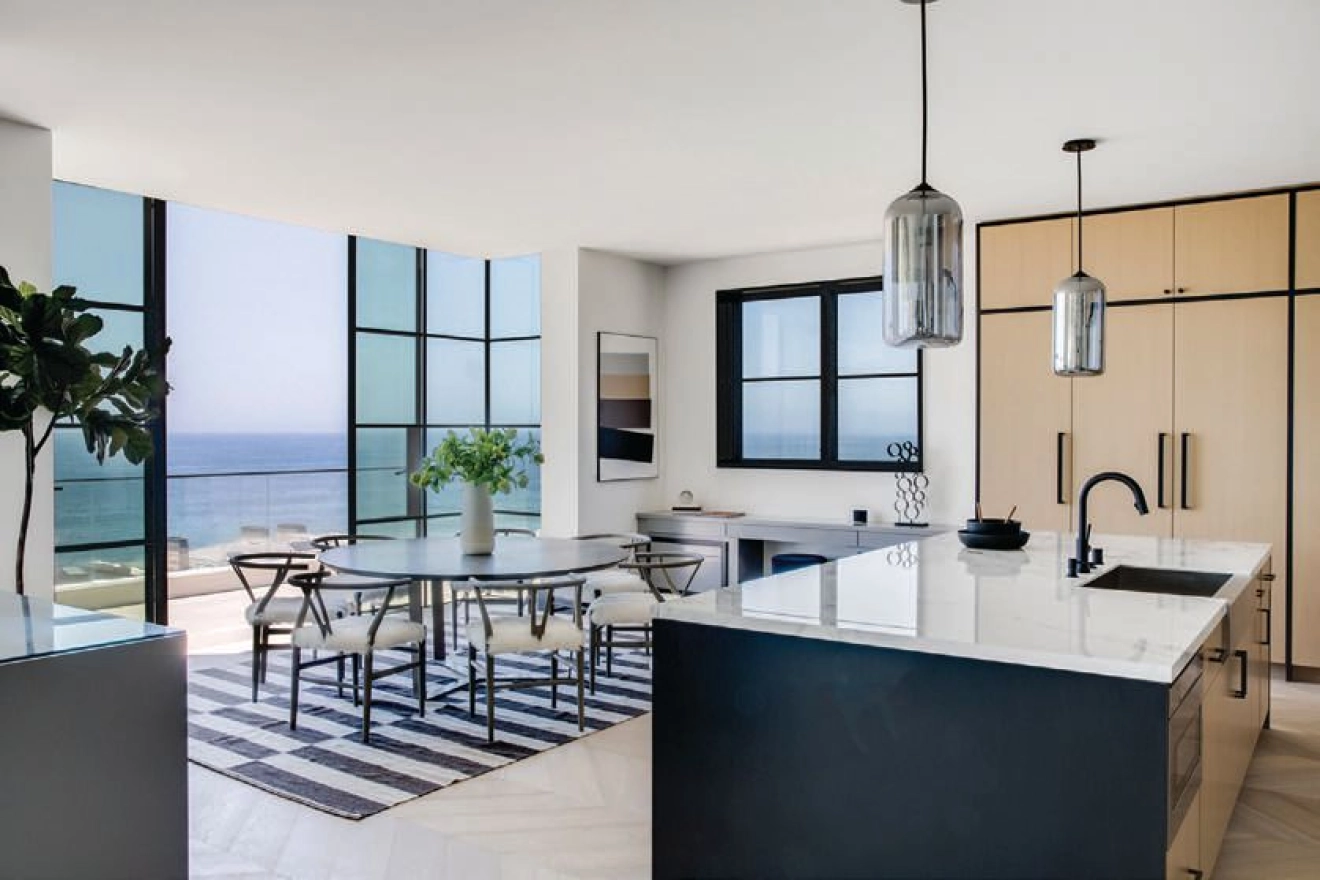
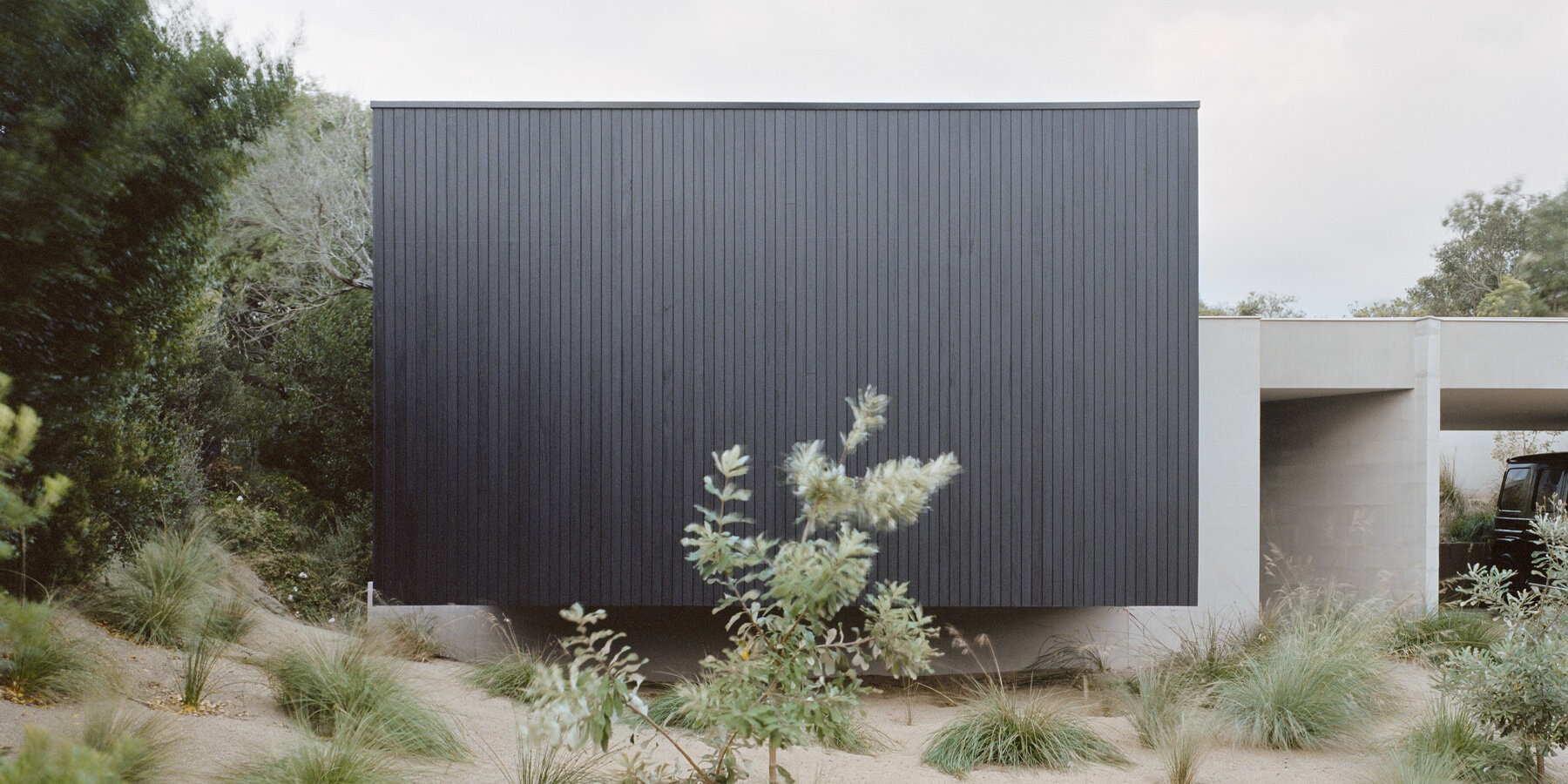
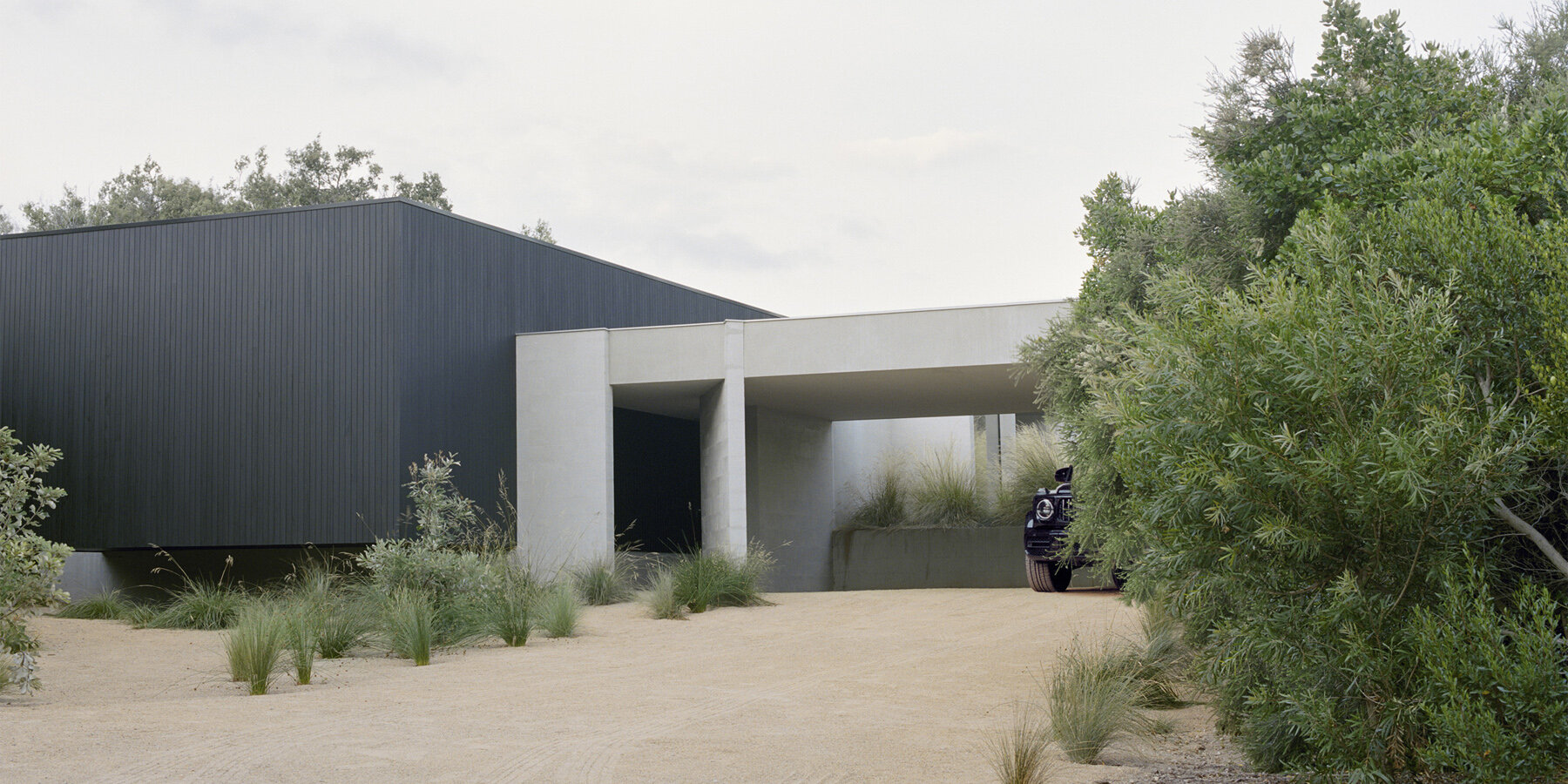
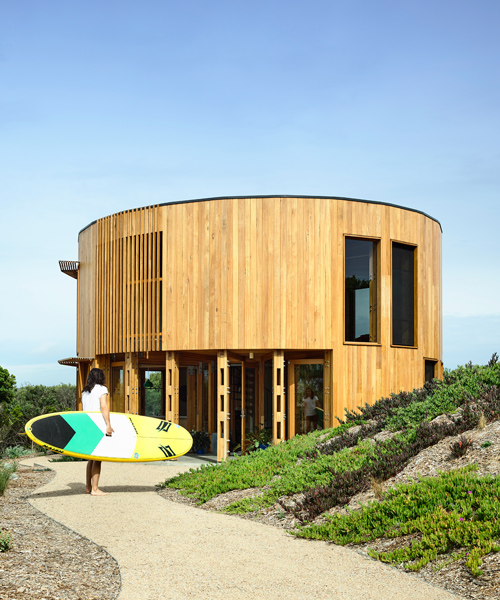
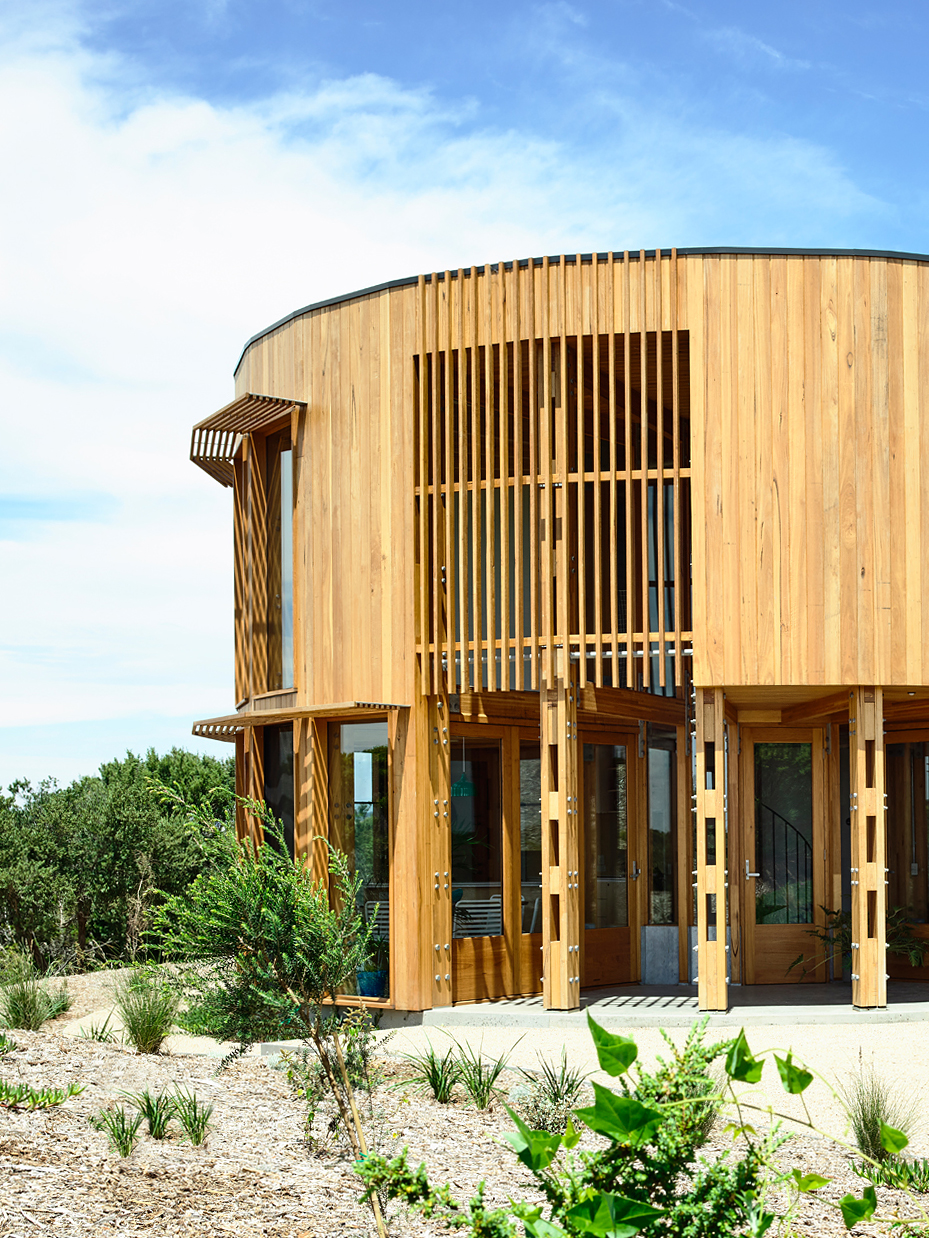
The St. Andrews Beach House, designed by Austin Maynard Architects, is a circular dwelling with a radius of less than five meters, situated along the wild, secluded coastline of Victoria, Australia. This modest, euclidean form was developed as a response to the prevalent Australian holiday home typology, which often mirrors grand suburban residences. Instead, the St. Andrews Beach House is conceived as a 'bach,' a New Zealand term for a small, basic shack primarily constructed in the mid-century using salvaged and recycled materials. The location, St. Andrews Beach, is characterized by its lack of a shopping strip or restaurants, offering only a corner store, a brewery, and a serene, wild landscape. The design prioritizes simplicity, escape, and relaxation, aiming for a low-maintenance and nearly self-sustaining beach house.
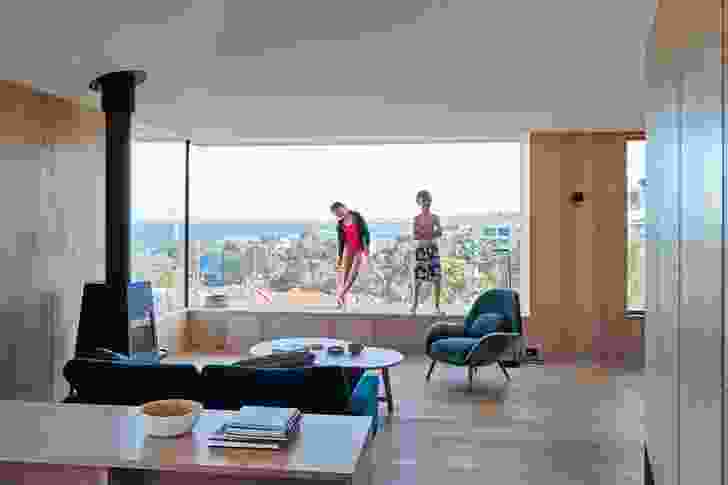
Austin Maynard Architects strategically positions the St. Andrews Beach House amidst the rugged dunes near Victoria's shoreline. The two-story, circular house maximizes the benefits of its remote setting and offers expansive, panoramic views. It stands in respectful integration with the fragile environment of wild bush, rugged sand dunes, and scrub. The circular form was deliberately chosen to respond to the surrounding views and to simplify the interior spaces. A key design principle was the elimination of traditional corridors, allowing circulation space to be freely integrated into the program. Due to the house's multiple outlooks, there is no dominant orientation, meaning the structure lacks conventional front, rear, or side elevations.
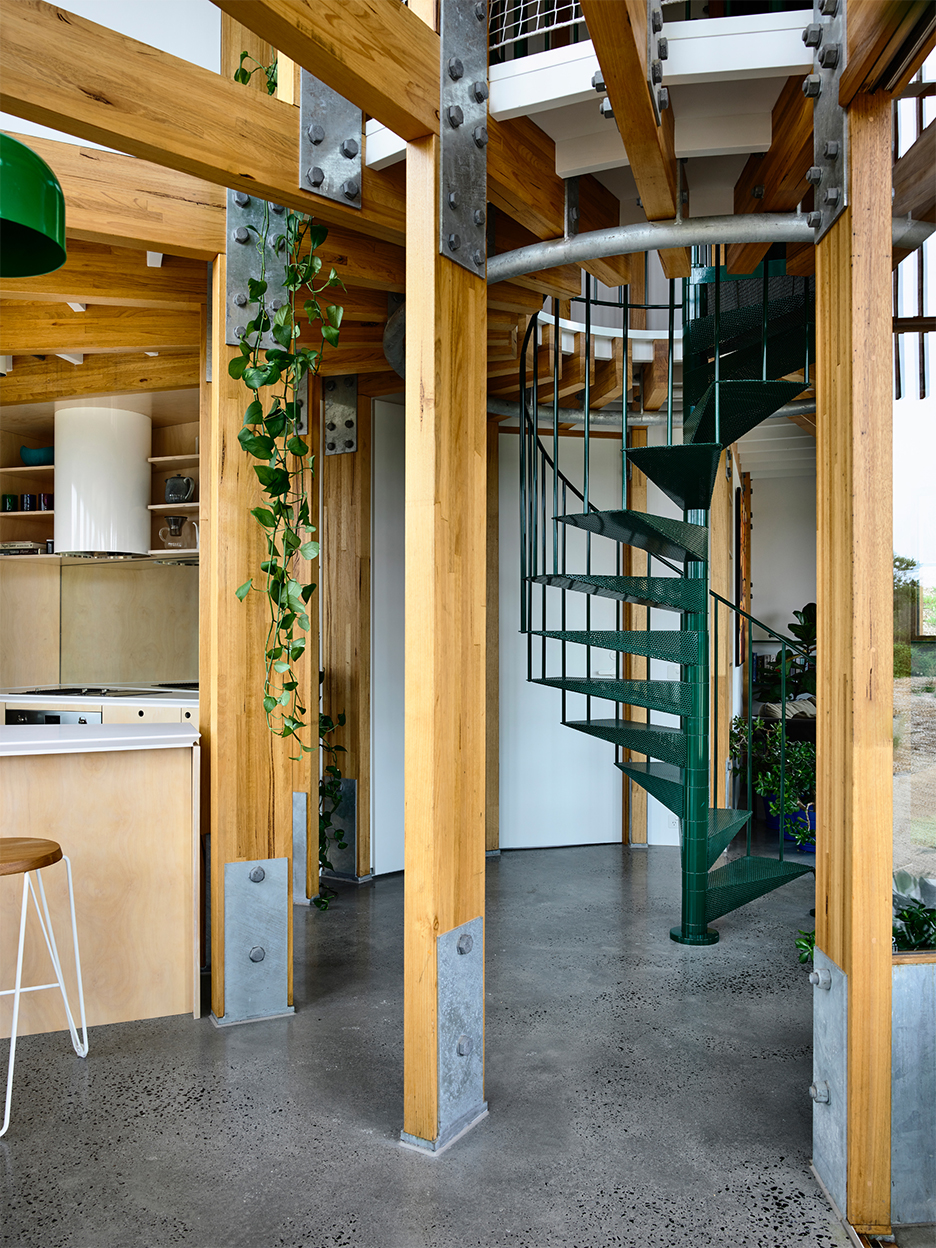
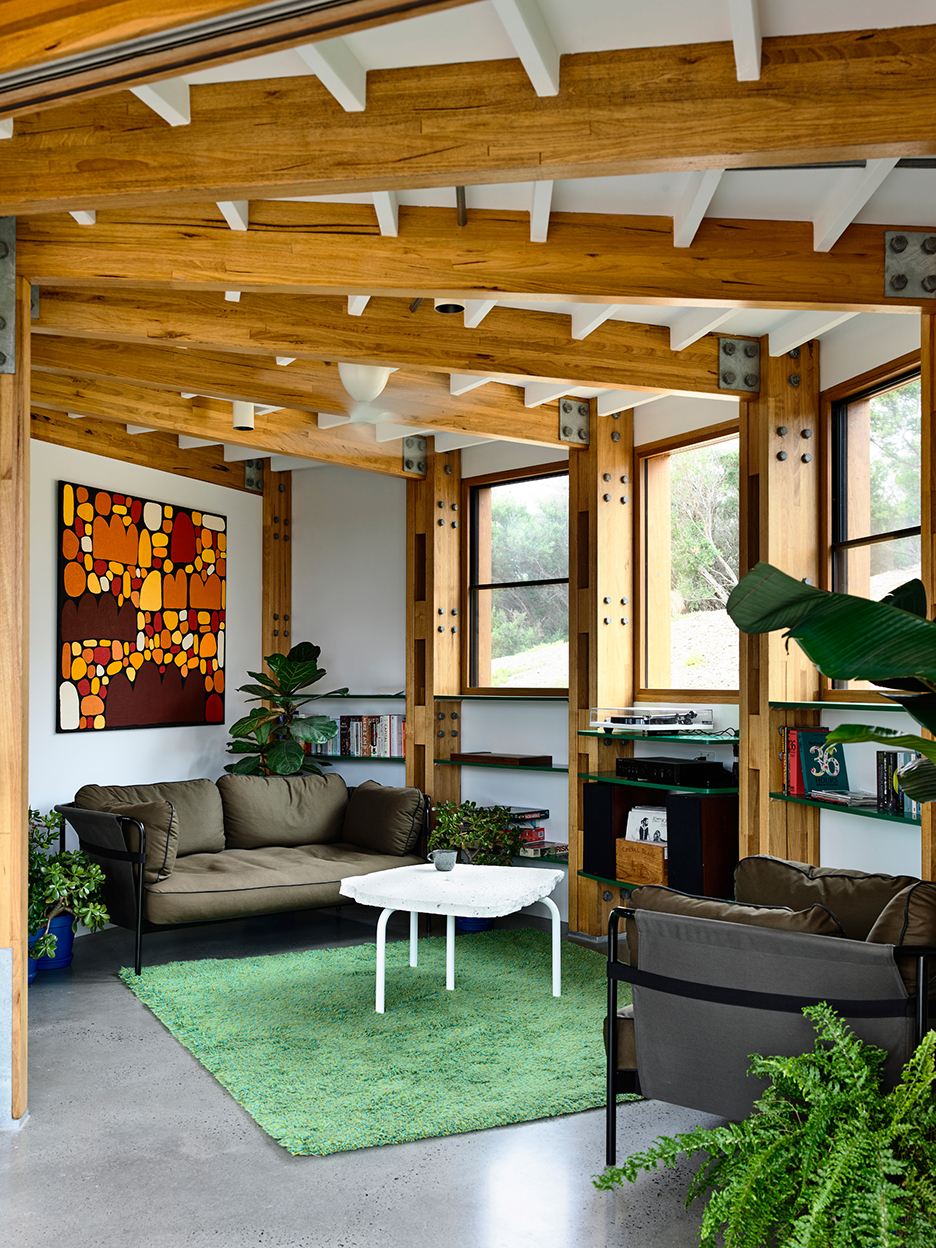
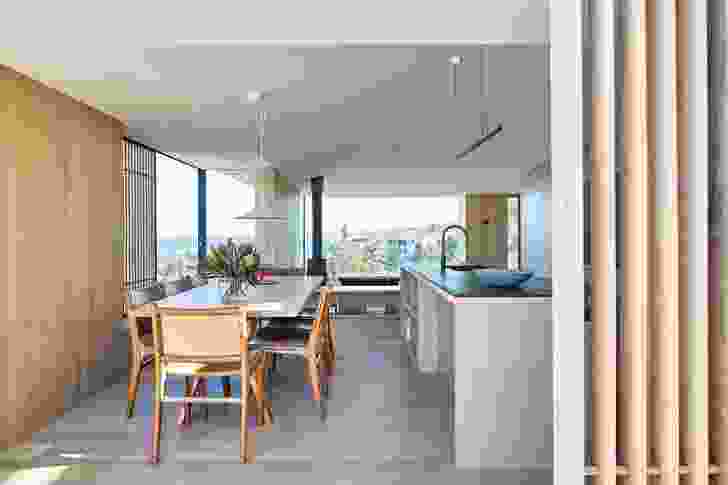
The ground floor of the St. Andrews Beach House accommodates the kitchen, living, and dining areas, along with a bathroom and a laundry. Bi-fold doors open to an exterior deck, creating a seamless connection between indoor and outdoor spaces. Unconventionally, instead of adding a veranda to the exterior, a traditional element in Australian homes, the architects carved out the deck space from the building’s volume, resulting in a two-story area that blurs the lines between interior and exterior. A central spiral staircase provides access to the upper level, which houses the bathroom and bedrooms. The upstairs sleeping arrangement deviates from a typical bedroom layout; it is essentially a single bunk room, with privacy achieved through curtains. This design fosters an informal and relaxed sleeping zone where the floor space dictates the capacity, moving away from a series of enclosed, separate bedrooms.
The project was recognized for its innovative design and was shortlisted in the 'completed buildings – villa' category at the 2019 World Architecture Festival. Key project details include its design by Austin Maynard Architects, with a team comprising Andrew Maynard, Mark Austin, and Ray Dinh. Spence Construction served as the builder. The house is situated on a site area of 8304 square meters, with a built area of 139 square meters, and was completed in December 2018. The engineering was handled by Perret Simpson, building surveying by Steve Watson & Partners, energy consulting by Efficient Energy Choices, and land surveying by Steve Palmer Surveys. Derek Swalwell was the photographer for the project.
#AustinMaynardArchitects #CircularHouse #BeachHouse #CoastalArchitecture #AustralianArchitecture #SustainableDesign #ResidentialArchitecture #DuneLandscape #WorldArchitectureFestival #AustinMaynardArchitects #CircularHouse #BeachHouse #CoastalArchitecture #AustralianArchitecture #SustainableDesign #ResidentialArchitecture #DuneLandscape #WorldArchitectureFestival
0 comment in total
 No comments yet
You may also like
This St. Andrews Beach House is a Perfect Circle, Unbroken By Hallways or Bedroom Walls
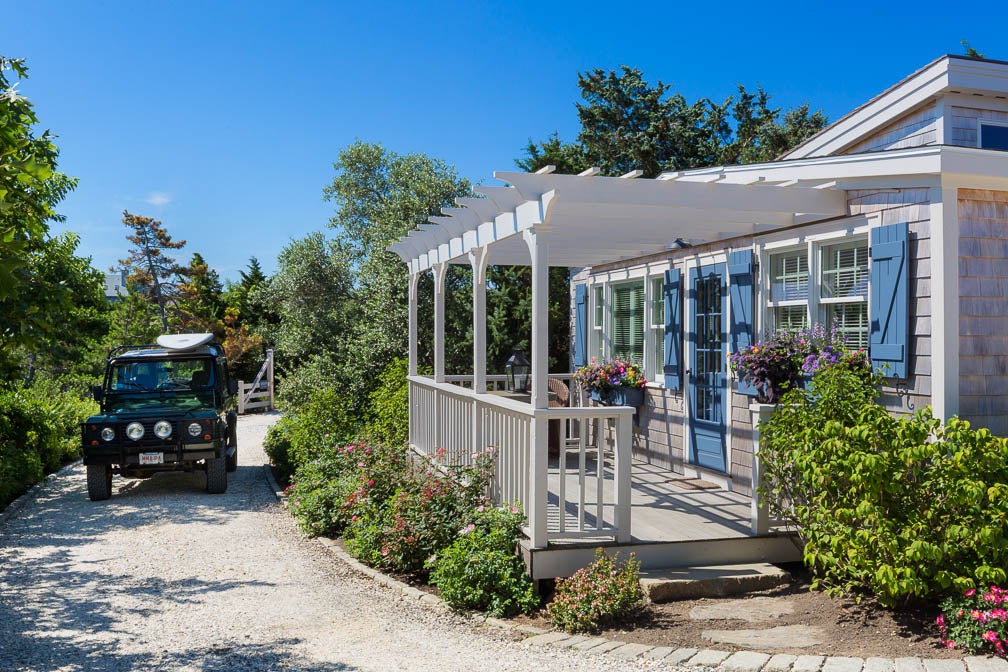
A Look at Patrick Ahearn’s Private Beach Cottage on Martha’s Vineyard

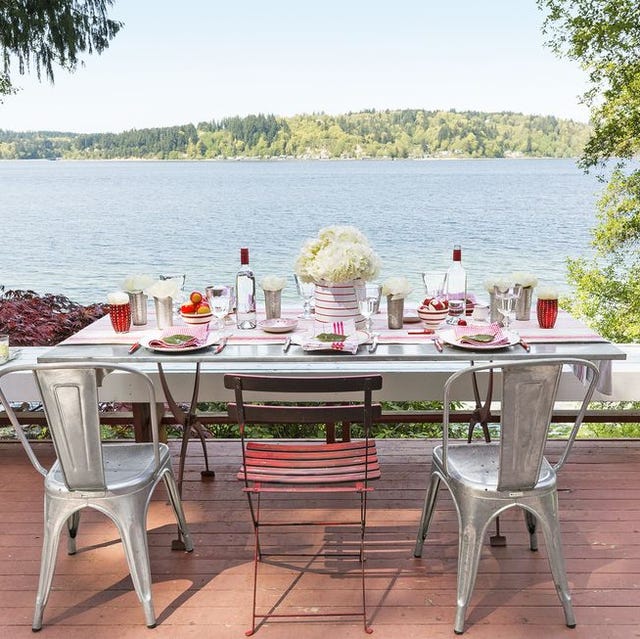
This Tiny Seaside Home Was Made for Lazy Summers
What Is Sustainable Design? A Look at How Australian Architect Andrew Maynard Does It
A Cantilevered Home in Austin Embraces Its Natural Landscape
The Maryland Home is an Eastern Shore Oasis

This Mermaid Beach home is a sanctuary with a unique design
This Custom-Built Bethany Beach Home Is All About Coastal Charm
13 luxurious Australian coastal homes to inspire a sea change

Japanese-inspired design turns this beach house into a Zen retreat
A modern rammed earth beach house retreat
Beachside home with interiors every bit as special as the stunning coastal views
13 Luxurious Australian Coastal Homes That Inspire A Sea Change
Modern Beachfront Home by Brandon Architects in Dana Point
Riding the Wave: Coastal Homes Trending in Australia
Resort-style lifestyle in an Adelaide sandstone sanctuary

masonry blade walls & a floating timber volume compose 'peninsula house' in australia
Coastal cottage reborn: Surfside House