
1/11
A Brief History of Tricky Mathematical Tiling
The article delves into the fascinating history and evolution of mathematical tiling, focusing on the discovery of various tile types and their properties. It begins by highlighting the ubiquity of repeating patterns in everyday life, from brickwork to honeycomb, and acknowledges the aesthetic appeal of intricate tile designs found in places like the Alhambra and M.C. Escher's artwork. The discussion then moves into the mathematical classification of tilings, starting with simple regular polygons. It explains that only triangles, squares, and hexagons can form regular tilings of a plane, due to the geometric constraints of their interior angles. Regular pentagons, for instance, cannot tile the plane without leaving gaps because their 108-degree interior angle does not evenly divide into 360 degrees.
Johannes Kepler's contributions to tiling theory are noted, specifically his 1619 discovery of eight semiregular tiling patterns that combine multiple regular polygons with identical vertex configurations. The article then expands to irregular polygons, revealing that every triangle and every quadrilateral can tile the plane, a surprising mathematical fact. However, convex polygons with more than six sides cannot tile the plane at all. The focus then shifts to the challenging problem of classifying convex pentagons that tile the plane. Karl Reinhardt initially identified three families of tiling hexagons and five families of tiling pentagons in his 1918 doctoral thesis. Over the next five decades, Richard Kershner added three more families of pentagonal tilings. The problem gained public attention in 1975 when Martin Gardner featured it in *Scientific American*, leading to significant contributions from amateur mathematicians. Richard James III discovered a ninth family, and Marjorie Rice, a homemaker, independently found four additional families after two years of dedicated work. In 1985, a 14th family was found, followed by a 15th using computer-assisted searches three decades later. The question of completeness was finally settled in 2017 when Michaël Rao proved that all 15 families of convex tiling pentagons had been discovered, thereby concluding the search for all convex tiling polygons.
The article further distinguishes between periodic and aperiodic tilings. Periodic tilings possess translational symmetry, meaning they can be shifted to perfectly align with their original pattern. Other symmetries, such as mirror and rotational symmetry, are also discussed, along with the 17 "wallpaper groups" identified by Evgraf Fedorov in 1891, which classify all possible periodic decoration symmetries of the plane. The concept of aperiodic tilings, which do not repeat, is then introduced. This idea challenged Hao Wang's 1961 conjecture that any set of shapes capable of tiling the plane must also be able to do so periodically. Robert Berger disproved this with a large set of aperiodic tiles. Roger Penrose later captivated the world with smaller sets of aperiodic tiles, some requiring only two shapes.
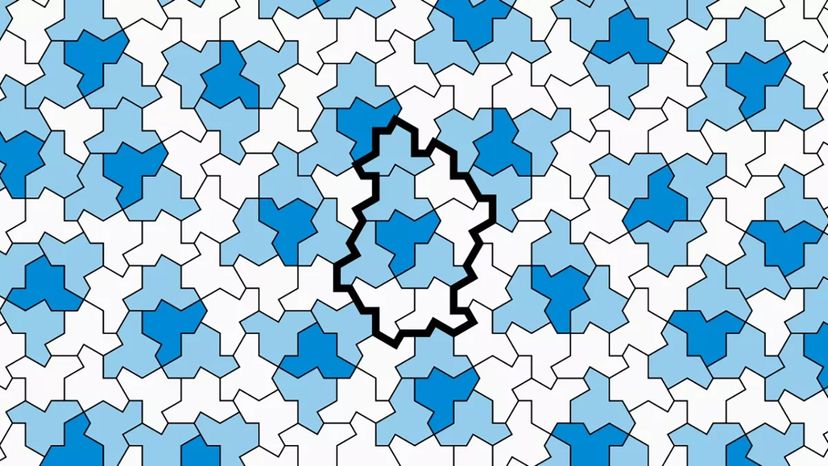
The ultimate quest in tiling theory became the search for a single tile, known as an "einstein" (from the German for "one stone"), that could tile the plane only aperiodically. Early attempts, like Joshua Socolar and Joan Taylor's 2010 discovery, were hindered by the requirement for disconnected tiles. The breakthrough came in March 2023 when David Smith, an amateur mathematician, discovered an infinite family of such einstein tiles. Collaborating with experts Craig Kaplan, Chaim Goodman-Strauss, and Joseph Samuel Myers, they introduced the "hat" tile, a 13-sided polygon that tiles aperiodically. While the hat tile required mirror images to tile the plane, Smith subsequently discovered another tile from his family, named "spectre," which is a true einstein, capable of aperiodic tiling without reflections. This recent discovery underscores a resurgence in tiling research, blending amateur contributions, artistic inspiration, and computational power to advance understanding of symmetry, geometry, and design.
#MathematicalTiling #Geometry #Symmetry #PeriodicTilings #AperiodicTilings #EinsteinTile #PentagonTilings #DavidSmith #MarjorieRice #MathematicalTiling #Geometry #Symmetry #PeriodicTilings #AperiodicTilings #EinsteinTile #PentagonTilings #DavidSmith #MarjorieRice
0 comment in total
 No comments yet
You may also like

A Tile Collection That Takes on Architecture’s Oldest Embellishments

TikTok Says Geometric Tile Is Dated, But These Expert Tips Make It Fresh & Timeless
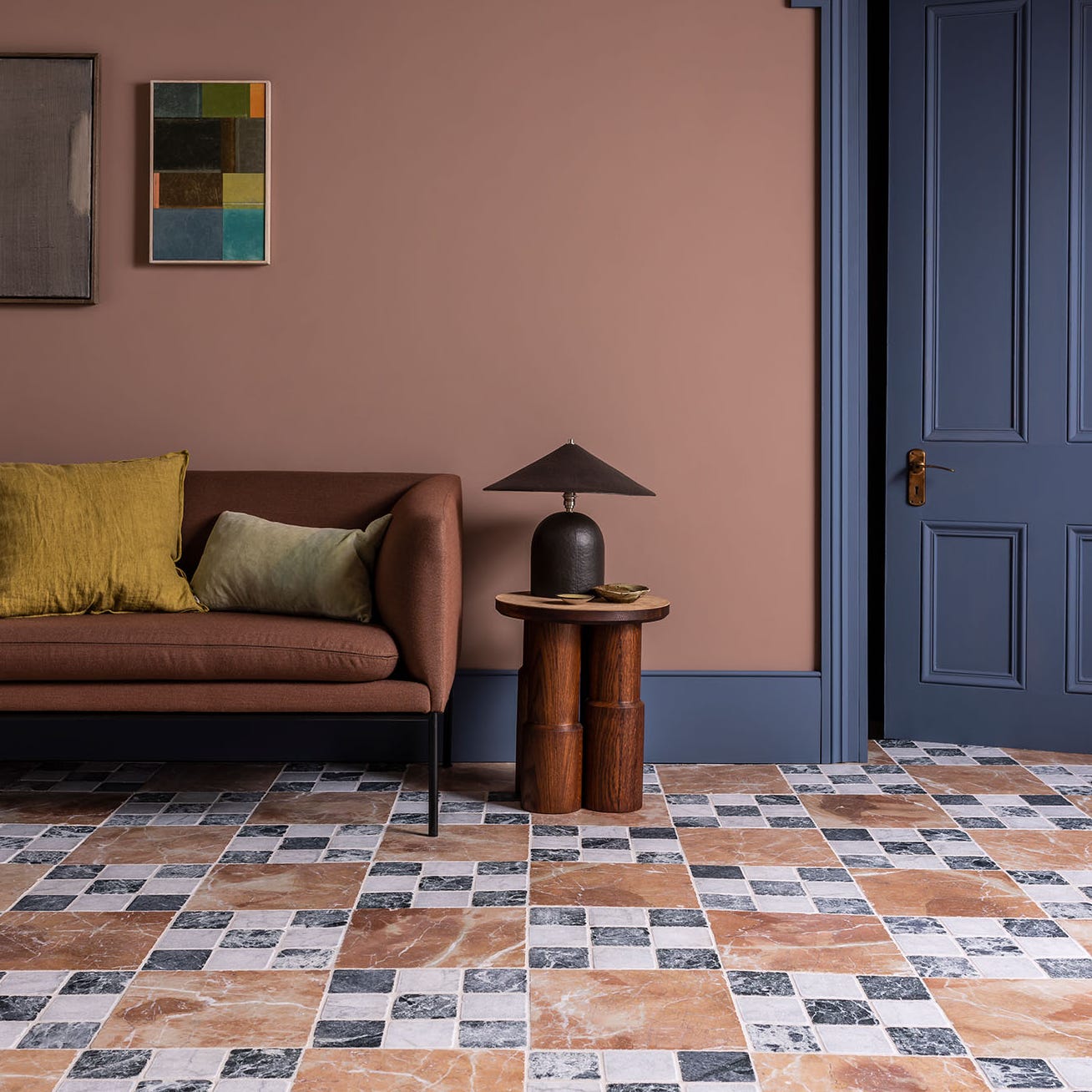
New ways with tiles: 15 creative ideas for using tiles at home

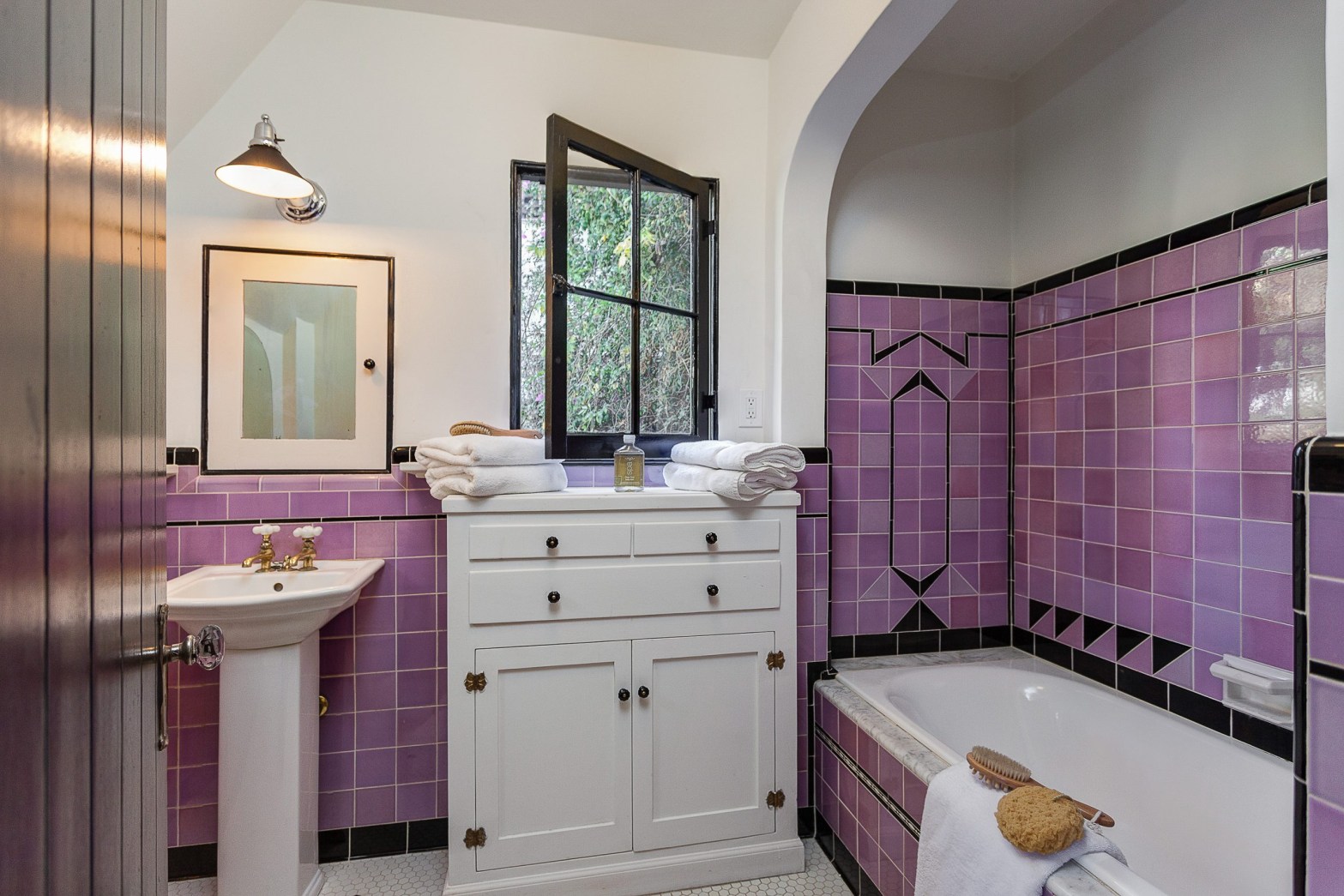
The Enduring Artistry of Vintage Tiles

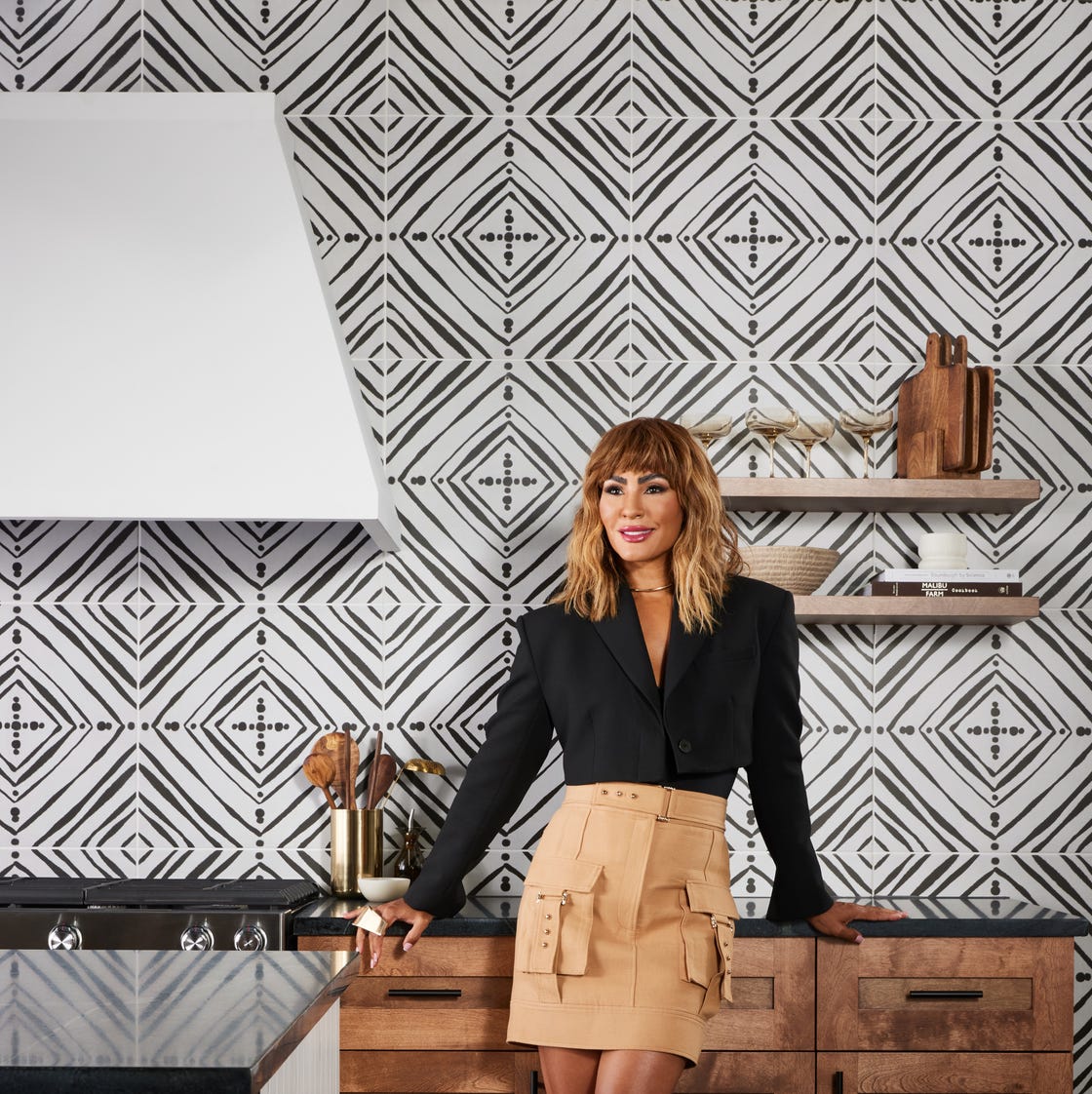
This New Collection Puts a Graphic Spin on Tile
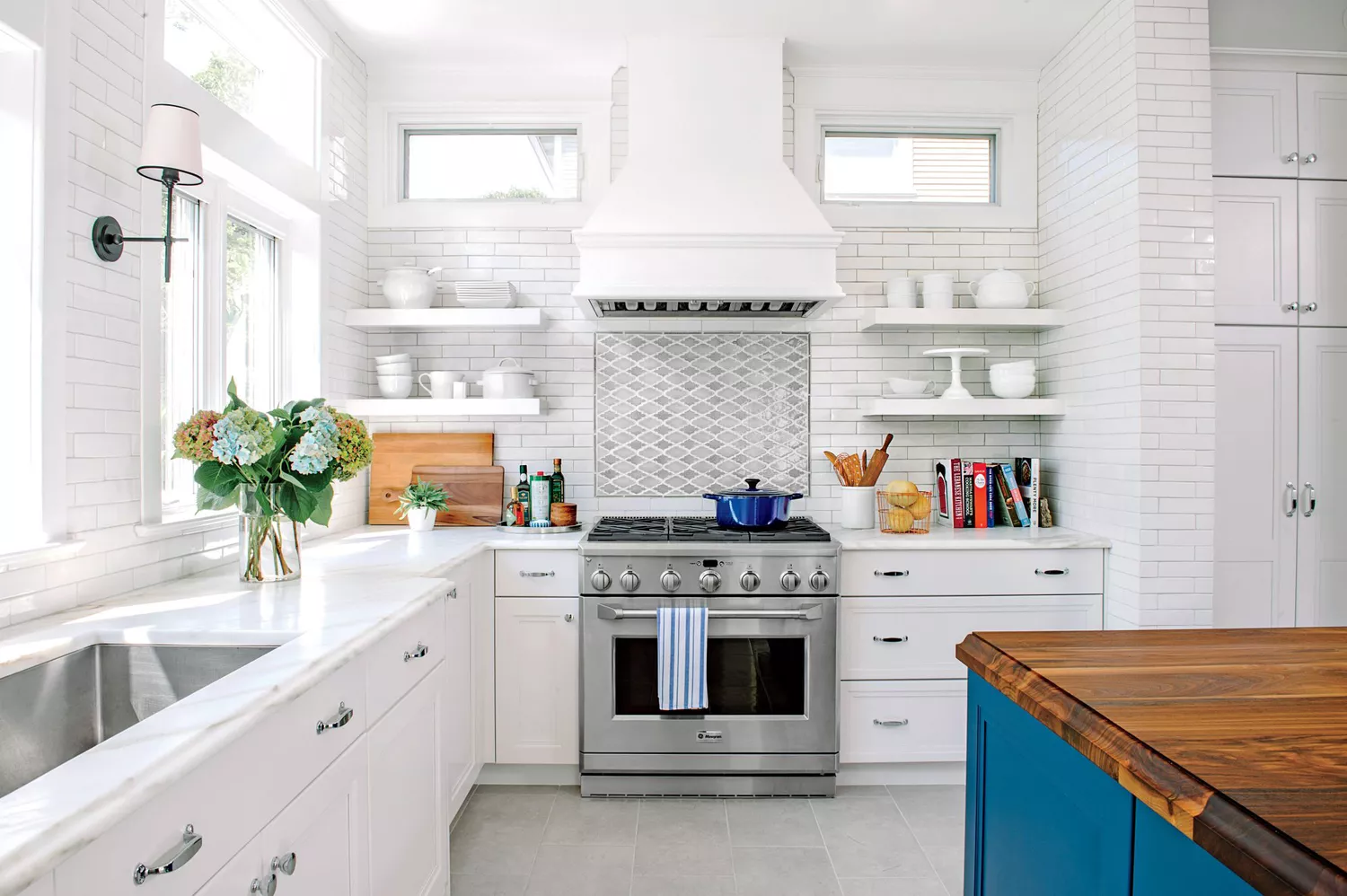
14 Timeless Tile Layout Patterns To Consider For Your Next Renovation
The 'Einstein' Tile: Mathematicians Find a Shape That Never Repeats

What Can Tiling Patterns Teach Us?

Fit to be tiled


The Intersection of Art and Mathematics Blogs Home