1/3
What Can Tiling Patterns Teach Us?
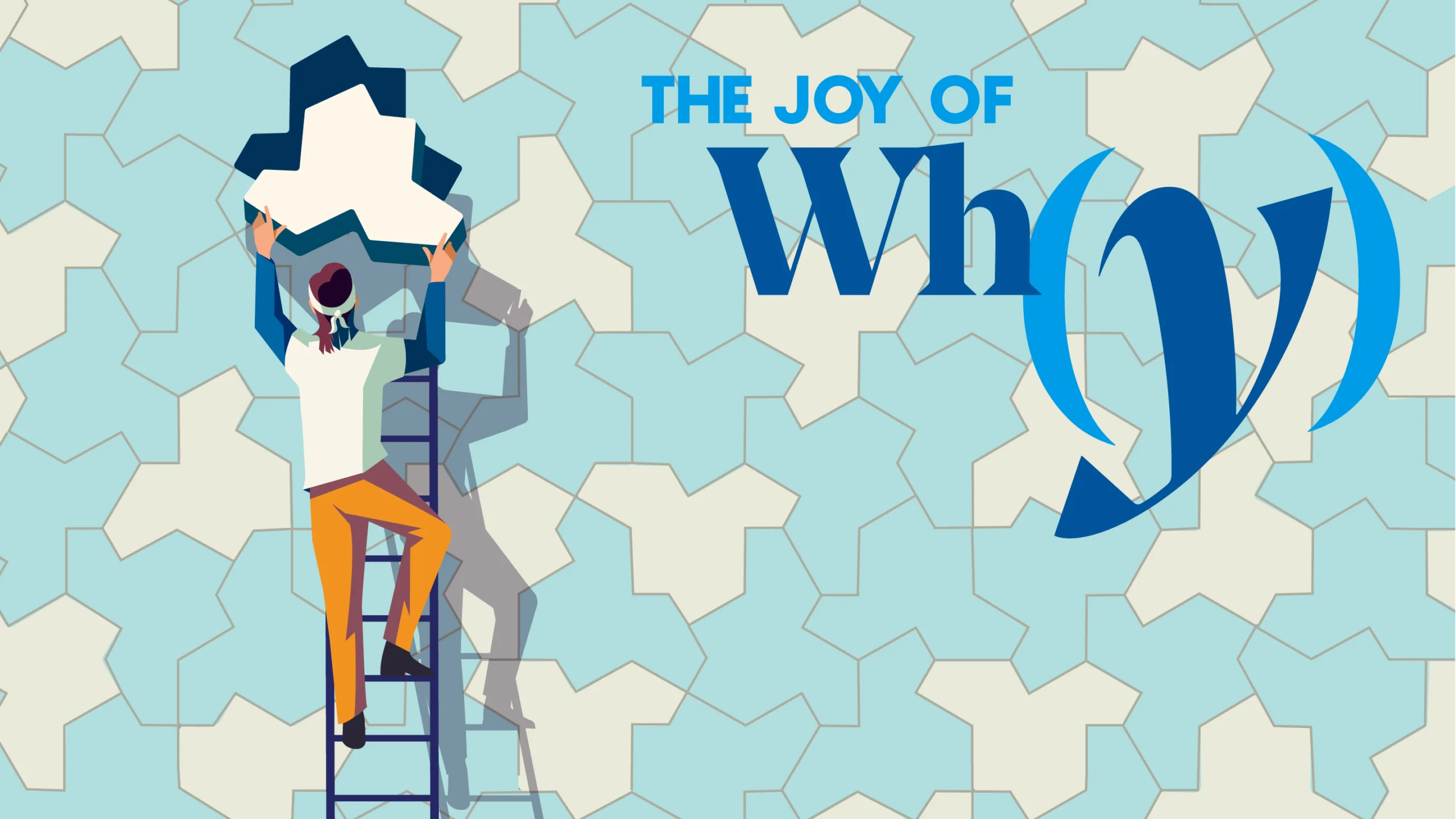
The article delves into the fascinating world of tiling patterns, exploring both periodic and aperiodic tessellations and their implications across mathematics, science, and even daily life. It begins by acknowledging the familiar repetitive patterns found in wallpaper and bathroom floors, which have long captivated mathematicians. The discussion highlights the significance of the 2023 discovery of an elusive aperiodic monotile by an amateur, David Smith, which propelled the field of tessellation into new dimensions. This discovery is framed not merely as a mathematical curiosity but as a potential key to understanding structural secrets in the natural world, ranging from mineral structures to cosmic organization.
Natalie Priebe Frank, a mathematician, explains the basic principles of periodic tilings, such as those made from squares, hexagons, or triangles. She attributes these limitations to the crystallographic restriction, which dictates that periodic structures can only have twofold, threefold, fourfold, or sixfold rotational symmetries. Shapes with fivefold or eightfold symmetry, for instance, cannot form periodic tilings, explaining why an octagon alone cannot tile a flat surface without gaps or the need for other shapes like squares.
From there, the conversation shifts to aperiodic tilings—patterns that never repeat. The historical context begins with logician Hao Wang in the 1960s, who posed a problem about colored square tiles (Wang tiles) and the decidability of tiling the plane with them. His work suggested that if an algorithm could decide whether any set of Wang tiles could tile the plane, then every such set would also have to be capable of forming a periodic tiling. Robert Berger, one of Wang’s students, later disproved this by discovering a set of 20,426 aperiodic tiles. This initiated a mathematical race to find smaller aperiodic tile sets, with Roger Penrose famously reducing it to two rhombus-shaped tiles in the 1970s, known as Penrose tilings.
The article emphasizes the profound impact of Penrose tilings when their diffraction pattern, exhibiting fivefold rotational symmetry, was found to be almost identical to that of physical quasicrystals discovered by Daniel Shechtman in 1982. This groundbreaking connection between abstract mathematical theory and a physical phenomenon earned Shechtman a Nobel Prize, demonstrating how mathematical discoveries can foreshadow scientific breakthroughs. The search for a single aperiodic monotile, or "einstein" tile (a pun on "one stone" in German), intensified, now with higher stakes due to its potential to reveal insights into the natural world.
Further amateur contributions are highlighted, including Joan Taylor's discovery of an aperiodic monotile around 2010, which, despite a flaw (being disconnected), was a significant step. David Smith's 2023 discovery of "the hat" tile, and later "the spectre" (a deformation of the hat tile that does not require its reflection), represented a major breakthrough, solving the long-standing einstein problem. Frank explains the process Smith used, involving polykites and an online community of tiling enthusiasts, which allowed him to discover a shape that forced aperiodic tilings.
The discussion then broadens to hierarchical and self-similar tilings, which act as mathematical models for quasicrystals. These tilings often feature fractal boundaries and scale up or down to reveal similar structures, connecting tiling theory to fractal geometry. The article concludes by touching upon remaining open questions in the field, such as the search for truly aperiodic monotiles in three dimensions and the theoretical work by Terry Tao and Rachel Greenfeld on the periodic tiling conjecture, which delves into the limits of computability and undecidability in tiling problems. Finally, Frank shares her personal joy in visual mathematics, creating art from her research, and even designing self-similar tile patterns for her family's bathroom floors, underscoring the interdisciplinary appeal and practical applications of tiling theory.
#TilingPatterns #AperiodicTiling #Quasicrystals #Mathematics #Geometry #Symmetry #PenroseTilings #MonotileDiscovery #MaterialScience #TilingPatterns #AperiodicTiling #Quasicrystals #Mathematics #Geometry #Symmetry #PenroseTilings #MonotileDiscovery #MaterialScience
0 comment in total
 No comments yet
You may also like
Tile patterns: 15 smart designs to add style to every room

7 designer-approved tile layout trends to try in 2024 to give your space a lift

All the Ways You Can Riff on Basic Square and Rectangular Tile

The Stylish Tile Hack That Adds A Pop Of Gingham To Any Room
Tile trends: Using pattern and contrast to create daring designs
Tiles To Turn Your Floor Into a Work of Art

The best hallway floor tile inspo on Instagram right now

Telling Stories With Tile: In Conversation With Emily Pueringer

New ways with tiles: 15 creative ideas for using tiles at home

Tiles take inspiration from fashion
Kitchen wall tile ideas - designer ways to add extra depth and style to your scheme

9 of the Most Creative Ways to Decorate Your Home With Tiles — Ideas That Will Change How You Think About Tiling
14 Timeless Tile Layout Patterns To Consider For Your Next Renovation
Ten interiors with Mediterranean-style statement tiling
Surprising ways interior designers are using tiles
Unique Ways to Up Your Outdoor Design Game With Patterned Tile
Pattern Splicing: The Bold Tile Trend About to Be Everywhere in 2026
Tile Trend: Botanical Patterns

Tile Trends 2025 — Every Design-Forward Look to Have on Your Radar
We Asked Designers Which Design Choice Homeowners Regret Most—And It’s Surprisingly Common