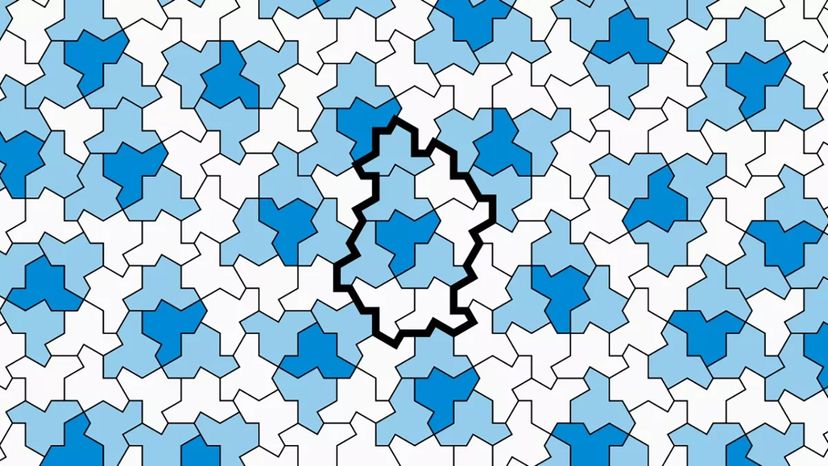
The 'Einstein' Tile: Mathematicians Find a Shape That Never Repeats
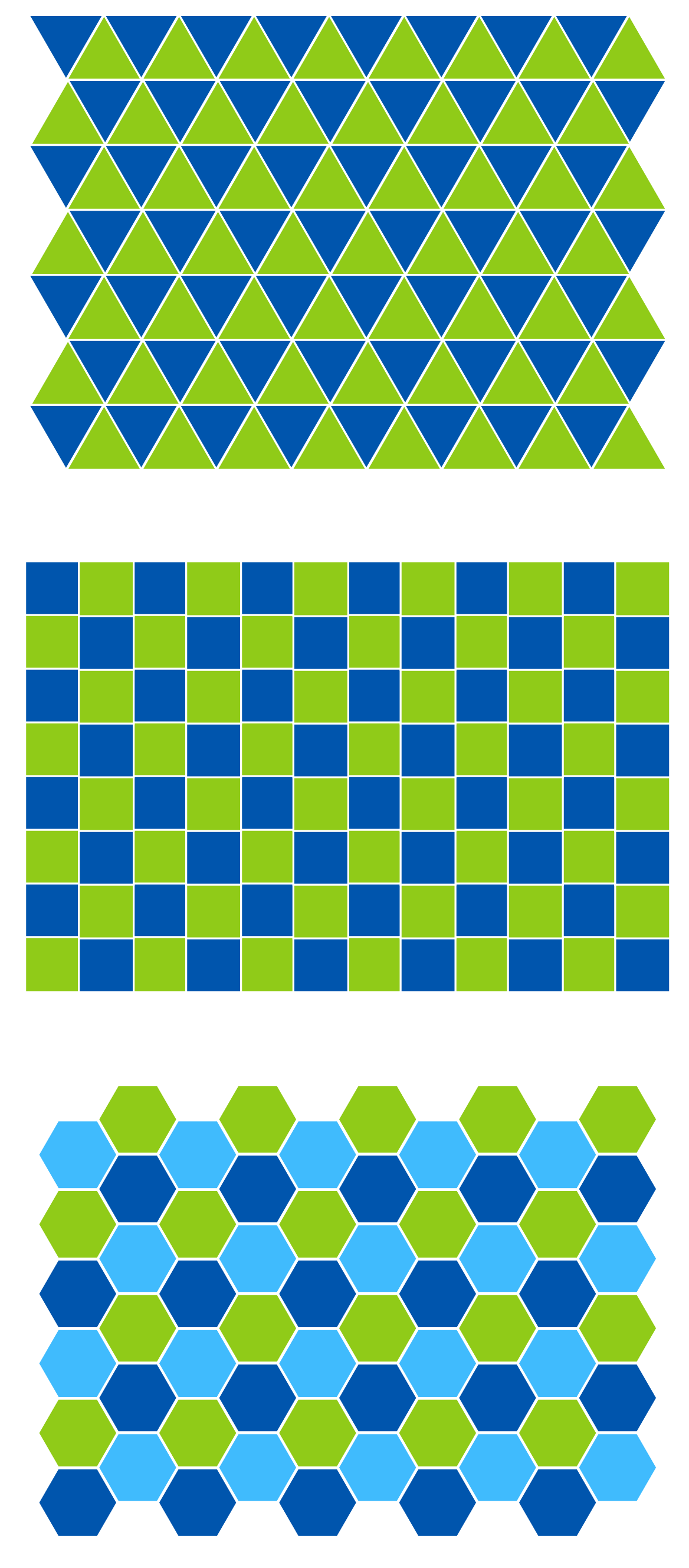
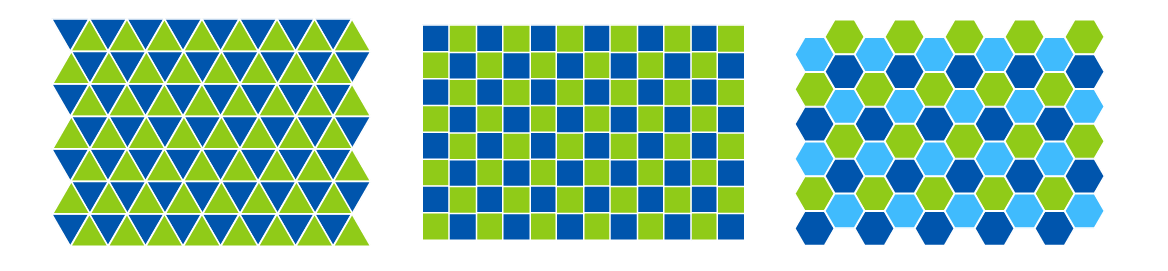
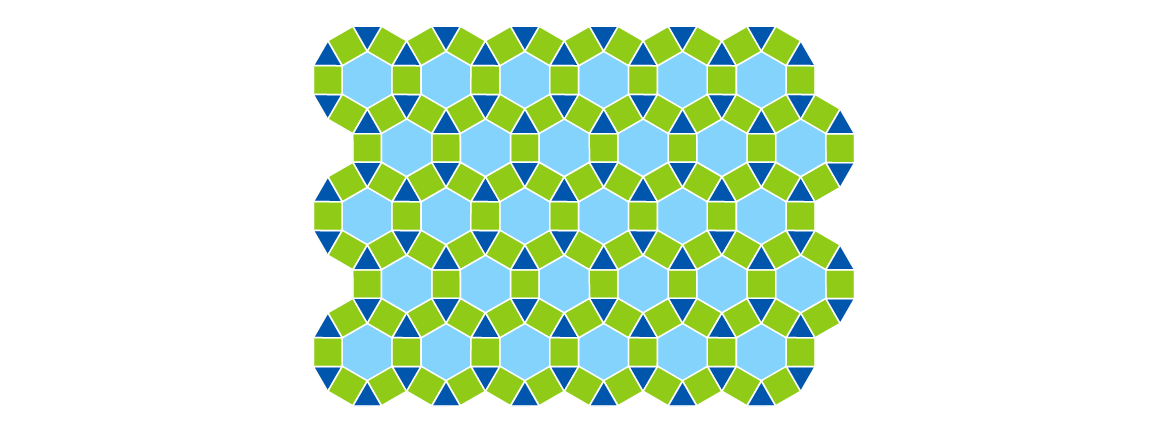
The concept of an aperiodic monotile, or "einstein" tile, challenges traditional understanding of tiling patterns. Unlike common geometric shapes that create repeating designs, an einstein tile is a single shape that can tile an infinite two-dimensional plane without ever forming a repeating pattern. This idea might seem counterintuitive, as interlocking tiles are typically associated with order and periodicity. However, the einstein tile introduces an element of controlled chaos, ensuring that no matter how its arrangements are extended, a periodic pattern will not emerge.
The search for such a shape has been a long-standing problem in geometry, known as the "einstein problem." Prior to this discovery, mathematicians had only been able to identify collections of shapes, called aperiodic sets, that could tile a plane non-periodically. The earliest such set, discovered in 1966, comprised 20,426 different tiles. Over subsequent decades, researchers managed to reduce the number of shapes in these sets to just a few, but the existence of a single, universal aperiodic tile remained elusive and was even considered by some to be impossible.
The breakthrough came in November 2022 when David Smith, an amateur shape enthusiast, announced his discovery of a 13-sided tile that appeared to be an einstein. He dubbed this shape "the Hat" due to its resemblance to a fedora. Smith, a retired printing technician, developed his findings through hands-on experimentation, cutting and arranging shapes. Recognizing the mathematical significance of his discovery, he collaborated with computer scientists and a mathematician to rigorously prove its aperiodic nature. In March 2023, their findings were published in a preprint, generating considerable excitement within the mathematical community.
Shortly after the initial discovery, Smith identified another einstein tile, which he named "the Turtle." Further investigation revealed that "the Hat" and "the Turtle" are part of a larger family of einstein tiles. These tiles can be generated by adjusting the proportional lengths of their sides, indicating a broader class of such shapes than initially conceived. This family of aperiodic monotiles fundamentally alters previous assumptions about the possibilities of tiling patterns.
The practical implications of the einstein tile extend beyond theoretical mathematics. Potential real-world applications include the creation of stronger materials, where the non-repeating atomic or molecular structures could lead to enhanced properties. Additionally, the unique aesthetic qualities of these non-repeating patterns could find applications in architectural design, decorative arts, and other fields requiring innovative visual arrangements. The discovery of these tiles also prompts mathematicians to continue exploring the vast complexities of geometric shapes and their tiling properties, often utilizing advanced computational methods to uncover previously unobserved patterns.
#EinsteinTile #AperiodicMonotile #GeometricShapes #TilingPatterns #MathematicalDiscovery #DavidSmith #TheHat #TheTurtle #Geometry #EinsteinTile #AperiodicMonotile #GeometricShapes #TilingPatterns #MathematicalDiscovery #DavidSmith #TheHat #TheTurtle #Geometry
 No comments yet
A Brief History of Tricky Mathematical Tiling


What Can Tiling Patterns Teach Us?