1/2
A Painter’s Home That Celebrates Hawaii (Published 2022)
The article details the story of Jean Charlot, a French American muralist who, despite initially intending to complete a commission and leave, made Hawaii his permanent home after arriving in 1949. His artistic journey evolved in Hawaii, shifting from interpretations of Catholicism and Mexican Indigenous traditions to a profound focus on nature, influenced by the native Hawaiian worldview where the spiritual and material worlds are interconnected through elements and daily life. This appreciation for the islands profoundly influenced his art and subsequently, his home design.
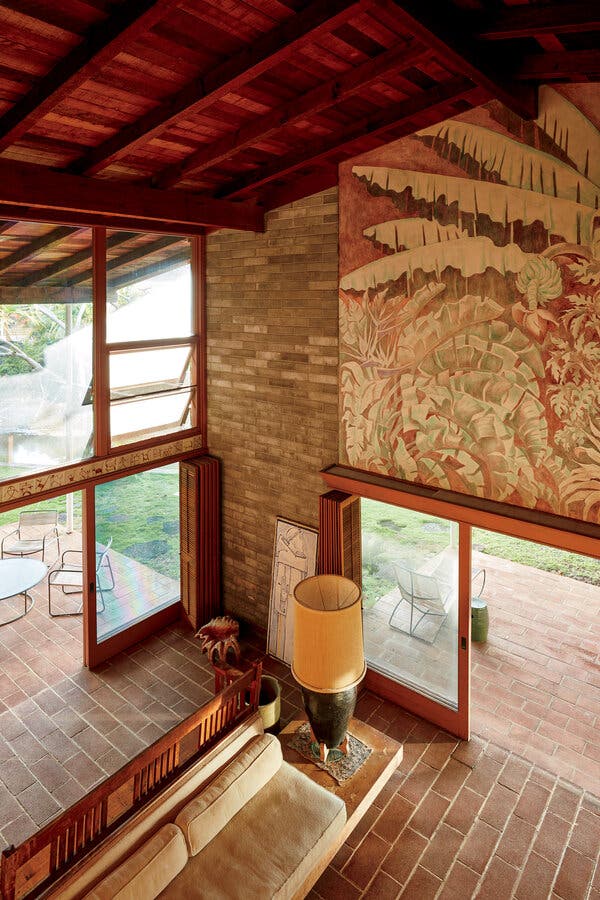
Charlot's home, built in 1958 near Kahala Beach in Honolulu, was a collaboration with local architect George “Pete” Wimberly. This 2,856-square-foot, two-story dwelling, primarily constructed from redwood and concrete bricks, reflects Charlot's artistic sensibilities and his deep connection to Hawaii. The design intentionally integrates the outdoors, featuring elements like a cantilevered wood table extending from the dining room to a lanai, blurring the lines between indoor and outdoor living spaces. Walls covered in dried _hāpuʻu_, an endemic fern, and a large fresco depicting tropical foliage further enhance the home's natural aesthetic.
Despite being in a neighborhood now dominated by larger residences, the Charlot House is noted for its modest yet elegant tropical Modernist design. Wimberly, an accomplished architect in this style, shared Charlot’s commitment to organic building materials and passive cooling strategies, orienting the house to utilize cross breezes. The home's design incorporates local Hawaiian concepts, with spaces divided into _mauka_ (mountain-facing) and _makai_ (sea-facing) areas, creating a dynamic sense of movement and connection to the landscape. A dramatic reveal upon entry, through a long driveway to a stately front door with Charlot's tile mural, leads into a deceptively cavernous interior.
The house served as a vibrant cultural hub where Charlot and his wife, Zohmah, entertained a wide circle of artists. Their home was adorned with art from friends like Max Ernst and José Clemente Orozco, alongside Charlot’s own works, including sketches for the numerous Hawaiian murals he would complete for local institutions. A wraparound cork wall in his upstairs studio showcased his creative process. In 2001, the family gifted the house to the University of Hawaii at Manoa, ensuring its preservation and preventing demolition or significant alteration. In June 2022, the house was returned to the family, who remain dedicated to safeguarding its cultural significance.
The home is further enriched by Charlot's hand-painted ceramic tile petroglyph friezes, featuring 167 tiles of Hawaiian-inspired figures and dogs, strung across both interior and exterior spaces. These friezes, along with other multicultural elements like Mexican-inspired brick floors and Papua New Guinean masks, underscore the artist’s profound kinship with his adopted home. The house, through its design and artistic elements, not only enshrines a bygone era of Hawaiian architecture but also consistently reinforces its primary purpose: to be a home that celebrates the spirit of Hawaii and its people.
#JeanCharlot #HawaiiArchitecture #TropicalModernism #HonoluluHome #ArtistHome #MidCenturyDesign #CulturalPreservation #Muralist #JeanCharlot #HawaiiArchitecture #TropicalModernism #HonoluluHome #ArtistHome #MidCenturyDesign #CulturalPreservation #Muralist
0 comment in total
 No comments yet
You may also like
Home is Where the Art Is

Get Inspired by Jana Lam’s Rainbow-Hued Home Studio

How to transform your home with art
Murals Have Moved In
Even the Kitchen Island in This L.A. Artist’s Home Is Covered in Her Signature Waves

How a Maximalist Lei Maker and Her Family Downsized to a 1,000 Square-Foot Honolulu Bungalow
In His Own Home, an Interior Stylist Takes a Light Touch (Published 2021)
Inside a Filmmaker’s Zen 727-Square-Foot Weekend Retreat in Laguna Beach

Home & Design | Art + Soul
Hawai‘i Home + Remodeling August-September 2025 Issue

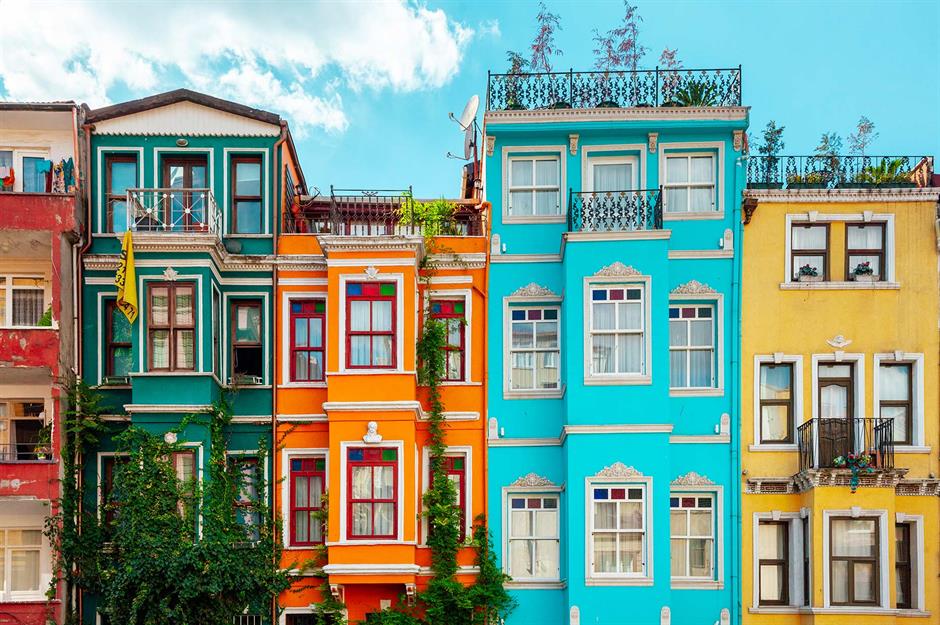
38 of the world's most colourful homes | loveproperty.com
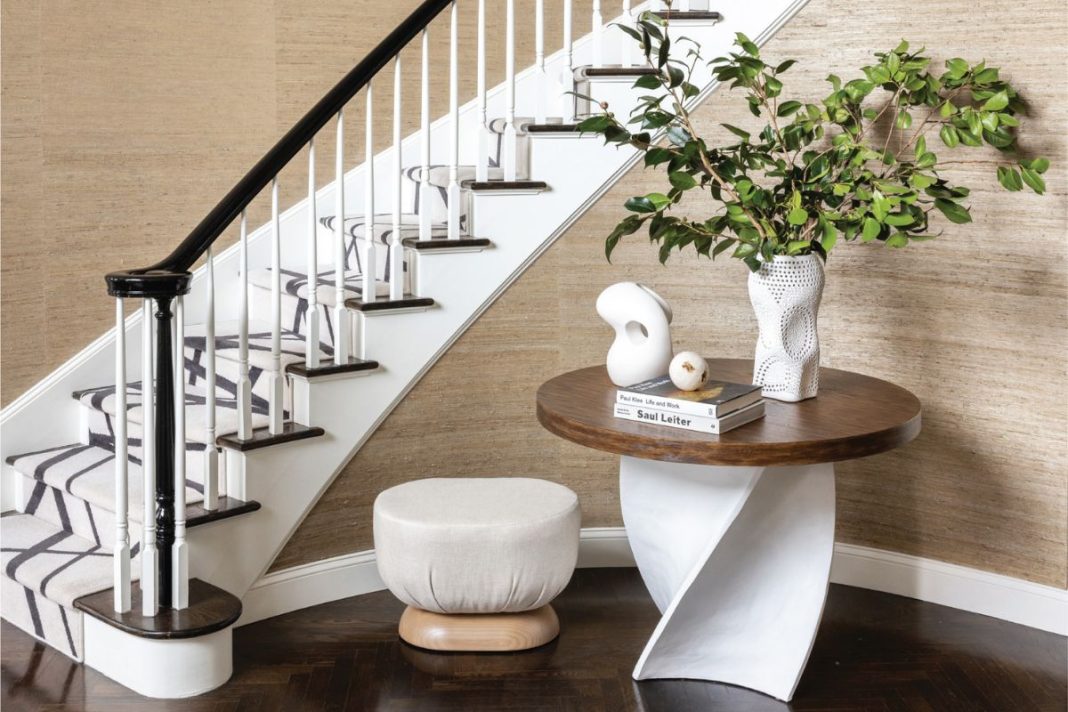
This West Harrison Home Design Is Filled With Creative Spirit

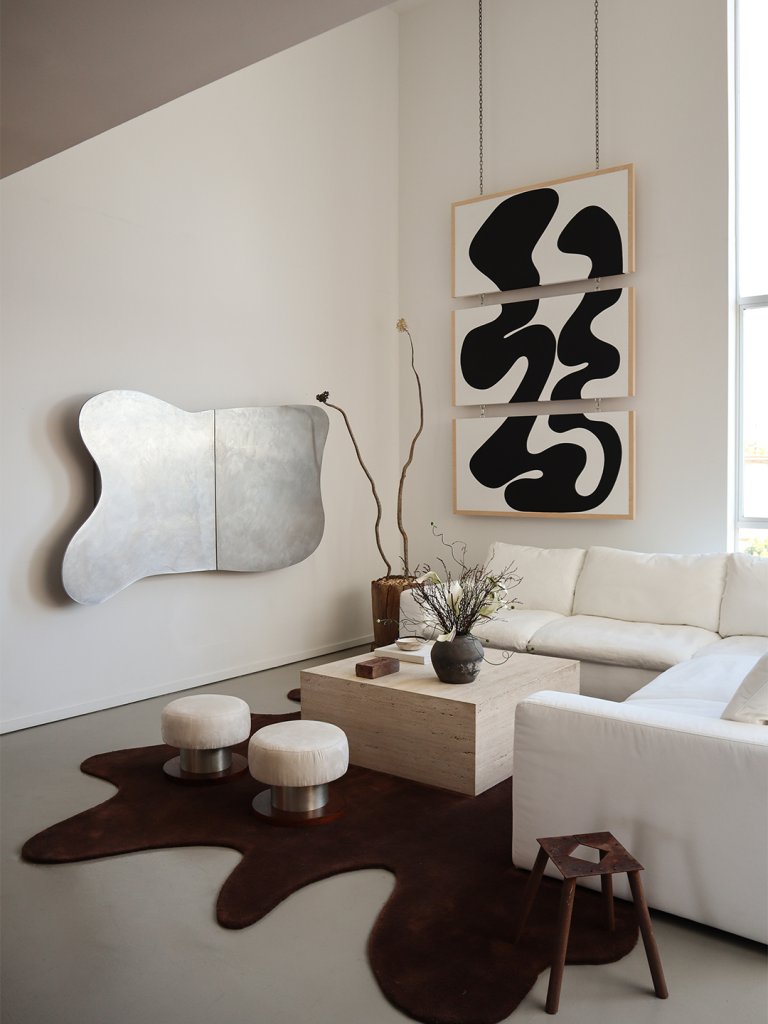
Sue Chan’s Minimalist L.A. Home Is the Antidote to Her Hectic Day Job

Photos: My Favorite Room with Liz Tew

Sierra Montoya Barela’s paintings are a tribute to interior design, plants and birthday cakes
Home & Design | The Art of Domesticity
An Artist's Creative Eye for Color Shapes This Nashville Home
Makani’ Eka on The Big Island, Hawaii
This Budding Designer Proudly Curated His Home to Grow His Social Media Following
For This Interior Designer, Home is Where the Art Is