1/14
How to Change a Light Fixture
Replacing a light fixture, while seemingly straightforward, can often present unexpected challenges for DIYers. This guide provides comprehensive electrical tips and techniques, gleaned from master electricians, to ensure a smoother, safer, and quicker installation process. Before beginning, it's crucial to prioritize safety by always flipping the circuit breaker. However, merely turning off the breaker might not be sufficient, as some junction boxes contain live wires from multiple circuits. A non-contact voltage detector is recommended to verify that all wires in the box are de-energized before disconnection.
The article addresses common issues encountered during light fixture replacement. One frequent problem is ill-fitting mounting brackets. To circumvent this, it's advised to purchase additional styles of mounting brackets when buying a new fixture, saving potential trips to the hardware store mid-project. If fixture mounting screws are too long, a wire stripper with built-in bolt cutters offers a clean and efficient solution, preserving thread integrity better than a hacksaw.
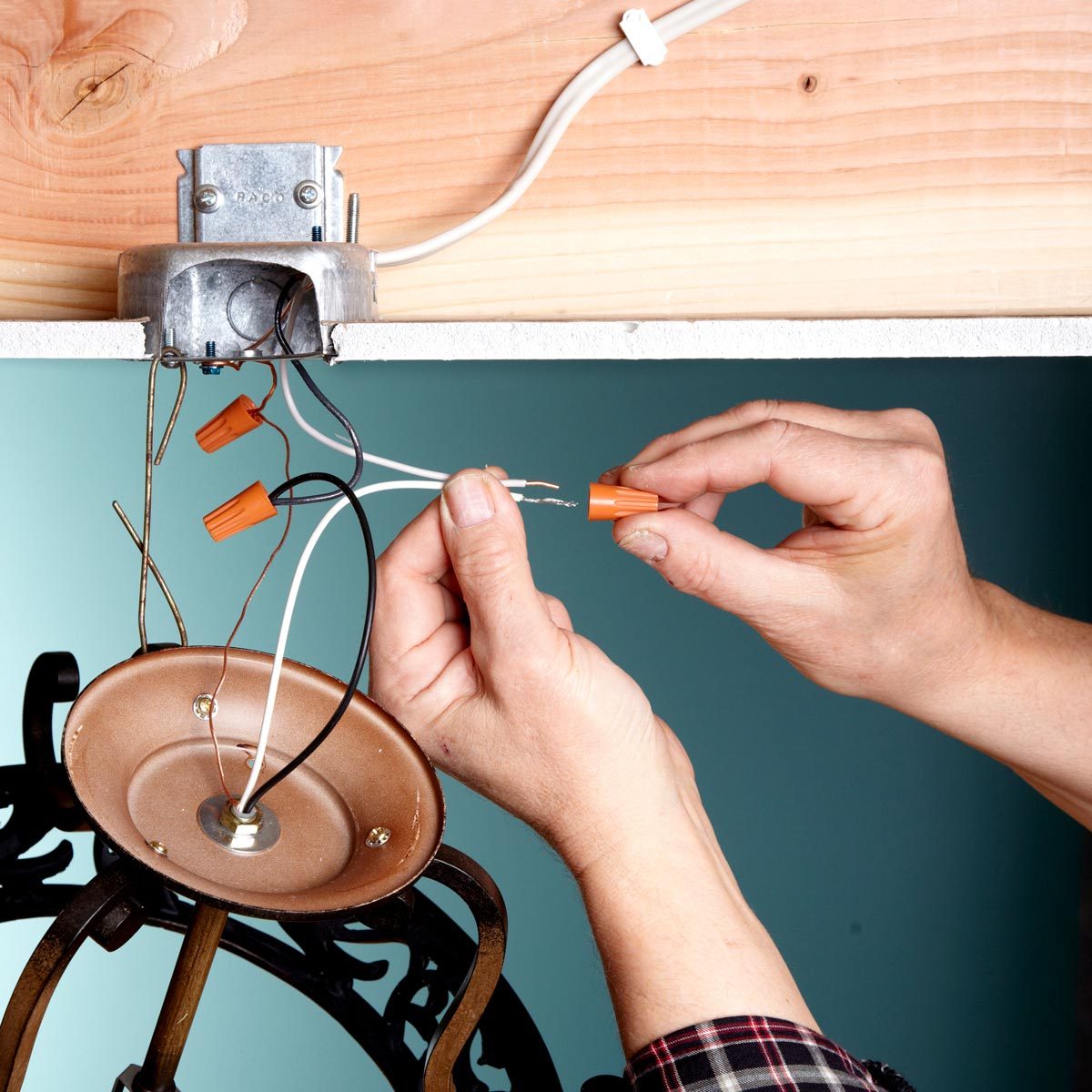
Another common hurdle is short wires within the junction box, which can make connections difficult. Stab-in connectors are suggested as an easier alternative to twist-on nuts in tight spaces. By attaching a “pigtail” (a new, same-gauge wire) to the existing short wire using these connectors, sufficient length is created for proper fixture connection. Special attention is drawn to aluminum wiring, which requires professional handling due to specific connection techniques.
Electrical code compliance is also highlighted, particularly concerning recessed junction boxes. If a box is recessed more than 1/4-inch from the wall or ceiling surface, a box extender should be used to rectify this violation, often occurring when additional layers of drywall or wood have been installed. For convenience during wiring, a practical tip involves creating an improvised third hand by hanging the fixture with a scrap of wire or a coat hanger, freeing both hands to make connections. Aligning canopy screw holes can be simplified by using a skinny screwdriver or nail to locate the second screw hole.
When selecting a new light fixture, it's important to consider the age of the home’s wiring. Homes built before 1985 may have wiring insulation that cannot withstand the heat generated by certain modern fixtures, which often carry a “Use wire rated for at least 90 degrees C” warning. In such cases, fixtures that do not carry this warning, like hanging fixtures, should be chosen unless the house is rewired. The article explains how to identify newer, heat-resistant wiring types (e.g., “NM-B,” “UF-B,” “THHN,” “THWN-2”). It also recommends upgrading from plastic twist-on connectors, which often lack secure grip, to metal-threaded connectors for a more reliable connection.
Connecting stranded wire from a fixture to solid household wiring can be tricky. The recommended technique involves stripping slightly more insulation from the stranded wire (5/8-inch) than the solid wire (1/2-inch), then holding them together so the stranded wire extends about 1/8-inch beyond the solid wire before twisting on the connector. This ensures the stranded wire bunches securely inside the connector. To avoid working in the dark, users are advised to plug in lamps on a different circuit or use a camping headlamp if the fixture and outlets share a circuit. If screw holes in a metal box are stripped, an electrician’s tap can cut new, larger threads, accommodating No. 10-32 screws. Finally, the importance of grounding is emphasized. New fixtures require a ground wire, and if an older metal box lacks one, a ground wire can be added by connecting a six-inch copper wire to the box with a No. 10-32 ground screw. However, it is crucial to first verify that the box itself is grounded using an electrical tester; if not, a licensed electrician is needed to run a ground wire.
#LightFixture #ElectricalWiring #HomeImprovement #DIYProjects #ElectricalSafety #JunctionBox #WireConnections #HomeMaintenance #LightFixture #ElectricalWiring #HomeImprovement #DIYProjects #ElectricalSafety #JunctionBox #WireConnections #HomeMaintenance
0 comment in total
 No comments yet
You may also like
How to change a lightbulb above the stairs – 4 safe steps to switch out bulbs


Simple or sculptural, the right light fixture can make any room shine

Best lighting for a makeup vanity – the 5 secrets to a flattering glow-up for your get-ready spaces

Swap Out Generic Ceiling Dome Lights For IKEA Fixtures With Class
Chic Lighting Fixtures - Lighting To Redecorate Your Rooms


Banish the “Big Light” Completely With Some Snazzy Lamps


Pulling the plug on dated light fixtures is a great home update. Here's how to choose new ones

Dynamic perspectives: a lamp that transforms with every angle


Be gone, 'boob light' – here's just how to fix unattractive ceiling lights

What to Know About Upgrading Your Light Fixtures

Your "Boob Lights" Are Cheapening the Look of Your Home—Here's How Designers Fix Them


Lighting Is the Easiest Way to Transform A Room—15 Ideas to Inspire


How to move a light fixture…NOT!


Upgrade Your Lighting With These Smart Light Switches


The 5-Minute Rental Upgrade You’re Probably Overlooking


An interior designer’s guide to lighting your home

Light Switches - Our Pick of the Best
Switches & Sockets | Electrical indoor Lighting

The 18 best places to buy light fixtures, with expert recommendations
How To Upgrade Light Switch Covers