1/2
Is There a Future for Fabric-Formed Concrete Structures?
This article, part two of a two-part series, explores the potential and challenges of using flexible fabric formworks for concrete structures, building upon an earlier introduction to this method. Historically, innovators like Heinz Isler and Antoni Gaudi used similar flexible concepts to visualize shell structures, and woven geotextiles have been employed in civil engineering for applications such as revetments and underwater pile jackets. Research indicates that geotextiles offer benefits including superior concrete finish and durability, exceptional strength, and cost-effectiveness. Additionally, fabric form liners have been shown to improve the surface quality of cast concrete members. However, despite these advantages and decades of experimentation, significant research is still needed to integrate flexible fabric formworks into mainstream construction practices. Computational analysis of structural members cast directly into flexible membranes remains a complex challenge, and straightforward methods of analysis and design, common for conventional concrete panels, are not yet established for fabric-formed concrete.
The article highlights several distinct advantages of using geotextile fabric as formwork, such as the ability to create complex shapes, its strength, lightweight nature, reusability, and cost-effectiveness. Furthermore, the filtering action of the fabric is noted to improve the surface finish and durability of the concrete members, leading to a conservation of materials due to reduced concrete and reinforcing requirements. Conversely, several disadvantages exist, including potential relaxation due to pre-stress forces in the membrane and creep in the geotextile material, which can be exacerbated by temperature increases during concrete hydration. The careful placement of concrete and avoidance of jostling the fabric formwork while the concrete is in a plastic state are also critical considerations. Despite these drawbacks, the benefits of geotextiles are currently believed to outweigh the disadvantages, particularly until new fabric technologies emerge.
The widespread adoption of fabric-formed concrete structures is hampered by the lack of established standards and guidelines for their use in both precast and cast-in-place systems. Without these, the method is likely to remain a niche market, embraced primarily by early adopters. Feedback from leading proponents, including Richard Fearn, Professor Remo Pedreschi, and Mark West, suggests that market complexities and a reluctance among builders to adopt unproven systems, especially in a low-bid environment, present significant hurdles. There is an inherent risk associated with new construction methodologies. Nevertheless, Professor Pedreschi frames fabric formwork not as a replacement for traditional methods but as a disruptive technology that offers new opportunities for formwork design. The continuous research and enthusiasm observed at international conferences, which have yielded over 75 papers and presentations, suggest a vibrant academic interest in the field. However, a significant gap remains between academic exploration and practical industry implementation. For fabric formworks to move beyond their current 'niche' status, collaboration between academia and industry is essential, potentially leading to their supplementary use alongside conventional forming methods, leveraging their unique structural advantages.
#FabricFormwork #ConcreteConstruction #Geotextiles #ConstructionTechnology #StructuralEngineering #BuildingMaterials #ArchitecturalInnovation #ConstructionIndustryChallenges #FormworkDesign #FabricFormwork #ConcreteConstruction #Geotextiles #ConstructionTechnology #StructuralEngineering #BuildingMaterials #ArchitecturalInnovation #ConstructionIndustryChallenges #FormworkDesign
0 comment in total
 No comments yet
You may also like
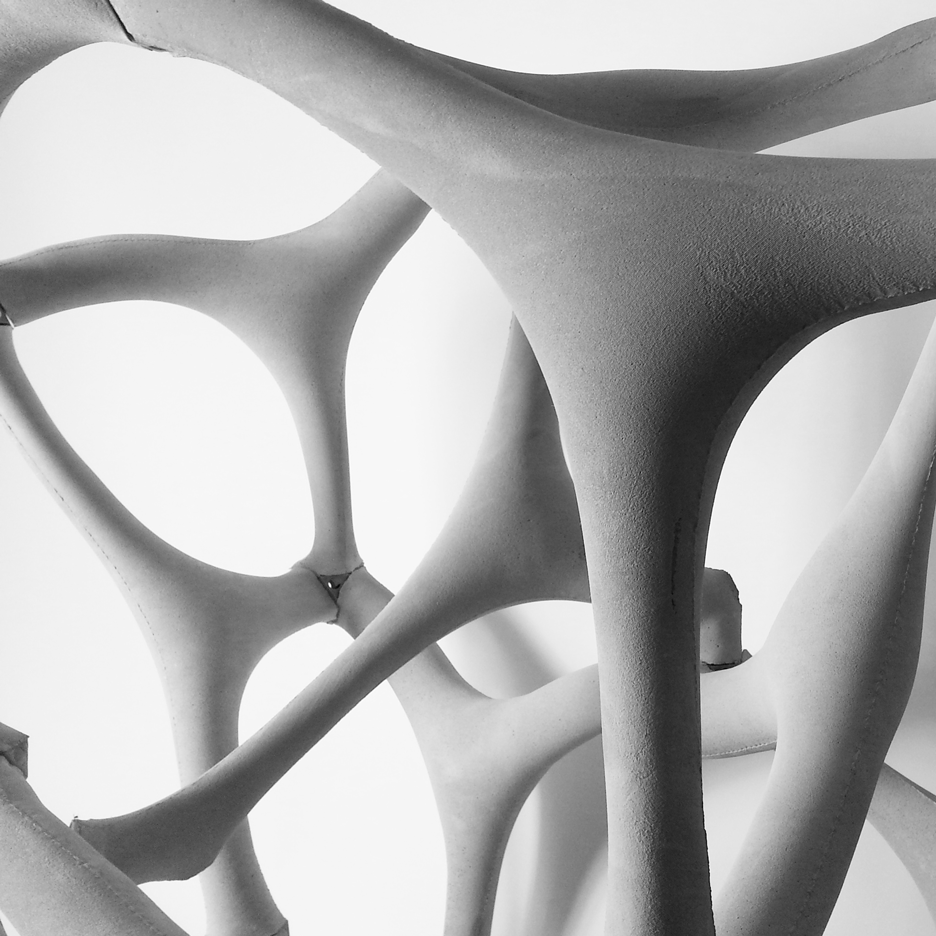
Six examples of fabric-cast concrete that are breaking the mould
The Circular Potential of Fiber Cement Cladding

Fiber Cement Panel - Swisspearl Interior from Swisspearl

Hardie™ Fine Texture Cladding delivers rendered wall look at heritage home refurbishment
Does the World's Oldest Fabric Have a Future in High Fashion?

7 Concrete Alternatives

5 Concrete Technologies to Reduce Carbon Footprint
Inside and out

Facade Panel – Twine from Rieder Smart Elements GmbH & Co KG

Sustainable Construction in Concrete - A Greener Future
Fiber Cement Colorline - Avera from Swisspearl
The latest and greatest innovations in sustainable building materials
The future of sustainable building materials
A comparative life cycle assessment of fiber-reinforced polymers as a sustainable reinforcement option in concrete beams
80% of Design Pros Agree This Pared-Back Material Will Rule Construction in 2025

Material Guide: The Benefits of Building With Concrete


Sustainable Concrete Panel Construction | Spotlight on Nexii and Vero Building Systems
Tensile strain-hardening cementitious composites and its practical exploration without reinforcement: A review
These are set to be the biggest fabric trends of 2025

Fiber-Cement Siding: An Attractive Alternative to Wood