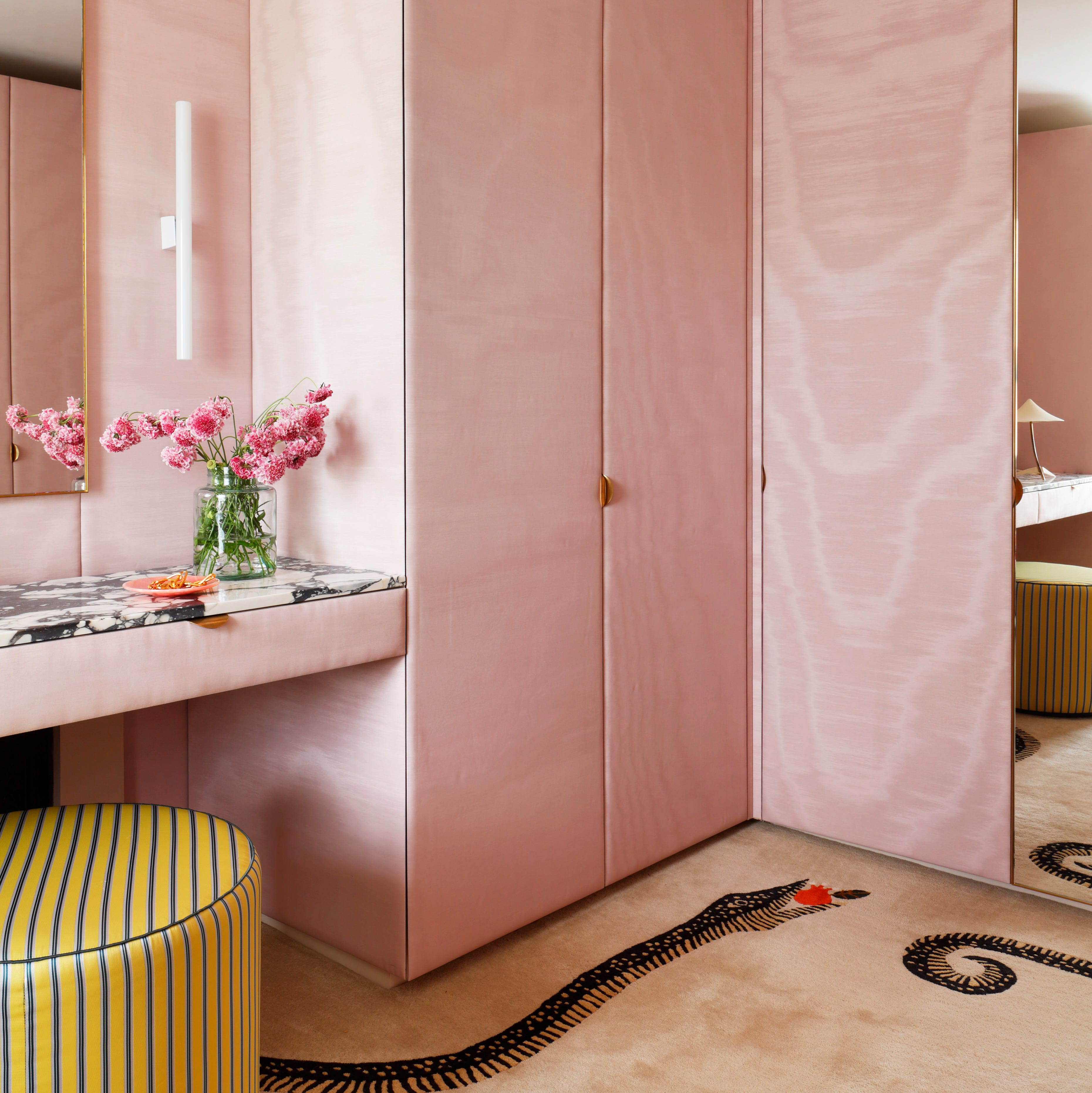
1/5
Moiré has dominated interiors in 2024: this is why
Moiré, a textile characterized by its distinctive undulating, rippling effect, has emerged as a dominant trend in interior design in 2024. Traditionally crafted from silk, this material is celebrated for its ability to reflect light and impart a sense of formality and gravitas, regardless of its color. The article highlights an example of its application in a Georgian townhouse in Holland Park, where designer Studio Ashby and architect William Smalley used petal-pink moiré from Dedar to entirely swathe a dressing room. This choice creates a sublimely decadent and romantic atmosphere, underscoring the fabric's aesthetic appeal.
The origins of moiré are rooted in China, a historical hub of silk production and skilled weaving. The technique, also known as watered silk, historically involves calendaring. This process applies heat and pressure to folded lengths of rib-weave fabric using large, textured rollers. The pressure flattens and distorts parts of the warp and weft, resulting in the characteristic wood-grain-like pattern. Modern advancements also allow moiré-like designs to be printed onto various surfaces, including textiles and ceramics, expanding its versatility in contemporary design.
Moiré's historical significance extends from the 17th to the 19th centuries, where it was synonymous with ceremony and formality. Queen Victoria and Russian Tsar Peter the Great famously wore blue moiré ribbon sashes. The fabric was a staple in court and evening attire, with historical fashion records from 1893 and 1897 mentioning dinner dresses made of 'rose-pink figured moiré' and 'white moiré' accents. The Victoria & Albert Museum even houses an opulent gown crafted from Prussian-blue moiré, adorned with metal buttons and chenille flowers, demonstrating its luxurious past.
In more recent times, moiré continued to be favored by renowned fashion designers like Christian Dior and Yves Saint Laurent. Its popularity also transitioned seamlessly into interiors. An inventory from Hampton Court Palace in 1695 reveals that lengths of silk moiré were used to complement tapestries, adding richness to state rooms. Centuries later, during Jacqueline Kennedy's tenure in the White House, apricot moiré upholstered bergère chairs, and deep leafy-green moiré adorned the walls of a salon. These historical and contemporary examples underscore moiré's enduring appeal as a material that can evoke a sense of royalty and sophisticated elegance in any space.
#MoiréFabric #InteriorDesignTrends #SilkTextiles #HomeDecoration #LuxuryInteriors #TextileHistory #GeorgianTownhouse #Dedar #MoiréFabric #InteriorDesignTrends #SilkTextiles #HomeDecoration #LuxuryInteriors #TextileHistory #GeorgianTownhouse #Dedar
0 commenti in totale
 Nessun commento ancora
Potresti anche gradire
Interior Designers Say These Decor Trends Will Be Everywhere in 2024
Interior Design Trends of 2024

Designers and property experts have called it - this unique front door colour is set to be huge in 2024
Designers Say These Furniture Trends Will Be Everywhere In 2024
Interiors experts predict this will be the biggest paint trend of 2026
The Interior Paint Colors You'll Be Seeing Everywhere in 2024

Colour splash: Beige bows out to vibrant 2024 interior trends
These Colors Will Be Everywhere in Interiors in 2025
Designers Say This Fabric Will Dominate Living Rooms in 2024

Move Over, Color Drenching— Color Capping Will Dominate 2026 Interiors

Bold, edgy color drenching is going to be big in 2024
This Opulent Decor Choice Is Poised to Become the Biggest Design Trend of 2025
Say Goodbye to Neutrals: Color-Drenching Will Define 2026 Interiors

What Are the Hot Home Styles for 2024?

The new interior design trends: 24 looks for 2024
Interior designers reveal the home decor trend that will take over 2026 & why it's time to bin off accent walls

Introducing Interior Design’s 2024 Rising Giants

The Biggest Design Trends of 2024—Spotted at Milan Design Week and Beyond

The Pros Have Spoken: These Interior Design Trends Will Define 2025
The Underrated 2026 Trend Interior Designers Swear By for Luxe Rooms