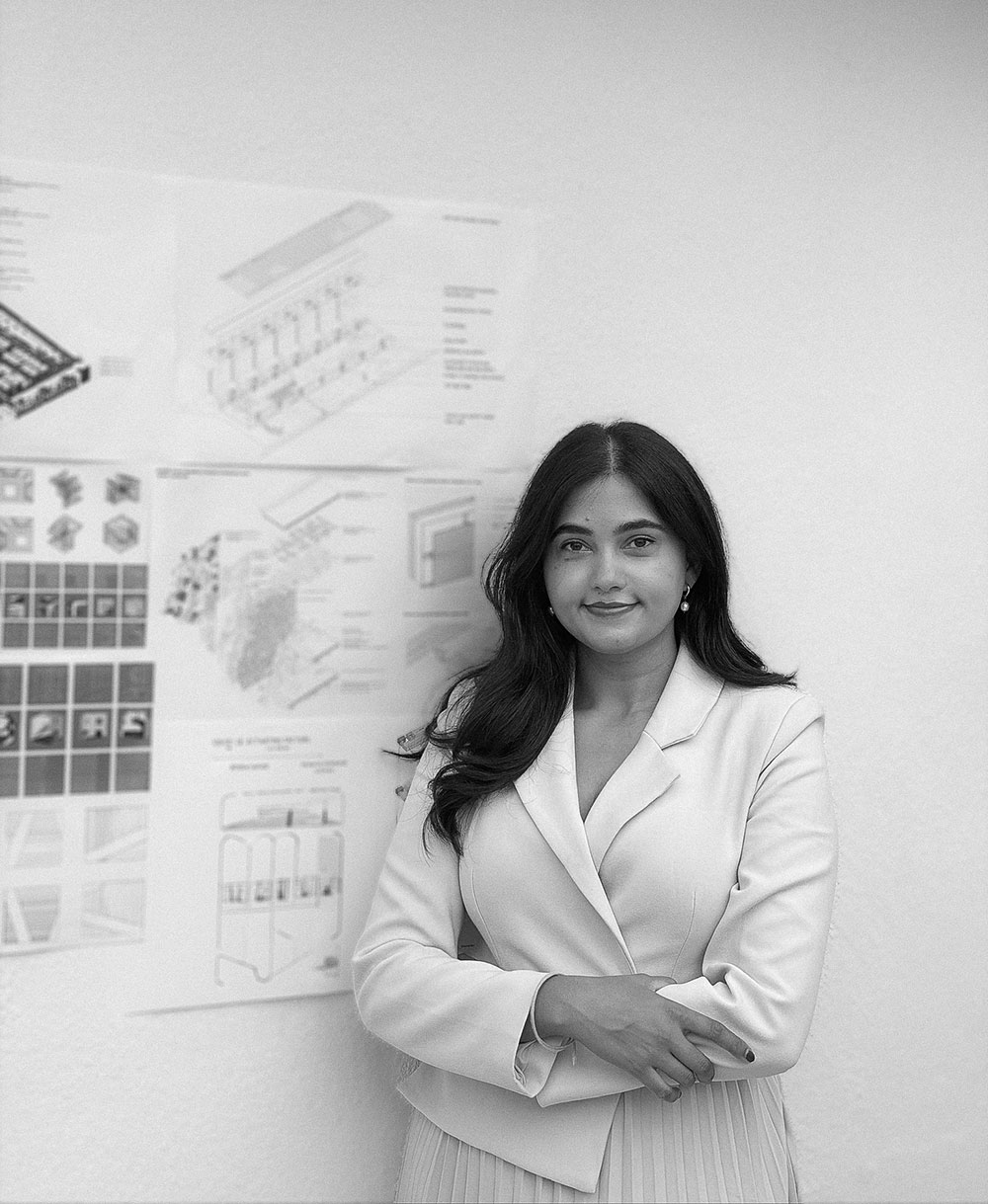
The Quiet Architecture of Purpose: Unpacking the Talent of Sanjana Satya Prakash
Sanjana Satya Prakash is an architectural designer whose work prioritizes human utility and purpose over architectural spectacle. Her career, spanning India, Boston, and Los Angeles, demonstrates a consistent belief that design success is measured by its positive impact on human life. Prakash's talent is defined by a deep-seated philosophy of purpose, a nuanced understanding of cultural and environmental contexts, a commitment to collaborative processes, and a strong technical acumen that bridges vision and reality. Her approach is encapsulated in the principle, “Design shapes with purpose,” which guides her in tackling challenges ranging from low-cost playgrounds to multi-million-dollar performing arts centers. She believes architecture should make a difference rather than just a statement.
Prakash's design philosophy originated from her work on Project Replay in Bengaluru, India. She co-founded this initiative to design and build a playground for a public school using recycled materials like tires, ropes, and salvaged wood. This project, featured in _The Times of India_, highlighted that a design's impact is not dependent on a large budget or exotic materials, but rather on its direct benefit to users. The playground provided significant developmental advantages and joy to children, demonstrating that true value is measured by positive user effect. This experience instilled in Prakash the importance of resourcefulness, proving that sustainability is a practical mindset of efficiency and creativity. It also established a clear link between design and social utility, illustrating that architecture is fundamentally a problem-solving discipline focused on addressing human needs.
Her diverse professional journey across India, Boston, and Los Angeles has cultivated a versatile and context-sensitive design approach. Her background in India provided an appreciation for architecture connected to community and climate, emphasizing transitional spaces that promote passive cooling and social interaction. In Boston, working at DiMella Shaffer, she gained experience in urban adaptive reuse projects and technically demanding science and technology facilities, honing her skills in precision and systems integration. In Los Angeles, at Parallax Associates, her work on educational facilities like the Mirman School and Sierra Canyon School’s Center for the Arts focused on flexibility, natural light, and spaces supporting creative pedagogy. This international exposure has fostered her adaptability, allowing her to approach each project with a fresh perspective, free from stylistic dogma, and grounded in respect for local context.
Prakash strongly emphasizes collaboration, viewing architecture as a collective endeavor involving architects, engineers, contractors, clients, and end users. Her ability to facilitate communication, foster mutual respect, and align diverse teams toward a shared vision is a key aspect of her talent. This collaborative ethic is evident in her management of the Sierra Canyon School’s Center for the Arts, where she coordinates specialized systems and leads communication between the architectural team, consultants, and contractors. Her pursuit of an Executive Master’s in Information Technology and Project Management further highlights her commitment to mastering the operational aspects of architecture. Her work with Habitat for Humanity also reinforced her belief in architecture as a service, emphasizing that the most meaningful solutions emerge from a process that honors the voices and needs of the people who will inhabit the spaces.
While her philosophy is humanistic, its execution relies on strong technical skills. Prakash can translate abstract goals into precise, coordinated documentation required for complex buildings. Her work on a Life Science Center at DiMella Shaffer demonstrates her intricate understanding of integrating specialized equipment, environmental controls, and life safety systems within an architectural framework. This technical rigor is essential for realizing her human-centered philosophy, turning abstract goals like creating optimal learning environments into realities through careful design and seamless integration of technology. Her talent lies in her ability to operate at both macro and micro scales, maintaining the project's overarching purpose while resolving complex technical details.
#ArchitecturalDesign #PurposeDrivenDesign #SustainableArchitecture #CollaborativeDesign #TechnicalAcumen #ContextualDesign #HumanCenteredDesign #EducationalFacilities #CommunityEngagement #ArchitecturalDesign #PurposeDrivenDesign #SustainableArchitecture #CollaborativeDesign #TechnicalAcumen #ContextualDesign #HumanCenteredDesign #EducationalFacilities #CommunityEngagement
 No comments yet
Sanjay Puri Architects Unveils “Zen Spaces”, a Zen Housing Blended in Nature

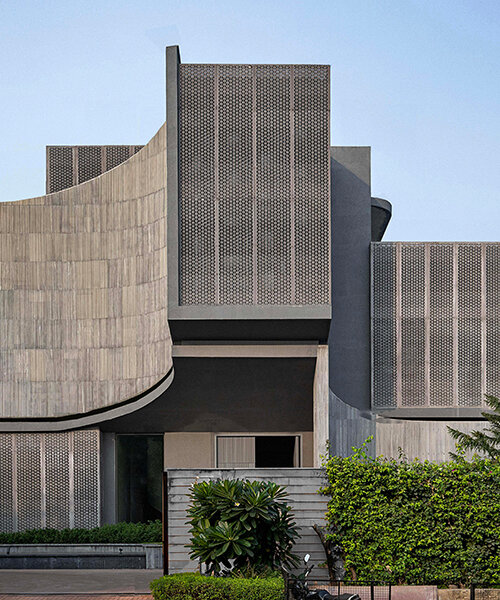
sanjay puri's screening facade infuses zen spaces in india with transparency and indirect light

Multidisciplinary Expertise In Architecture & Interior Design

Profiles in Design: Architect Anthony Spann


The Artful Life Questionnaire: Sara Nash