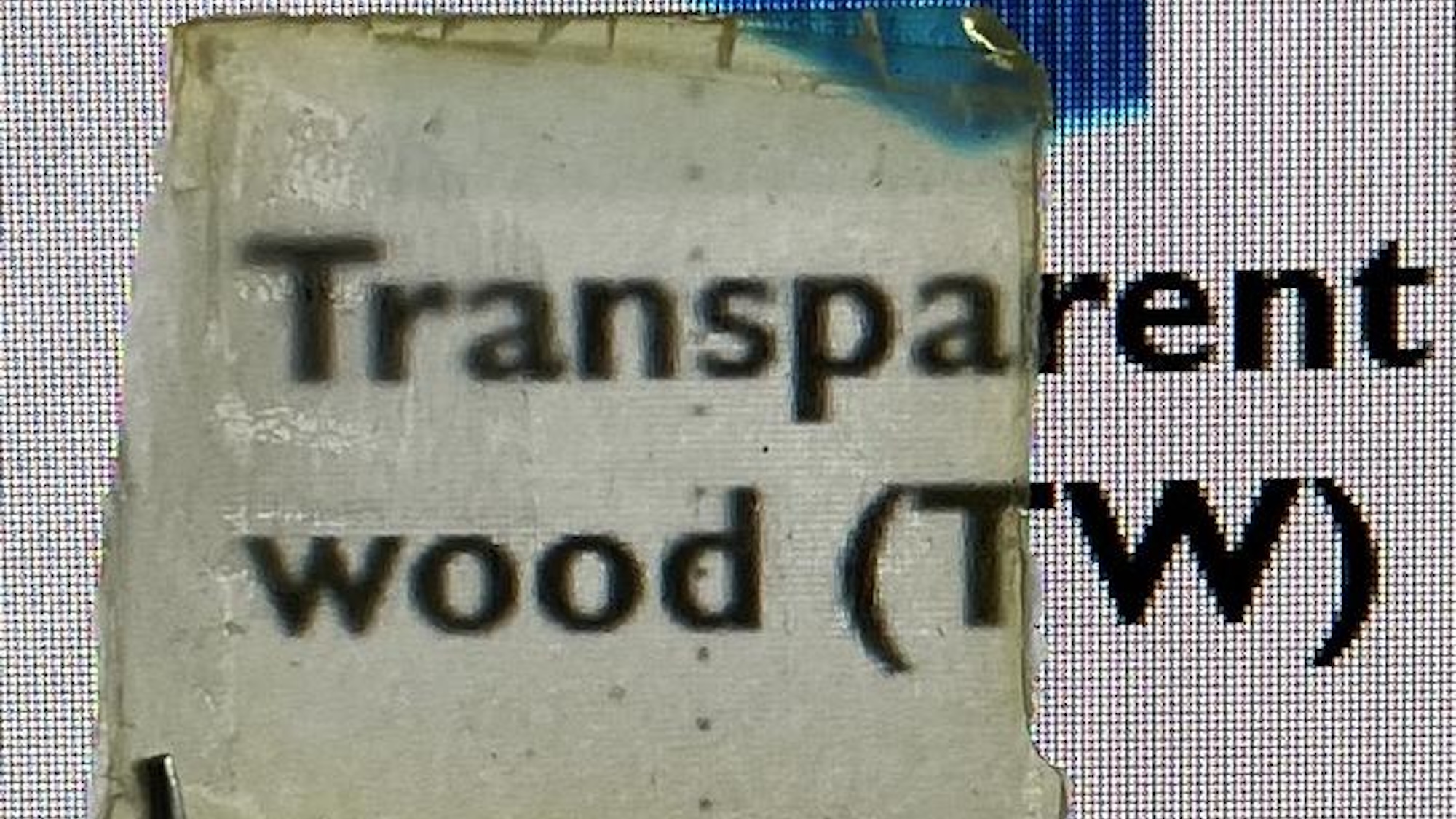
Eggs, sticky rice, and transparent wood create new kind of window
Traditional glass, a fundamental element in construction, poses significant environmental challenges due to its non-biodegradable nature, recycling difficulties, and potential for greater environmental harm than plastic. While advancements in glass manufacturing have been explored for years, the core production methods have remained largely unchanged. Consequently, researchers are now focusing on alternative transparent materials to entirely replace glass. One promising avenue involves chemically modified wood, as explored by Kennesaw State University chemistry professor Bharat Baruah and his undergraduate assistant, Ridham Raval.
Baruah, drawing inspiration from his woodworking hobby, considered wood as a viable substitute for glass. The primary challenge with wood is its inherent opacity. To address this, Baruah applied his chemistry expertise, recognizing that wood is composed of cellulose, hemicellulose, and lignin. By removing the latter two components, a porous, paper-like cellulose web remains. The process involved placing balsa wood in a vacuum chamber with chemicals, including the delignifying agent sodium sulfite and diluted bleach.
The inspiration for strengthening this transparent wood came from Baruah's childhood observations in northeastern India, where ancient buildings utilize a cement made from sand, sticky rice, and egg whites for durability. Baruah hypothesized that applying these same ingredients to the balsa cellulose would harden and reinforce it sufficiently for construction purposes. The experiments yielded semi-transparent wood slices that were both durable and flexible.
To demonstrate its practical application, Baruah modified a wooden birdhouse with a window made from this augmented wood. Under a heat lamp, the birdhouse with the transparent wood window maintained an internal temperature 9–11 degrees Fahrenheit cooler than when fitted with a conventional glass pane, suggesting potential for energy-efficient windows. Beyond construction, the utility of transparent wood could extend to other applications. In a separate experiment, silver nanowires were integrated into the samples to showcase their potential for use in solar cells, wearable sensors, and coatings. While silver nanowires are not biodegradable, future iterations could incorporate eco-friendly alternatives like graphene.
Despite these advancements, transparent wood windows are not yet ready for widespread home installation. Further research is required to enhance transparency. Additionally, while the small quantities of reagents used for hemicellulose and lignin removal in the experiments were environmentally safe, scalability for mass production remains a consideration. Nevertheless, these developments present a promising and sustainable path forward for developing cost-effective alternatives to traditional glass.
#TransparentWood #SustainableMaterials #GlassReplacement #EcoFriendlyConstruction #MaterialScience #RenewableResources #EnergyEfficiency #ChemicalEngineering #BiodegradableTechnology #TransparentWood #SustainableMaterials #GlassReplacement #EcoFriendlyConstruction #MaterialScience #RenewableResources #EnergyEfficiency #ChemicalEngineering #BiodegradableTechnology
0 comment in total
 No comments yet
You may also like
Kitchen window curtain ideas – 10 looks rich in texture and style

Material Innovation At Its Best: Explore Design Standouts

These 8 Unusual Windows Will Take You by Surprise

Kitchen island trends – 8 shapes, materials and finishes designers are choosing for elevated spaces

Decorating with vege-crazy extravagance
15 easy, breezy kitchen servery windows

8 Kitchen Curtain Ideas for a Charming, Light-Filled Space
Kitchen design ideas: A kitchen window bar
3D-Printed Ceramic Vases That Mimic Nature’s Patterns

24 Window Sill Decorating Ideas Designers Love for Every Home

Poilu Vases Are 3D Printed with Implanted "Hair"
We Found a New Place for Your Open Kitchen Shelving—The Window
Window Dressing

On This Architect’s Kitchen Wish List: Red Windows and Heart-Shaped Open Shelves

Dusen Dusen’s Throw Pillow Drop, a Roasted Tomato Rug, and the Most Genius Grilling Set

Terramater: the new sustainable porcelain stoneware by Marazzi

Kitchen Makes an Artful Statement

3D printed clip on vase modifies drinking glass
7 kitchen island style ideas that are easy and eye-catching


Best Dressed