The Evolution of a Poured Wall Contractor
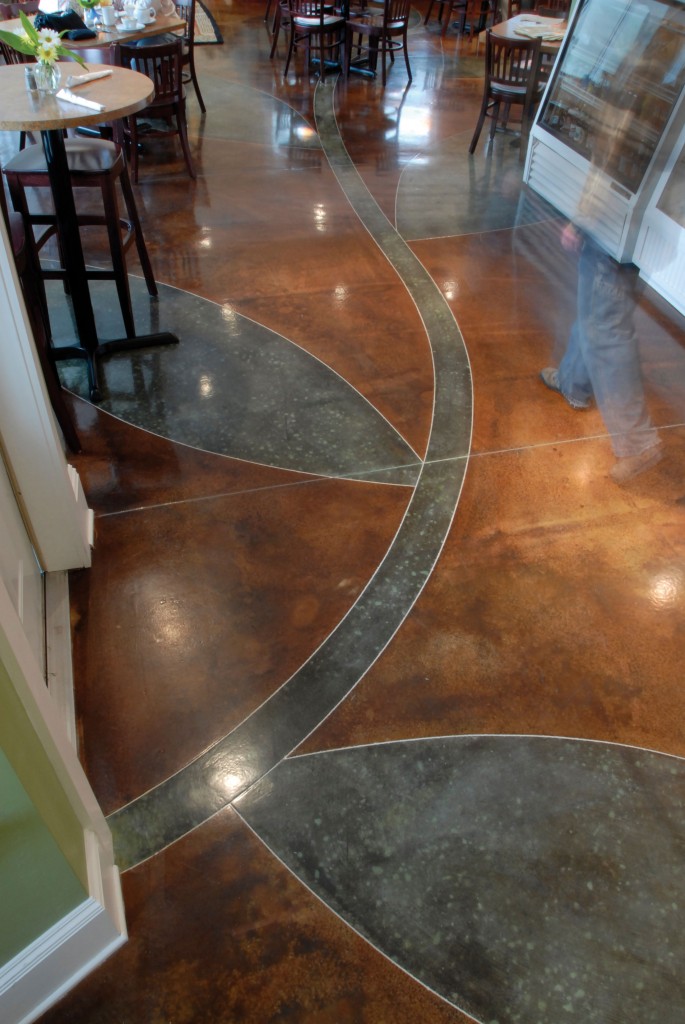
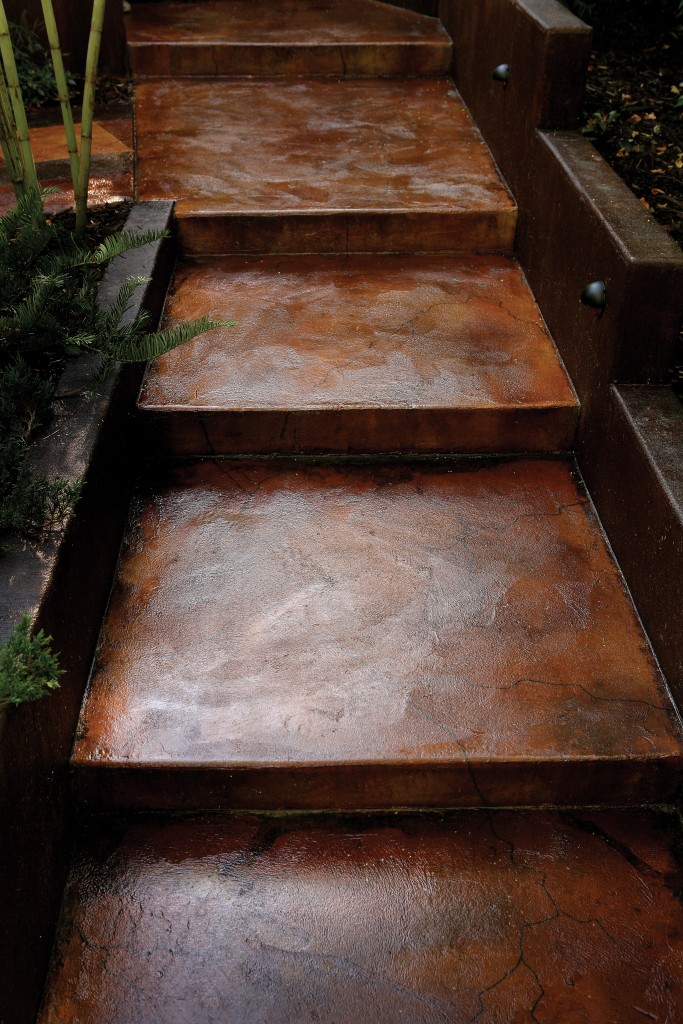
Rich Kubica, owner of K-Wall Poured Walls, LLC, has dedicated his career to the concrete foundation and wall industry, following in his father's footsteps who founded Jerry Kubica Foundations in the 1950s. After his father's retirement and the business closure, Rich revived K-Wall in Traverse City, Michigan, in 1992, later inventing the E-Max insulated wall system, now sold by Western Forms. In 2006, Kubica relocated his family and business to Asheville, North Carolina, and began operations in 2007. The economic downturn of 2008 posed significant challenges, leading to the collapse of many concrete wall contractors in the region. However, K-Wall Poured Walls survived by diversifying its services. Kubica's strategy included expanding into footing and wall projects, flatwork, gypsum concrete underlayment applications for multi-family units, decorative concrete, and epoxy floor coating jobs. This diversification allowed the company to maintain operations when housing construction, and consequently poured wall demand, declined.
As the economy gradually recovered and competitors re-emerged, Kubica identified a growing market for precast walls, particularly in the mountainous Asheville area. Several factors influenced his decision to incorporate precast walls into his offerings. The limited availability of ready-mix concrete in the region presented a logistical challenge. Additionally, the heavily engineered walls required in Western North Carolina, due to the terrain, led to thick walls, substantial footings, and extensive rebar, significantly increasing the cost of traditional poured wall foundations to the point where they were deemed too expensive for typical homeowners. A crucial development was the 2012 IRC Code Book, which, for the first time, recognized precast walls, moving them from a proprietary product status to a widely accepted construction method.
Another significant driver for adopting precast walls was the increasing difficulty in finding skilled and dedicated labor for the demanding work of pouring concrete walls. Kubica noted a shift in work ethic among younger generations compared to his own experiences. Precast walls offer a less labor-intensive solution, as they are manufactured in a factory setting under controlled conditions. Installation primarily involves a crane and minimal manual labor, making the process more attractive to both experienced and new workers. This approach reduces physical strain and streamlines the construction timeline.
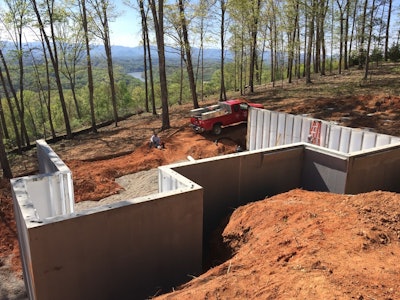
Kubica partnered with Ron Ward, CEO of Structura Technologies, to develop the MonoKast Precast Wall system. While precast walls had been observed for two decades, their timing was not previously optimal due to lack of code recognition, proprietary status, and higher costs compared to traditional methods. However, advancements now allow for the use of 70 percent less concrete in precast walls, making them a more efficient and cost-effective option. The MonoKast system is manufactured at K-Wall’s facility in Fletcher, North Carolina, and delivered to job sites. These walls are set using a crane on a crushed stone footing, adhering to 2012 IRC building codes. Once installed, they are insulated, studded, and ready for finishing without requiring additional framing. The stud cavities can accommodate insulation to enhance R-values, and MonoKast walls can be integrated with traditional cast-in-place walls to create hybrid foundations.
The MonoKast wall profile features a 10-inch wide header beam at the top and a 10-inch wide footing beam at the bottom, both 3.5 inches thick with solid concrete and reinforced steel. The concrete shell is 2 inches thick, fiber-reinforced, and meets 5,000 psi code compliance. Precast concrete offers benefits such as faster construction times, reduced costs, and versatility. Kubica highlighted an instance where 180 lineal feet of MonoKast wall was set in 3.5 hours. He emphasizes that precast walls are not a threat to poured wall contractors but rather an opportunity for diversification and offering a comprehensive service to builders. He views the addition of precast walls as an evolution, allowing contractors to provide a "one-stop shop" solution for foundation and wall construction, ultimately meeting modern building and energy codes, reducing material volume, and opening new revenue streams while maintaining the core business of poured concrete walls.
#ConcreteConstruction #PrecastWalls #PouredWalls #FoundationContractor #ConstructionDiversification #MonoKastSystem #BuildingCodes #LaborEfficiency #ConstructionTechnology #ConcreteConstruction #PrecastWalls #PouredWalls #FoundationContractor #ConstructionDiversification #MonoKastSystem #BuildingCodes #LaborEfficiency #ConstructionTechnology
0 comment in total
 No comments yet
You may also like
A Day in the Life of a Pro: Drywall Shorty


Rogue builders quoted over £15k for a repair job that cost £185 to fix - my lessons learnt
Creative Concrete: Poetry in Non-Motion

Masters of Their Craft | Plaster Master

Builders' Metalwork

Plaster Walls—a Signature of Warm Modernist Interiors—Are Having a Moment

Designing Forms for Tall Concrete Walls
Ideal Work showcases innovative finishes, coatings and flooring on Dezeen Showroom

Meet Joseph Ballard | General Contractor / Designer

Bryce Hollingsworth, Dry-Stone Waller
A Look at Plasterwork, One of the Industry's Most Timeless and Long-Standing Design Trends

‘It’s a tough lesson to learn’ – brick homeowners must complete this outdoor maintenance task to avoid costly repairs and structural failure

Decorative concrete contractor

How to plaster a wall

4 DIY Muralists on How They Turned Bare Walls Into an Artistic Moment


5 Questions on Decorative Plasterwork You Need to Ask Before Specifying It in 2025 — Answered by Interior Designers

An Architect’s Life in a Diehard Profession


BBB Tip: When to call a professional painter
How a Designer Worked With, Not Against, a Wall of 34 Windows

How to Figure Out What Kind of Walls You Have Behind Your Wall Paneling