1/8
Below ground
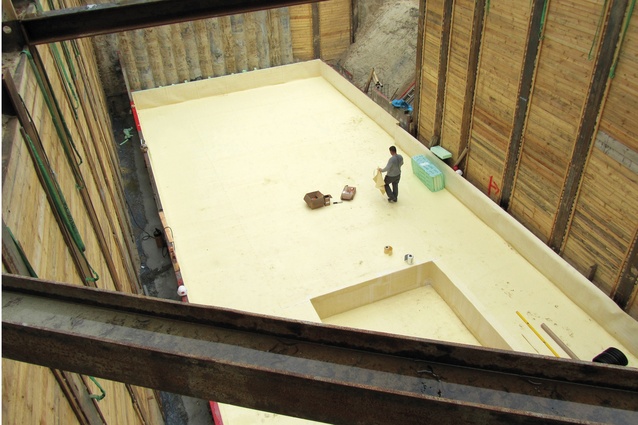
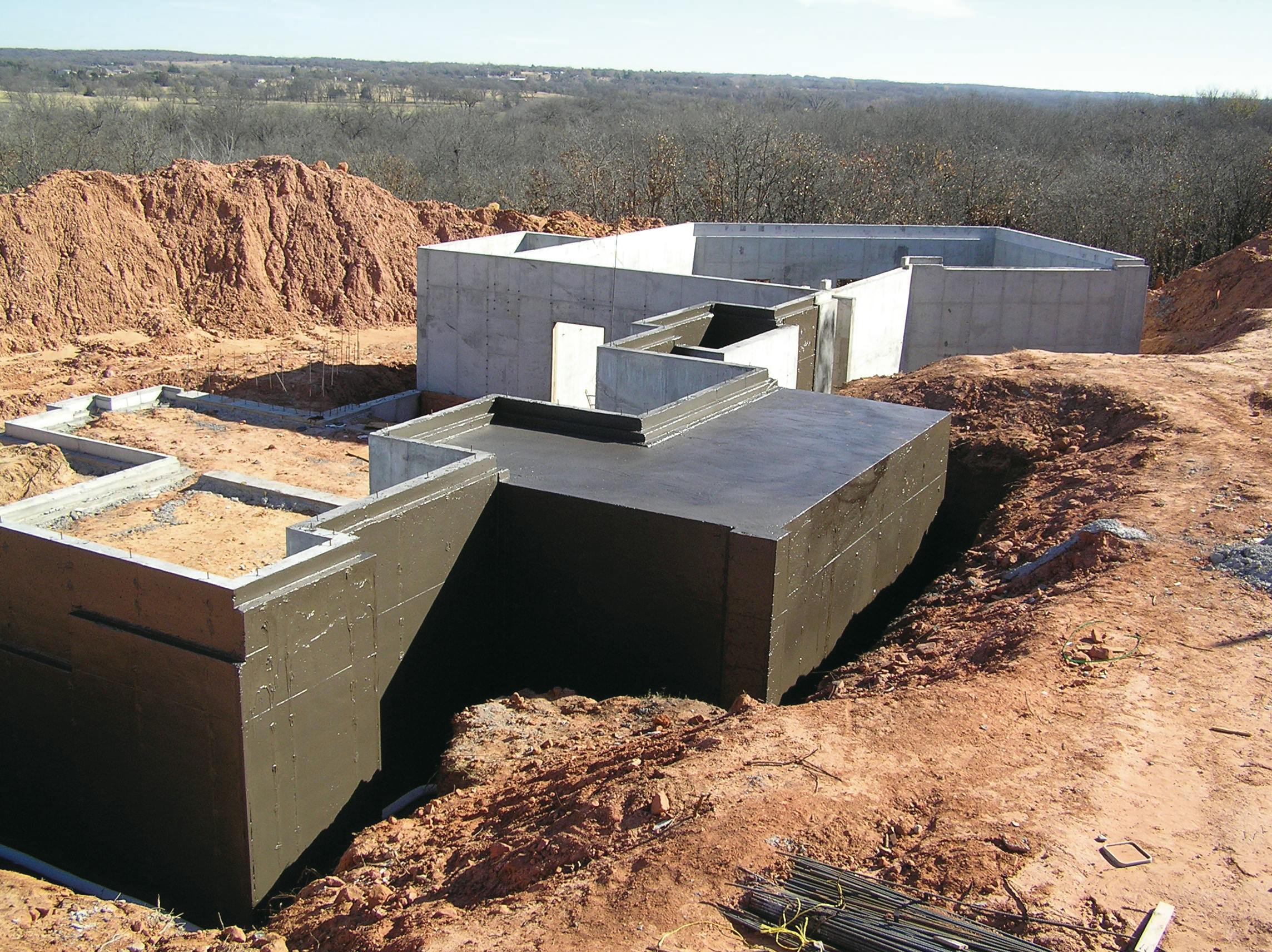
New Zealand currently lacks standardized regulations for below-ground waterproofing in residential dwellings, which is not considered a restricted building activity. This absence of standards means there's no benchmark for installation, and individuals can undertake the work without specific licenses or knowledge. This situation is particularly concerning given below-ground waterproofing's critical role in preventing moisture ingress, yet it remains the only aspect of moisture resistance without associated standards.
Prior to 2011, Clause E2 (External Moisture) of the Building Code included Section 12.0 Basements, which outlined requirements for damp-proof membranes in basement retaining walls. However, the updated E2/AS1 acceptable solution, reviewed and updated in 2011, removed this section. Consequently, there have been no acceptable solutions for residential below-ground waterproofing since then. Industry experts, such as Peter Withell, SIKA area manager for Australia and New Zealand, highlight that this gap forces designers to rely on product suppliers for information and allows unqualified individuals to perform critical waterproofing work. Once backfilled, incorrectly installed waterproofing is extremely difficult and costly to rectify.
Further complicating matters, NZS 4229, while containing some information on water and vapour-proofing of masonry walls, is not comprehensive. Mike Edwards, SIKA business manager of building systems, points out that while it mandates sub-soil drains and damp-proof membranes, it refers to membranes primarily used under floors rather than on walls, and its details are insufficient to ensure durable solutions. Another acceptable solution, E2/AS3, introduced in August 2011 for concrete and masonry buildings, refers to CCANZ CP 01:2011, which explicitly states it does not cover below-ground waterproofing, directing readers back to the insufficient NZS 4229.
In mid-2012, the Ministry of Business, Innovation and Employment (MBIE) initiated policy consultations regarding below-ground waterproofing, exploring the development of new licenses. "Tanking/basement waterproofing" was identified as a priority area that should be classified as Restricted Building Work (RBW) but currently isn't due to the lack of a specific license. While MBIE and the Building Practitioners Board have discussed this, they aim to avoid a proliferation of narrow specialist licenses. Discussions have focused on whether a site license for RBW could encompass tanking, thus eliminating the need for a separate specialized license.
The board plans to consult the sector in early 2014 regarding the role of site licenses within the RBW regime, making additional specific licenses unlikely until this review is complete. John Simmons, managing director of Nuralite Waterproofing Systems and a member of the Waterproofing Membrane Association of New Zealand (WMANZ), expresses disappointment over the lack of standards, emphasizing its critical role. WMANZ is, however, in the early stages of developing a code of practice for below-ground waterproofing in both residential and commercial applications, involving manufacturers and suppliers.
Simmons notes an increasing demand for robust and quality below-ground waterproofing systems from architects. Various systems exist, including liquid applications, bentonite clay systems, and bitumen sheet membranes. Nuralite uses a 'positive waterproofing system' with torch-on bitumen membranes (Nuraply 3PT), which provides immediate watertightness. Sika also advocates for below-ground waterproofing to be a restricted building activity, highlighting the difficulty of fixing basement leaks compared to roof leaks. They only provide a guarantee for their flexible paint-on bitumen membrane, Sika Blackseal Elastic, if applied by a Licensed Building Practitioner who has completed their online training and test, ensuring a certain level of knowledge and skill, despite the product being available for general purchase.
#BelowGroundWaterproofing #BuildingCode #NewZealand #ConstructionStandards #MoistureResistance #BuildingRegulations #LicensedBuildingPractitioner #WaterproofingMembranes #ResidentialConstruction #BelowGroundWaterproofing #BuildingCode #NewZealand #ConstructionStandards #MoistureResistance #BuildingRegulations #LicensedBuildingPractitioner #WaterproofingMembranes #ResidentialConstruction
0 comment in total
 No comments yet
You may also like
Rammed Earth Construction


Down to the Wire

act_romegialli’s underground pavilion contains a sunken swimming pool
Finished basements

The Complicated Path From Decking to Dirt

Basement Waterproofing and Foundation Repair

8 Basement Flooring Ideas to Elevate Your Subterranean Space


Get Floored
Art underfoot
Basements and Beyond

How to Install a Subfloor


The Next Frontier in Urban Design Will Send You Undeground
Taking the floor
Floor Prep and Underlayments: Critical flooring performance attributes reside below the surface - Jan 2021

Underfloor Heating