1/3
History revealed in restoration of Beaufort’s Verdier House front door frame
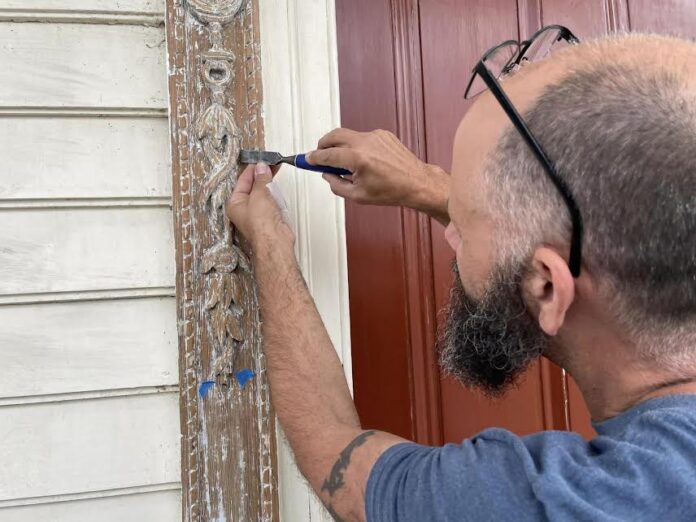
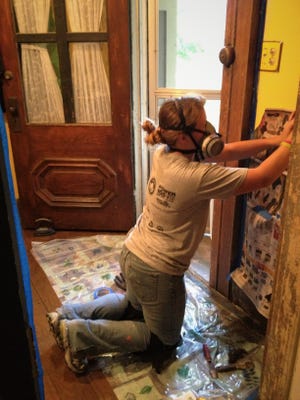
The historic John Mark Verdier House in downtown Beaufort is undergoing a meticulous restoration of its front door frame, revealing intricate details and historical insights spanning 219 years. This ongoing project, led by master carpenter and restoration craftsman Chad Bond from Charleston, is significantly enhancing the Historic Beaufort Foundation's understanding of its premier property and public house museum. The restoration commenced after conservation lab specialist and paint analyst Frances Ford meticulously removed layers of paint, uncovering significant wear and loss of architectural elements on the decorative pilasters and frieze due to centuries of weathering.
Ford, an adjunct professor and conservation lecturer at the College of Charleston and a graduate of Clemson University’s historic preservation program, played a crucial role in analyzing the paint layers. As Bond continued the paint removal, delicate and intricate craftsmanship on the decorative elements surrounding the front door, originally created by artisans 219 years ago, began to emerge. This restoration endeavor is supported by the generous contributions of Patricia and Colden Battey, Greg and Sarah Dyson, and Cheryl Steele, in memory of Roger Steele.
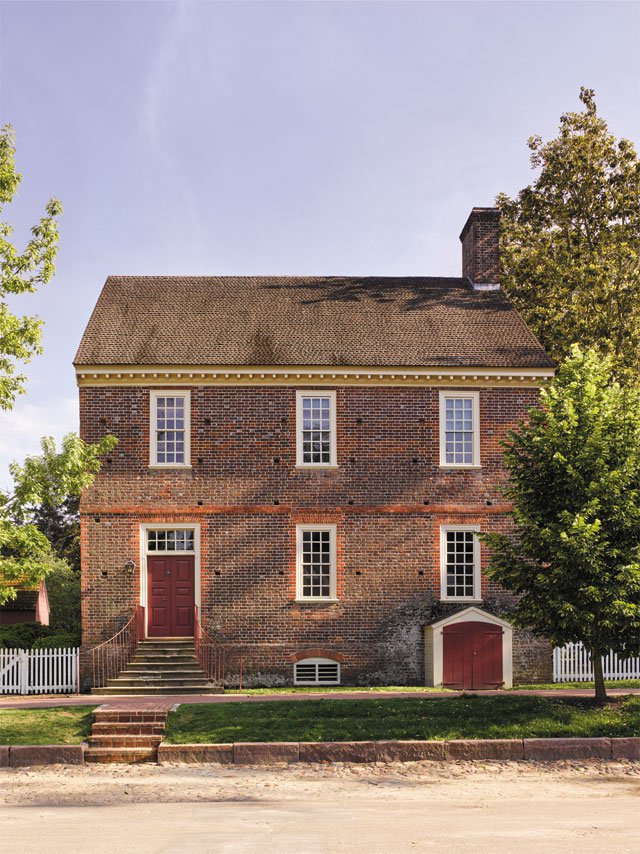
Constructed between 1801 and 1805 by John Mark Verdier, a prosperous merchant and cotton planter, the house exemplifies typical Beaufort Style architecture. Key features include a south-facing orientation, a high tabby foundation, a two-story pedimented portico, and a low-pitched hip roof. During the restoration, Bond made a significant discovery: the long-lost floral motif pattern on the two composite medallions at the top of the pilasters, which is characteristic of the Federal Period. These details were previously obscured by numerous paint layers. For example, simple bell flowers adorning the upper brackets above the pilasters were completely rediscovered, having been buried under decades of paint. Bond expressed satisfaction with the restoration's ability to revive the original crispness of these details.
Cynthia Jenkins, Executive Director of the Historic Beaufort Foundation, noted that a particularly interesting revelation was the differing deterioration levels between the left (west) and right (east) sides of the door. The west side showed more extensive damage, attributed to its exposure to the harshest rain and weather coming from the southwest, as well as more intense summer sun not protected by the portico. This observation provides insight into why the Beaufort Style architecture evolved to incorporate deep piazzas across the south fronts of houses—to provide shade, capture breezes, and offer a cool living space before the advent of air conditioning.
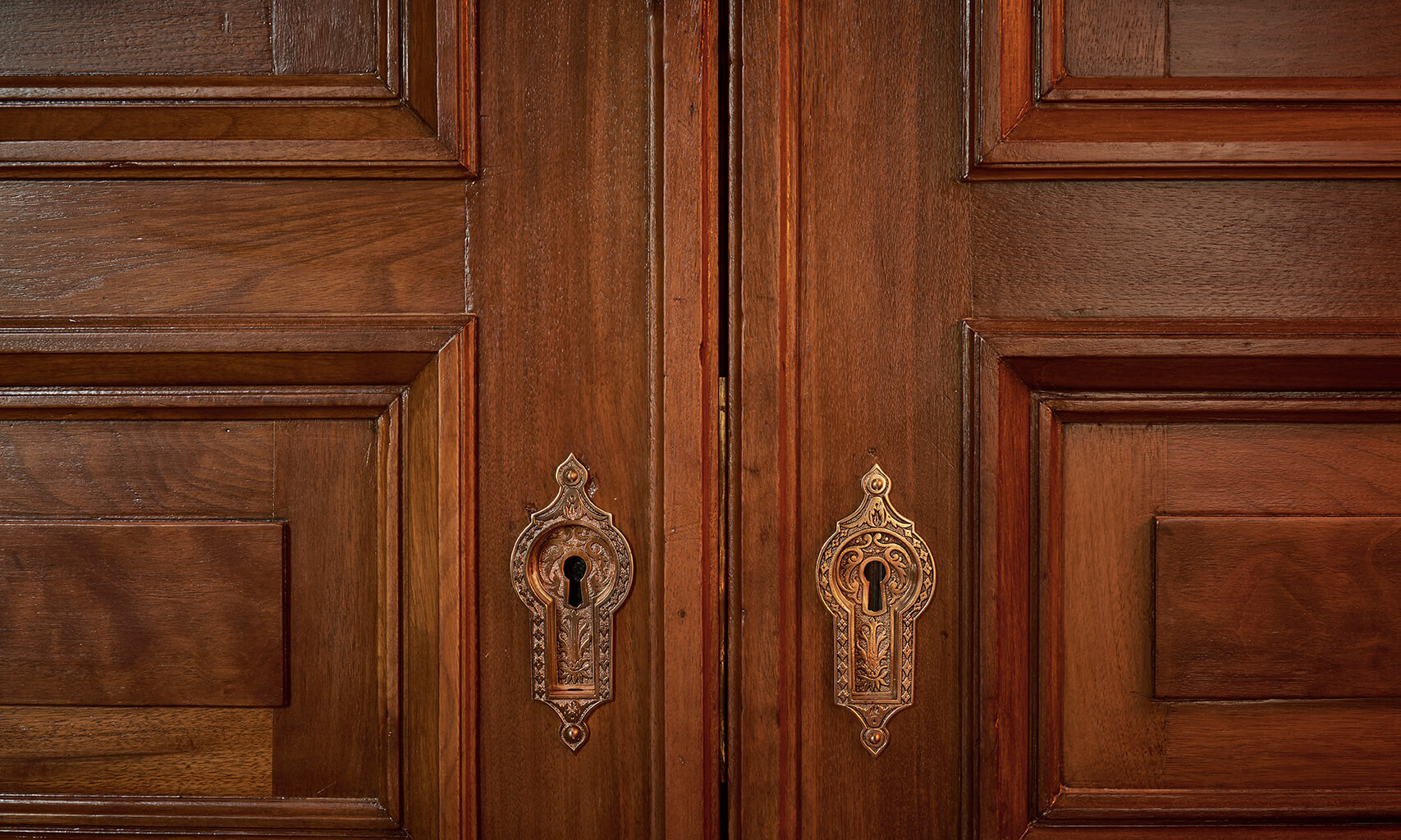
Renovation plans for the house's exterior and interior were initiated in 2006. Renowned restoration paint colorist Susan Buck, with a Ph.D. in Art Conservation Research from the University of Delaware, was engaged to identify the original paint colors of the clapboard exterior, interior, doors, and shutters. Buck's microscopy analysis of the original door, which had been replaced with a replica during a 1970s renovation but was still preserved, revealed that both the original front door and the second-floor jib-door were initially painted with multiple layers of deep red-brown paint. Subsequently, a grain-painting sequence was applied to imitate mahogany, a common practice of the era to signify wealth and status.
Jenkins faced the decision of restoring the original door or grain-painting the 1970s replica. Ultimately, the original door was placed in storage for future technological advancements, and master colorist Stephanie Poe was engaged in December 2022 to grain the replica door to resemble mahogany. Poe, a Charleston resident, has extensive training in authentic and historical techniques of Italian plastering, wood graining, and marbling. Bond's involvement in restoring the decorative door surround coincided with Poe's work. The project highlights the rich history embedded within the structure and the collaborative effort to return this significant historical property to its original grandeur.
#BeaufortHistory #HistoricPreservation #VerdierHouse #ArchitecturalRestoration #HistoricCraftsmanship #SouthCarolinaHistory #FederalPeriodDesign #JohnMarkVerdier #PaintAnalysis #BeaufortHistory #HistoricPreservation #VerdierHouse #ArchitecturalRestoration #HistoricCraftsmanship #SouthCarolinaHistory #FederalPeriodDesign #JohnMarkVerdier #PaintAnalysis
0 comment in total
 No comments yet
You may also like

Young couple renovating 108-year-old house makes stunning discovery in attic: ‘Such an incredible find’
When restoring historic homes, what’s old is new again

The Demolition Depot in East Harlem, for Any Vintage Piece You Could Ever Want

Mistress of Glittering Rides

Piecing Together 18th-Century Doors

Home & Design | A World of Interiors
What It's Like to Build Boston's Doors at Historic Door

Inside the Private Suites of New York City’s Iconic Frick Collection


Restoring Breuer's House in Garden

Front door: Does it keep your home safe, warm and looking stylish?
Designers Say This Vintage Home Feature Is Back


A Brownstone Dweller Brings Back the Glorious Details on a Distinguished Bed Stuy Block
At Home: The Door

Hidden Doors and Patterns Galore Brought British Charm to This Builder-Grade Home

19th Century Montclair Home Undergoes Stunning Makeover

7 Architectural Details You Should NEVER Get Rid of in a Historic Home

Restoring a Crown Jewel in West Highland

Tradition Meets Trend
Tour A 19th-Century Federal Home That Is Stylishly Updated
Old House Handyman: Restoring front door with new glass three decades in the making