1/4
The Fan Mistake You’re Making That’s Making Your House Hotter
The article explains how to properly use ceiling fans to keep a home cool in the summer and warm in the winter, emphasizing that the direction of a ceiling fan's spin is crucial for optimal performance. During the summer months, a ceiling fan should rotate counterclockwise, creating a downdraft that pushes air directly downward, producing a cooling effect. This can allow homeowners to raise their thermostat settings by approximately four degrees without compromising comfort, leading to energy savings. Conversely, in winter, the fan blades should spin clockwise, generating an updraft that gently circulates warm air, which naturally rises, back down into the room. This can help distribute heat more evenly throughout the space, potentially saving up to 15 percent on heating costs. The article suggests using a lower speed setting during winter to avoid creating an unwanted breeze.
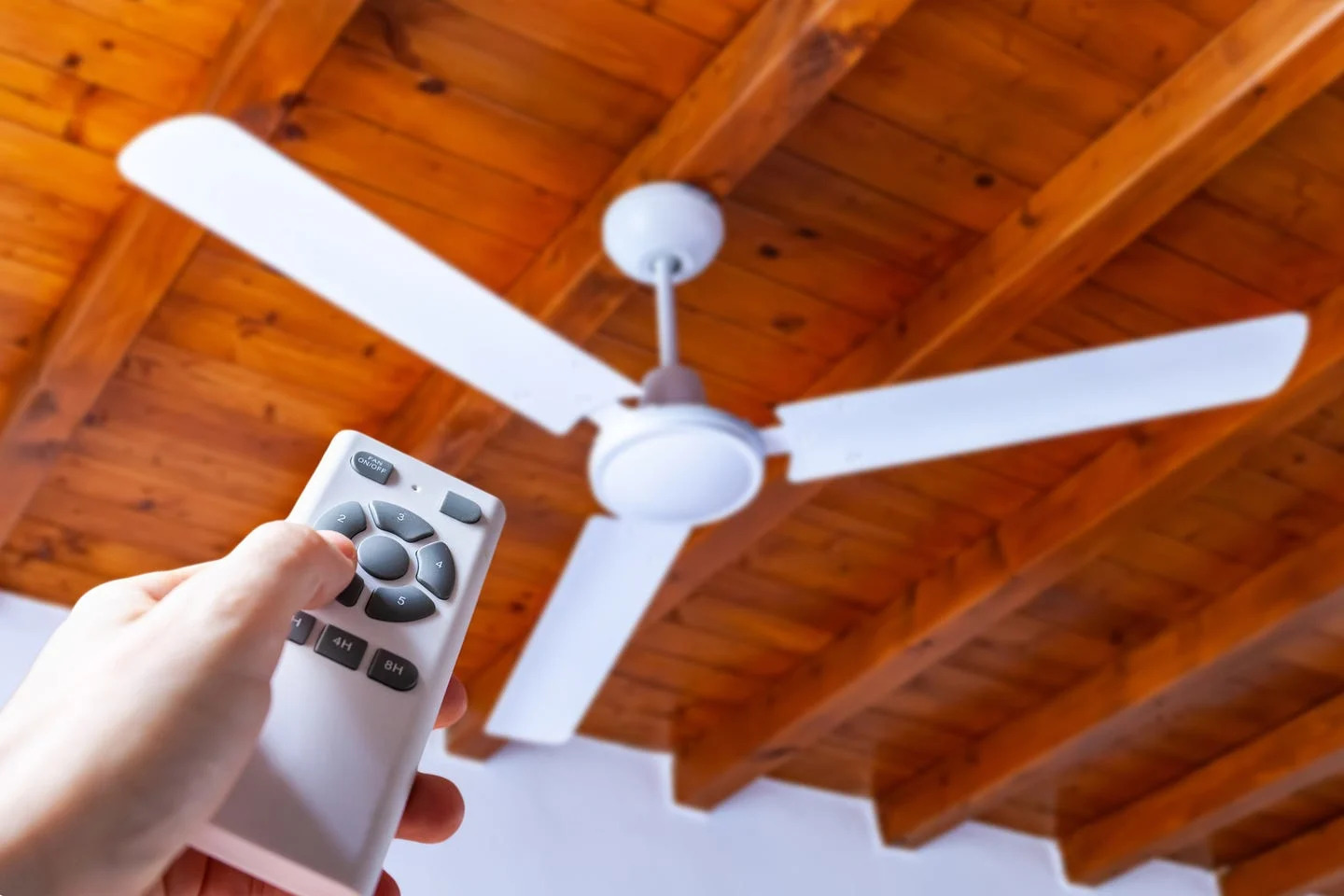
Changing the direction of a ceiling fan is typically a straightforward process. Most ceiling fans have a switch located on the base, allowing users to toggle between summer and winter modes. For newer models, this adjustment might be as simple as pressing a button on a remote control. If a physical switch is present on the fan itself, a ladder may be required to access it. It is recommended to make this seasonal adjustment twice a year to maximize the fan's efficiency in both cooling and heating.
Beyond seasonal adjustments, the article also provides guidance on selecting the appropriate size for a new ceiling fan. For smaller areas such as laundry rooms or home offices, a fan 40 inches or less in diameter is usually sufficient. Medium-sized rooms, including living rooms, kitchens, and larger bedrooms, generally benefit from fans ranging from 42 to 52 inches. For more expansive spaces, fans 56 inches and larger are recommended to ensure effective air movement. The number of blades on a ceiling fan primarily affects aesthetics, as most fans come with three, four, or five blades. While some theories suggest that more blades contribute to quieter operation, this is not a universal rule. The blade count is less critical than ensuring the blade angle is set between 12 to 15 degrees, which is essential for achieving maximum cooling efficiency.
Utilizing ceiling fans correctly can significantly reduce energy consumption and improve indoor comfort year-round. By understanding and implementing these simple tips—adjusting the spin direction seasonally, selecting the right size for the room, and maintaining an optimal blade angle—homeowners can effectively manage their home's temperature and lower utility bills. The Department of Energy supports the use of ceiling fans as an energy-efficient alternative or supplement to air conditioning and heating systems.
#CeilingFan #HomeMaintenance #EnergyEfficiency #CoolingTips #HeatingTips #SummerPrep #WinterPrep #HomeComfort #CeilingFan #HomeMaintenance #EnergyEfficiency #CoolingTips #HeatingTips #SummerPrep #WinterPrep #HomeComfort
共0条评论
 暂无评论
暂无评论你可能还喜欢

5 Design Mistakes Making Your Heating Less Effective in Your Home — And the Easy Ways to Fix Them

3 home design choices that were increasing my heating bills

Designers Say This Is the #1 Living Room Mistake Everyone Makes

HVAC Pros Say This One Fall Task Can Make Your Home Feel So Much Warmer (and It's So Easy!)


Experts warn against these 9 mistakes that are making your kitchen feel cold – what to do instead

Designers Share 4 Common "Mistakes" You're Making in Your Living Room—and How to Correct Them

Are Your Return Air Vents Facing the Wrong Way? They Could Be Making Your Home Hotter


5 Feng Shui living room mistakes you're making – and how the experts avoid them


5 mistakes you're making that are compromising your home's air quality – and how to fix it like a HVAC pro
The Ceiling Fan Mistake That's Costing You Money Every Month

5 Living Room Design Mistakes You Didn't Know You Were Making

7 Common Living Room Lighting Mistakes to Avoid at all Costs
Common design mistakes you're making in every room of your house

This home heating habit could be ruining your sofa
6 mistakes design experts instantly notice in your home – and how to fix them

5 kitchen hardware mistakes interior designers say homeowners always make, and how to fix them

Experts Urge Homeowners to Avoid This Radiator Mistake That 'Exaggerates' How Well It Will Heat Your Home

12 common family living room mistakes that pros warn against

9 common home renovation mistakes to avoid


Homeowner reveals how your ceiling fan could keep you warmer in the winter: 'No wonder my room was so hot during the summer'