1/12
Assessment of the effectiveness of secondary anti-damp insulation in heritage buildings made of historic brick: the current state of knowledge, research gaps and perspectives
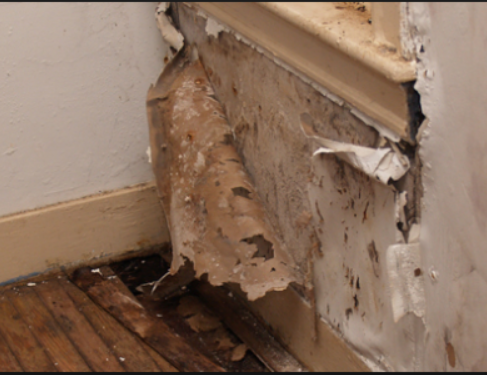
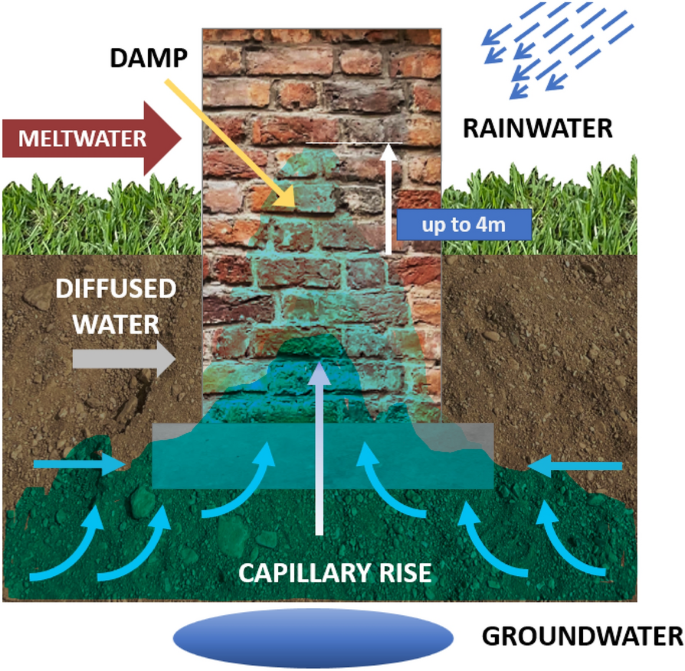
Moisture-related damage is a widespread problem in heritage buildings constructed with historic brick, often leading to structural degradation, reduced load-bearing capacity, aesthetic deterioration, and potential health hazards. Historic buildings frequently lack proper horizontal insulation or have inadequately placed insulating materials, allowing ground moisture to infiltrate and ascend through capillary action, sometimes reaching heights of up to 4 meters. This capillary rise, a continuous upward movement of water through porous materials like brick and mortar, is driven by capillary forces influenced by pore size and structure. The presence of salts in the penetrating water exacerbates damage, as their crystallization and expansion within pores can exert significant pressure, leading to the disintegration of building materials. Sodium and magnesium sulfates and sodium carbonate are particularly destructive due to their high volume expansion upon hydration.
Secondary anti-damp insulation, primarily applied using injection methods, is a common strategy to mitigate this issue. However, current research on the effectiveness of these methods, especially in the long term, remains insufficient. Existing studies primarily focus on the application process rather than post-implementation assessment, leading to a lack of understanding regarding the reasons for their eventual failure. Key factors influencing the effectiveness of injection insulation include the type, age, and porosity of the brick, the structure of the brick wall (e.g., filled vs. unfilled joints, layered construction), the type of mortar used, the existing moisture level, the penetration and interphase of the injection material with the brick, the impact of salts, potential chemical reactions between injection materials and salts, and the application method (gravity or pressure).
Previous studies have explored various aspects, such as paraffin injections, which demonstrated significant short-term moisture reduction but lacked long-term data. Comparisons of liquid and solid injection materials revealed that water-based substances spread more easily through mortar than organic solvent-based ones, and that effectiveness can vary greatly depending on the material's moisture content and drying conditions. However, these studies often overlooked crucial variables such as different brick structures, the interphase between materials, and the influence of salts. Research on high water load environments showed that chemical injection could reduce capillary rise, but again, lacked comprehensive analysis of material interactions and long-term efficacy.
A critical research gap exists in understanding how injection masses penetrate and interact with brick structures of varying ages and porosities, and how this is influenced by different wall constructions. The impact of salts on modern repair materials is also a significant concern, as potential reactions could lead to undesirable outcomes. Most existing research has focused on only one or two factors affecting insulation effectiveness, with very few considering multiple variables simultaneously. To address these gaps, future research should encompass a holistic approach, employing both non-destructive (microwave, dielectric, thermal imaging) and destructive (SEM electron microscopy, microtomography, mercury porosimetry) methods. This comprehensive investigation should evaluate the effectiveness of different injection materials across various brick types, ages, wall structures, moisture levels, and saline environments, thereby providing a more robust understanding of secondary anti-damp insulation in heritage buildings.
#HeritageBuildings #AntiDampInsulation #HistoricBrick #MoistureDamage #CapillaryRise #InjectionMethods #BuildingConservation #MaterialScience #NonDestructiveTesting #HeritageBuildings #AntiDampInsulation #HistoricBrick #MoistureDamage #CapillaryRise #InjectionMethods #BuildingConservation #MaterialScience #NonDestructiveTesting
0 komentarzy łącznie
 Brak komentarzy jeszcze
Możesz również polubić
Damage and restoration technology of historic buildings of brick and wood structures: a review

A Homeowner’s Guide to Maintaining and Restoring a Brick Facade

Saint-Gobain Weber EWI Render Brick colour created to match aesthetics for Rotherham regeneration project
Insulate Your Basement, Part 1

Vintage view: How old stone and brick walls can benefit from lime render

Old Drafty House Owners: The Pros and Cons of Retrofit Insulation


Why buildings fail: damp can become dangerous

How to insulate your period house
Another brick in the wall
Brick Cladding: Helping keep moisture out
Insulate Your Basement, Part 3
Advice on Damp problems – are these damp specialists trying to make a quick buck?
What a damp basement can do to brick


Should you insulate a basement ceiling? Expert advice for a comfortable home

Insulating an Old House from the Outside
Dampproofing and Waterproofing for Foundation Walls

Avoid insulating these spots as it can cause damp and mould
Why modern British homes are getting mouldy