Comment - A foreign perspective on second staircase regulations
Building regulations frequently undergo revisions in response to significant structural failures, as seen in the UK after the Grenfell Tower disaster. This event prompted a new requirement for second staircases in all new buildings exceeding 18 meters in height, alongside other critical building safety measures. Initially, the UK government deliberated on a 30-meter height threshold following recommendations from the London Fire Brigade and the Royal Institute of British Architects. However, this was subsequently reduced to 18 meters, a decision announced by the housing secretary. Scotland implemented the same 18-meter threshold in 2019, contributing to a push for regulatory standardization across different jurisdictions. This new regulation positions the UK as significantly more restrictive compared to its European counterparts. For example, Germany permits single-staircase apartment buildings up to 60 meters, while France allows them up to 50 meters.
From a Canadian perspective, the 18-meter threshold aligns with a proposed code change aimed at permitting single staircases for buildings up to six storeys. This proposal seeks to encourage the development of ‘missing middle’ housing—a category of housing that bridges the gap between low-rise single-family homes and high-rise apartment complexes. The existing Canadian building code mandates two staircases for all multi-unit residential buildings, irrespective of their height, meaning a three-storey building faces the same constraint as a 13- or 30-storey one. Historical research indicates that this long-standing principle in Canadian building codes is rooted in construction methods and firefighting capabilities from the early 20th century, which are no longer reflective of contemporary practices.
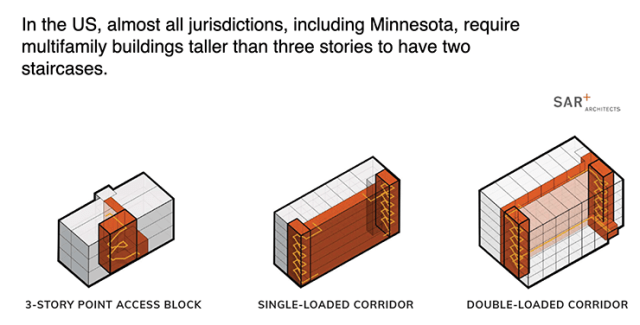
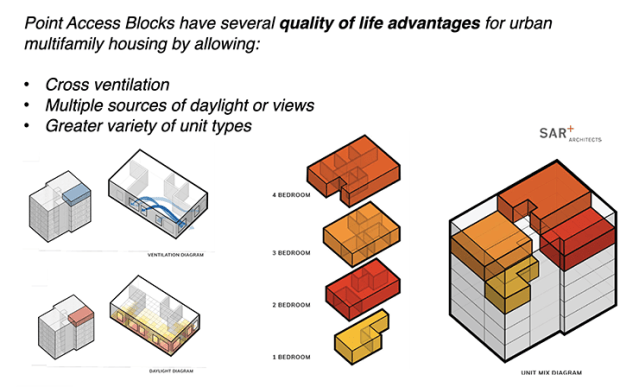
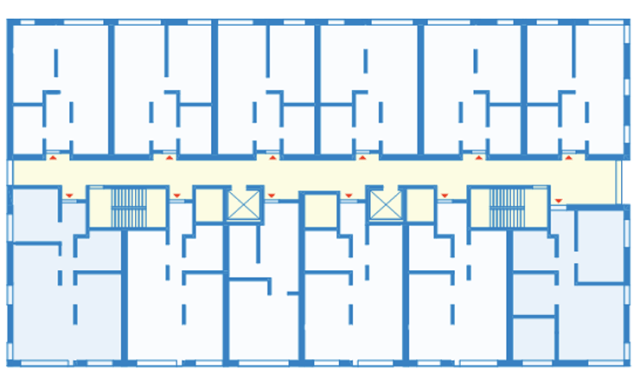
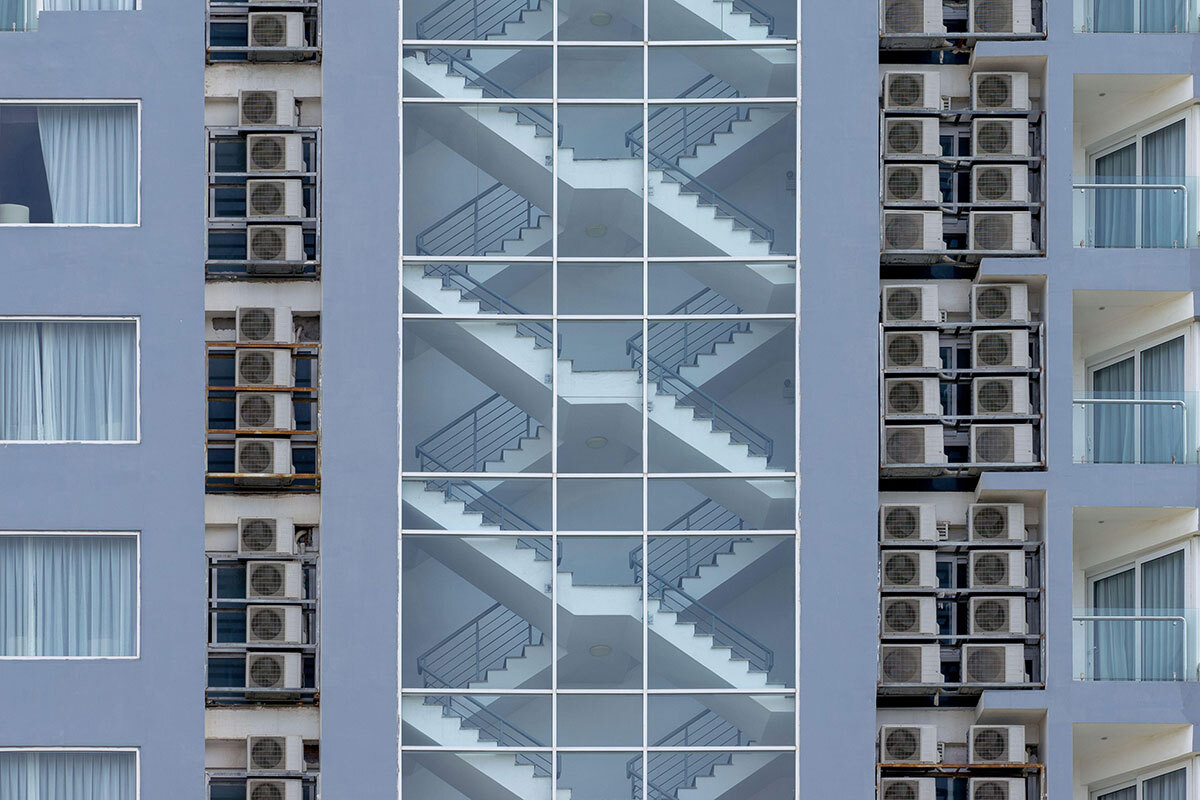
This rigid requirement often leads to apartment designs that resemble hotels, featuring two staircases at opposite ends of a 'double-loaded corridor,' with most units receiving natural light and air from only one side. Such regulations pose a particular challenge for developers attempting to build on smaller, urban infill sites. Several U.S. jurisdictions, including Seattle, New York City, and Hawaii, have recognized this issue and now permit single-staircase buildings up to six storeys, provided they incorporate additional safety measures. States like Washington, California, and Oregon have also initiated legislative efforts to explore and adopt similar changes. An exemplary project is the Capitol Hill Urban Co-housing development in Seattle, a five-storey building on a compact urban lot that would have been unfeasible under more restrictive codes.
A comparative analysis of second staircase requirements across over 30 jurisdictions revealed that Canada, excluding Uganda, has the most stringent regulations. Conversely, countries like Switzerland and South Korea do not impose maximum building height limits but instead regulate single staircases based on floor area, travel distance, and the number of dwellings or occupants served. Many of these jurisdictions also mandate supplementary fire suppression and smoke-control systems to ensure the safety of single exit stairs. The UK previously adopted a similar approach, relying on compartmentation to facilitate a ‘stay put’ evacuation strategy.
In Canada, the proposal for a single staircase was developed to be adaptable to various construction types, including timber, and includes additional safety requirements. This approach aims to address the environmental impact of concrete and steel construction by promoting alternatives. Current Canadian regulations mandate fire sprinklers for buildings over three storeys, permit single staircases for up to six storeys under the proposed changes, and allow mass timber construction up to 12 storeys (with site-specific permissions for up to 18 storeys). Given the UK’s recent adjustments to second staircase and fire sprinkler thresholds, it may be beneficial for the UK to re-evaluate other outdated building requirements.
#BuildingRegulations #FireSafety #SecondStaircase #HousingPolicy #UrbanPlanning #ConstructionStandards #InternationalComparison #Sustainability #BuildingRegulations #FireSafety #SecondStaircase #HousingPolicy #UrbanPlanning #ConstructionStandards #InternationalComparison #Sustainability
0 commentaire au total
 Aucun commentaire pour le moment
Vous aimerez aussi
The Minnesota building code should loosen up about single-stair buildings

Regularisation certificate for a dormer window?

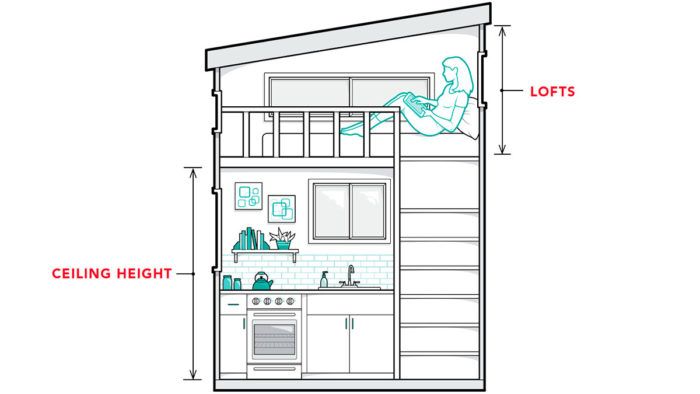
Tiny Homes Get Big Recognition

On the double: The rise and rise of the twin basin style statement
Opinion: Disregard rules on building permits and bylaws at your peril

Council will not accept area of loft flat where roof slopes – Help?
Tips On How To Make Your Stairs Child-Proof

Barry Stone: Spaces in deck rails are unsafe for children

A surprising theory of what’s wrong with North American apartment buildings.
To buy a house with old uncertified loft conversion?
Handrail Building Code Requirements


The Once-Popular Staircase Trend That's Just Impractical (& Unsafe)