
1/6
Deep Retrofit 2023: Show me the money, how to pay for it all
The article provides a comprehensive guide to grants and financing options available for homeowners in Ireland looking to undertake energy improvements, specifically deep retrofitting, for their properties. The Sustainable Energy Authority of Ireland (SEAI) offers various grants that can cover between 30% and 70% of the retrofitting work, excluding builders' costs. Homeowners can finance the remaining expenses through savings, remortgaging (including green mortgage products), or low-interest green loans from credit unions, building societies, An Post, or banks.
The SEAI's "One Stop Shop" approach simplifies the grant process by awarding grants directly to the supplier, while independent grant aid is retroactive, paid to the homeowner after commissioning and a Building Energy Rating (BER) assessment. The article emphasizes that even if a full deep retrofit isn't immediately feasible, homeowners can undertake individual projects over time to gradually improve their home's energy rating to a B2 or better. It's noted that the One Stop Shop generally offers a wider selection of grants compared to individual applications.
Before starting any work, homeowners are advised to check if their property has previously received energy upgrade grants, which can be done using their Eircode or Meter Point Reference Number (MPRN). Addressing the common assumption that going outside the SEAI grant scheme might be cheaper, an expert highlights that SEAI-required standards, while potentially more expensive upfront, ensure higher quality and long-term benefits, often including VAT which non-grant quotes might omit.
For eligible homeowners receiving certain welfare payments, fully funded energy improvements are available through the Warmer Homes Scheme, prioritizing properties built before 1993 with a pre-works BER of E, F, or G.
The "One Stop Shop" facilitates a holistic deep retrofit, combining SEAI grants for full house insulation, airtight sealing, sustainable heating, renewable technologies, and intelligent controls. This includes traditional draught-proofing, A-rated doors and windows to prevent heat loss and cold bridging, and managed ventilation systems (like MVHR) to ensure air quality and heat retention. Many homeowners achieve A1-A3 BER levels, comparable to new builds, by utilizing these grants.
Insulation measures are presented as an accessible starting point for energy upgrades. Attic insulation grants range from €800 for apartments to €1,500 for detached homes, with rafter insulation available through the One Stop Shop. These grants can cover up to 70% of the total cost for attic insulation, particularly beneficial for homes built before 2011 with inadequate existing insulation. Wall insulation grants vary significantly based on the type of insulation (cavity, internal dry lining, or external) and property size, ranging from €700 to €8,000. Proper ventilation design is crucial when tightening the house against air exchanges to prevent condensation.
Heating controls offer an excellent independent grant-aided upgrade with a €700 SEAI grant. These controls, including thermostatic radiator valves, programmable timers, and boiler interlocks, optimize heating system performance and can lead to significant energy bill savings. The article encourages homeowners to assess their current heating control capabilities against SEAI recommendations.
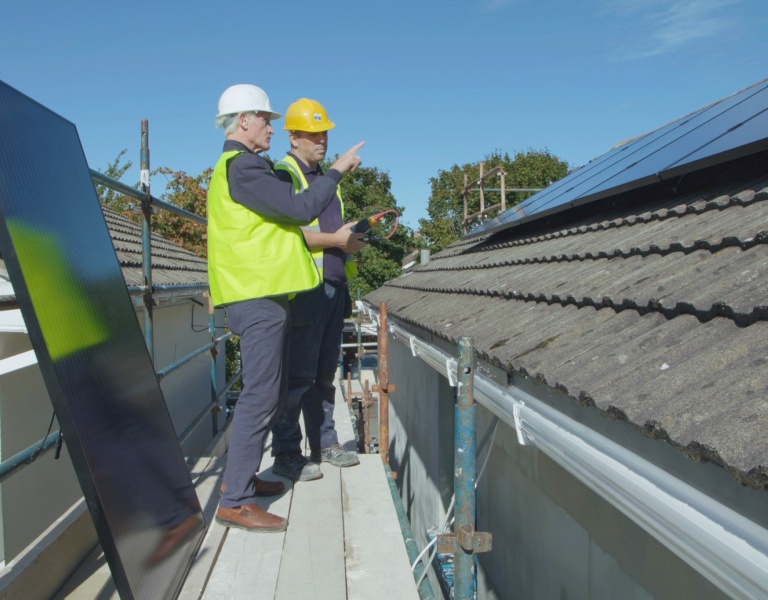
Photovoltaic (PV) solar panel installations are increasingly popular, with an SEAI grant capped at €2,400. The Irish Solar Energy Association anticipates further growth due to new tariffs for selling power back to the grid and relaxed planning restrictions. PV-solar can be a standalone project or integrated into a deep retrofit. Key considerations include roof suitability, structural integrity, and space for an inverter and optional battery/water diverter. While a battery is not mandatory, installers can advise on its cost-effectiveness based on individual needs and electricity demand. The payback period for PV systems has shortened due to rising energy costs.
Heat pumps are central to achieving Near Zero Energy Building (NZEB) standards. SEAI grants are available, with €6,000 for a house and €4,500 for an apartment pump, plus additional awards for One Stop Shop participants reaching B2 BER. A heat pump-ready home requires a BER of B2, excellent insulation, low U-value windows and doors, and minimal heat loss. Air source heat pumps (ASHPs) are common in retrofits, using electricity to transfer thermal energy from the air, earth, or water into the home for heating. While HPs have zero carbon emissions at the point of use, electricity consumption rises in colder months. The SEAI requires grant-funded systems to meet 100% of dwelling space heating and at least 80% of hot water demand. A technical advisory report is essential for heat pump grant applications, determining the appropriate size and ensuring the existing heating system components, like radiators, are compatible.
Finally, replacing windows and doors, responsible for 20-30% of heat loss, is grant-aided only through the One Stop Shop. Grants range from €1,500 for apartment windows to €4,000 for detached homes, and €800 per external door. Upgrading to modern double or triple-glazed units with high U-values improves thermal comfort, airtightness, and security. Homeowners should obtain multiple quotes from SEAI-registered contractors for these projects.
#DeepRetrofit #SEAI #EnergyEfficiency #HomeGrants #Insulation #HeatPumps #SolarPV #GreenLoans #BuildingEnergyRating #SustainableHomes #DeepRetrofit #SEAI #EnergyEfficiency #HomeGrants #Insulation #HeatPumps #SolarPV #GreenLoans #BuildingEnergyRating #SustainableHomes
 Aún no hay comentarios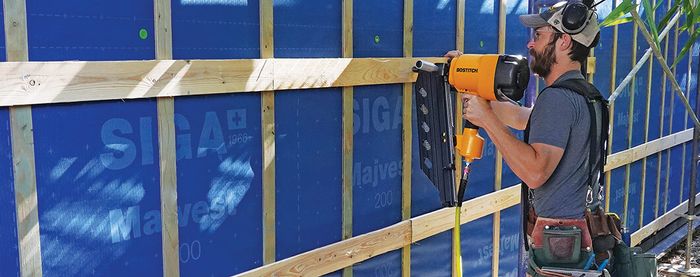
A Retrofit for the Future

Deep Retrofit Reviews