The 5 Key Characteristics of Gothic Architecture
Gothic architecture, a prominent style originating in France during the Middle Ages, spread throughout Europe between the 12th and 16th centuries, leaving behind magnificent, detailed, towering buildings, primarily houses of worship. Initially termed 'Opus Francigenum,' or 'French Work,' this architectural style was heavily influenced by the Roman Catholic Church. Builders of these cathedrals focused on constructing functional buildings rather than adhering to a specific 'style,' viewing it as a progression of building methods and available tools.
The style evolved from the Romanesque period, which featured numerous arches, vaulted ceilings, and smaller stained-glass windows. Gothic architecture amplified these elements, incorporating much larger arches and more ornate stained-glass windows, often depicting detailed storylines. A significant departure from Romanesque style was the abandonment of thick, solid walls in favor of taller, more massive structures. To support these thinner, lighter walls, Gothic builders innovatively employed flying buttresses, providing lateral stability.
The location and construction period also influenced Gothic architecture, with many characteristics serving multiple purposes, such as enhancing stability and maximizing natural light. For instance, high pointed arches and flying buttresses were particularly beneficial in Northern Europe, where sunlight could be scarce, helping to illuminate large, open spaces that were difficult to light with candles. Eugene Colberg of Colberg Architecture notes that features like high pointed arches and flying buttresses were engineering tools that allowed for greater stability and thinner walls.
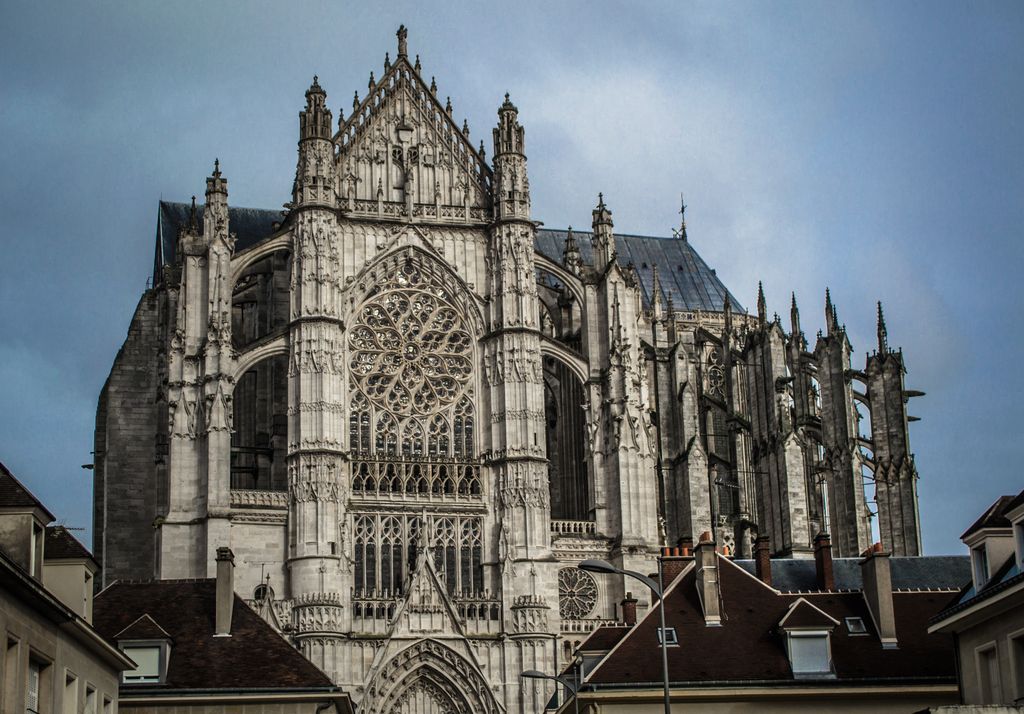
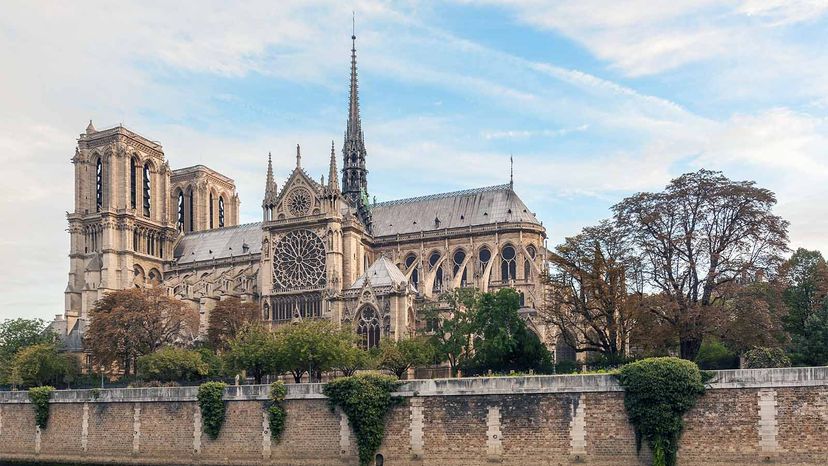
Five key characteristics define Gothic architecture. First, flying buttresses, which dominate the external appearance, redistribute weight from higher levels, providing stability while also serving as decorative elements often adorned with elaborate carvings. Second, pointed arches, a departure from Romanesque rounded arches and similar to Islamic structures, enabled vertical construction, creating more space and allowing for taller buildings. Third, ribbed vaults were crucial for supporting high ceilings and large windows. These vaults not only offered visual appeal but also provided structural support for rounded roofs by arranging arches in parallel or adjacent patterns, giving the impression of lightness.
Fourth, large stained-glass windows are a hallmark of Gothic cathedrals, exemplified by the famous Rose Windows of Notre Dame. These massive windows, like the 42-foot-diameter South Rose Window crafted in the 13th century, were integral for both decoration and admitting natural light. Finally, gargoyles and ornate decorative stone elements, including detailed statues, columns, spires, and pinnacles, are emblematic of the Gothic style. These intricate decorations served as pedagogical tools, conveying narratives and biblical stories to a largely illiterate populace, making the buildings themselves a form of communication. Examples of Gothic architecture are abundant across Europe, with notable structures including Notre Dame Cathedral in Paris, the Basilica of Saint-Denis, Reims Cathedral, Chartres Cathedral in France, Seville Cathedral in Spain, Milan Cathedral in Italy, and Westminster Abbey and Canterbury Cathedral in England.
#GothicArchitecture #MedievalArchitecture #CathedralDesign #ArchitecturalHistory #FlyingButtresses #PointedArches #RibbedVaults #StainedGlassWindows #Gargoyles #GothicArchitecture #MedievalArchitecture #CathedralDesign #ArchitecturalHistory #FlyingButtresses #PointedArches #RibbedVaults #StainedGlassWindows #Gargoyles
 No comments yet
Hot Home Trend: Gothic Glam
3 brick mansions by Mott Schmidt for sale right now
17 Essential Architectural Styles Everyone Should Know


Yes, gothic boho decor is a thing — here’s what you need to decorate in this style


The Gothic Vision

Modern heritage style – 5 ways to get the look