
National Bath Safety Month –
January is designated as National Bath Safety Month, serving as a critical reminder to implement necessary precautions to prevent injuries within the home's bathing areas. Bathing, a daily routine, often leads individuals to overlook the inherent dangers associated with bathrooms, which are considered among the most hazardous spaces in a residence. However, numerous strategies can significantly mitigate the risk of injury. These preventative measures are particularly vital for very young children and the elderly.
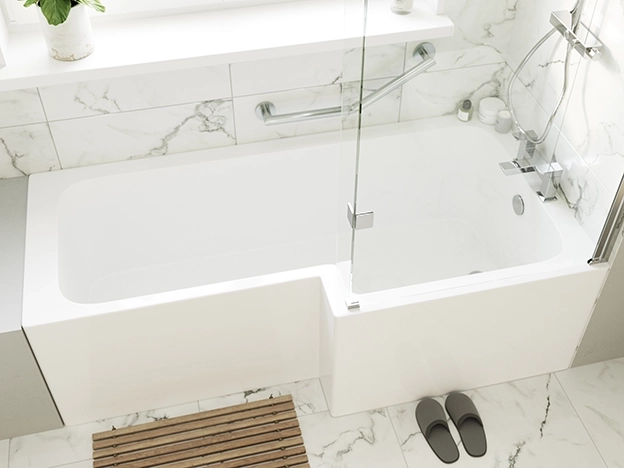
Key safety installations include safety bars, also known as grab handles, and non-slip mats within the bathtub or shower. These are widely recognized as effective and common solutions for enhancing safety in these wet environments. The historical context of bathing reveals a long evolution of hygiene practices. Prior to ancient Greece, natural bodies of water like seas and rivers served as primary bathing sites. The earliest documented daily bathing rituals are attributed to ancient Indians, who engaged in elaborate personal hygiene practices involving three daily baths and washing, as detailed in the grihya sutras—practices that some communities still observe today.
As ancient societies developed, public baths became prevalent, largely due to a lack of private bathing facilities. The Great Bath of Mohenjo-daro, located in Sindh, Pakistan, is one of the oldest public baths, dating back to the ancient Indus Valley Civilization. Early "showers" in ancient Egypt and Mesopotamia were rudimentary, with servants pouring cold water over wealthy individuals in private rooms. The ancient Greeks are credited with pioneering what is now considered the modern shower, featuring water flowing through pipes.
The Romans further advanced this concept with their aqueducts, which provided indoor plumbing and supplied water to bathhouses. These Roman bathhouses functioned as early spas, offering massages, exercise, and entertainment. By the early twentieth century, personal cleanliness gained increased importance due to a growing understanding of germs. This led to new recommendations for bathing to eliminate "invisible dirt" causing diseases. Concurrently, industrial manufacturing made bathtubs more affordable, and warm baths became widely accepted for comfort and relaxation.
Significant milestones in bath safety history include Englishman William Feetham patenting the first mechanical shower in 1767. The Aquae Sulis, a major Roman bath outside Italy, was established in AD 60. The Romans constructed their first aqueduct in 312 BC, eventually building 11 to supply public baths. In 2500 BC, natural water bodies were used for bathing, exemplified by the Great Bath of Mohenjo-daro. By 3100 BC, wealthy individuals in ancient Egypt and Mesopotamia had indoor showers with water poured by servants.
Common causes of shower injuries include slips and falls, hot-water scalds, and submersions. Data indicates a significant number of drowning deaths in bathtubs, with 4,866 reported in 2014, an increase from 2,870 in 2004. Regarding hygiene, showers are considered more effective than baths for cleaning when heavily soiled or sweaty, while baths can be equally effective for normal daily cleaning and offer benefits such as opening pores with steam.
To observe National Bath Safety Month, individuals are encouraged to install inexpensive non-slip mats both inside and outside the bath to prevent falls. Installing safety handles near the bath and toilet can assist individuals, particularly those with mobility issues, in entering and exiting the tub or standing from the toilet. Childproofing the bathroom by securely storing sharp adult items like razors and tweezers away from children's reach is also crucial. Studies suggest that soaking in hot baths can relieve muscle aches, lower blood pressure, and improve sleep. Some research even indicates potential blood sugar reduction for type 2 diabetics from hot baths. The Baths of Caracalla in Rome could accommodate up to 1,600 bathers. Americans use approximately 80 to 100 gallons of water per day, with the average family consuming about 300 gallons. The National Institute on Aging reports that 80% of falls among individuals aged 65 and older occur in the bathroom.
National Bath Safety Month underscores the importance of protecting loved ones, especially given that drowning is a leading cause of death, with infants and adults over 85 being most vulnerable in bathtubs. Gaining knowledge about bath safety empowers individuals to take preventative action. It emphasizes that proactive measures to retrofit baths, even if seemingly minor, are crucial for preventing accidents that might otherwise be dismissed as rare occurrences.
#BathSafety #HomeSafety #InjuryPrevention #BathroomDesign #PublicHealth #ElderlyCare #ChildSafety #HomeImprovement #HygieneHistory #BathSafety #HomeSafety #InjuryPrevention #BathroomDesign #PublicHealth #ElderlyCare #ChildSafety #HomeImprovement #HygieneHistory
 No comments yet
6 ‘Wellness’ Additions Taking Priority in Bathroom Updates

One-Day Bathroom Upgrades That Help Seniors Stay in the Homes They Love


Baths & Accessories


Showers

It's International Bath Day, When We Ask Why Bathtubs Are So Bad

2019 Bathroom focus: international trends