A Museum for Place-Setting Obsessives
The International Museum of Dinnerware Design (IMoDD), founded in 2012 by ceramic historian and curator Margaret Carney, has opened its first permanent brick-and-mortar location in Kingston, New York. Previously operating as a roving attraction with digital and pop-up exhibitions, the museum now showcases its extensive collection of over 9,000 "masterpieces of the tabletop genre" in a dedicated physical space. The inspiration for the museum stemmed from Julie Gaines, co-founder of Fishs Eddy, who sought a dedicated home for her lifelong collection of dishware. Gaines found that larger institutions were only interested in a few specific pieces, unwilling to preserve her collection as a cohesive whole. Carney shared this sentiment, believing that dinnerware, despite its prevalence in other museum collections, was often marginalized and not properly celebrated for its design contributions.
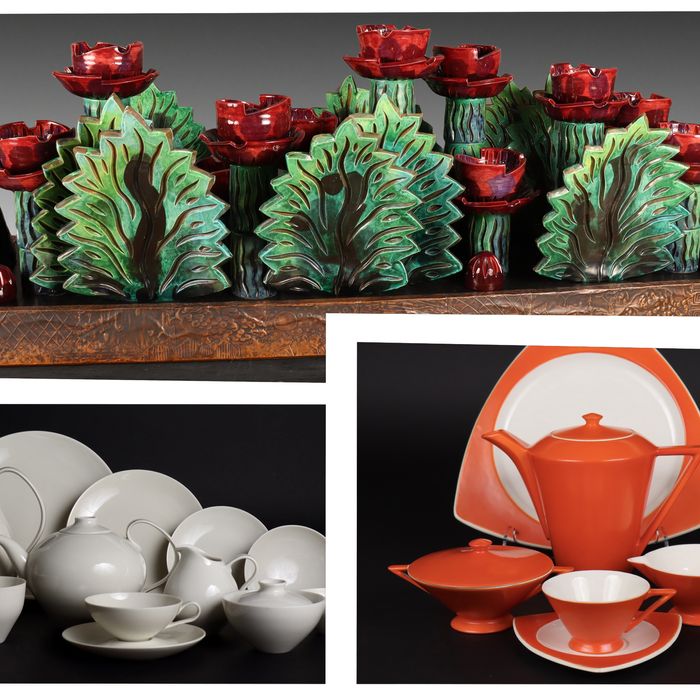
The inaugural exhibitions at the Kingston museum, "Dining Grails" and "Dining Memories," feature approximately 500 pieces of dinnerware and related dining objects. "Dining Grails" presents a historical continuum of dining aesthetics, ranging from a Song Dynasty jug excavated from the Yellow River to contemporary 21st-century innovations like Shinichiro Ogata’s compostable dining set from 2013. Notable items include Eddie Dominguez’s "Rose Garden," a 12-person dinnerware set that forms a sculptural flower bed when not in use, and a rare spotted and shadowy breakfast set designed by Roy Lichtenstein for Jackson China Company in 1966. The exhibition also includes a 1960s lunchbox designed to resemble a loaf of sliced bread and Peter Saenger’s futuristic nesting tea set from 1990, famously featured on "Star Trek: The Next Generation."
"Dining Memories" focuses on site- and era-specific dining vignettes, meticulously recreated with historically accurate furniture and décor. Visitors can explore a 1930s Queen Mary teatime deck scene or observe the impact of early refrigerator design on covered food-storage containers. This section also features a pink 1950s high chair that converts into a wheeled walker and a Donald Duck baby-food warmer, a pre-microwave invention. Margaret Carney's personal favorites from the collection include a fiery orange, angular coffee and tea set designed by Don Schreckengost in the 1930s, which is also the inspiration for the museum’s logo, and Eva Zeisel’s "Museum" set.
Eva Zeisel, known for her organic forms, was the first female designer to have a solo exhibition at the Museum of Modern Art in 1946, and her "Museum" set was commissioned for this seminal show. Jean Richards, Zeisel’s daughter and an advisory council member for IMoDD, highlights the personal connection people have with dinnerware, suggesting it’s more intimate than traditional art. Richards notes that while Zeisel’s work is present in other prestigious museums, it can get overlooked within their larger collections. The IMoDD, however, provides a dedicated platform to emphasize her significant contributions. Zeisel herself expressed a preference for designing cohesive sets rather than individual objects, viewing her pieces as having familial relationships.
Among the rarest pieces in the "Museum" set is a porcelain salt spoon, of which only about four are estimated to survive globally. The museum’s Kingston location holds historical significance, being an hour's drive from where Zeisel lived and worked until her death at 105 in 2011. It is also near Russel Wright’s Manitoga, a design mecca where Wright designed dinnerware until the 1970s. This proximity allows for a comprehensive exploration of mid-century dinnerware design, with visitors able to see Wright’s "American Modern" collection at Manitoga and then his miniaturized plastic playset version at IMoDD. Carney envisions future exhibits dedicated to diverse topics like ashtrays and nesting dishes, and hopes to expand the museum into a larger space that can accommodate a kitchen and a growing collection. The museum aims to convey the rich story of dining, extending beyond mere novelty to celebrate the evolution of design, innovation, and artistic influences across various cultures and centuries.
#DinnerwareDesign #MuseumOpening #Tableware #EvaZeisel #DesignHistory #KingstonNY #CeramicArt #HomeDecor #Exhibition #DinnerwareDesign #MuseumOpening #Tableware #EvaZeisel #DesignHistory #KingstonNY #CeramicArt #HomeDecor #Exhibition
0 comment in total
 No comments yet
You may also like
Quirky Home Decor Ideas, Inspired by the Bell Museum

I’m at the hot tub. I’m at the art installation. I’m at the combination hot tub-art installation

Art Leaves the Gallery for the Parlor
Location, location, location: behind the Art Basel floor plan beef

Design Escape: 7 Remarkable Objects From the Cooper Hewitt


OBSESSED: Everything We Can't Stop Talking About This Week
Vincenzo De Cotiis’s Material Transformation

How to Hang an Art Collection Like an Expert
Explore Claude Monet's Paintings with Discoveries
Living in a One-Bedroom Museum
A Night at the museum: What to see at 21c’s art gallery hotel

Inside the Private Suites of New York City’s Iconic Frick Collection

Living in Style: Five Centuries of Interior Design from the Collection of Drawings and Prints

How to Virtually Explore the Smithsonian From Your Living Room

Three Cor-Ten Steel Pavilions Make Up This Art Collectors’ Rugged Retreat

Nanjing Jingjian Lawyer Museum / Inch Condensation Architectural Design

Peek inside these artists’ amazing houses
T&C Design Dispatch: New Season, New Decor Starting With RH's Fall 2023 Collection
How to hang paintings: Everything you need to know
This Organized Art Supply Storage System Is A Crafter's Dream