1/3
Hoshinoya Tokyo Spa Hotel by Rie Azuma Reinvents The Traditional Japanese Ryokan
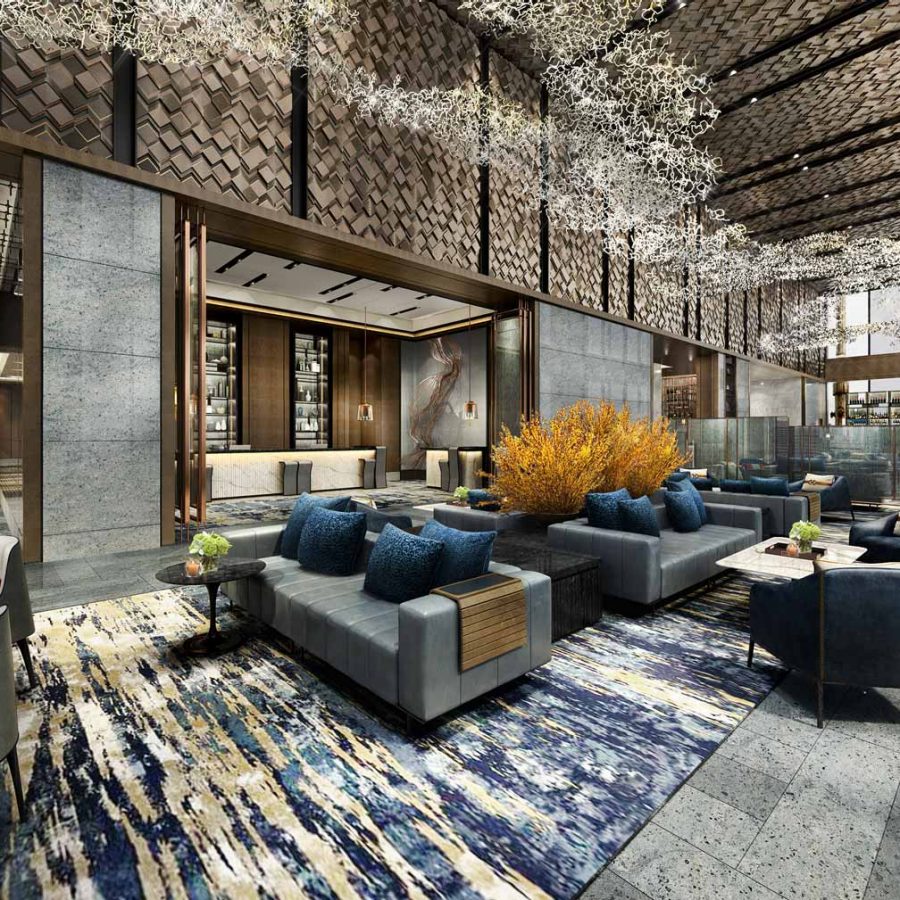
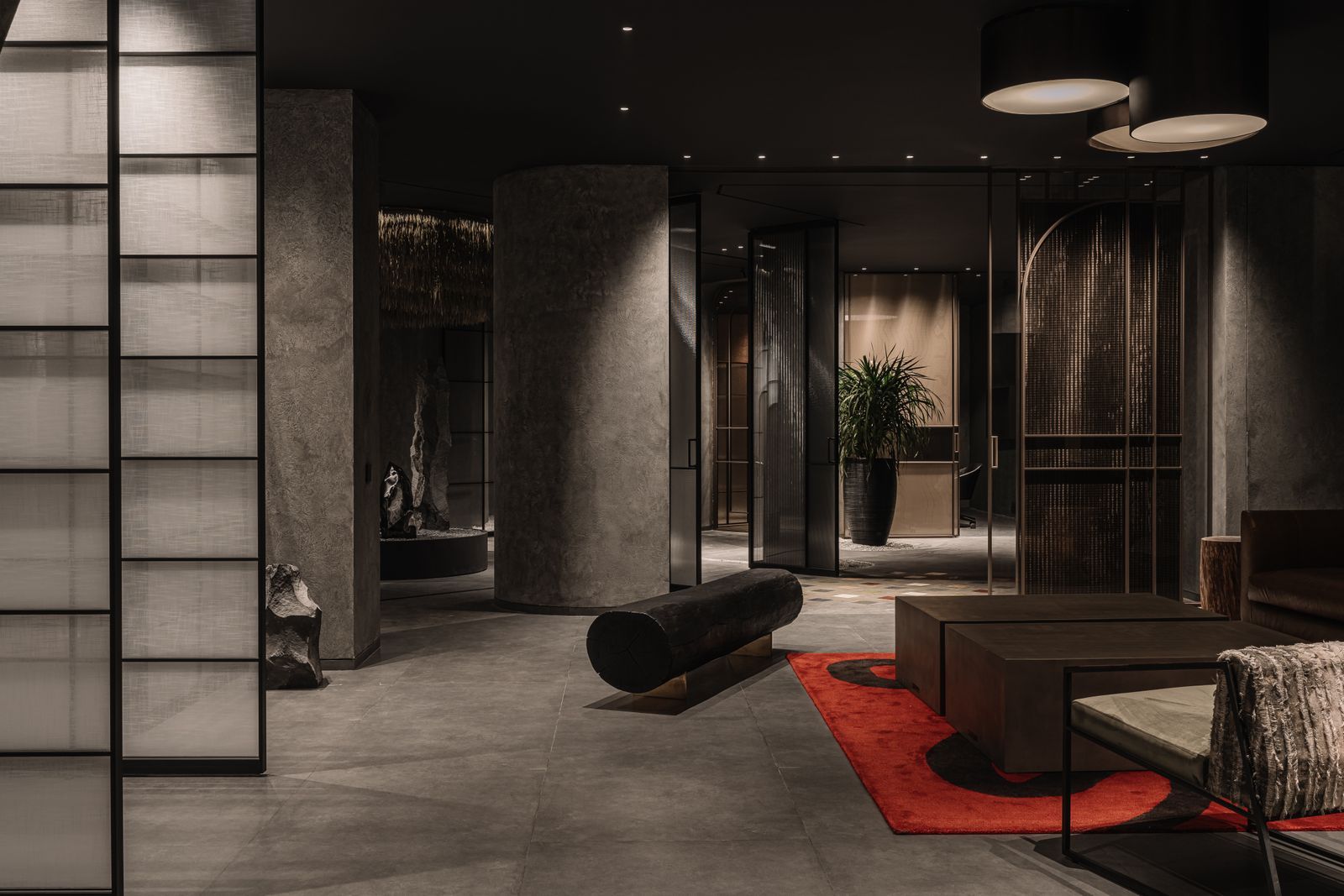
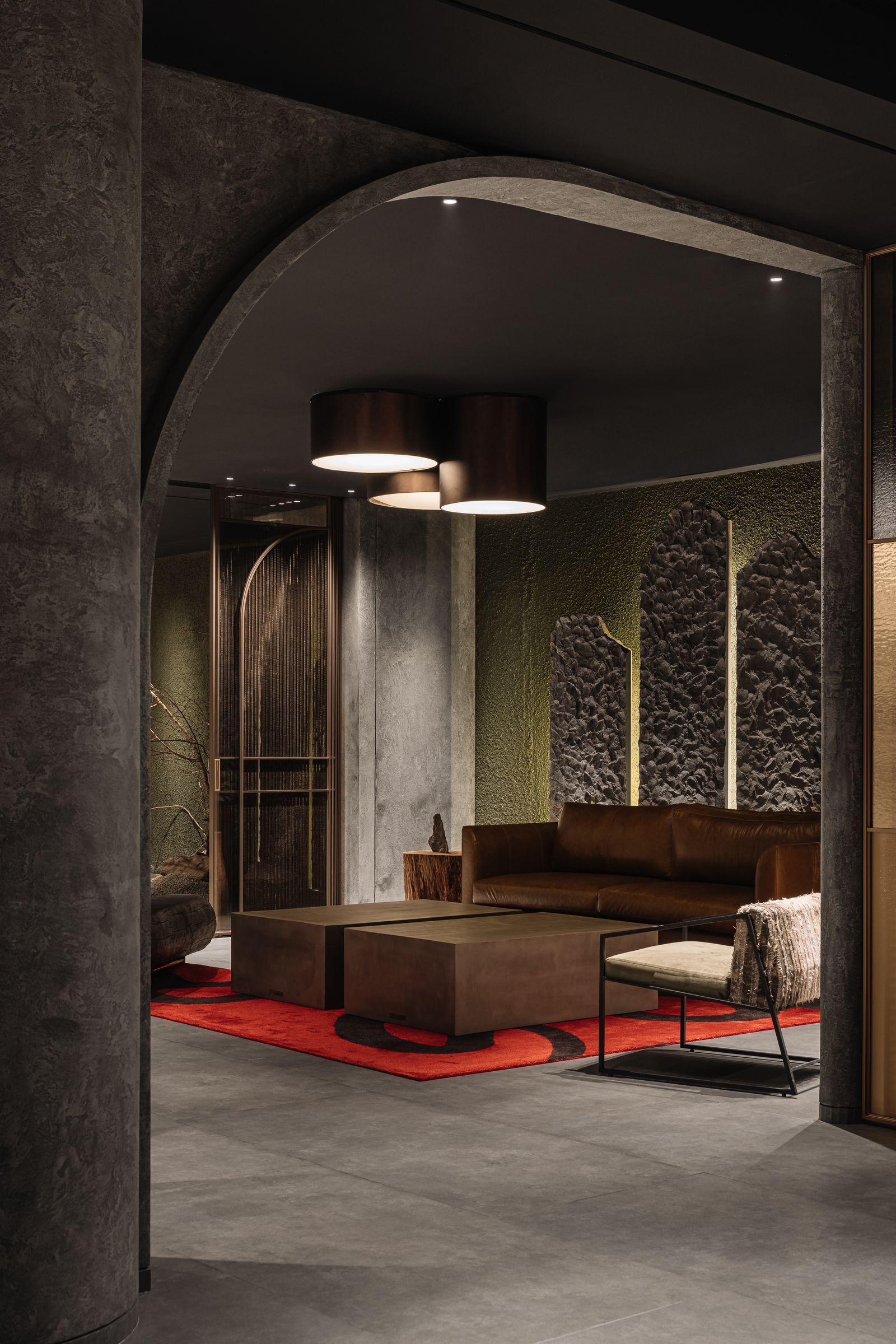
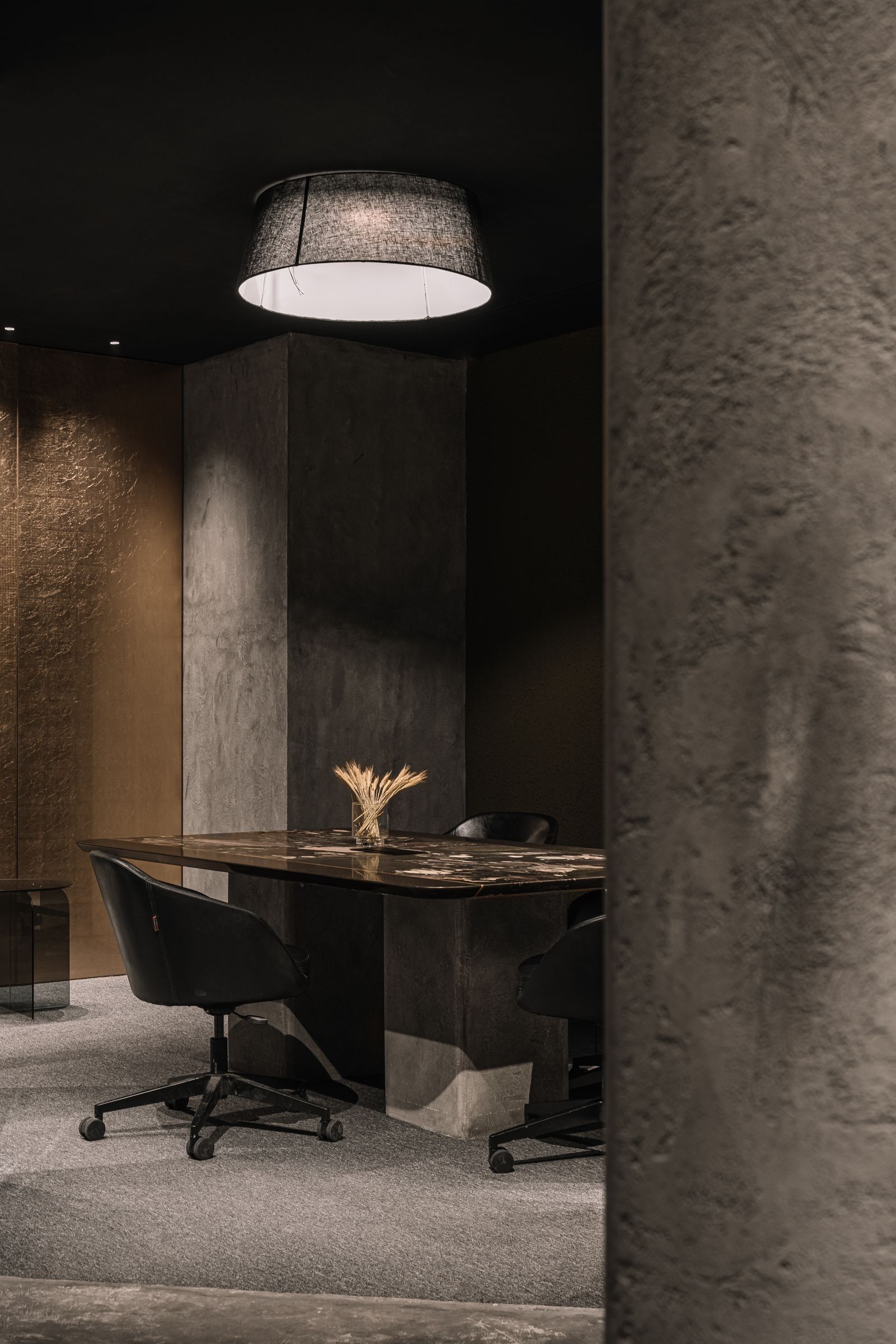
The Hoshinoya Tokyo, a spa hotel designed by Rie Azuma of Azuma Architect & Associates, introduces a traditional Japanese ryokan experience to the heart of Tokyo's Otemachi district. This development addresses a long-standing gap in the city's hospitality landscape, where authentic hot-spring ryokans were previously confined to regions outside the capital. Hoshino Resorts, a company with a century-long history, collaborated with Azuma Architects to create this unique urban retreat, blending ancient Japanese hospitality with contemporary comforts.
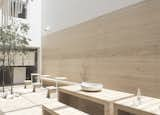
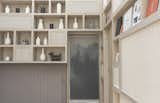
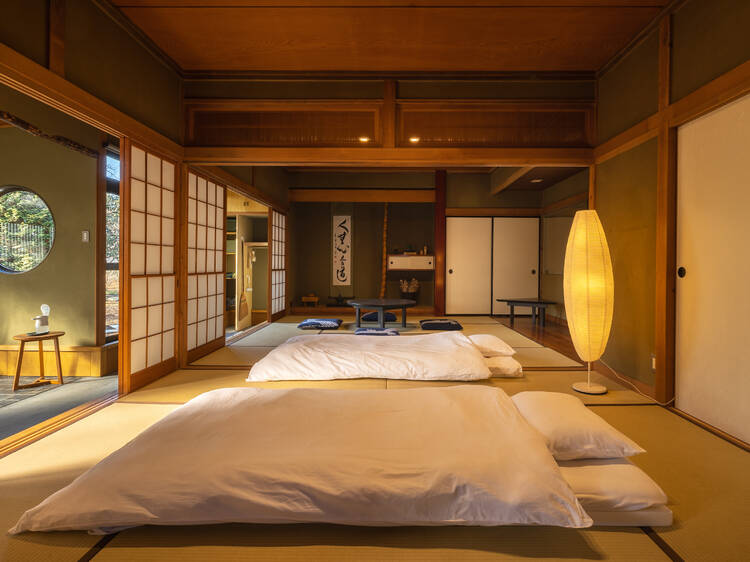
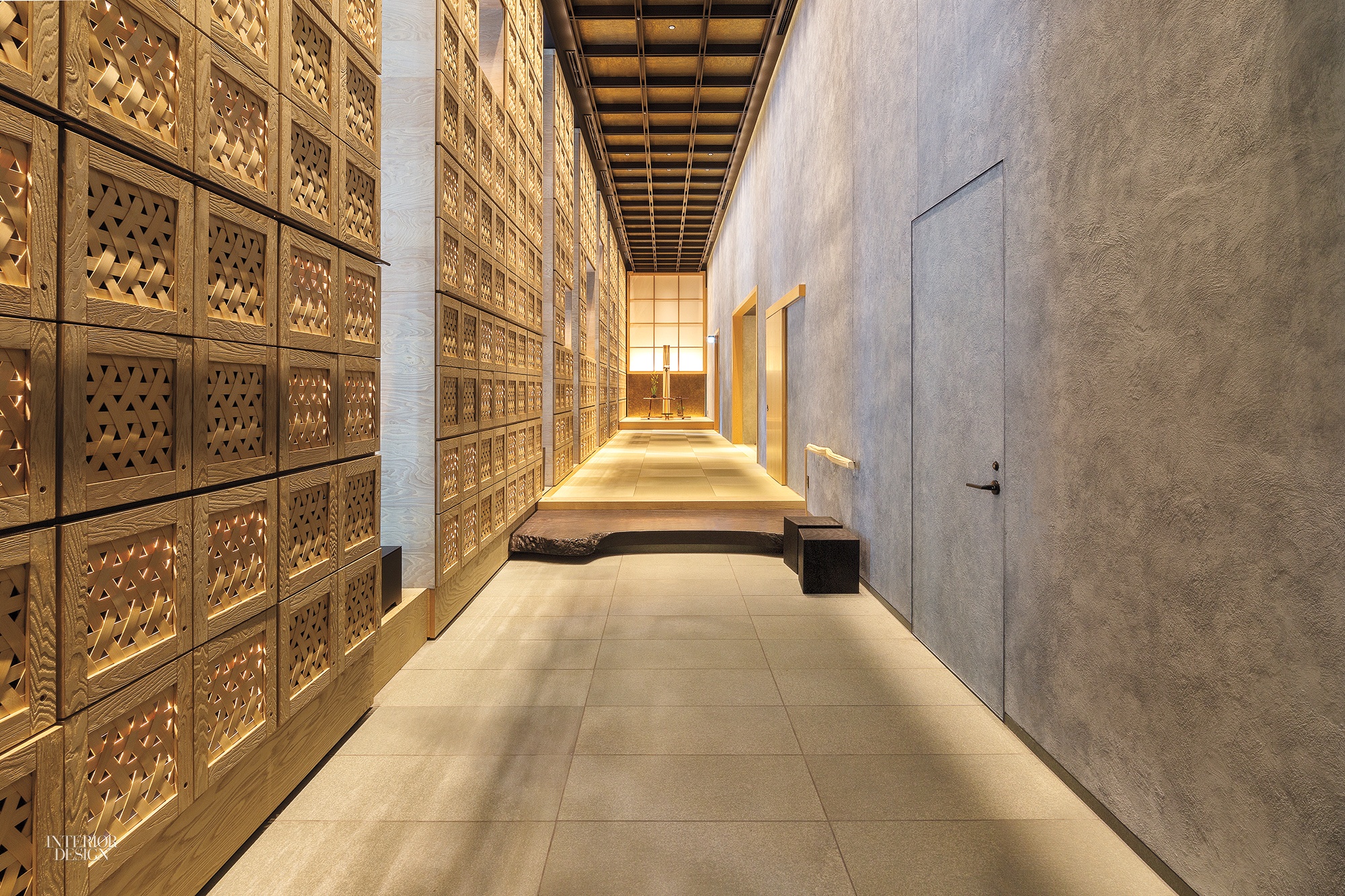
The hotel occupies an 18-story tower, strategically set back from the street behind a courtyard with trees, distinguishing it from the surrounding skyscrapers. Its facade features black resin-baked aluminum latticework, illuminated by soft spotlights, creating a distinctive glowing effect. The ground level discreetly hosts a soba noodle shop, offering a subtle hint of the unique experience within. Upon entry, guests are greeted by a doorman in traditional attire, and the customary removal of shoes signifies the transition into a serene environment. Shoes are stored in chestnut cubbies with woven bamboo doors, and the flooring throughout is traditional, fragrant tatami matting, replacing conventional carpeting.
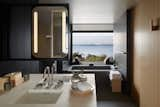
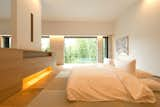
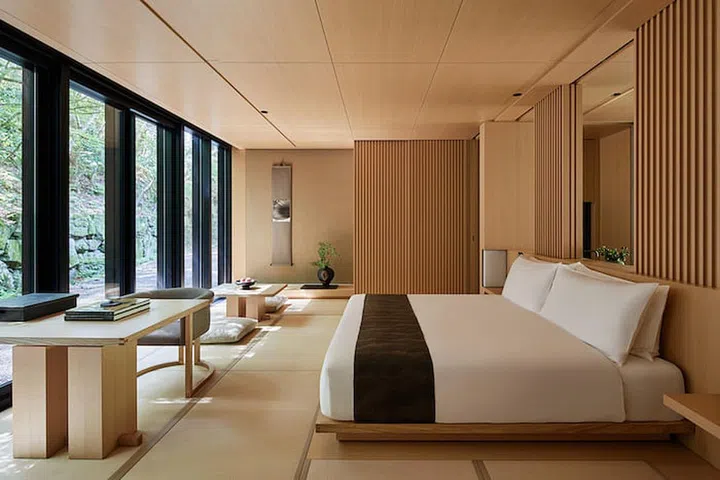
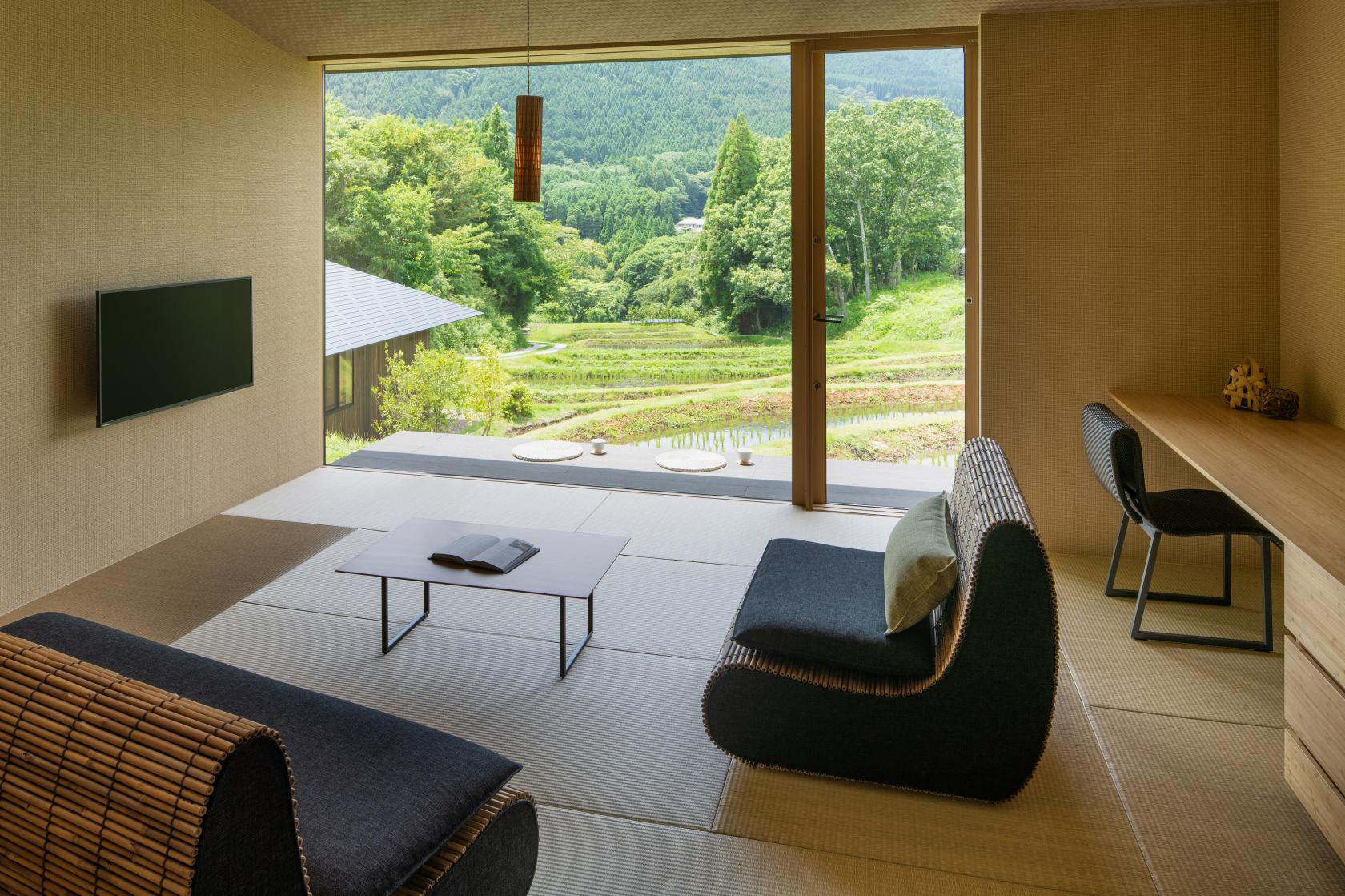
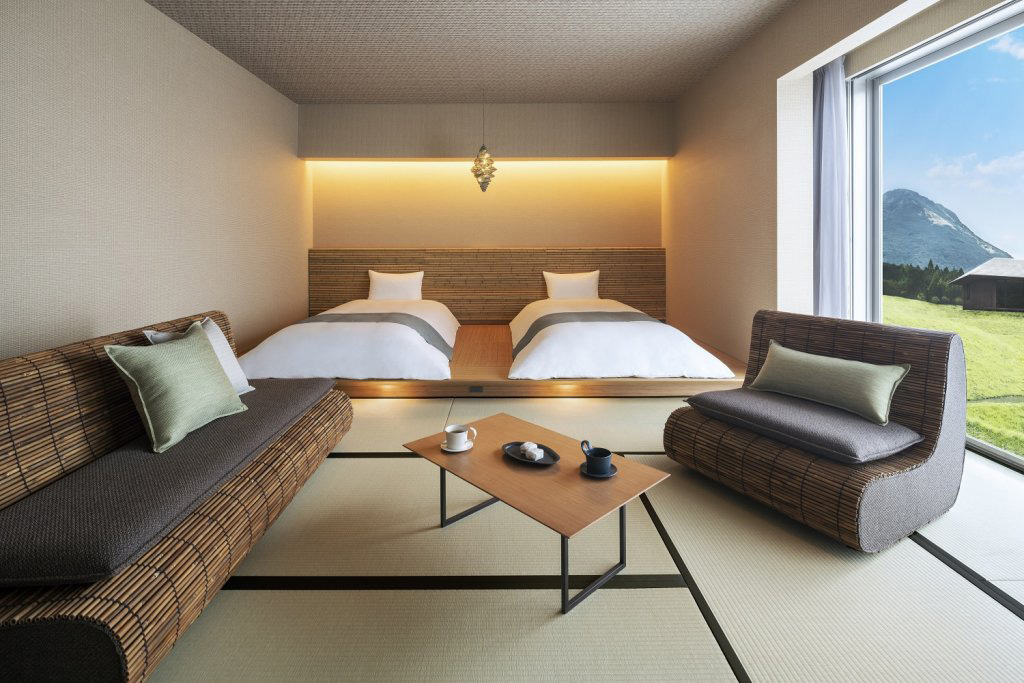
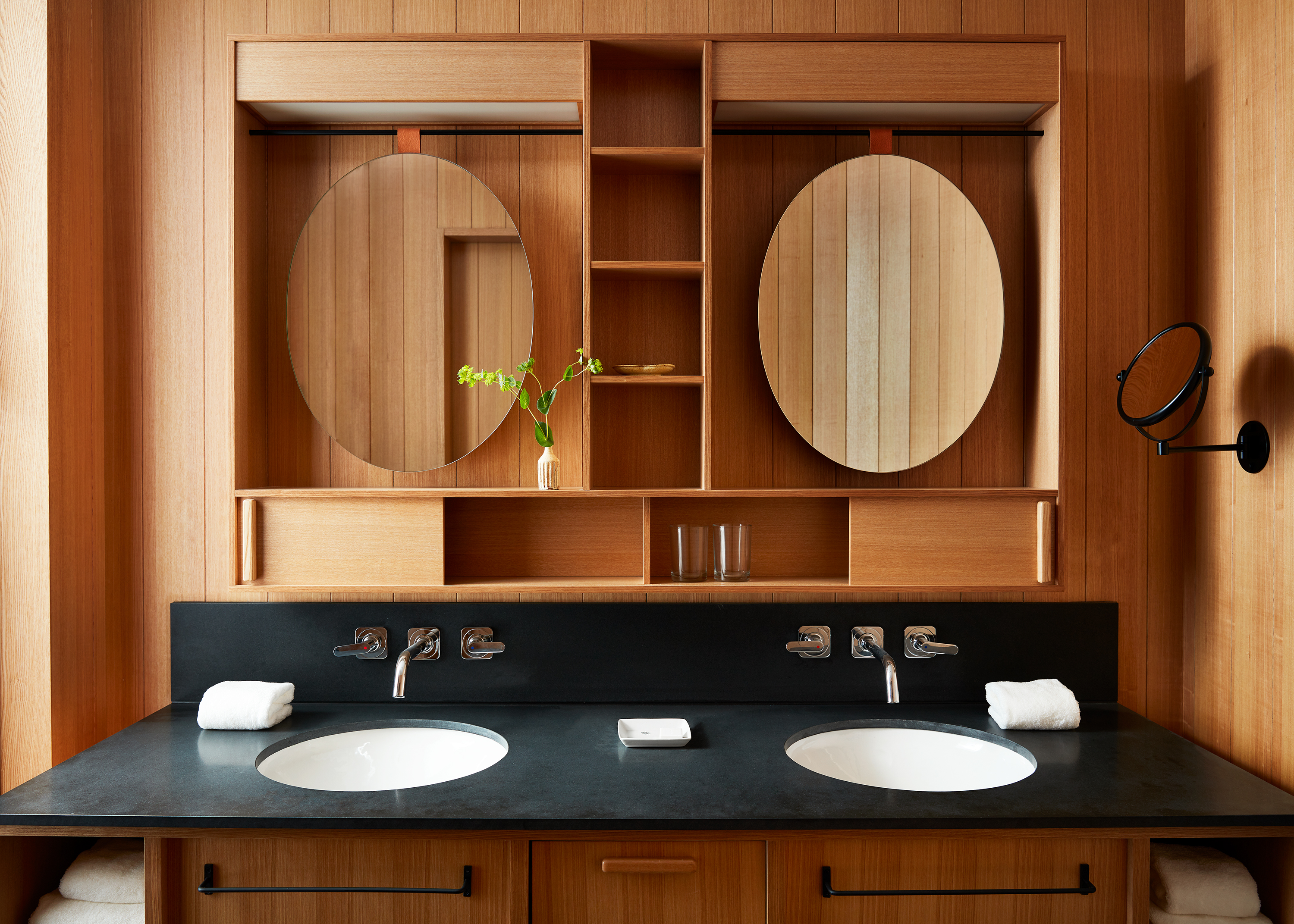
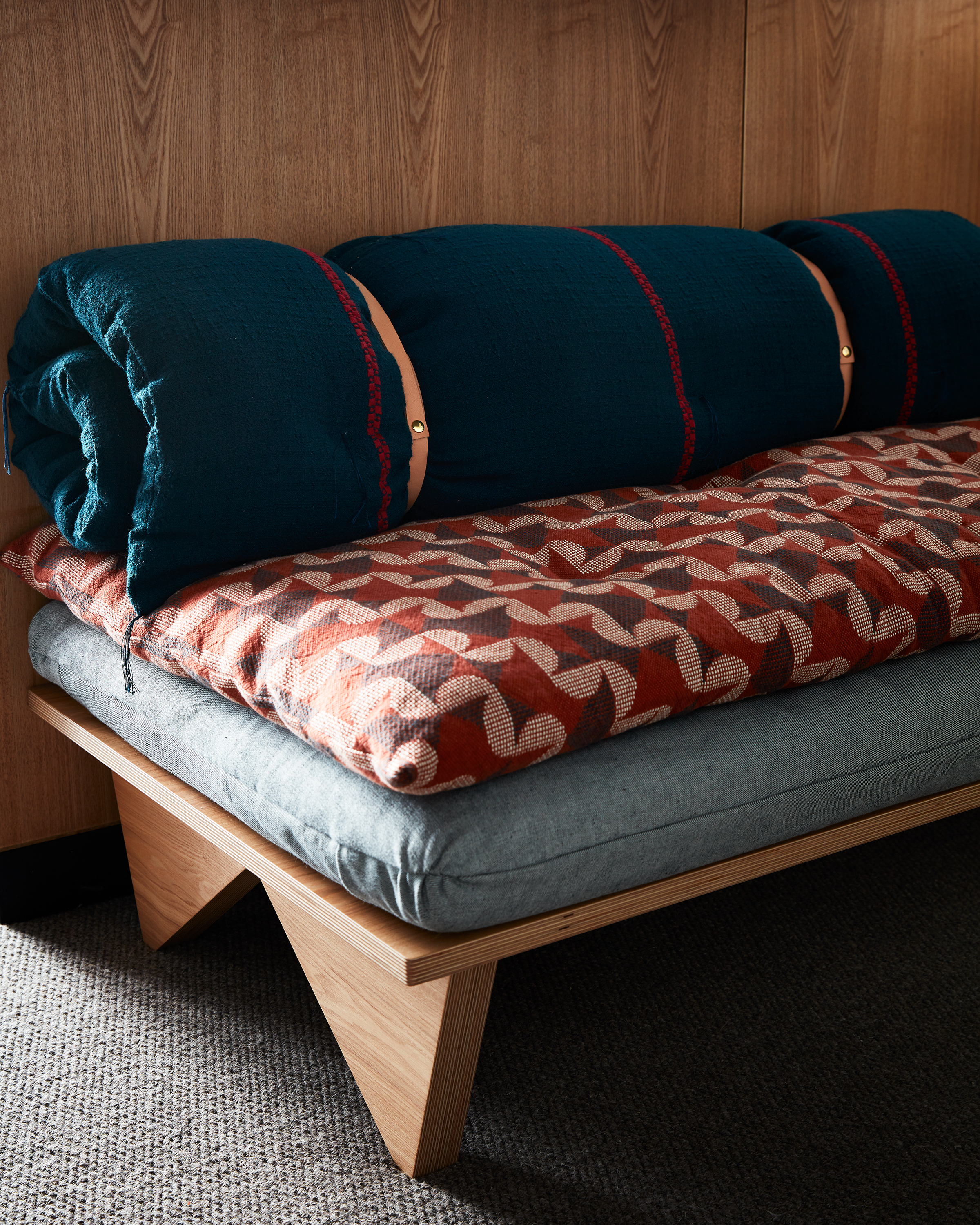
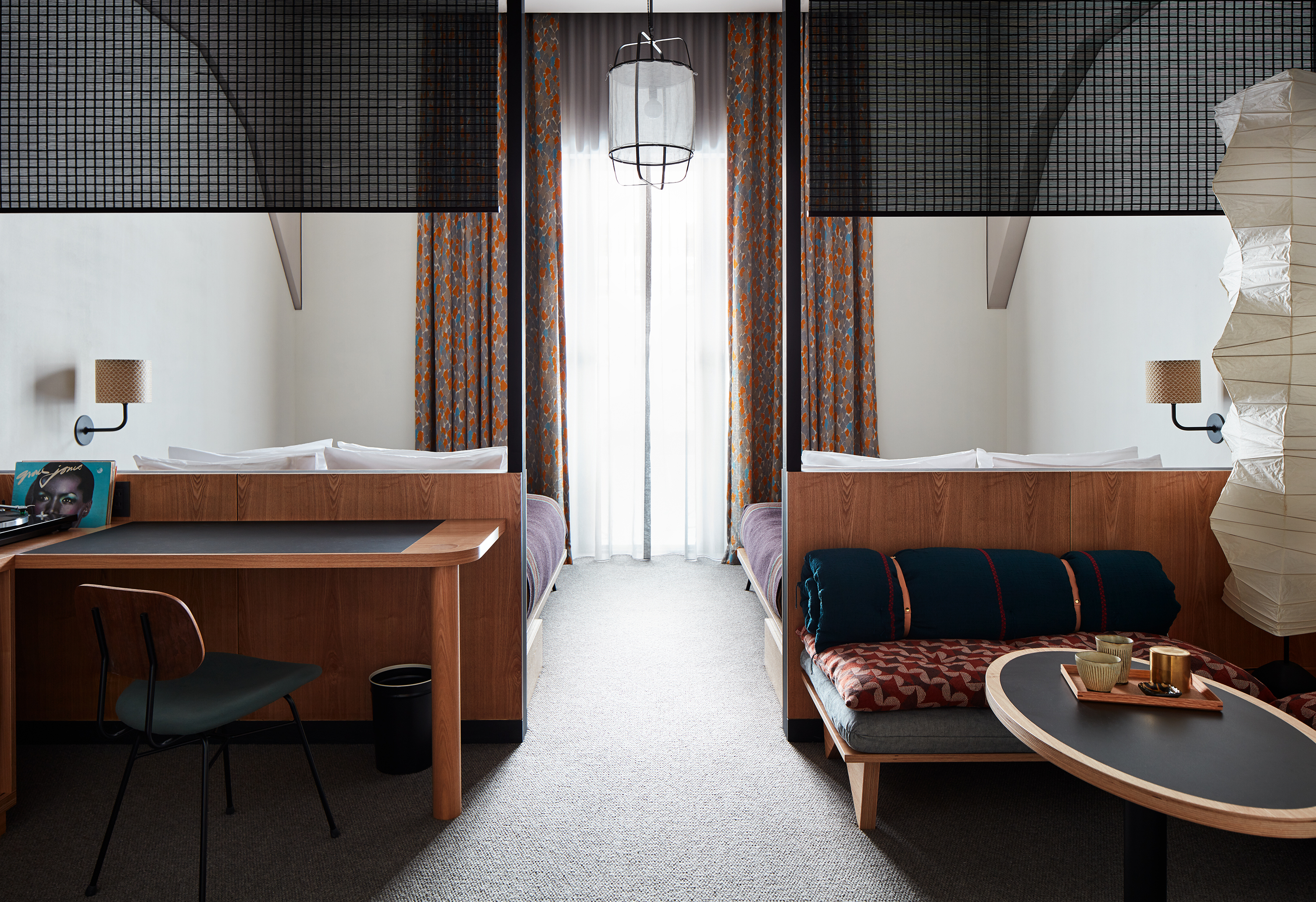
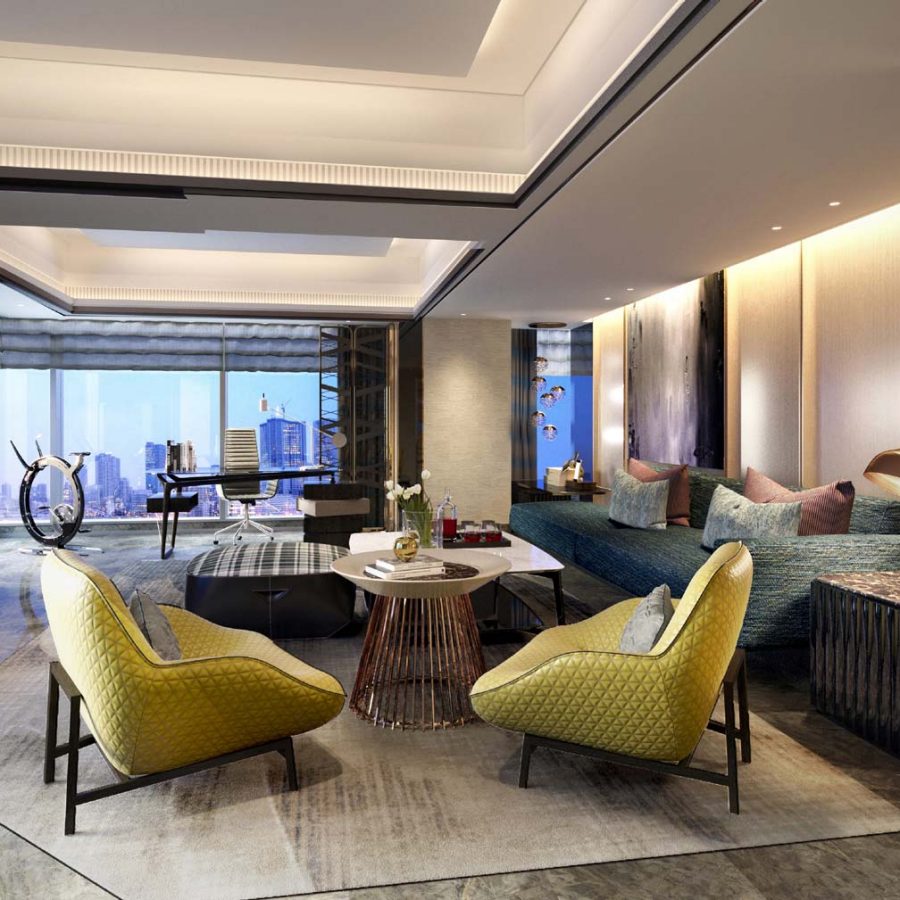
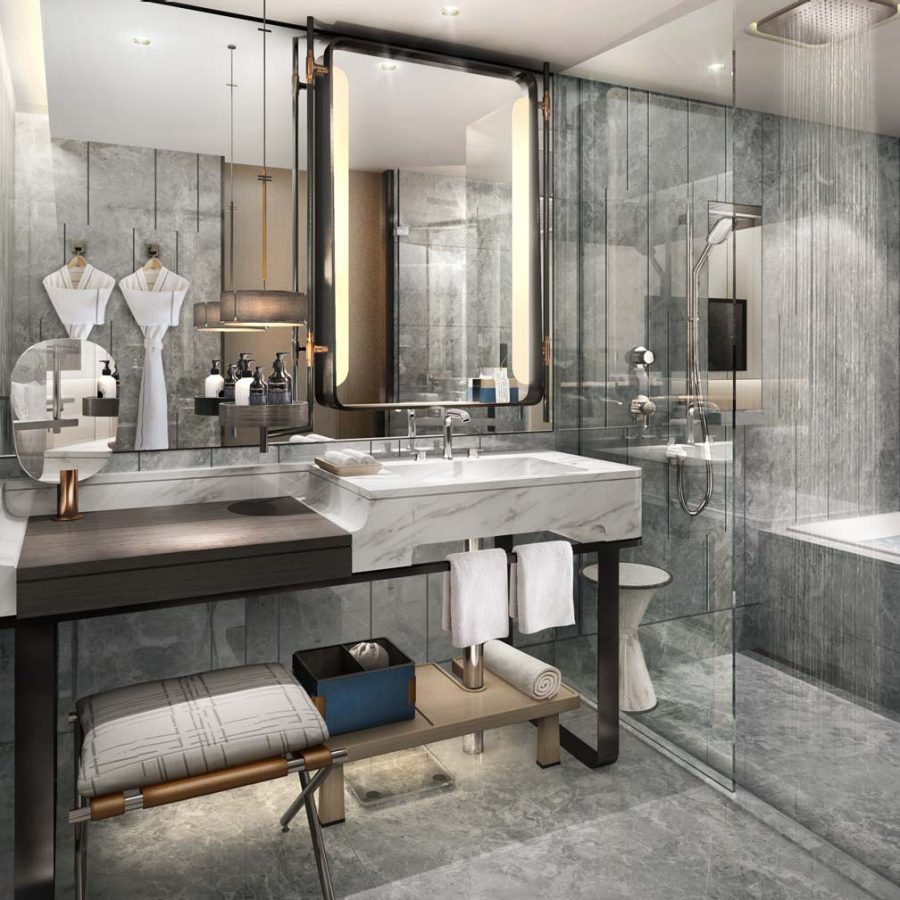
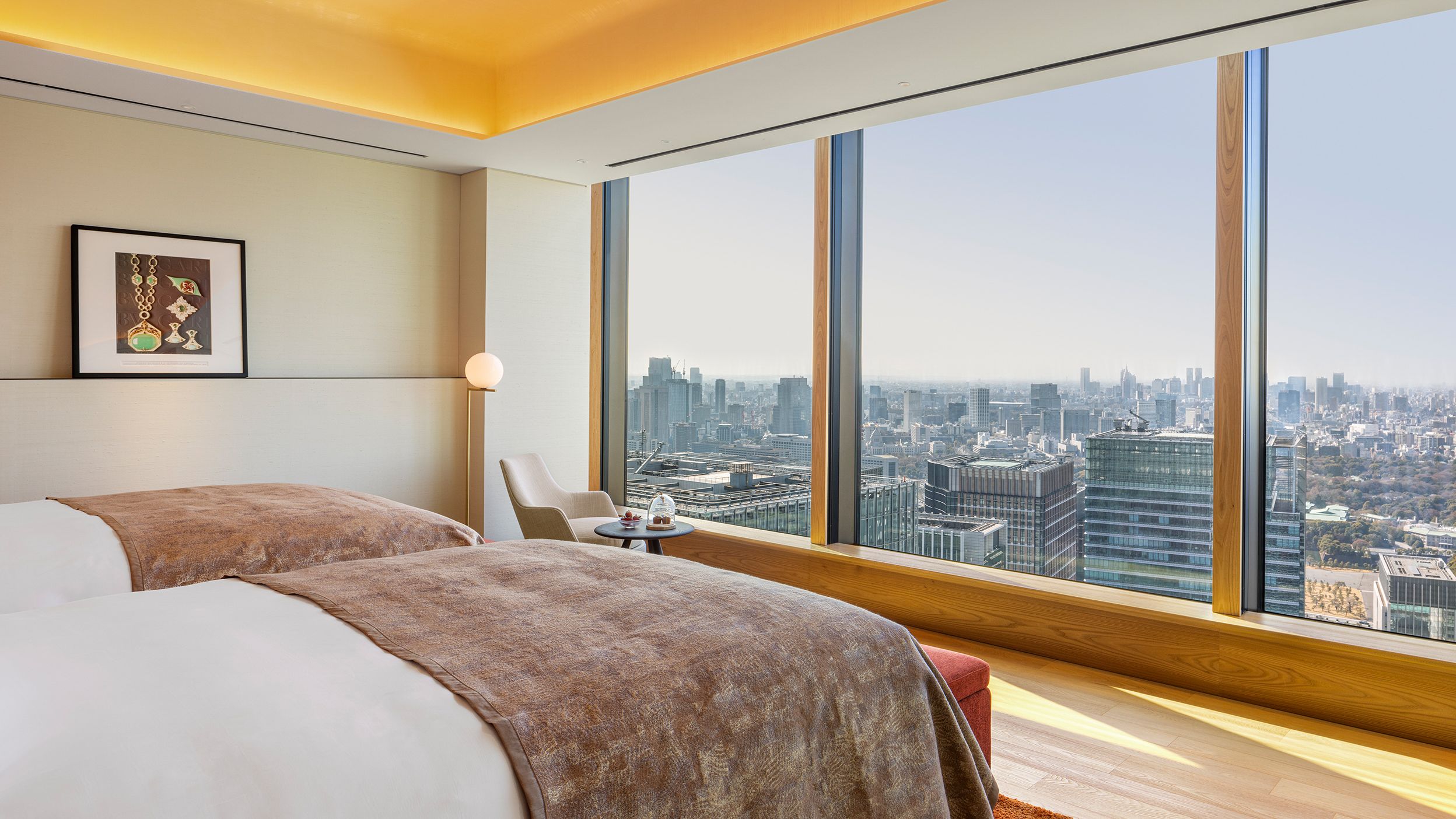
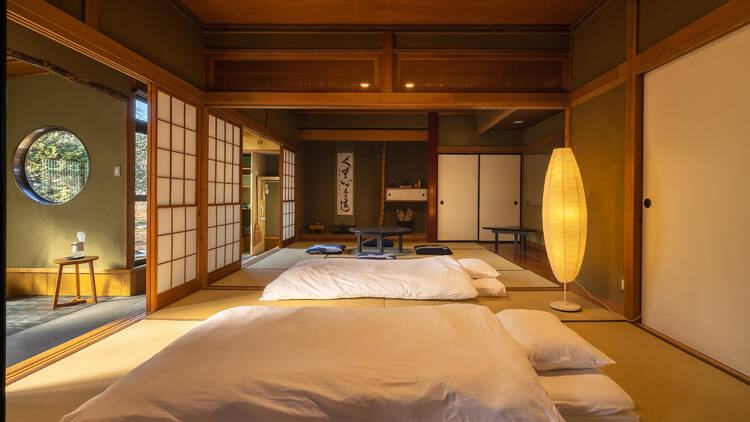
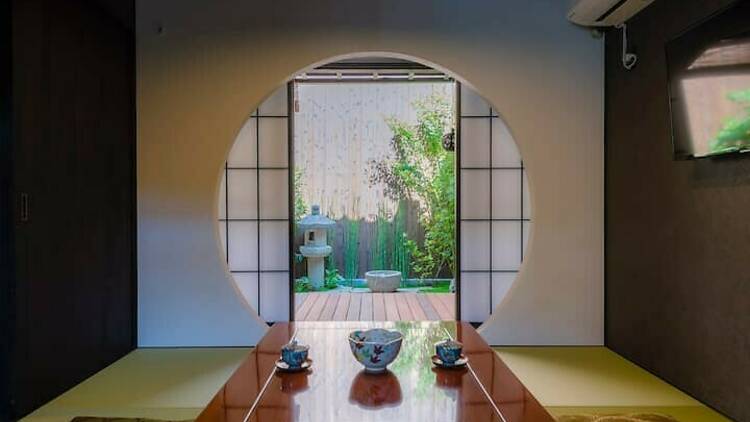
Azuma's design ethos centers on respecting tradition while adapting it for modern travelers. The architecture and interior design are rich with references to old Japan. The facade's latticework is inspired by Edo-era kimono patterns, and guests arrive via a subterranean entrance veiled by a black hemp curtain, reminiscent of dividers found in traditional Japanese shops. The hotel's discreet logo echoes noble family crests, reinforcing the connection to heritage. The 84 guest rooms, six per floor, represent a harmonious blend of old and new. Shoji sliding screens, made of chestnut and paper, serve as window coverings, while bathrooms feature clear glass walls that become opaque with a switch. Low beds, designed for Western comfort standards, replace traditional futons, yet maintain an authentic aesthetic. Custom-designed seating and tables are engineered to prevent damage to the tatami flooring.
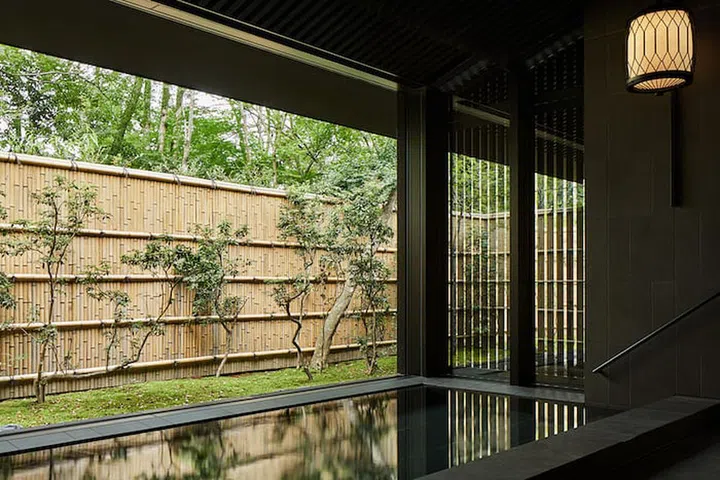
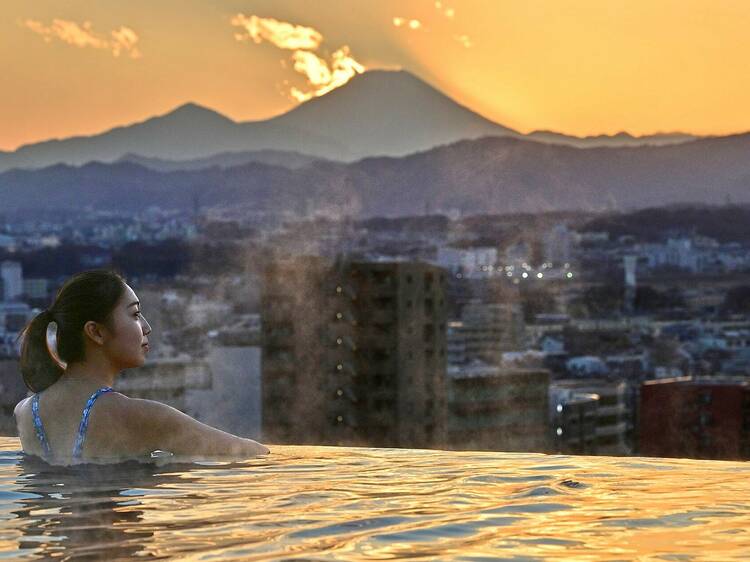
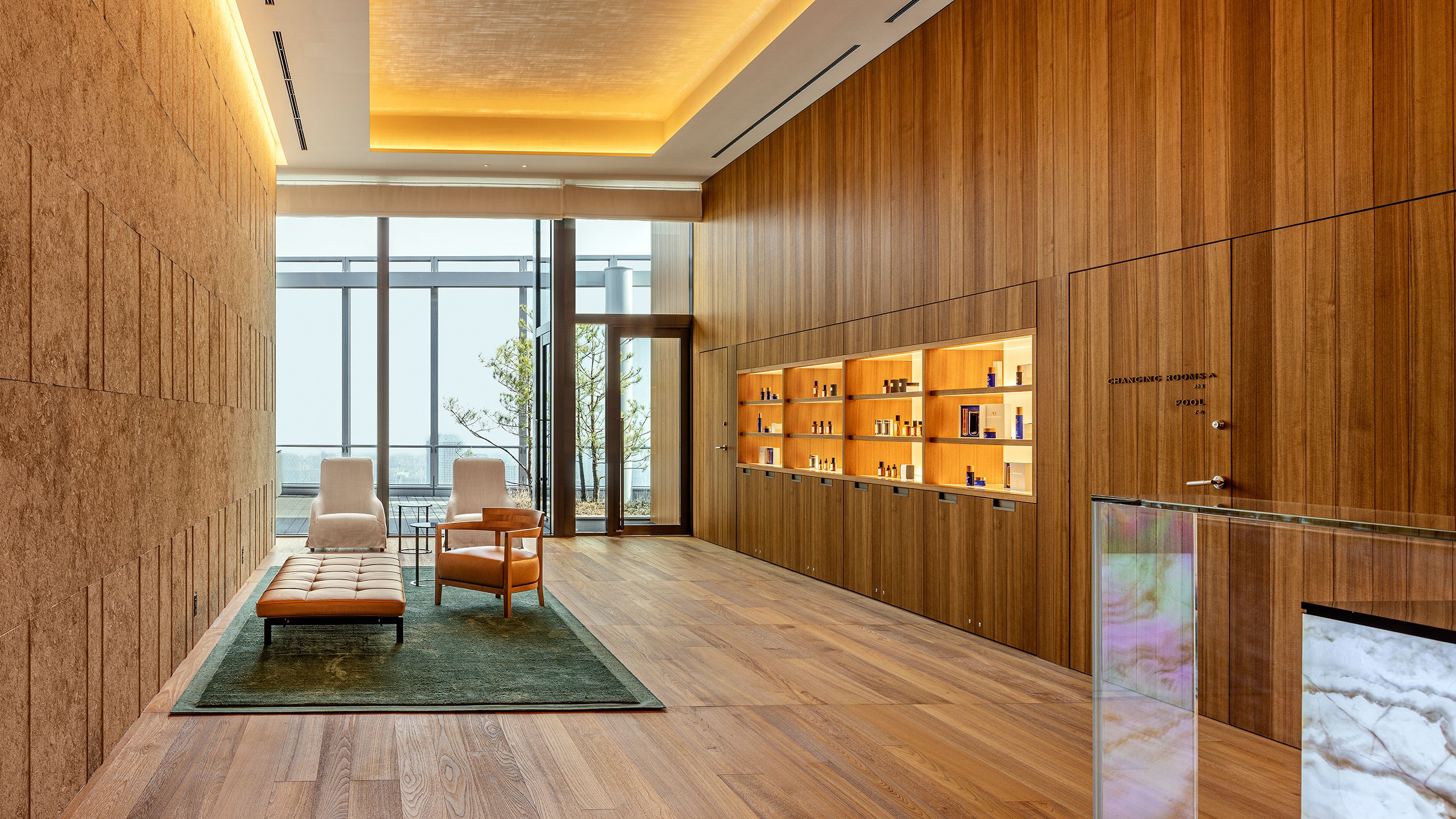
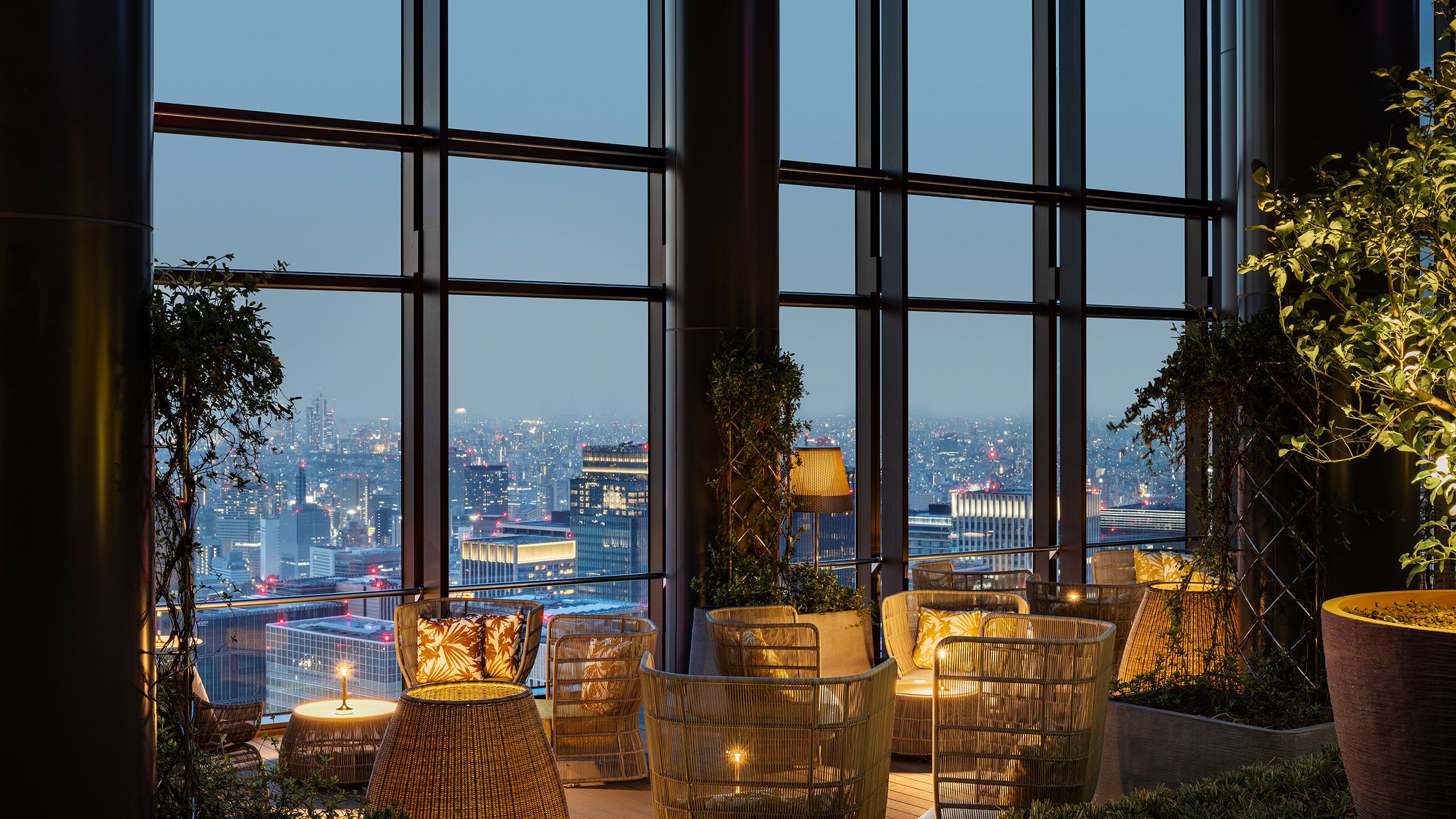
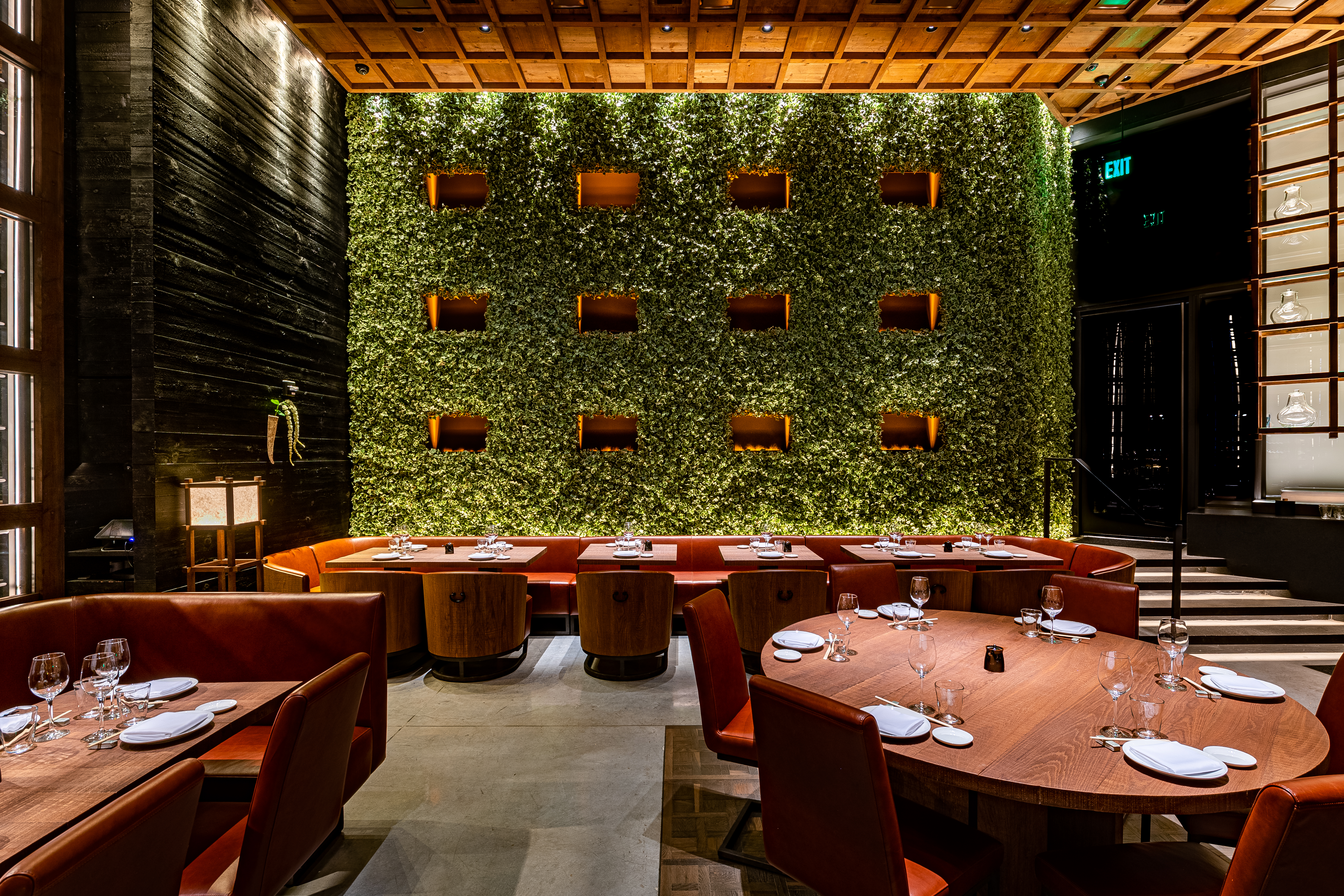
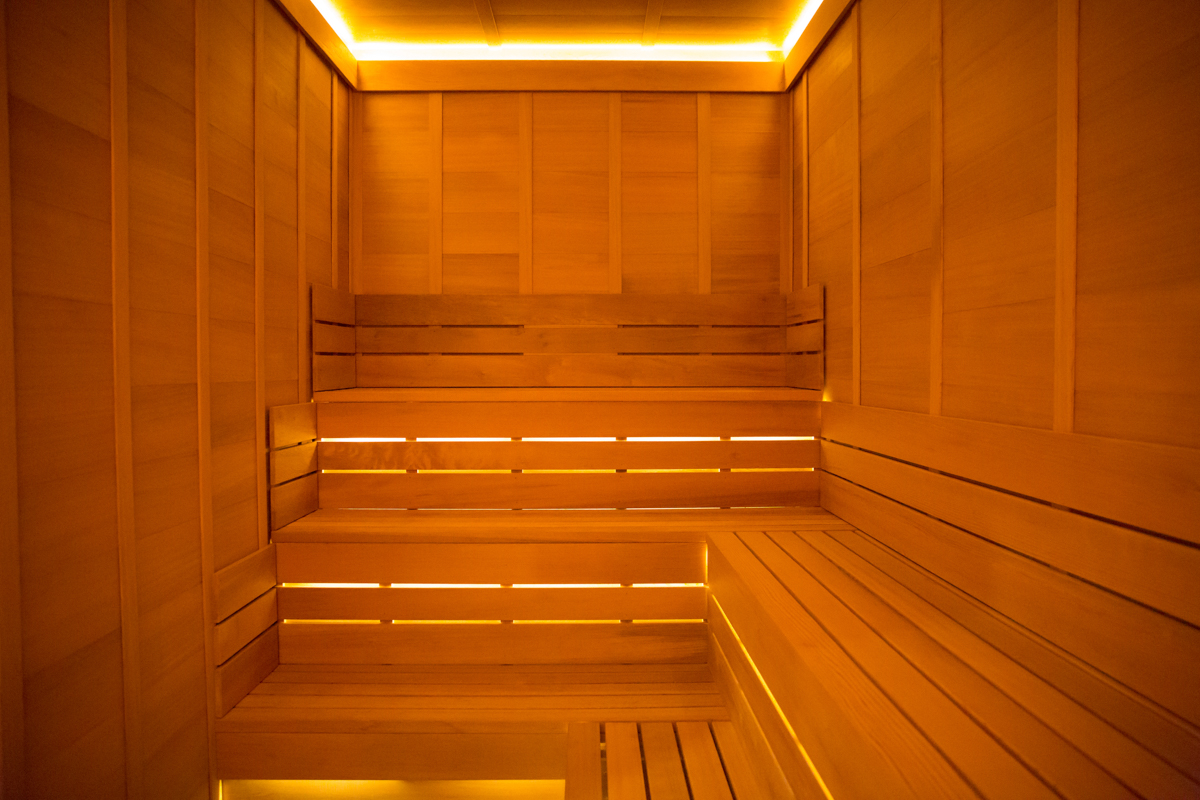
Each level of the hotel includes a lounge where guests can enjoy Japanese sweets, green tea, sake, and plum wine. The pinnacle of the hotel's amenities is the penthouse spa, where mineral-rich hot spring water is pumped from a source beneath the building. The spa features a pool lined with local granite and walls paneled with cypress, with a light well providing a sensation of an outdoor bath. The project involved numerous specialists, including an award-winning lighting consultant who recreated the warmth of an old ryokan, and a leading woodworking studio responsible for the chestnut floorboards in the restaurant, which offers French cuisine with a Japanese influence. A master plasterer created the restaurant vestibule's sidewalls using a blend of plaster and compressed earth, and the Japanese granite feature wall was installed by the same company that supplied Isamu Noguchi. Rie Azuma emphasized the importance of natural materials, appreciating their randomness and ability to age beautifully. Her aim was to create a space where both Japanese and international guests could experience relaxation in a traditional Japanese manner, demonstrating how ancient traditions can thrive in contemporary life, as exemplified by the library's daily tea ceremonies and ancient court music performances.
#HoshinoyaTokyo #RieAzuma #JapaneseRyokan #SpaHotel #TokyoHospitality #TraditionalJapaneseDesign #LuxuryTravel #AzumaArchitects #HotSprings #HoshinoyaTokyo #RieAzuma #JapaneseRyokan #SpaHotel #TokyoHospitality #TraditionalJapaneseDesign #LuxuryTravel #AzumaArchitects #HotSprings
0 comment in total
 No comments yet
You may also like
7 Modern Japanese Hotels That Will Help You Find Your Zen

This Japanese-Inspired Inn Is One of Mexico City's Best Kept Secrets
Bulgari Hotel Tokyo – Hotel Review
thinned trees from japanese forest compose barrel-shaped sauna with stepped ceiling
Aman Kyoto: A Luxury Onsen Ryokan designed by architect Kerry Hill
MESM Tokyo serves waterfront views in luxe surrounds

shigeru ban is designing a zen wellness center for awaji island in japan
Japan's New Club Med Has Chic Styling & Edgy Design
Kengo Kuma designs a hot spring hotel on the Japanese island of Kyushu
Hotel The Mitsui Kyoto offers Zen stays and exclusive access to rare cultural experiences

Inside Shōtō, a Zen Japanese Masterpiece Rising Downtown Tonight
7 coolest Airbnbs in Japan that you should book
FHAMS & kosaka transform old school in kyoto into spacious hotel with zen gardens
A 75-Year-Old Japanese House Was Transformed Into a Zen Weekend Hideaway

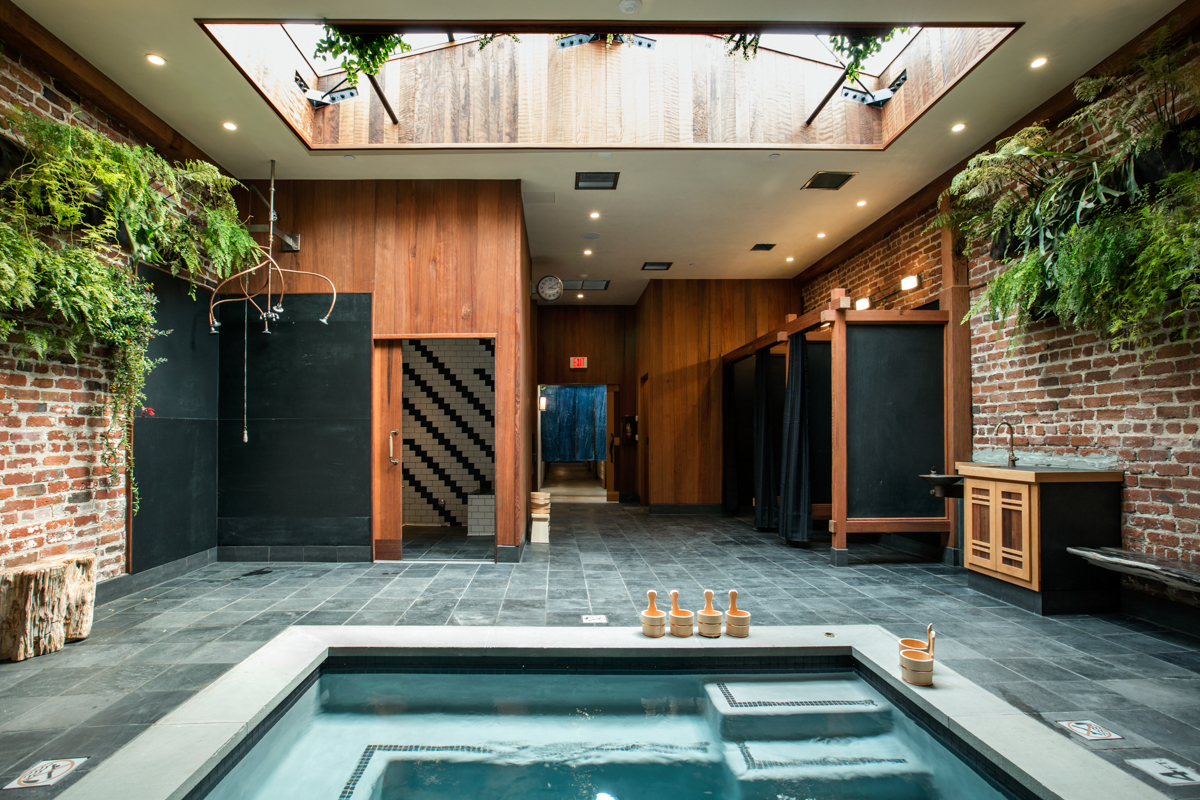
Former Auto Body Shop Transformed Into Zen Bathhouse

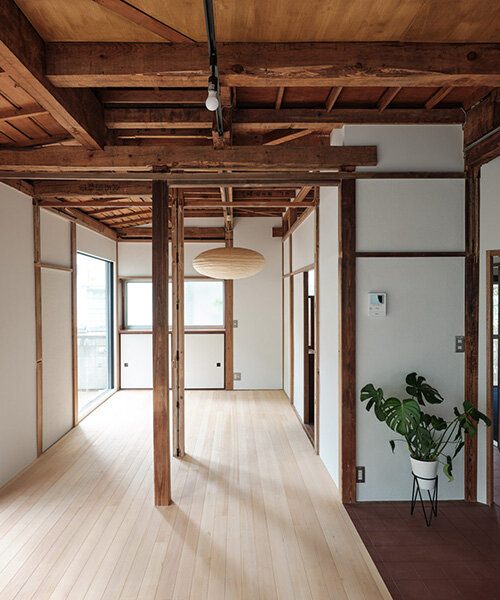
ROOVICE renovates 1970s japanese house with earthquake-safe design
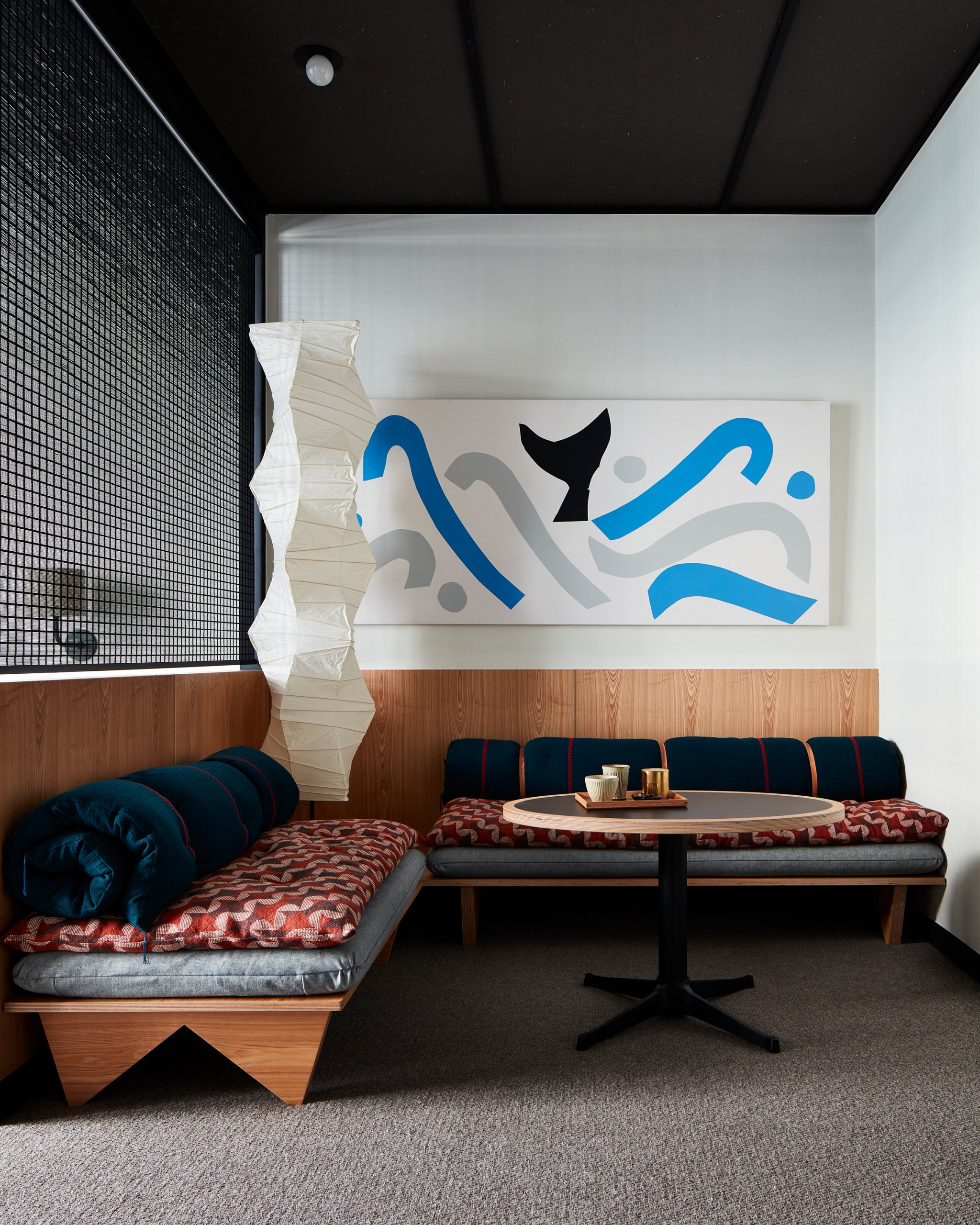
Ace Hotel Kyoto Already Won Us Over With Its Extra-Zen Bathrooms

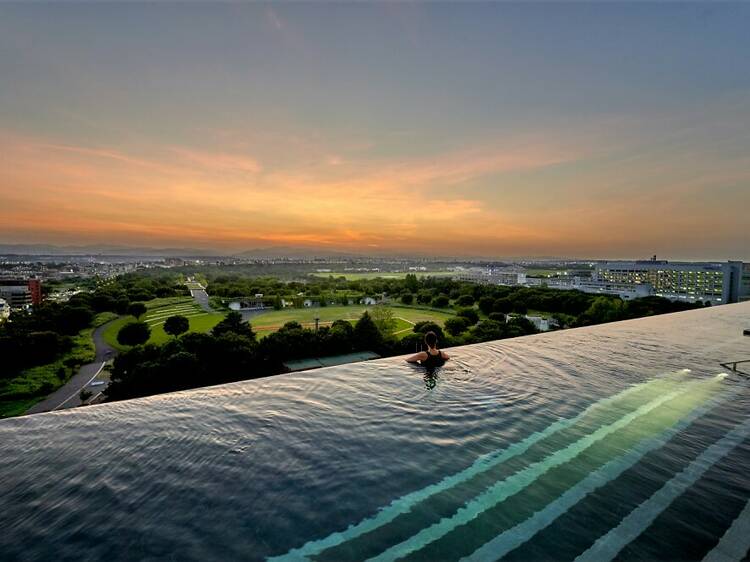
6 most breathtaking hotel infinity pools in Japan – from Tokyo to Okinawa
This new store in Hyderabad transports you to a Japanese Zen garden

Zen-Like Micro-Apartment Renovation Is Inspired by Japanese Inns