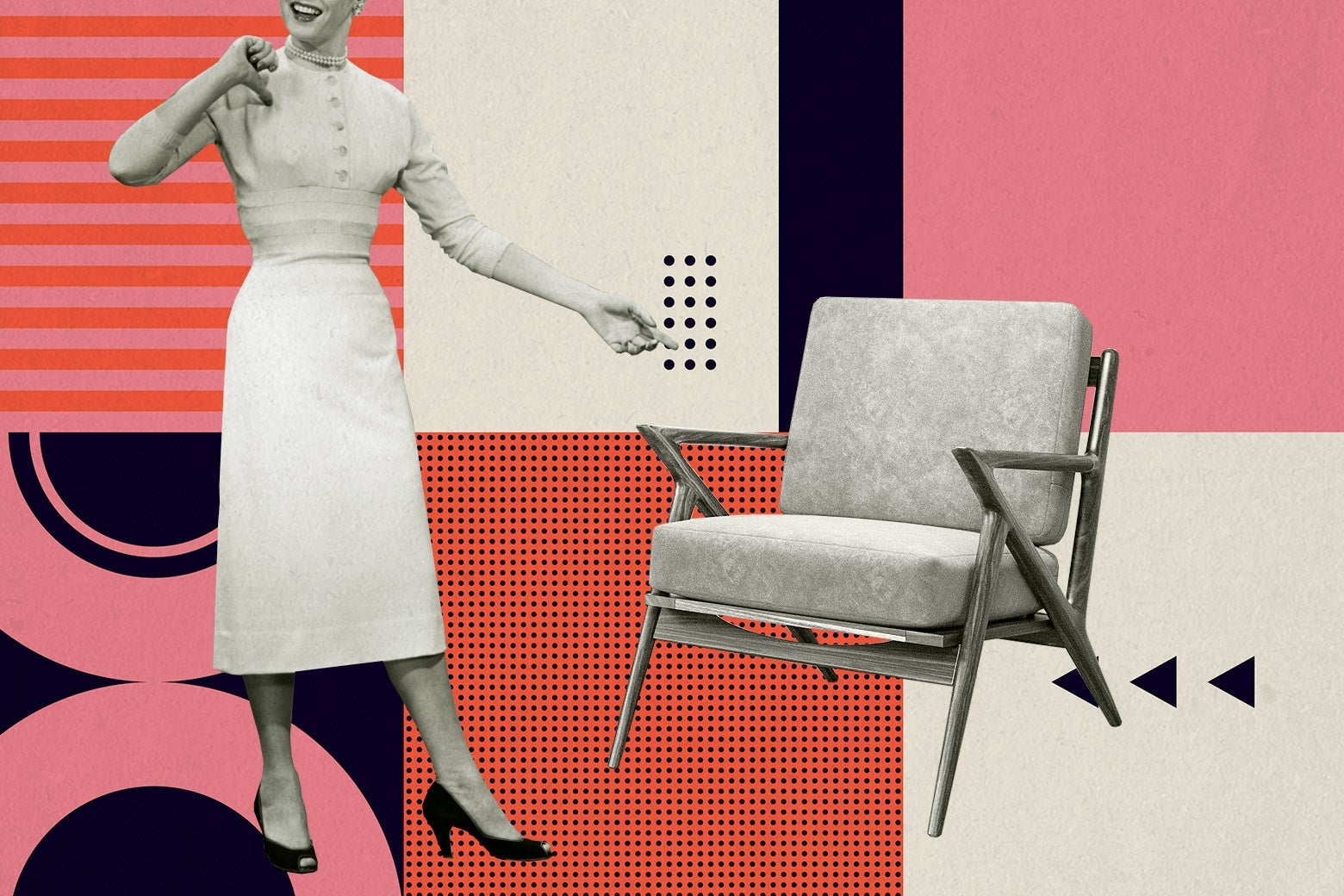
Instagram’s Favorite Furniture Style Has an Uncomfortable History
Midcentury modernism, a design style characterized by simple forms, lack of ornament, and new materials, has gained widespread popularity, particularly amplified by shows like 'Mad Men' and accessible through retailers like Ikea. This style, often associated with a bright new day of booming consumer culture in the 1950s, is explored in Kristina Wilson's book, 'Mid-Century Modernism and the American Body: Race, Gender, and the Politics of Power in Design.' Wilson's work provides a historical context for the style, challenging the conventional narrative by highlighting its connections to race, gender, and control.
The traditional understanding of midcentury modernism celebrates its break from the past, affordability, and the use of post-war technologies, presenting an image of 'open' spaces, clean floors, and elegant furniture. However, Wilson argues that this scholarly celebration is ideologically limited, overlooking the legally and rigorously segregated landscape of suburbia during that era. She questions the true beneficiaries of this 'new, better world,' suggesting that it wasn't necessarily a liberating experience for all, including white women in suburbia. Wilson's research aims to uncover the ideas that this design was truly deployed to support, particularly by examining how its history is predominantly a 'white story' that emphasizes whiteness and control, rather than universal progress.
The article delves into the concept of 'whiteness' in midcentury design, building on the work of Dianne Harris, who argued that suburban houses themselves were coded as white through their clean, open, and crisp aesthetics, contrasting with the perceived crowding and dirtiness of cities. Wilson extends this idea to the objects within these homes, analyzing media representations in magazines like 'Life' and 'Ebony' to see how white and Black individuals interacted with modern design. She observes that while 'Life' often portrayed midcentury modernism as a symbol of control and access, 'Ebony' discussed it as more elite, a tool for a comfortable, confident lifestyle and social gathering, offering bodily comfort. In contrast, 'Life' often showed people not enjoying their modern furniture, highlighting a different narrative.
Wilson elaborates on the idea of 'control' within midcentury modernism, citing decorative advice manuals like Mary and Russel Wright's 'Guide to Easier Living,' which emphasized order and regulation in the home, such as the function of a foyer in separating outside dirt from the clean interior. Another example is the Eames leg splint developed during WWII, whose technology later informed their molded plywood chairs. These chairs, much like the splint, proposed an ideal posture, comportment, and even size for the body, suggesting a form of bodily control. The 'Marshmallow Sofa' is also presented as an example, where its design, though visually striking, offered little comfort and placed the sitter 'on display,' further illustrating this theme of control.
The discussion extends to decorative elements within midcentury modern homes, particularly non-Western accessories like vases and sculptures. These items, often sourced from Latin America and featured in Herman Miller's publicity, were presented by white tastemakers as signs of global travel and a way to appropriate non-Western craft skills. Wilson notes that these objects were intentionally positioned as a binary opposite to the industrial modernism of the furniture, providing a 'pop of supposed authenticity' in an otherwise smooth and clean room. This dynamic highlights a possession and power relationship, allowing white Westerners to borrow non-Western qualities without being defined by them.
Finally, the article connects the contemporary fixation on midcentury modern style to the Colonial Revival trend of the late 19th and early 20th centuries. Both movements, though separated by time, shared a similar appeal for simplicity and a sense of 'authentic' American past. While Colonial Revival idealized a 'white America' of Puritans and Paul Revere, midcentury modernism appeals to a more recent, yet still 'white,' American history. Wilson concludes by urging mindfulness that the narrative surrounding midcentury modernism, both historically and in its current revival, predominantly represents a white historical perspective.
#MidcenturyModernism #DesignHistory #FurnitureStyle #ArchitecturalControl #RacialBiasInDesign #KristinaWilson #AmericanSuburbia #InteriorDesign #CulturalAppropriation #MidcenturyModernism #DesignHistory #FurnitureStyle #ArchitecturalControl #RacialBiasInDesign #KristinaWilson #AmericanSuburbia #InteriorDesign #CulturalAppropriation
0 comment in total
 No comments yet
You may also like
To Flip or Not to Flip: Have Antique Furniture Revamps Gone Too Far?
Outdated Furniture Pieces That Are Having A Comeback

Luxe look: The interior upgrade that's taking over social media - and it's not what you think
These Micro Trends Look Good Online—But Designers Say You'll Regret Them

"Frankly, It's Tacky": People Are Revealing Common Interior Design Trends They Can't Stand


Interior designer says having family photo 'shrines' in your house is tacky

People Are Sharing Why These Universally Despised Design Trends Work Quite Well In Their Homes

The Anabei Sofa Claims to Be ‘The Only Washable Sofa — Inside and Out.’ Only, It Isn’t. | Reviews by Wirecutter


Anti-Instagram Home Décor: A Shopping Guide


Interior designer says that having family photo 'shrines' in the house is poor taste
We’re Calling It: These Are the Best Online Home Decor Brands Around

Skirted furniture trend – here are the pieces we're loving

Why fruit-themed decor is trending in home design
This Controversial Home Layout Has DIVIDED the Design World


Why Is Everyone Obsessed With Food-Themed Aesthetics Right Now?

The Unexpected Living Room Seating Designers Swear By
I Asked Interior Designers to Share the Worst Decorating Trends They've Seen on Social Media

Skirted Furniture Is Really Having a Moment
"Frankly, It's Tacky": People Are Revealing Common Home And Kitchen Design Trends They Can't Stand
9 Influencers Who Have the Absolute BEST Bedrooms On the Internet