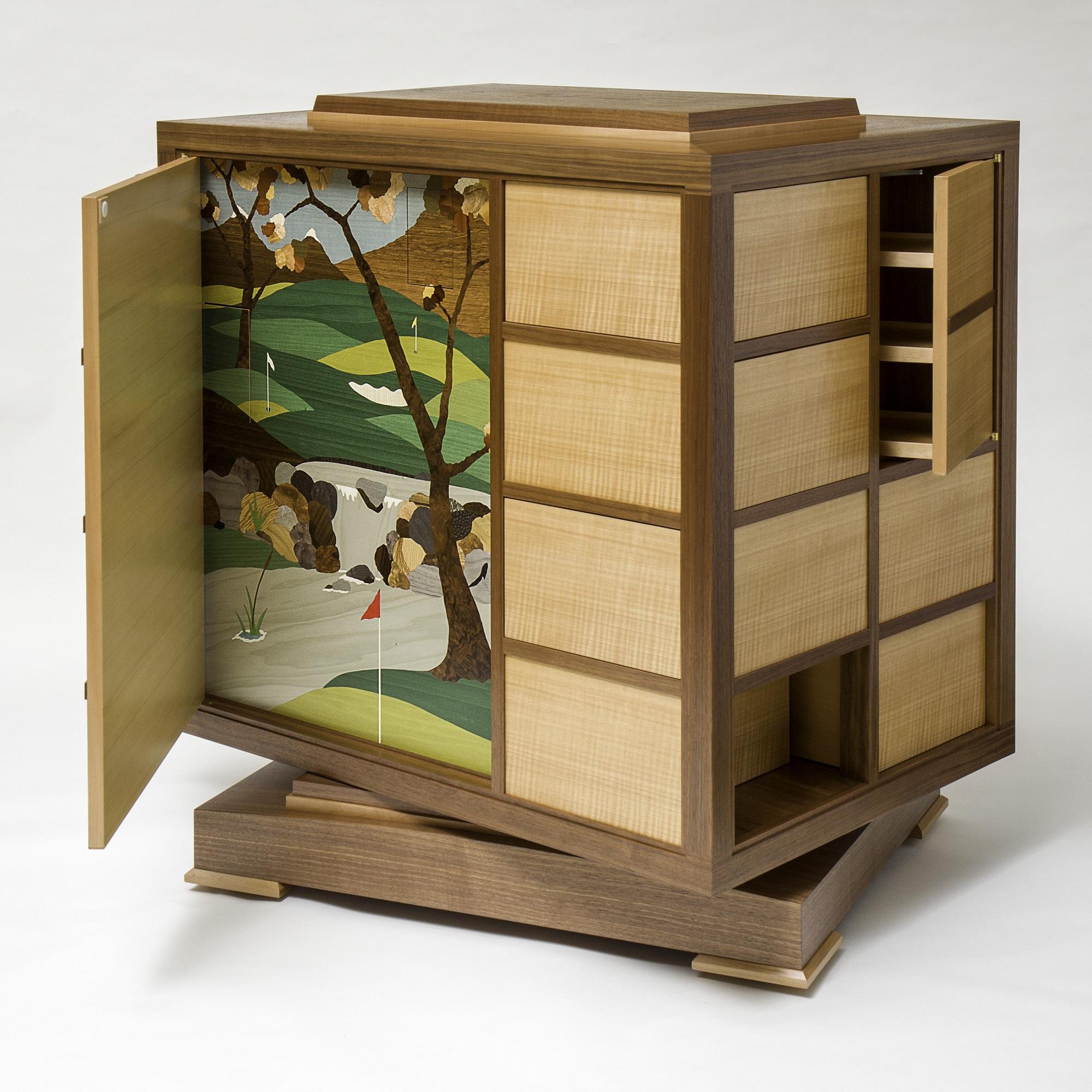
Puzzle cabinets are intricate masterpieces
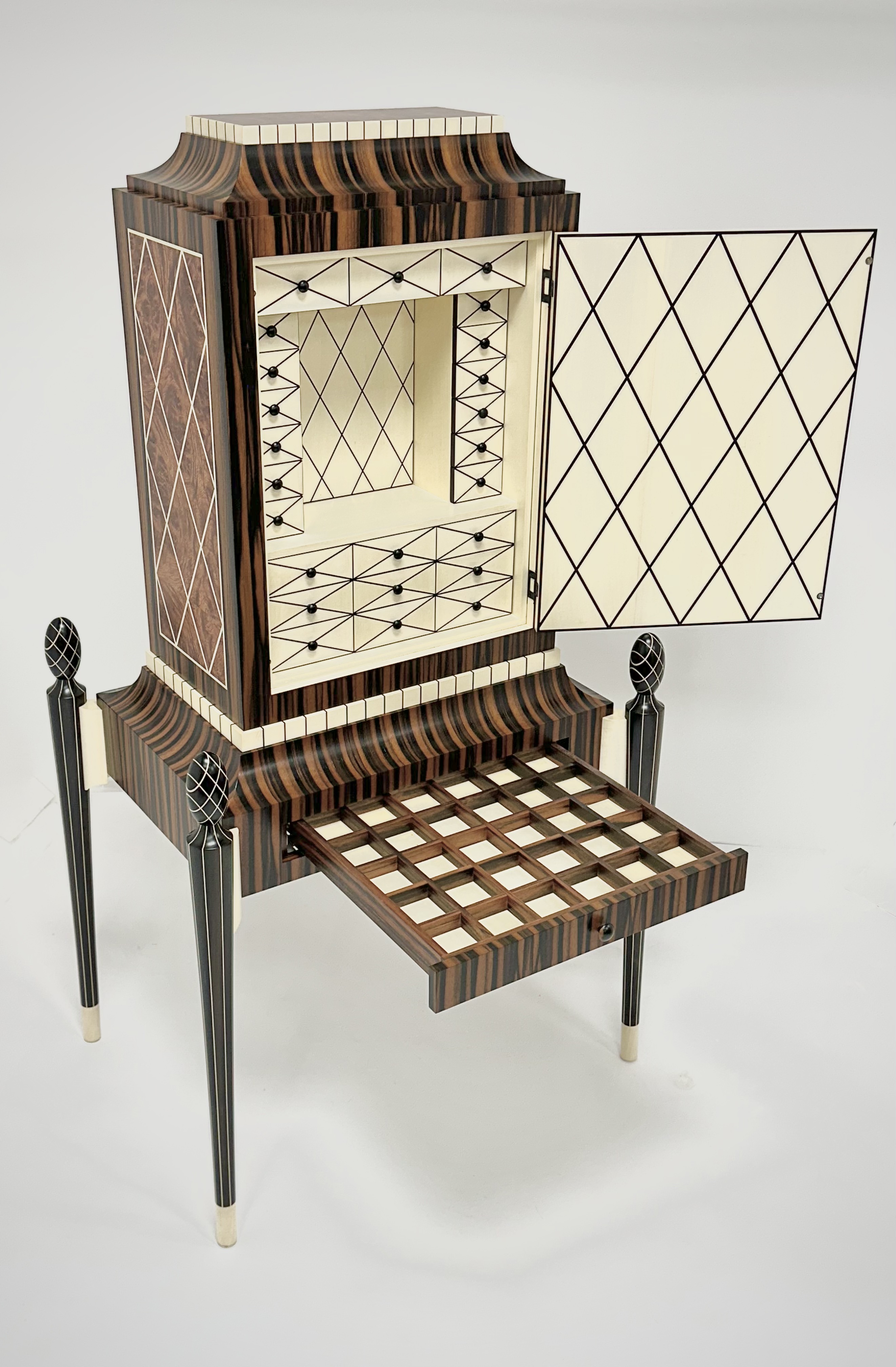
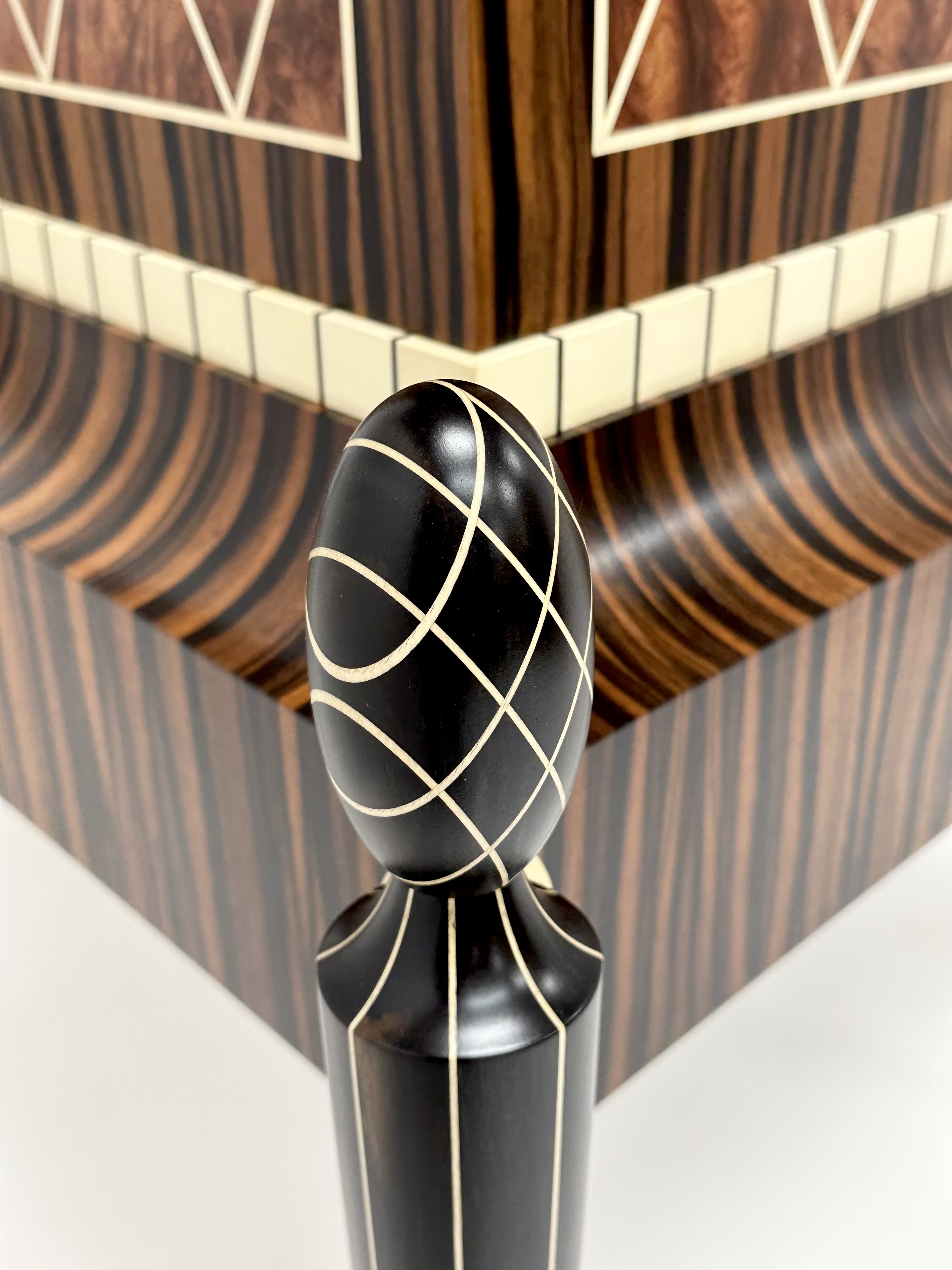
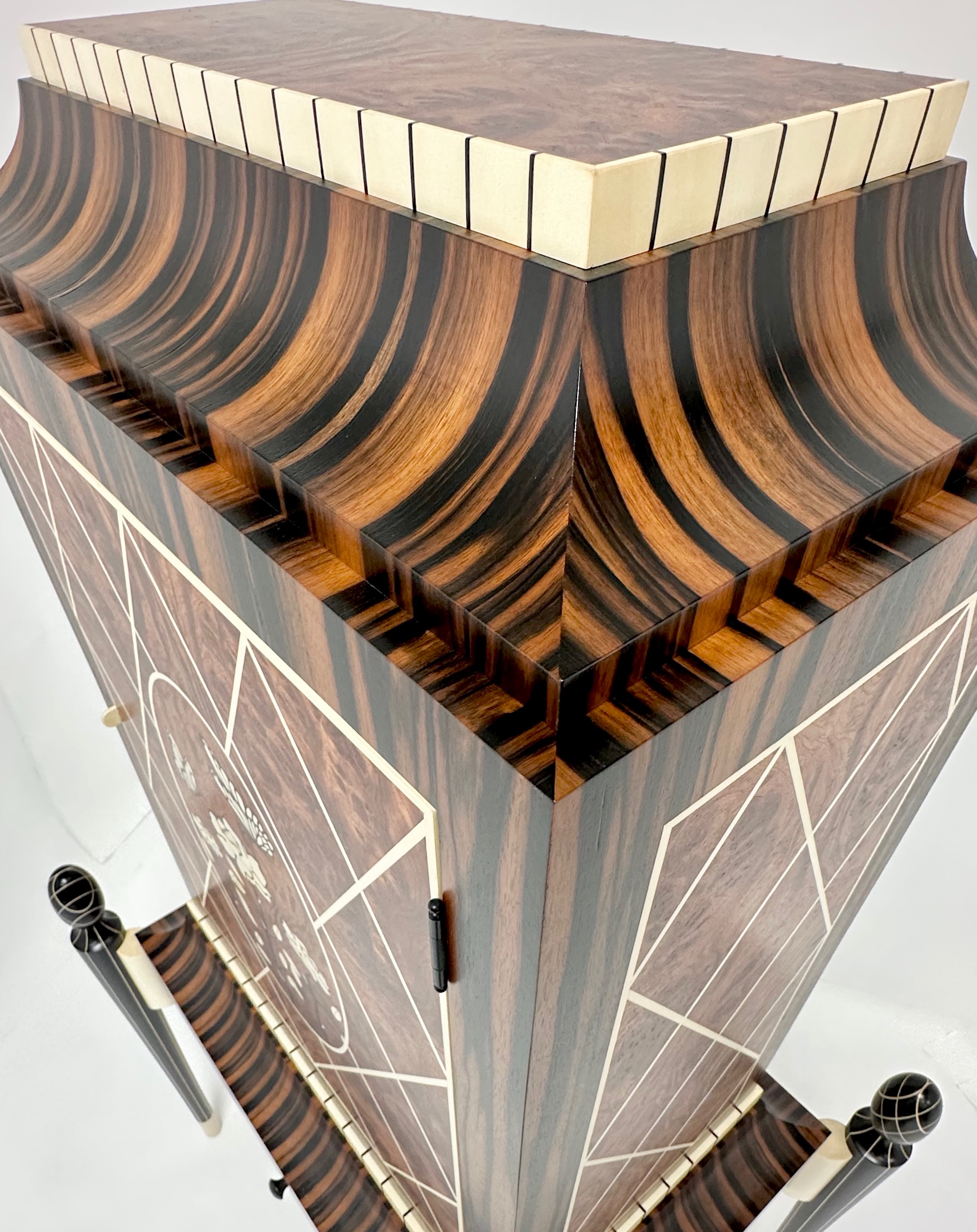
The article highlights the work of Craig Thibideau, a master of intricate mechanical furniture, focusing on two of his latest creations: the Spinning Cabinet and the Wisteria Cabinet. Thibideau, known for his veneering skills, has collaborated with Robert Yarger of Stickman Puzzle Boxes to integrate complex mechanical and puzzle features into these furniture pieces. Their collaboration combines Thibideau's furniture craftsmanship and design with Yarger's expertise in sequential movements and puzzle mechanisms.
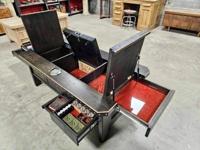
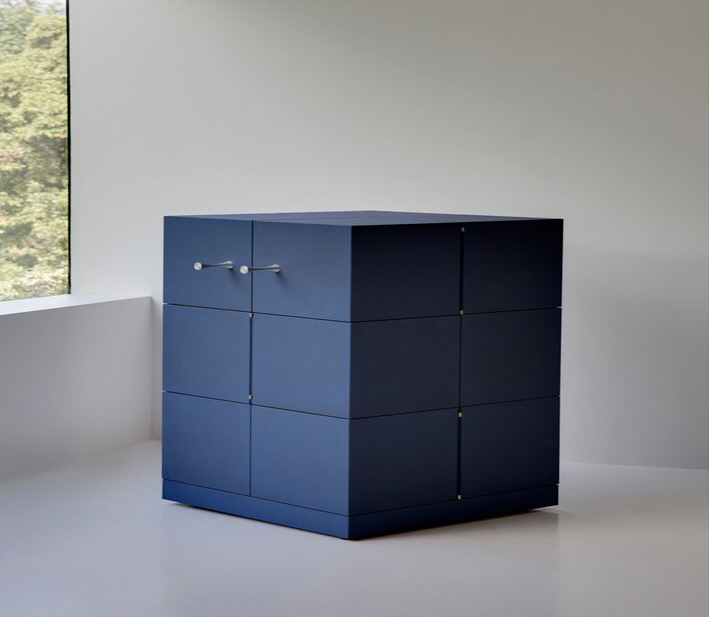
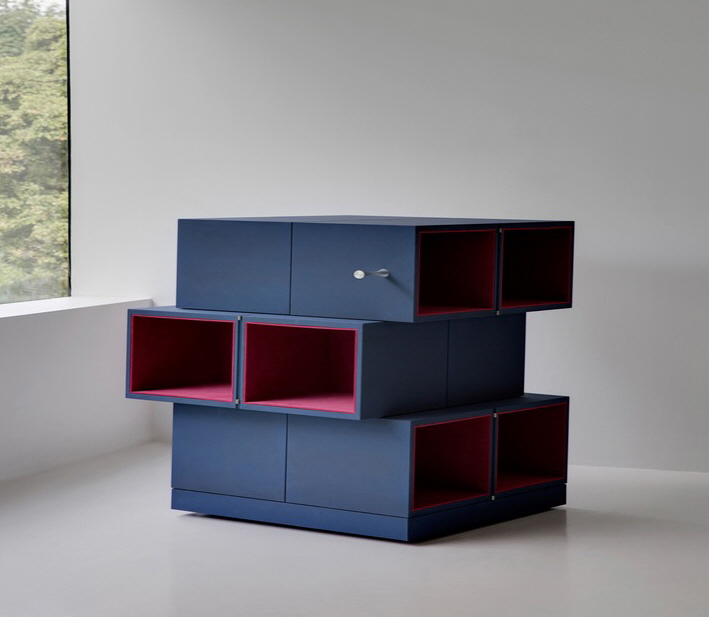
The Spinning Cabinet, measuring 42 inches wide, 26 inches deep, and 46 inches high, is constructed primarily from walnut, figured anigre, and Sitka spruce, with various marquetry woods. Designed for a puzzle-collecting client, this cabinet features numerous mechanical and puzzle elements that create a highly interactive experience. Upon solving an initial puzzle, the cabinet can rotate 360 degrees, triggering automatic opening and closing of drawers around its perimeter. Further rotation stages reveal additional puzzles, requiring solutions to access other sections of the cabinet. The cabinet incorporates various mechanical components, including spring-loaded panels, touch-opening mechanisms, and magnetic locks, designed to be discovered by the owner.
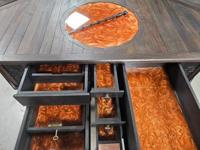
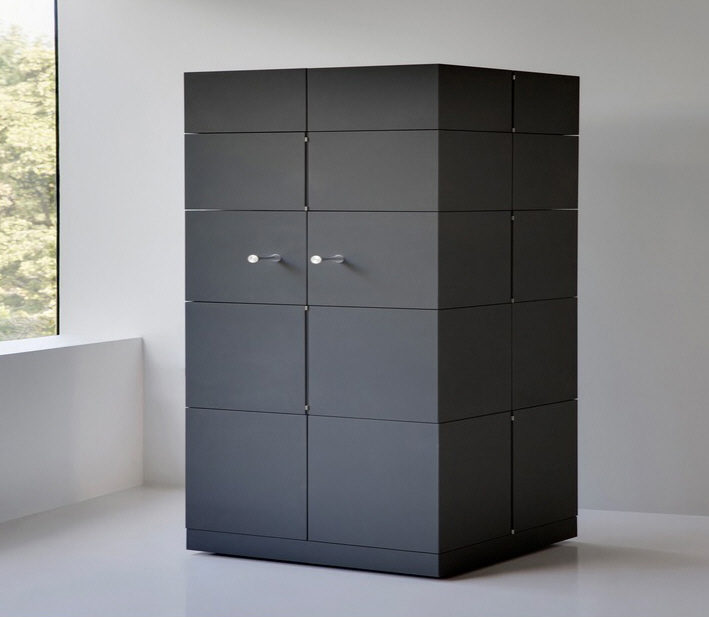
The Wisteria Cabinet, named for its distinctive wisteria flower marquetry, stands 70 inches tall, 36 inches wide, and 20 inches deep. Its construction utilizes Honduran mahogany, maple burl, Amboyna burl, walnut burl, walnut, sycamore, olive ash, and different marquetry woods. The client's preference for burl woods led to their extensive use throughout the piece, both externally and internally, posing a challenge to integrate such diverse materials without overwhelming the final aesthetic. This cabinet was also created for a puzzle collector who desired a large cabinet with a sequentially solved puzzle system and multiple forms of mechanical movement.
Inspired by the mechanical furniture of Abraham and David Roentgen from the 18th century, Thibideau's work on the Wisteria Cabinet demonstrates a similar level of complexity. As different stages of its puzzle system are solved, two moving components automatically open, unveiling additional small puzzles. The most complex of these is a magnetically activated clock mechanism that subsequently unlocks a series of drawers. The intricate design of both cabinets reflects a sophisticated blend of artistic woodworking and mechanical engineering, offering a unique and interactive experience for their owners.
#PuzzleCabinets #FurnitureDesign #Woodworking #MechanicalFurniture #VeneerCraft #CraigThibideau #RobertYarger #InteriorDesign #CustomFurniture #PuzzleCabinets #FurnitureDesign #Woodworking #MechanicalFurniture #VeneerCraft #CraigThibideau #RobertYarger #InteriorDesign #CustomFurniture
0 comment in total
 No comments yet
You may also like
Mind bender: Toquerville carpenter makes secret compartment furniture in castle shop

An Expert Explains How To Perfectly Style Your Trendy Curiosity Cabinet

Kitchen Designers Weigh In on Deep Drawers vs. Cabinets
Interior Designers NEVER Overlook This Surprising Space

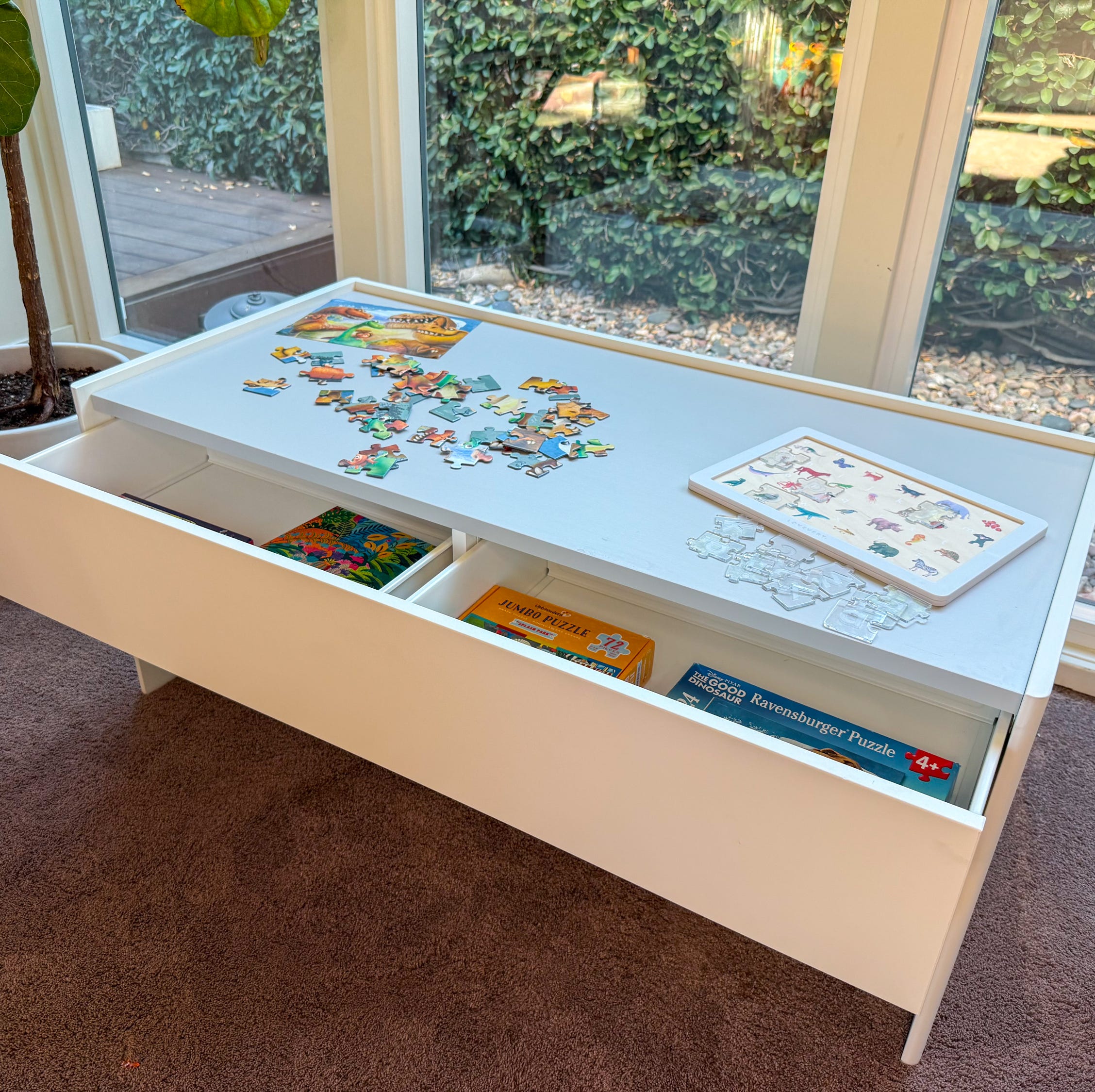
Puzzle Tables For Every Type Of Puzzle
2 Basic Craft Materials Turned These IKEA Ivar Cabinets Into Sculptural Statements

This Organized Art Supply Storage System Is A Crafter's Dream
Skip the cookie-cutter cabinets and add pops of personality with these designer ideas

Gustaf Westman creates chunky 3D-printed shelves based on interlocking puzzles
Cabinet Jewelry

8 Simply Amazing Closets

These designers have 5 rules for getting the curiosity cabinet trend right, including how not to over-style one

Creating A Curiosity Cabinet
Behind These Streamlined Cabinets Is an Entire Hidden Kids’ Zone

You Have To See This Cabinet Expand Into A Full-Blown Craft Room

Art Deco jewelry cabinet is veneer tour de force
The Transforming Cubrick Cabinet Comes from "Chaos Technique"

Home decor designer transforms an IKEA Billy bookcase into a show-stopping display cabinet
This Custom Wall of Closets Has a Storage Surprise Hidden in the Center

QLine Design's Incredible Hidden Compartment Furniture Designs