A Slab Appeals to Potential Buyers
The FHB House project, designed for the affordable market in Wilder, Vermont, aims to achieve a net-zero energy designation while focusing on cost-effectiveness and universal design principles. This involves a strategic balance between investing in photovoltaic (PV) arrays and optimizing the building envelope. For this production-built, easily duplicable house, the team prioritized reducing construction costs and duration by opting for a slab foundation, a decision that also caters to its target demographic of older, downsizing homeowners seeking single-level living without subterranean spaces.
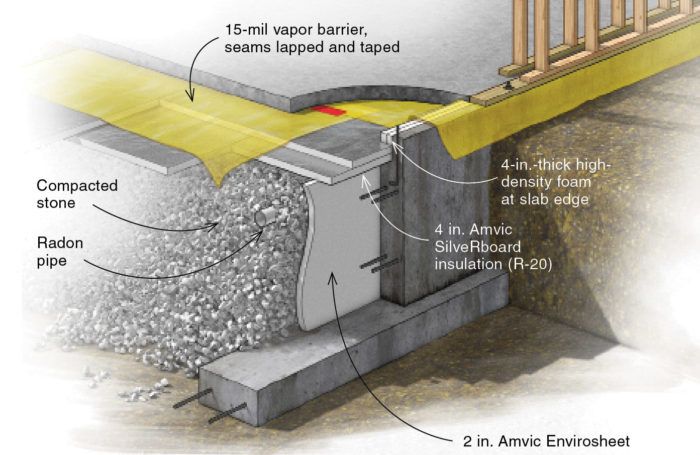
The foundation system for the FHB House utilizes traditional footing and stem-wall construction, extending below the frost line. The interior of these stem walls is insulated with 2 inches of Amvic Envirosheet. A critical component of the slab's thermal performance is the Amvic SilveRboard subslab insulation, providing an R-value of 5 per inch and a compressive strength of 35 psi. This expanded polystyrene (EPS) foam is laminated on both faces with polypropylene film, enhancing its strength and durability to minimize breakage and cracking during construction. The EPS insulation is free of CFCs and HCFCs and is available in various compressive strengths to suit different structural requirements.
Historically, the Biebels, the builders involved, have explored the use of ICF (Insulated Concrete Forms) for stem walls. However, they returned to formed stem walls after considering the additional costs associated with protecting the exterior foam of ICFs. For the slab insulation itself, they specified 4 inches of Amvic SilveRboard, achieving an R-20 insulation value. Prior to the concrete pour, a 15-mil vapor barrier was installed over the insulation. All seams of the vapor barrier were overlapped and meticulously sealed with tape, as were any penetrations through the slab. At the edges of the slab, the vapor barrier was extended up the side and over the top of the stem wall, then draped long. Following the erection of the walls, this vapor barrier was taped securely to the exterior face of the wall sheathing, ensuring a continuous moisture barrier.
This approach to the slab foundation demonstrates a concerted effort to balance energy efficiency, construction costs, and market appeal. The choice of a slab-on-grade not only streamlines the construction process and reduces material usage but also aligns with the accessibility needs of potential buyers. The robust insulation and vapor barrier detailing are crucial for achieving the net-zero-ready goal and maintaining a comfortable, energy-efficient interior environment. The selection of specific insulation products like Amvic SilveRboard highlights a commitment to high-performance, durable materials in the pursuit of affordable and sustainable housing.
#SlabFoundation #NetZeroReady #AffordableHousing #BuildingEnvelope #Insulation #VaporBarrier #ConstructionCosts #UniversalDesign #HomeBuilding #SlabFoundation #NetZeroReady #AffordableHousing #BuildingEnvelope #Insulation #VaporBarrier #ConstructionCosts #UniversalDesign #HomeBuilding
0 comment in total
 No comments yet
You may also like
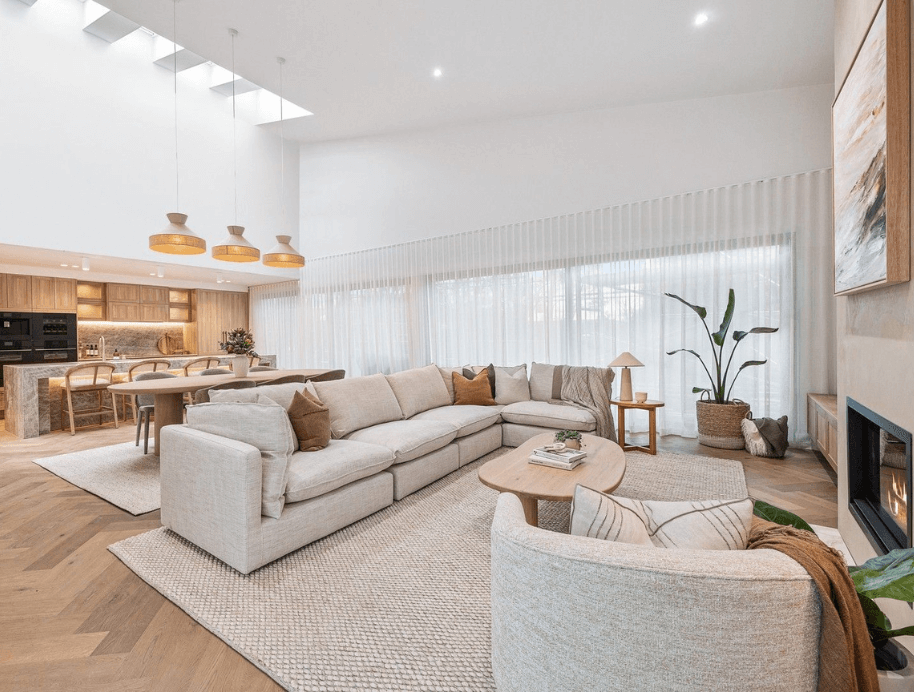
The Block is on the market!

Realtors Say "Screen Appeal" Is One the BIGGEST Reasons Homes Fly Off the Market


25 Bestselling Print-On-Demand Products (2026)


Promotion: Meet the local flooring business turning houses into homes


Beauparlant Launches Open, Wall-Mounted Shelves

The best debuts at High Point Market this fall

Home Staging Tips: 12 Ways to Prep Your Property for Fast Sale
Clayton welcomes a new place to shop for home decor

Dressed for Bed: Ticking Suppliers Tease With Tints and Talk of Tech


Matt Blatt Wants You to be the Face of Their Campaign
Products

14 Innovative Showcase Strategies That Will Make Your Mind Whir

7 Things You Should NEVER Do if You’re Trying to Sell Your House, According to Home Stagers
How 10 Creative Jewelry Retailers Make the Most of Blank Walls


Modulyss lists carpet tiles on Dezeen Showroom
Urban Outfitters’s Home Sale Is Flush With Wavy Table Lamps and Chic Sconces


A Boulder-Based Furniture Firm Is Taking Its Showroom on the Road


Black-Owned Home Decor Items To Refresh And Revitalize Your Space This Spring
Dusen Dusen’s Throw Pillow Drop, a Roasted Tomato Rug, and the Most Genius Grilling Set

According To Yelp, Wallpaper Is Back